Galvanized Tub Ideas: 12 Smart Ways to Use One at Home
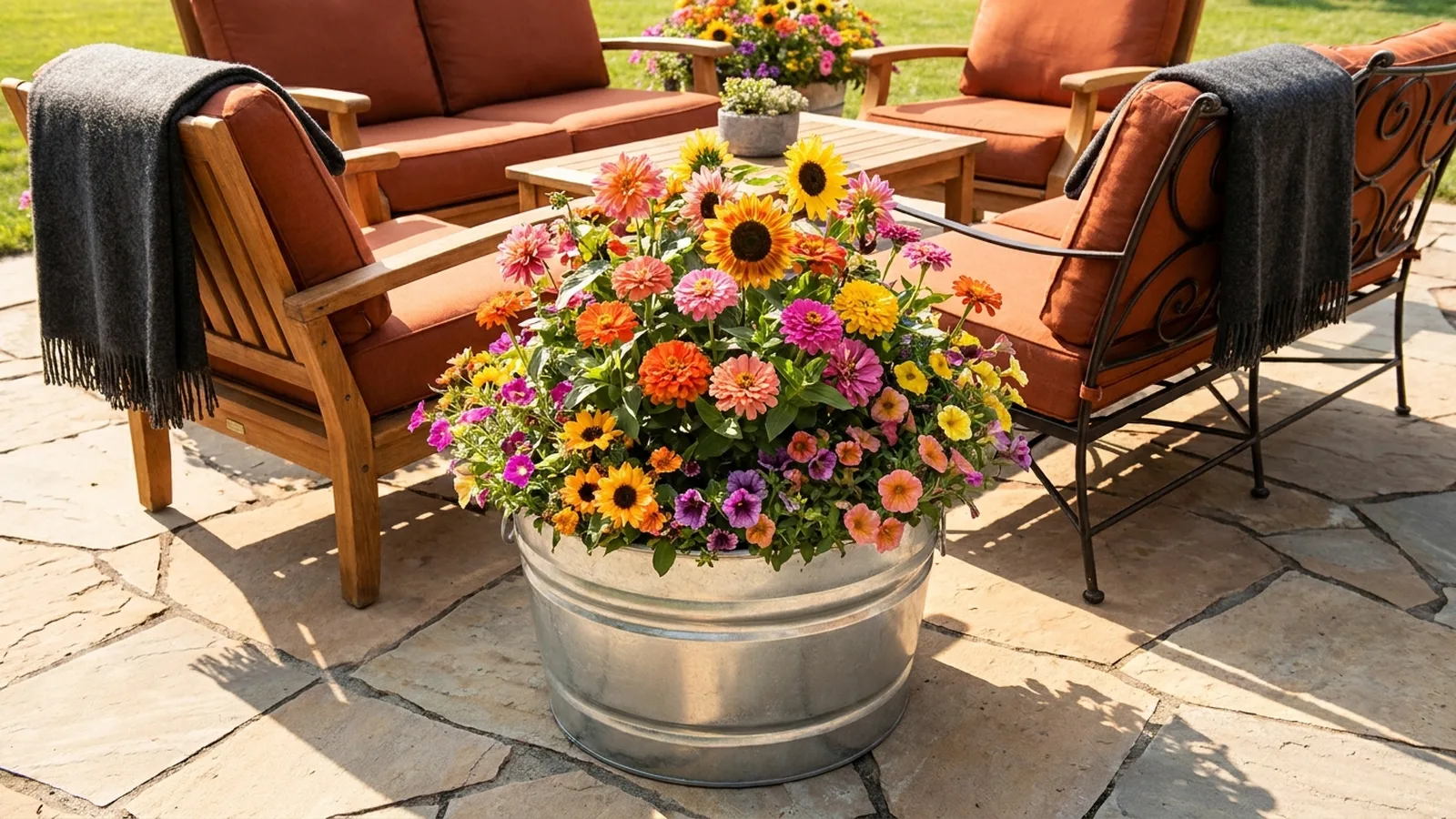
Say you buy a shiny galvanized tub for a summer party, fill it with ice and lemonade, and forget it on the damp lawn for a few weeks. By September the bottom has orange freckles and the lemonade left a dull film behind. Nothing was broken. The tub just got used in the one way it handles worst.
A galvanized tub is cheap, handsome and wildly versatile, but it has rules nobody prints on the tag. Standing water, acidic drinks and missing drainage holes cause most of the regret. This is one small piece of refreshing a patio or porch, and it’s worth getting right because a decor tub is usually one of the cheaper items in the project.
You’ll learn what the metal really is, which size fits which job, and how to keep it from rusting out. You’ll also get a straight answer on drinks, vegetables and fish.
Executive Summary
A galvanized tub is a steel tub coated in zinc. The coating does the protecting, so every smart decision is about keeping that coating intact and keeping the bottom dry. Pick the size by the job, from a small 4-gallon herb planter to a 17-gallon party cooler. Drill drainage holes before planting. Rinse after acidic drinks, and lift the tub off wet ground.
The biggest objection is safety. The honest answer is that it depends on what touches the zinc. Meat and non-acidic foods are fine under the 1997 FDA Food Code, per the American Galvanizers Association. Acidic drinks are the exception. Fish and edible plants have split guidance, so we’ll cover the trade-offs instead of pretending there’s one rule.
Along the way: a size and price table, a drilling walkthrough, a short list of twelve ideas, and a plain verdict on plastic and stock tank alternatives.
What exactly is a galvanized tub, and what is it made of?
A galvanized tub is a steel tub dipped in molten zinc, a process called hot-dip galvanizing. The zinc layer shields the steel from moisture and sacrifices itself first when scratched. As long as that coating stays intact and the tub can dry out, the steel underneath stays protected for years.
The American Galvanizers Association says hot-dip galvanized structural steel can last 70 years or more in most atmospheres. Don’t apply that to a thin decor tub. Those are lighter sheet metal, and nobody should promise a lifespan for them.
Two terms help. White rust is a chalky zinc film that forms on damp metal. Red rust means the steel itself is showing. White is cosmetic. Red is the warning.
What sizes and shapes can you buy, and what do they cost?
Galvanized tubs run from about 4 gallons to 17 gallons or more in round, oval and rectangular shapes. Prices vary widely by thickness and brand, from roughly $8 for a tiny decor piece to well over $100 for a large oval. Check the gauge, not only the capacity, because thin sheet dents and rusts faster.
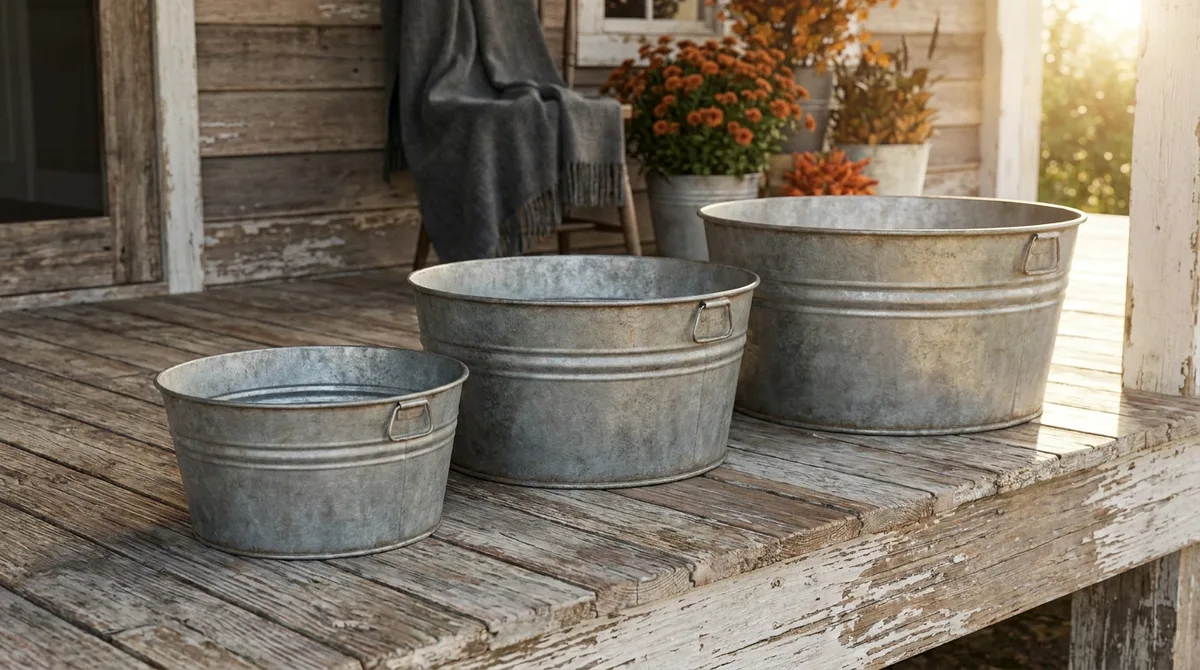
Here are listings checked on 2026-11-10. They’re snapshots, so expect drift.
| Size and shape | Typical use | Listed price seen |
|---|---|---|
| 4.25 to 10.5 gallon round | Herb planter, ice bucket | Typically the low end of the range |
| 15 gallon wash tub | Laundry, storage | $34.99 at a farm store |
| 17 gallon round | Party cooler, planter | $54.49 at a hardware outlet |
| 16 gallon oval | Drinks, bath soak, blooms | $72.49 at the same outlet |
Walmart’s range stretched from about $8 to $179 across 126 items. Makers such as Behrens, Miller Manufacturing and Little Giant sell the sturdier farm-style tubs.
How do you choose the right galvanized tub for your project?
Choose by the job, then by thickness. Planters need depth and drainage, coolers need a seam-tight bottom, and ponds need the thickest metal. A stock tank beats a decor tub for anything that holds water for weeks. Check the rim, the seams and the handles before you pay.
Here’s the decision rule I’d follow:
- Planting flowers: any size, but drill holes.
- Party drinks: a 15 to 17 gallon round, rinsed after use.
- Holding water for weeks: skip decor tubs and buy a livestock-grade stock tank.
- Indoor display: the thinnest, prettiest tub is fine because it never gets wet.
Decor tubs are made to look rustic on a shelf. A farm-supply wash tub is made to be abused. They’re sold under the same name, which is the sneaky part.
How do you turn a galvanized tub into a planter?
Drill several drainage holes in the bottom, add a layer of gravel, fill with potting mix and plant. Choose shallow-rooted flowers, succulents or herbs for small tubs. A planter without holes drowns roots and rusts the bottom from the inside, so the holes matter more than the plants.
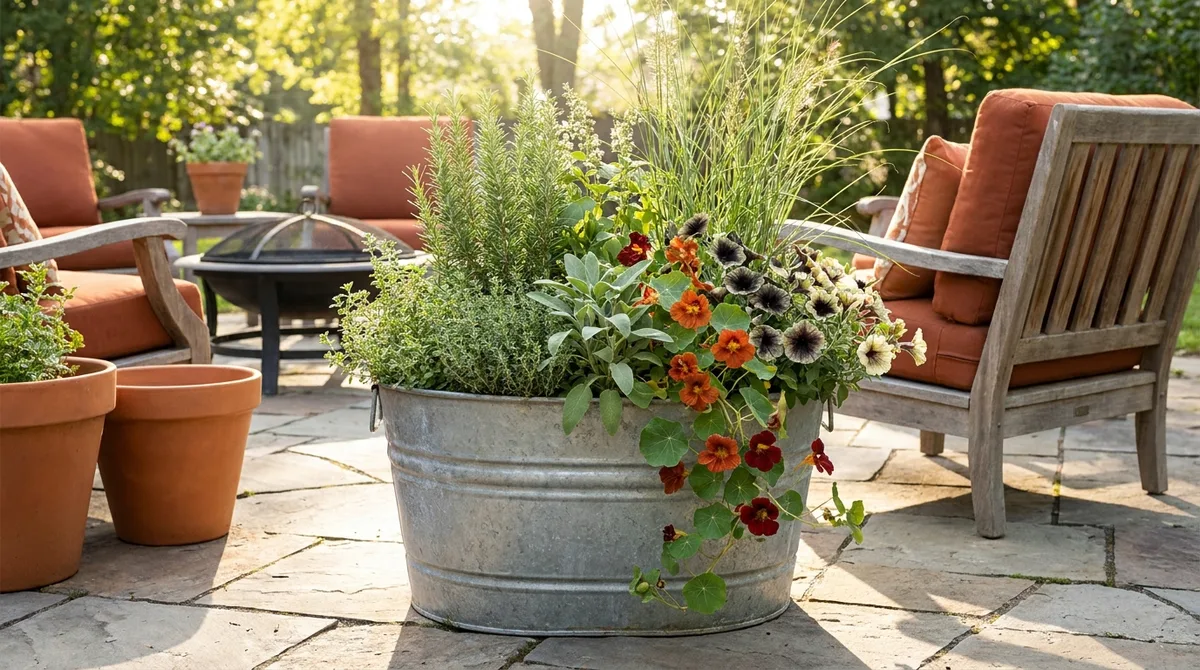
Take a typical 17-gallon round tub with three tomato plants. It can work, but a bigger tub holds moisture steadier than a small one, which is why a 10-gallon tub dries out fast in July. For a patio, a mixed tub of trailing flowers and one tall grass looks planned without being fussy.
Is it safe for vegetables? Guidance genuinely splits. One university-affiliated extension answer advises against edible crops in galvanized containers, "better safe than sorry," while other sources call it fine. I’d line the inside with a food-grade liner for edibles and move on with my life. Flowers need no such debate.
How do you use one as a drink cooler for a party?
Fill the tub with ice and sealed bottles or cans, and keep it on a stand or in the shade. Keep acidic drinks out of the bare metal. Sealed bottles and cans are the safe choice, and the tub should be emptied and dried after the party.
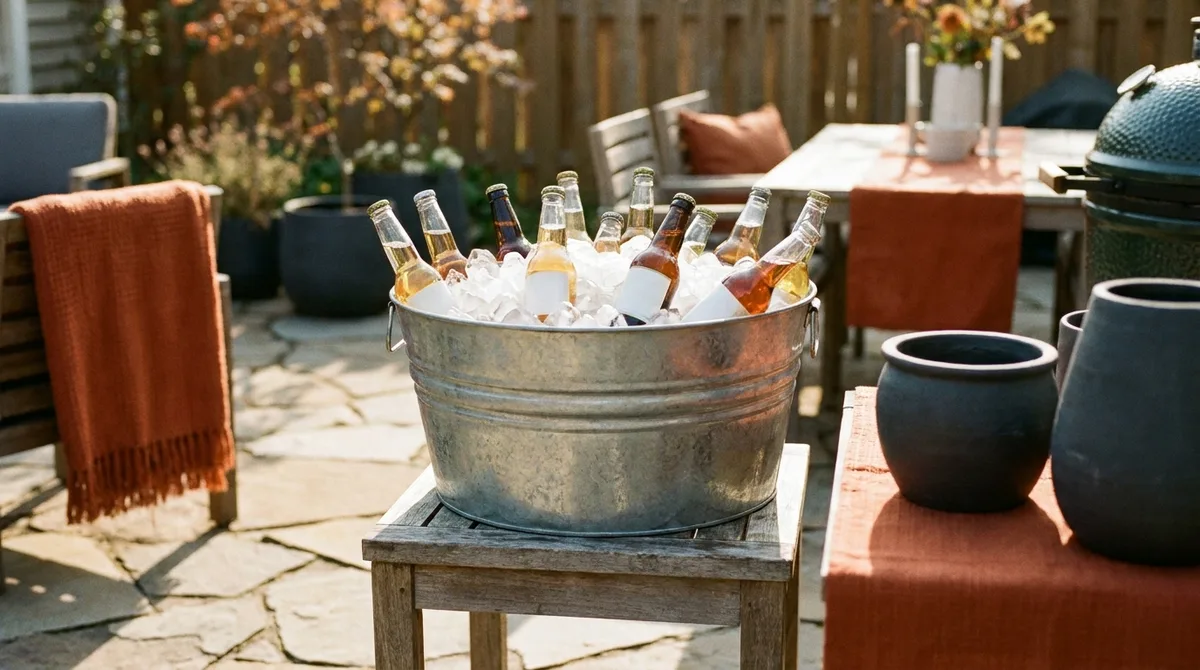
The American Galvanizers Association notes galvanized steel is acceptable for meat and non-acidic fruits and vegetables under the 1997 FDA Food Code, while acidic foods and drinks form zinc salts. So the rule is simple: chill things around the tub, not in it, when the drink is sour.
A common mistake goes like this. A host pours punch straight into the tub to keep it cold, then wonders about the metallic taste. The fix is a drink dispenser nested in ice. Sealed bottles also keep the ice-melt separate, which is easier on your tub.
Can a galvanized tub work as a patio pond, bath or cold plunge?
Yes for a decorative patio pond, with caution for the rest. Many hobbyists report fish living for years in galvanized troughs, but others add a liner as insurance, and seams can leak. Treat a bath or cold plunge as untested territory because zinc and hot water raise questions I can’t answer with reliable figures.
On r/ponds, one thread had a user testing water and finding no detectable zinc, while another recommended a liner "just in case." Others said the bottom rusts eventually and that plastic tubs last longer for small ponds. I agree with the plastic crowd on pure longevity, but a galvanized tub looks better, and that’s why people keep asking.
If you try a pond, seal the seams with a pond-safe sealer, set it level and keep water chemistry in mind. Check local rules if you’re connecting any pump to electricity, since codes vary and a licensed electrician should handle outdoor wiring. For a soaking bath, I’d skip it unless a manufacturer says the tub is designed for it.
How do you drill drainage holes without damaging the coating?
Mark the spots, use a sharp step bit or metal bit, drill slowly with light pressure, and seal the raw edges afterward. Drill from the inside out if possible, and wear gloves and eye protection. Cut edges expose bare steel, so a dab of zinc-rich paint protects them.
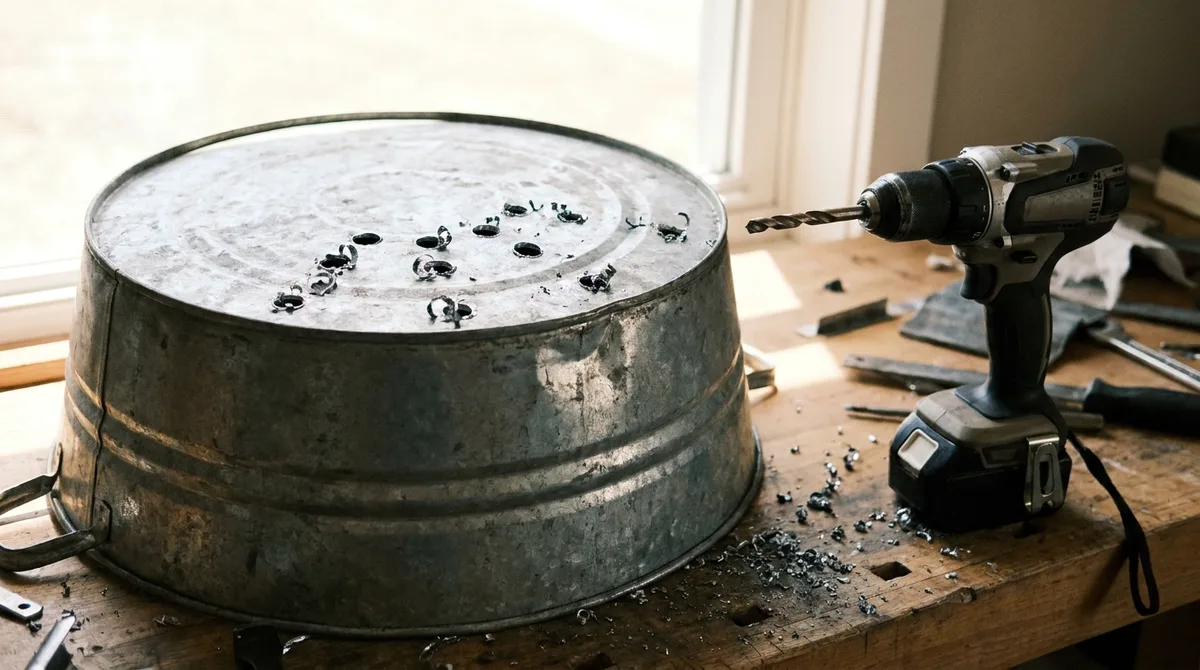
Here’s the 15-minute routine:
- Mark five to eight holes across the bottom, spaced about a hand apart.
- Tap each mark with a nail so the bit doesn’t wander.
- Drill slowly with a step bit, holding the tub steady against scrap wood.
- File the burrs flat with a metal file.
- Dab zinc-rich paint or clear sealant on every raw edge.
Tin snips work for larger holes, but they bend the metal. A drill is cleaner. Raw edges are the one place the zinc has been breached, and rust likes a breach.
Why does it rust, and how do you stop it?
A galvanized tub rusts when the zinc wears away, usually at the bottom where water stands. Elevate the tub on feet or bricks, drain it after use, and avoid leaving it wet on soil. Early white rust brushes off, while red rust needs sanding and a zinc-rich touch-up.
The myth is that galvanized never rusts. It can, and bottoms go first. Say a tub sits on a mulch bed holding a few inches of rainwater. Moisture gets trapped under it with nowhere to evaporate, so rust can show up within a season or two. Lift it and the same tub has a better chance of staying sound.
For the galvanized tub you want to keep, run a quick check each spring:
- Look for orange spots near seams and the base.
- Scrub with a stiff brush and vinegar water, then rinse.
- Touch up any bare steel.
- Store it upside down over winter if you can.
Which styles and finishes fit your home?
Bare galvanized suits farmhouse and industrial looks, while powder-coated or enameled colors fit modern spaces. Colored finishes look fresh but trade away some rust resistance once scratched. Rope handles, embossed rims and wooden stands change the mood more than the tub itself does.
Farmhouse styling loves a battered patina and a rope handle. Industrial rooms prefer bare metal with a wheeled stand. For something softer, a matte black or sage finish works nicely as a towel or blanket bin.
Indoor ideas are endless: firewood storage, toys, rolled towels or magazines. I’d keep indoor tubs dry and sealed with a clear coat, then save the planting for the patio.
In a bathroom, a tub like this sits better as a towel bin than as a soaking tub. If you want a real soak, compare it with a garden tub built for bathing.
What are 12 galvanized tub ideas for home and patio?
Beyond planters and coolers, a galvanized tub works as firewood storage, a toy bin, a laundry basket, an ice bucket, a herb planter and more. Pick dry, indoor jobs for thin decor tubs, and save wet jobs for thick, drilled or lined ones. The ideas below cover twelve uses.
- Flower planter with drainage holes.
- Party drink cooler on a stand.
- Decorative patio pond with a liner.
- Herb planter for a sunny step.
- Succulent planter, which suits shallow tubs.
- Firewood or kindling storage by the hearth.
- Toy or blanket bin in a family room.
- Laundry basket for a mudroom.
- Towel or magazine bin in a bathroom, a small touch from our bathroom remodel ideas.
- Ice bucket for a small gathering.
- Boot and umbrella tray by the door.
- Shelf display piece, empty and dry.
Ideas 6 to 12 stay dry, so rust barely matters. Those are the easiest wins if you hate maintenance.
Is a galvanized tub better than plastic or a stock tank?
It depends on the job. Plastic is lighter, cheaper to replace and never rusts, but looks plain. A livestock stock tank is thicker and better for holding water for weeks. A galvanized decor tub wins on looks for planters, drinks and display. Choose by use, not by the name on the label.
For a small pond or bath-style soak, plastic or a stock tank is the safer pick, and a purpose-built garden tub is safer still for bathing. For a porch planter or party cooler, the galvanized tub’s look is hard to beat. Copper and enameled tubs look richer, but they cost more and need their own care. My verdict: galvanized for style, a stock tank for function, plastic for pure low maintenance.
Frequently Asked Questions
How many gallons is a standard galvanized tub?
There’s no single standard. Common sizes run from about 4 gallons to 17 gallons, and Miller Manufacturing lists round tubs at 4.25, 10.5, 13.75, 15 and 16.75 gallons. A 15 to 17 gallon round tub is the usual choice for drinks or a large planter.
Is a galvanized tub waterproof?
Yes, while the seams and coating are intact. The steel holds water, but seams can leak over time and thin decor tubs dent easily. If you want to hold water for weeks, choose a livestock-grade stock tank and test it with a hose first.
Can you put food in a galvanized tub?
It depends on the food. The American Galvanizers Association says galvanized steel is acceptable for meat and non-acidic fruits and vegetables under the 1997 FDA Food Code. Acidic foods and drinks react with zinc, so avoid them. Sealed packages or a food-grade liner remove the question entirely.
Does a galvanized tub leach zinc into soil?
Some zinc can transfer in small amounts, and sources disagree on how much matters. A food-grade liner removes the worry for vegetables. For flowers and ornamentals, most gardeners don’t bother. No reliable figures exist that I can point to, so I won’t invent one.
Do you need to seal a galvanized tub?
Not always. Bare zinc protects itself. Sealing helps when you cut holes, paint the tub or plan to keep water in it for long periods. A clear sealant on raw edges slows rust. For indoor display, a clear coat keeps the patina from changing.
How do you remove white rust?
Scrub with a stiff brush and a mix of water and white vinegar, then rinse well and dry the tub. White rust is a surface zinc film, not a failure. If you see orange or brown instead, sand that spot and touch it up with zinc-rich paint.
Can a galvanized tub sit outside in winter?
Yes, but empty it first. Water that freezes inside can bulge seams and crack coatings. Turn the tub upside down or store it in a shed. If it’s planted, drain it as much as possible and keep the base off wet ground.
Can you paint a galvanized tub?
You can, with the right prep. Clean it, scuff it lightly, apply a metal primer made for galvanized surfaces, then topcoat. Skipping primer makes paint peel. Remember that paint can hide early rust, so check the metal first. Near food or fish contact, read the product label before using zinc-rich paint or sealer.
Will a galvanized tub rust on a deck?
It can, mainly at the bottom, if water collects under it. Wet wood and wet metal in contact keep each other damp. Put the tub on small feet or a rack so air can move beneath, and the deck stays cleaner too.
Is it true that galvanized never rusts?
No. That’s the myth. Galvanizing slows rust a lot, but thin coatings wear down, edges get scratched and standing water finishes the job. Think of the coating as a long delay, not a guarantee. Keep it dry, elevated and touched up.
Conclusion
The best galvanized tub isn’t the shiniest one. It’s the one matched to the job, drilled when it needs holes, kept off wet ground and rinsed after anything acidic. Treat the zinc as a coating you’re helping, not a magic shield.
Back to our soggy lemonade story: the fix was a dispenser and two bricks under the tub. Ten minutes and nobody noticed anything wrong, which is the whole point of good decorating.
Your next step is simple: decide the job first, then choose the tub. If you also want a proper soak, the garden tub guide is a good next read. So, what will your first galvanized tub end up holding?