Vintage Christmas Decorations: Spot Real Finds, Skip the Fakes
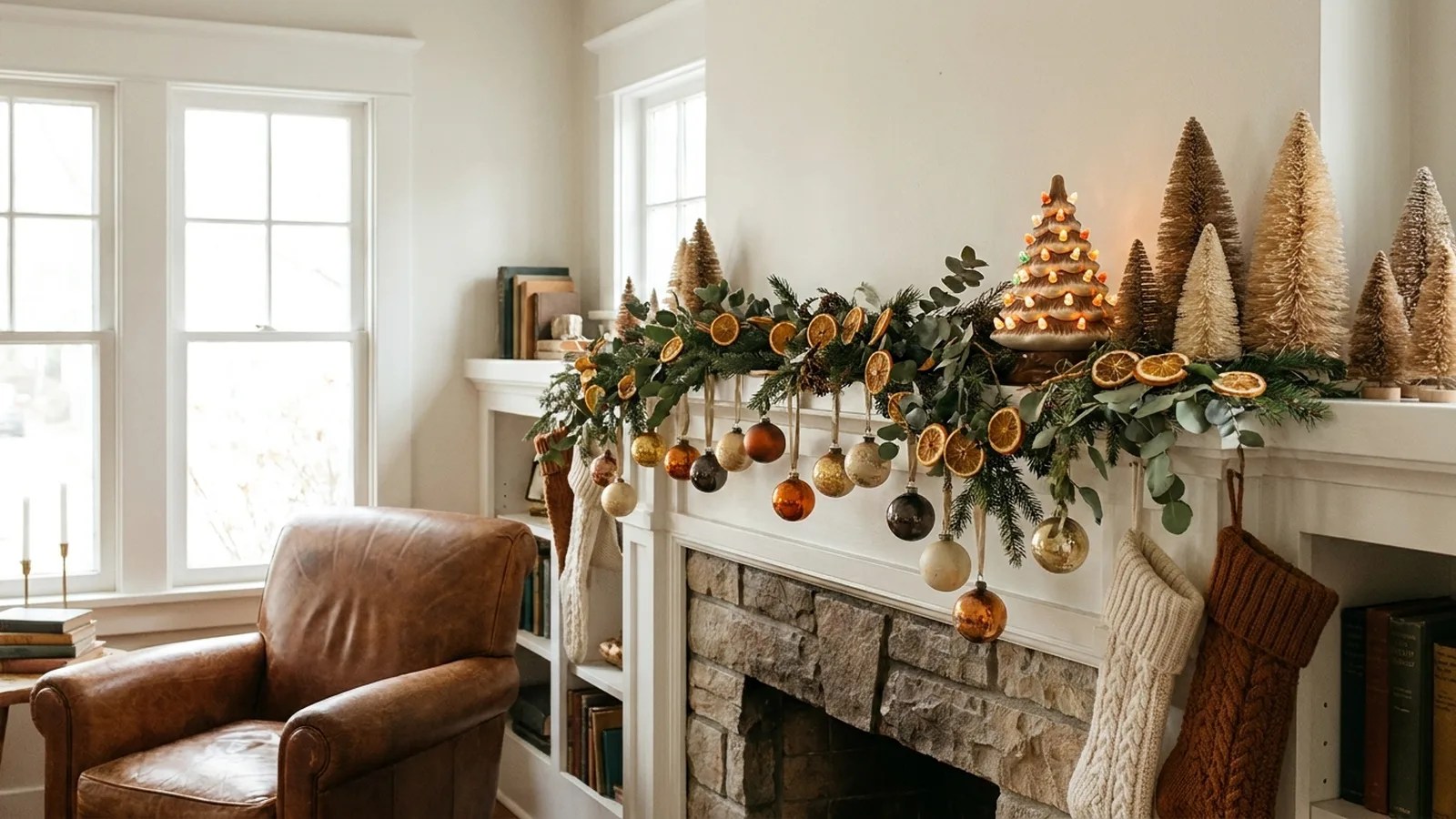
Say you walk into an estate sale on a cold Saturday morning and spot a dusty box of glass ornaments for a few dollars. Your heart races. Is it a score, or a tote of faded junk that will sit in your garage until spring? Most of us can’t tell on the spot, and that’s the whole problem with vintage christmas decorations.
Here’s the twist. The prettiest old pieces are often the cheapest, and some "vintage" listings online turn out to be much newer than they claim. Old glass breaks, old lights can be a fire risk, and an inherited box may be worth far less than the family story says.
This guide shows you how to recognize the real thing, buy it without overpaying, and display it safely. It’s one part of building a cozy vintage aesthetic across your whole home.
Executive Summary
You can get a warm, nostalgic Christmas look for far less than you’d think, and you don’t need a house full of antiques to do it. The smartest approach is to mix one or two genuine old pieces with new vintage-style ones.
Here’s what you’ll learn. First, what actually counts as vintage and which items are worth hunting, from Shiny Brite glass to blow molds and ceramic trees. Second, how to tell a real find from a reproduction using caps, silvering and materials. Third, why old lights deserve more caution than old ornaments, and why reproductions are often the safer choice there. Fourth, how to store and sell what you own.
The biggest worry is money: "Will I get burned?" Not if you buy for the look and not for resale value. Most boxes at thrift stores are priced for decoration, and that’s exactly how you should shop for them.
What counts as vintage Christmas decorations?
Vintage usually means an item is at least 20 years old but under 100, while antique means 100 years or older. In practice, shoppers use "vintage Christmas decorations" loosely for anything that looks mid-century or retro, so ask for proof of age and check the claim yourself before you pay extra.
Plenty of people just mean "traditional," and new pieces get you that look.
There are three buckets worth knowing. Genuine vintage is old and original. Reproduction is a new item copied from an old design, often by the same brand. Vintage-style is simply inspired by the era, with no copy involved. None is "wrong." The mistake is paying genuine vintage christmas decorations prices for the second or third bucket.
Which vintage Christmas decorations are worth looking for?
The best finds are Shiny Brite glass ornaments, mercury glass, blow mold figures, ceramic light-up trees, bottle brush trees, aluminum trees and bubble lights. Each is easy to recognize, reasonably easy to find, and usually has a modern reproduction available if the originals are too fragile or pricey for you.
Shiny Brite is the headline act. According to The Henry Ford, the line began in the summer of 1939, when Max Eckardt and a Woolworth representative got Corning to convert its ribbon machines to make ornament blanks. Corning soon made over half of the ornaments on American trees. During the wartime years of 1941 to 1945, cardboard and string stood in for metal caps, and metal caps returned after 1945, so a cardboard cap suggests wartime production.
| Item | Why people like it | Watch out for |
|---|---|---|
| Shiny Brite glass | Soft colors, easy to find | Thin silvering, rust on caps |
| Mercury glass | Silvery glow, heavy feel | Flaking inside, cracks |
| Blow mold figures | Porch charm, durable plastic | Sun fading, cracks |
| Ceramic trees | Warm colored bulbs | Missing bulbs, old wiring |
| Bottle brush trees | Cheap, tiny, easy to display | Shedding, dust |
| Aluminum trees | Bold mid-century drama | Needs a color wheel, no lights on the tree |
I’d start with blow molds and bottle brush trees. They’re forgiving, cheap and hard to ruin. Save mercury glass for later, once your eye is trained.
How do you tell real vintage from a reproduction?
Check the cap, the silvering, the weight and the wear. Original glass ornaments tend to show age consistently, such as dulled interior silvering, tarnished caps and fine scratches. Reproductions often look suspiciously perfect, with bright plastic or crisp new paint. If everything looks flawless, be skeptical, but no single check proves anything.
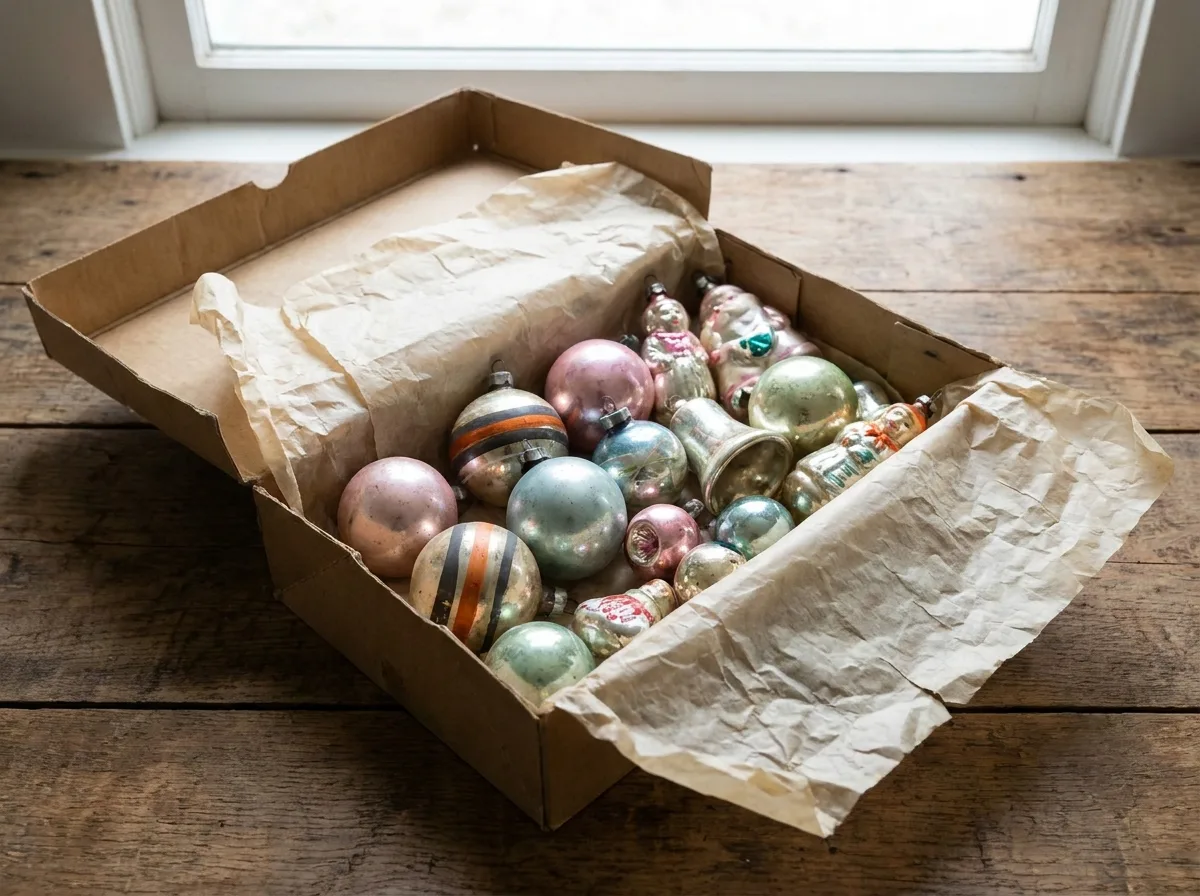
A common version of this mistake goes like this: a shopper sees a "1950s" ornament online, pays a premium, and receives a lightweight plastic ball with a modern sticker. As a rule of thumb, an old ornament usually shows uneven wear from handling rather than a uniform glossy finish.
These are general rules of thumb for under a minute, and none is proof on its own:
- Look at the cap. Cardboard caps suggest wartime production, while old metal caps often show rust or dulling.
- Hold it to light. Aged silvering often looks uneven or cloudy.
- Feel the weight. Glass generally feels cooler and heavier than plastic.
- Look for markings. Foreign novelties are often stamped, and a missing mark isn’t proof of anything.
A reproduction you love is still a fine decoration. Just don’t pay antique prices for it, and for anything priced high, ask a qualified appraiser to assess it first.
Where can you find vintage Christmas decorations without overpaying?
Estate sales, thrift stores, antique malls, flea markets, Etsy and eBay all work. The cheapest finds usually come from estate sales and thrift bins, where sellers often price for clearing space. Online sellers tend to charge for convenience, so compare listings and read condition notes first.
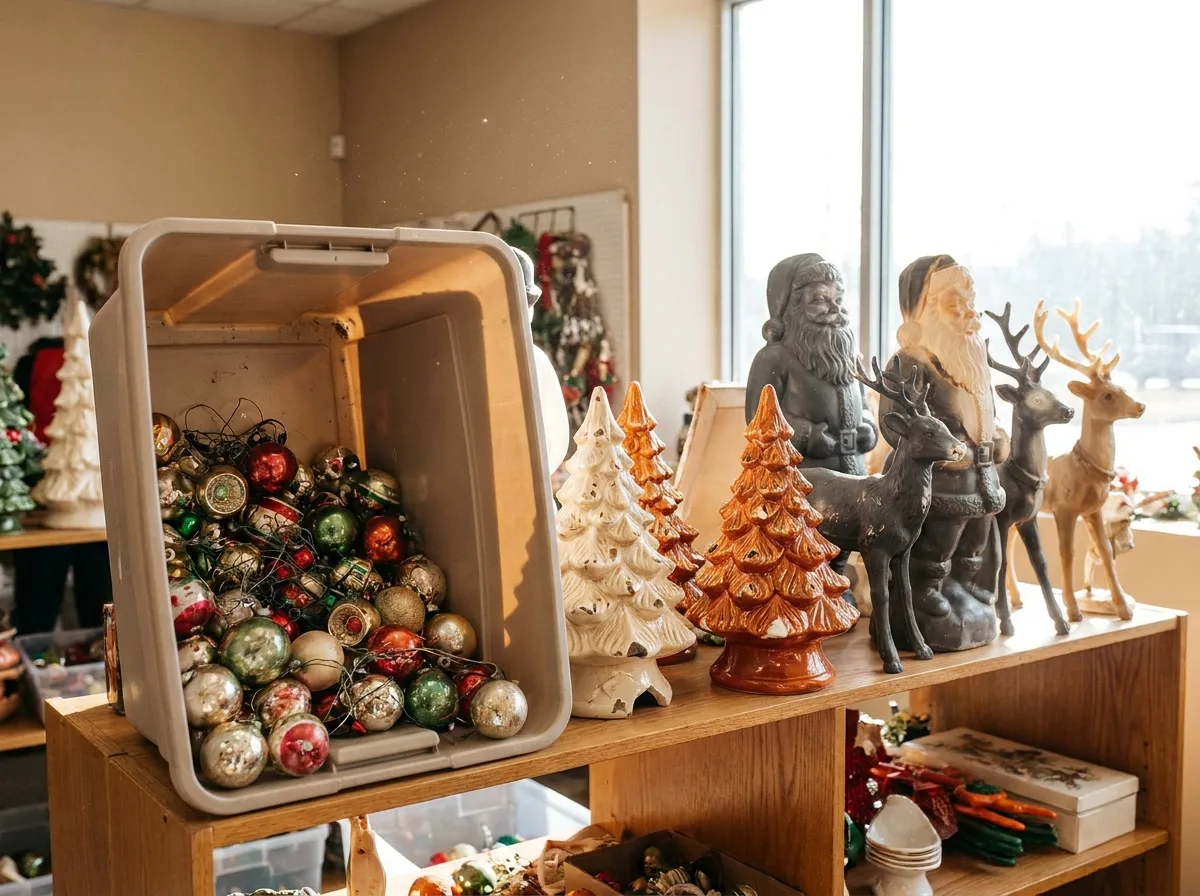
Say you spot a tote of glass ornaments and lights at a thrift store for under ten dollars. That sort of lot shows up in thrift threads all the time, and the fun part is that it’s priced for clearing space, not for collectors.
Online, search with condition words like "chipped," "faded" or "lot" and you’ll often find the best bargains, because sellers undervalue rough pieces.
Budget move for vintage christmas decorations: buy new vintage-style garland, a wreath and stockings, then add two or three real finds.
How do you style an old-school Christmas look without a museum feel?
Mix old and new, repeat a limited color palette, and layer different heights. Put a few real pieces where people can see them and group the rest in odd numbers. This keeps your vintage christmas decorations lived in, not staged, and protects fragile glass from kids and pets.
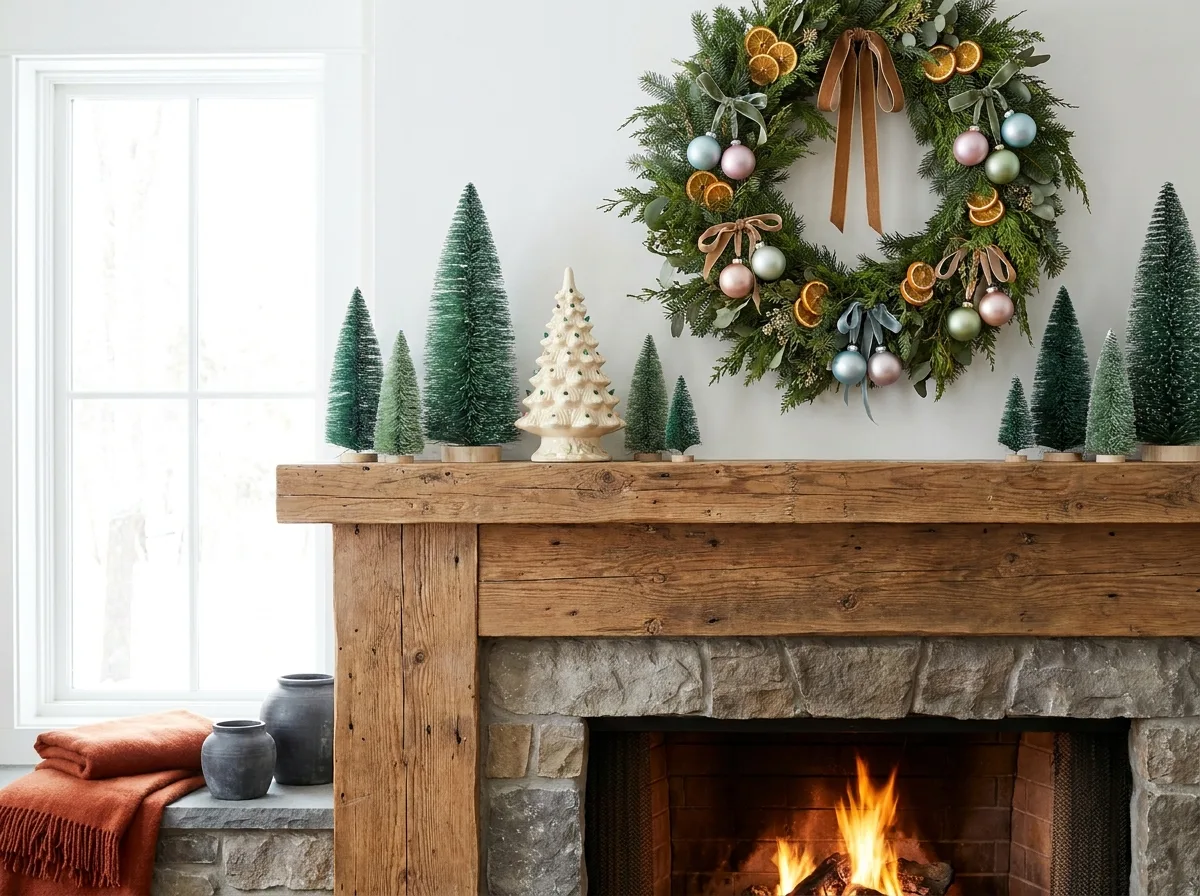
One or two vintage christmas decorations per room feel lived in. Fifty start to look like a shop display.
- Tree: Use a color theme, such as pastel Shiny Brites with white lights, and add a few unmatched keepsakes.
- Mantel: Line up bottle brush trees in a row, then add a ceramic tree on one side.
- Entry: Set a blow mold figure on the porch and a wreath on the door.
- Kitchen: Display retro mugs and glass on an open shelf.
A common version of a styling mistake is hanging every ornament at once. Say a homeowner puts up two hundred pieces and the tree turns into visual noise. The fix is to pull half off, group the rest by color, and move the best pieces to eye level.
Are vintage Christmas lights safe to use?
Not always. Old light strings can have cracked sockets, frayed wires and loose connections, and those are real fire hazards. Inspect every set before plugging in, throw away damaged ones, and consider new lab-tested reproduction bulbs if you love the retro look but want fewer worries.
This is where nostalgia hits a wall. The U.S. Consumer Product Safety Commission advises checking lights for cracked sockets, frayed or bare wires and loose connections, and throwing out damaged sets. It also says to use no more than three standard sets per extension cord, to never use electric lights on a metallic tree, and to skip lighted candles on trees.
Aluminum trees glow with a color wheel placed outside the tree, never with strung lights. If your ceramic tree has an old cord, have a qualified electrician look at it. Codes vary, so don’t guess.
Wear gloves with spun glass angel hair, and choose plastic or nonleaded tinsel. A reproduction string is cheaper than the regret. This CPSC advice comes from a 2002 news release, so check current guidance too. This CPSC advice comes from a 2002 news release, so check current guidance too.
How do you store vintage Christmas decorations so they last?
Wrap each ornament in tissue or plain paper, use sturdy plastic bins with tight lids, and keep them in a cool, dry, indoor spot. Avoid damp garages and attics where possible. Heat, moisture and pests are common causes of damage to paper, fabric and delicate glass, so a stable indoor shelf is usually safest.
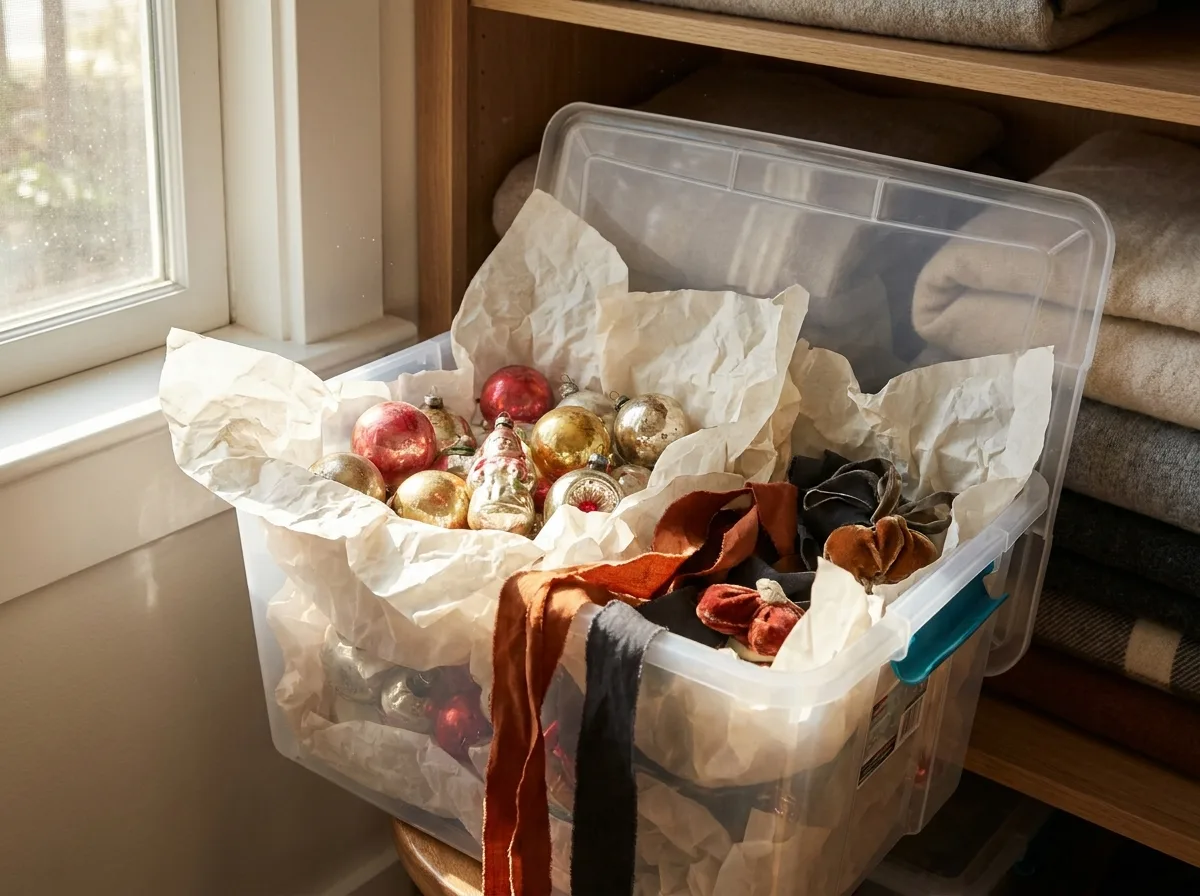
The garage question comes up constantly. Temperature swings crack glass and damp rots cardboard boxes, and rodents love paper, fabric and pine cones.
A simple system: wrap each piece, divide trays by type, label the bin, and keep delicate items on top. Common advice is plain tissue over newspaper. For cleaning, keep it gentle with a soft brush, and avoid soaking or scrubbing old ornaments.
If you’re unsure what old material you’re handling, such as inherited pre-war pieces, don’t sand, scrape or break them. Ask a professional to advise.
Can you sell inherited Christmas decorations?
Yes, but expect it to be slow. Fragile, colorful glass and rare figures sell best, while faded, plastic or mismatched items tend to sit unsold. Price for patience, since holiday goods may take many months to move outside the season, and many boxes never earn what families hope.
One pattern that keeps showing up in seller threads: someone inherits eight boxes, assumes a windfall, then finds nobody wants them. Seller anecdotes mention waiting nine or ten months for good items to sell.
So sort your vintage christmas decorations first. Keep what you love. Sell the clean, colorful glass and any unusual figures. Donate the rest. If you want a hint of the era, the connection is the real value, so the best use of a grandparent’s box is often your own tree.
Frequently Asked Questions
Is it OK to store Christmas decorations in the garage?
It’s risky. Garages swing between hot and cold, and damp air ruins paper, fabric and silvered glass. Rodents also chew boxes and fabric. If the garage is your only option, use sealed plastic bins with tight lids and keep them off the floor on a shelf. An indoor closet is safer for anything you want to keep.
Is Shiny Brite valuable?
Usually it’s more charming than valuable. Shiny Brite was mass-produced starting in 1939, so many boxes survive. Rare colors, unusual shapes and boxed sets in good shape can earn more, but common faded balls typically sell cheaply. Buy it because it looks good on your tree, and treat any resale value as a happy surprise.
What is mercury glass?
Mercury glass is decorative glass with a silvery finish that gives it a soft mirror-like glow. Construction and age vary, and newer lookalikes exist, so treat weight and interior wear as general clues only. For anything priced high, ask an appraiser to confirm what you have.
Are old ornaments safe around kids and pets?
Treat them as fragile and keep them high on the tree. Thin glass shatters into sharp pieces, and old paint may chip. Put unbreakable ornaments and reproductions within reach and save real vintage glass for the upper branches or a high shelf. If a piece cracks, pick up the shards carefully, and sweep up any chips before pets find them. Old paint can contain lead, so ask a pro before handling or scraping inherited pieces.
Are vintage Christmas lights safe?
Only after careful inspection. Cracked sockets, frayed wires or loose connections mean the set should be thrown away, according to the CPSC. Limit extension cord loads and never put electric lights on a metallic tree. Many people choose new lab-tested reproduction bulbs to get the retro glow without the risk.
What are blow molds?
Blow molds are hollow plastic figures, like Santas, snowmen and candles,. They’re often lit from inside with a bulb and displayed on porches and lawns. Sun may fade them over time. Inspect them for cracks before buying, and have any old cord checked by a qualified electrician.
Is vintage the same as antique?
No. The common rule is that antique means 100 years or older, while vintage covers items roughly 20 to 99 years old. Sellers use the words loosely, so don’t trust the label alone. Ask for photos of the cap, base and any markings, then judge the age yourself before paying a premium.
Where should I buy vintage Christmas decorations?
Start with estate sales, thrift stores and flea markets for the best prices, then try antique malls, Etsy and eBay for specific pieces. Compare several listings and read condition notes closely. Ask for clear photos of the caps, the interior and any damage, and check the return policy.
Do old Christmas items sell in the off season?
Slowly. Good pieces sell year-round, but demand peaks from fall to December, and sellers often wait many months for the right buyer. Rare glass and unusual figures move faster than common items. If you want a quick sale, list in early fall with clear photos and fair prices.
Are reproductions worth it?
Often, yes. Reproduction ornaments, trees and lights give you the look at a lower price with fewer safety worries. Myth buster: a reproduction isn’t "fake" if it’s sold honestly. The problem is only when it’s passed off as old. For lights especially, new lab-tested versions are the smarter pick.
Conclusion
The best vintage christmas decorations aren’t the priciest ones. They’re the pieces that make your home feel like a memory you’re still making. Buy a few real finds, mix them with reproductions, and keep the fragile ones out of reach. Check every light string, store with care, and sell only what you can let go of.
Remember the estate sale box? You know what to look for. Check the caps, hold it to the light, and walk away if it’s mostly cracked.
Your next step is simple: pick one room and one color palette this weekend. Then keep going with our vintage aesthetic ideas or build a festive snack spread with these Christmas charcuterie board ideas.
So what’s the one old ornament in your family’s box that you’d save first?