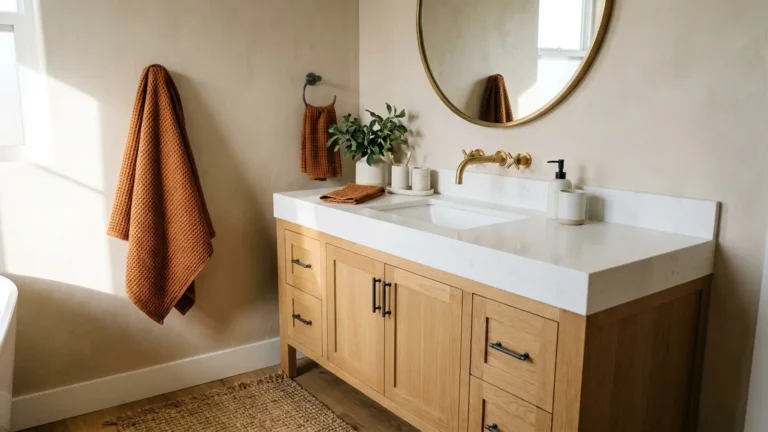
Bathroom Door Styles That Work (and the Ones to Skip)
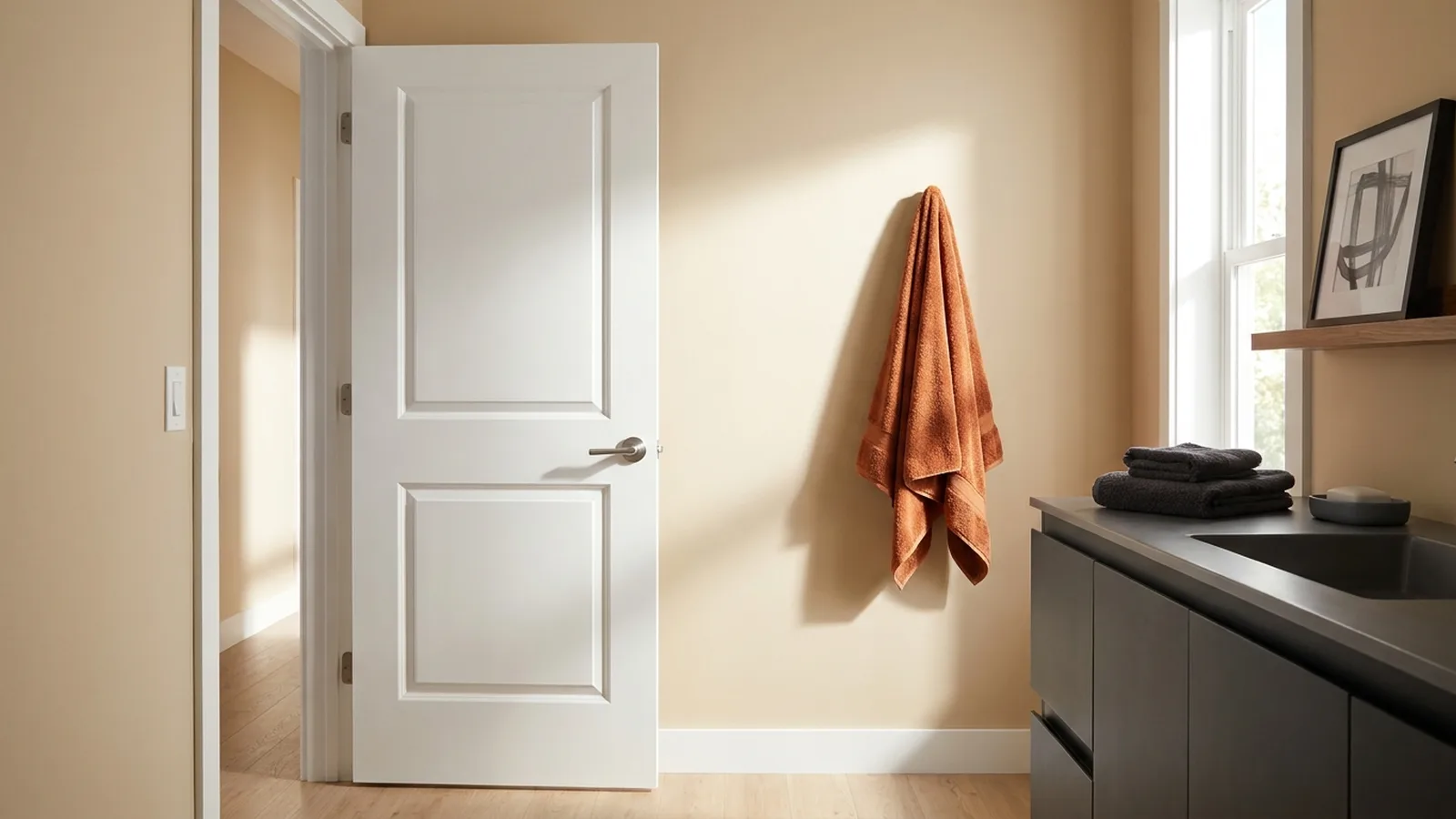
Say you just bought a 1960s house with a narrow bathroom, and the old hinged door slams into the vanity every time someone walks in. A contractor suggests a sliding door. A Pinterest board says pocket door. Your cousin swears by barn doors, right up until you remember a hotel bathroom where every sound seemed to travel.
Here’s the part most people miss: a bathroom door has a harder job than any other door in your house. It has to block sound, survive steam, lock without drama, and still open when someone needs help.
I’ll walk you through the real options, what each one costs you in daily annoyance, and which ones I’d skip. This is one part of planning a bathroom remodel, so if the whole room is on the table, start there too. Ready to stop guessing?
Executive Summary
The best bathroom door for most homes is a plain hinged, solid core door that swings into the room, with a privacy lock that has an emergency release. It’s boring, and it works. Fancier styles solve one problem (usually space) and create several others (noise, smell, sticking, repairs).
You’ll learn how pocket, barn, bifold, French and glass doors hold up according to what owners report after daily use, how to match a style to your room size, and how to measure door width and swing clearance before you buy. You’ll also see illustrative cost drivers, so you can judge a quote without trusting a made-up price.
The biggest objection is usually "my bathroom is too small for a swinging door." Often a narrower slab or an outswing fixes that without opening a wall. We’ll cover when it doesn’t, including when a pocket door is worth the mess. You’ll also get a quick lock-safety rule, because a door that locks but can’t be opened from outside is a risk, not a feature.
Which bathroom door style fits your room?
Match the bathroom door to the problem you’re solving. A hinged door is the default for privacy and sound. A pocket door saves swing space but needs wall surgery. A barn door slides on the surface but leaks sound and smell. Bifold and French doors fit odd cases. Pick the simplest style that clears your floor space.
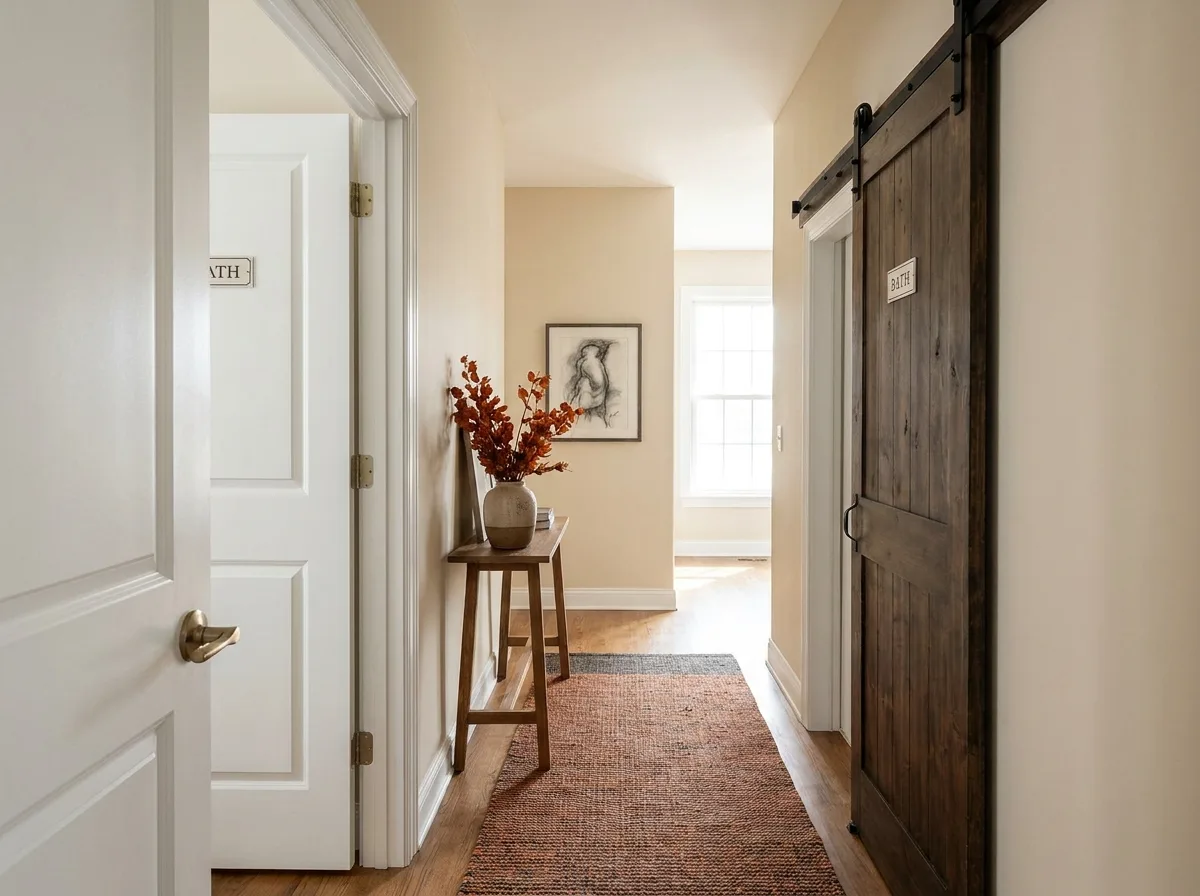
Name the real problem first: no clearance, a dated door, or poor privacy. The table judges each style by daily annoyance, not looks.
| Style | Saves space | Sound and smell | Install effort | My verdict |
|---|---|---|---|---|
| Hinged, solid core | No | Best | Low | Default pick |
| Yes | Fair | High (opens the wall) | Only with a clear wall | |
| Barn or sliding | Yes | Poor | Medium | Skip for bathrooms |
| Bifold | Some | Poor | Low | Closets, not bathrooms |
| French, frosted | No | Poor | Medium | Only with a private hall |
Space and privacy almost never share a row.
Should a bathroom door swing in or out?
Most interior doors swing into the room, and that’s the usual default for bathrooms too. An outswing door frees floor space beside the toilet or vanity, but it can open into a hallway where someone is walking. Choose an outswing only if the hall is wide enough and the lock works from both sides.
A hinged bathroom door swings in because that keeps it from hitting people passing by. A common version of the small-bathroom story goes like this: the door arcs over the toilet, so the owner hangs it to swing out instead and gains a few usable inches inside. That works fine with a standard privacy lock or bolt.
The catch is the hallway. If your door opens toward a stairwell, a second door or a busy corridor, you’ve traded one collision for another.
Are pocket doors a good idea for a bathroom?
Pocket doors slide into a hollow wall and vanish, which is perfect for tight spaces. The cost is hidden: the wall must be cut open, any wiring or plumbing inside has to move, and a load-bearing wall may rule it out. Many owners report noise, weak locks and sticking.
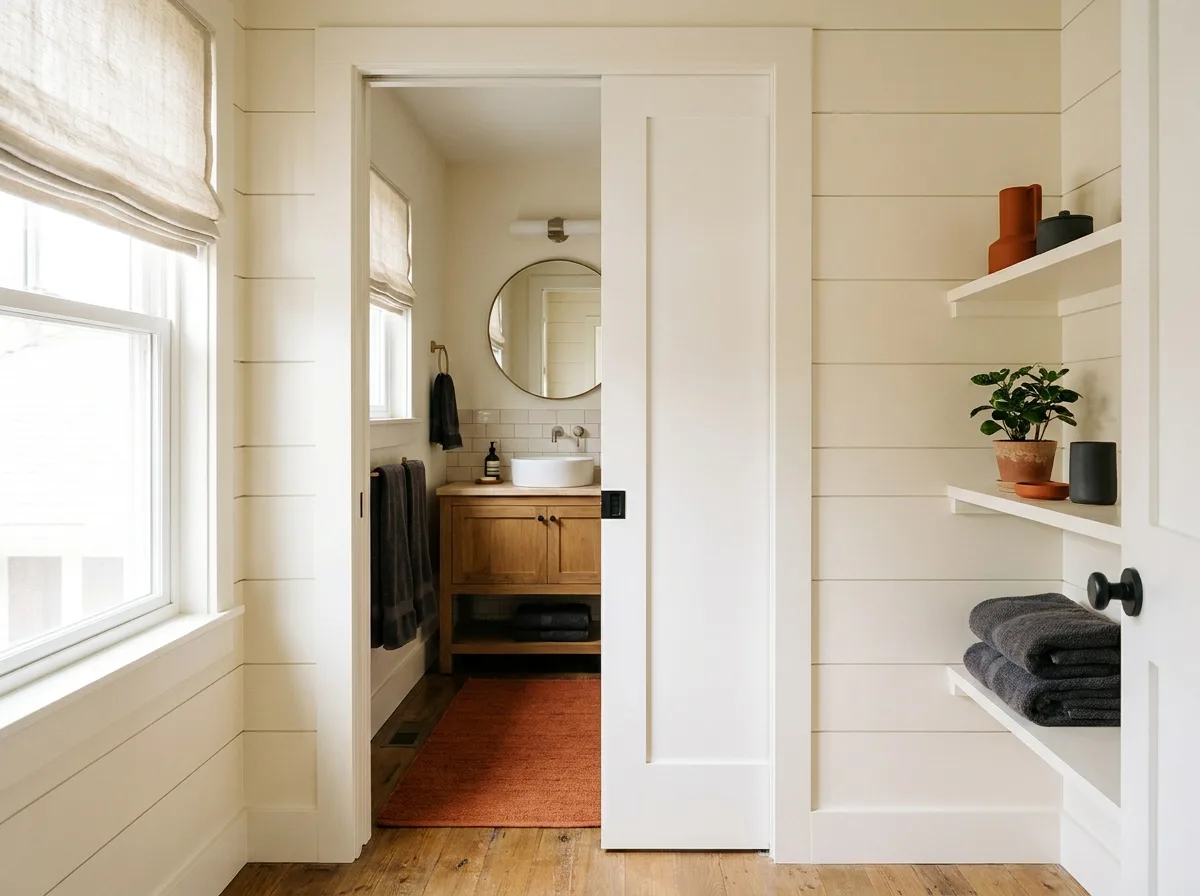
Homeowners in renovation threads are blunt about this. Some call pocket doors a pain, mostly because guests can’t work the pull or lock. Others report decades with zero issues, usually when they bought commercial-grade hardware instead of the cheapest kit (one commenter named Johnson Hardware). A very short wall can’t hold one at all.
My take: a bathroom door that slides into the wall is a wall decision, not a style decision. Ask what’s inside that wall first. If the answer is "wiring, a vent and maybe a pipe," a licensed electrician or plumber has to move them, and permits vary by area.
Are barn doors or sliding doors worth it in a bathroom?
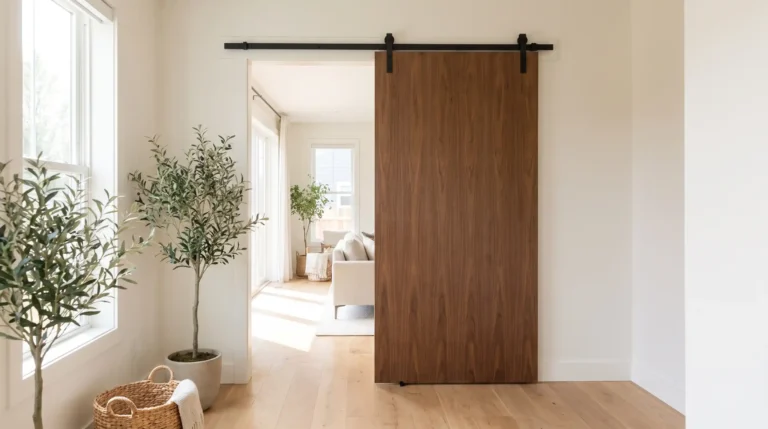
Rarely. A barn door hangs on a surface track, so it leaves gaps at the sides and bottom. Sound and odor pass through, and nobody feels private. It looks great and needs no wall surgery, but for a bathroom I’d skip it unless the room is a spare half bath.
Owners and travelers in hotel forums often complain about this style on a bathroom door, citing noise, smell and doors that stick or slip off the track. If you still love the look, you can improve it. Add a magnetic latch, a bottom sweep and edge gaskets, and use a quality kit. Our guide to barn door hardware that won’t fail shows what to look for, and the barn door overview covers styles for other rooms.
What about bifold, French and glass doors?
Bifold doors fold in half to cut swing space, but many owners say they feel flimsy after daily use. French doors with frosted glass bring light, yet they leak sound. Both suit older layouts or private spaces. For a shared family bathroom, a solid hinged door still wins.
If you must use a bifold, choose solid core and a quality track so it stops rattling. For glass, frosted or reeded panels hide shapes, but light still shows movement at night, so check the angle from the hall. The same privacy trick applies to entry doors, and our post on privacy fixes for a glass front door explains film and glass options you can borrow.
Hollow core, solid core or moisture-resistant: which holds up?
Solid core doors block more sound and resist warping better than hollow core. Fiberglass, PVC and composite doors handle steam best because they don’t swell. Plain wood works if sealed on every edge. Choose solid core for quiet, or a moisture-resistant slab if the room has no fan.
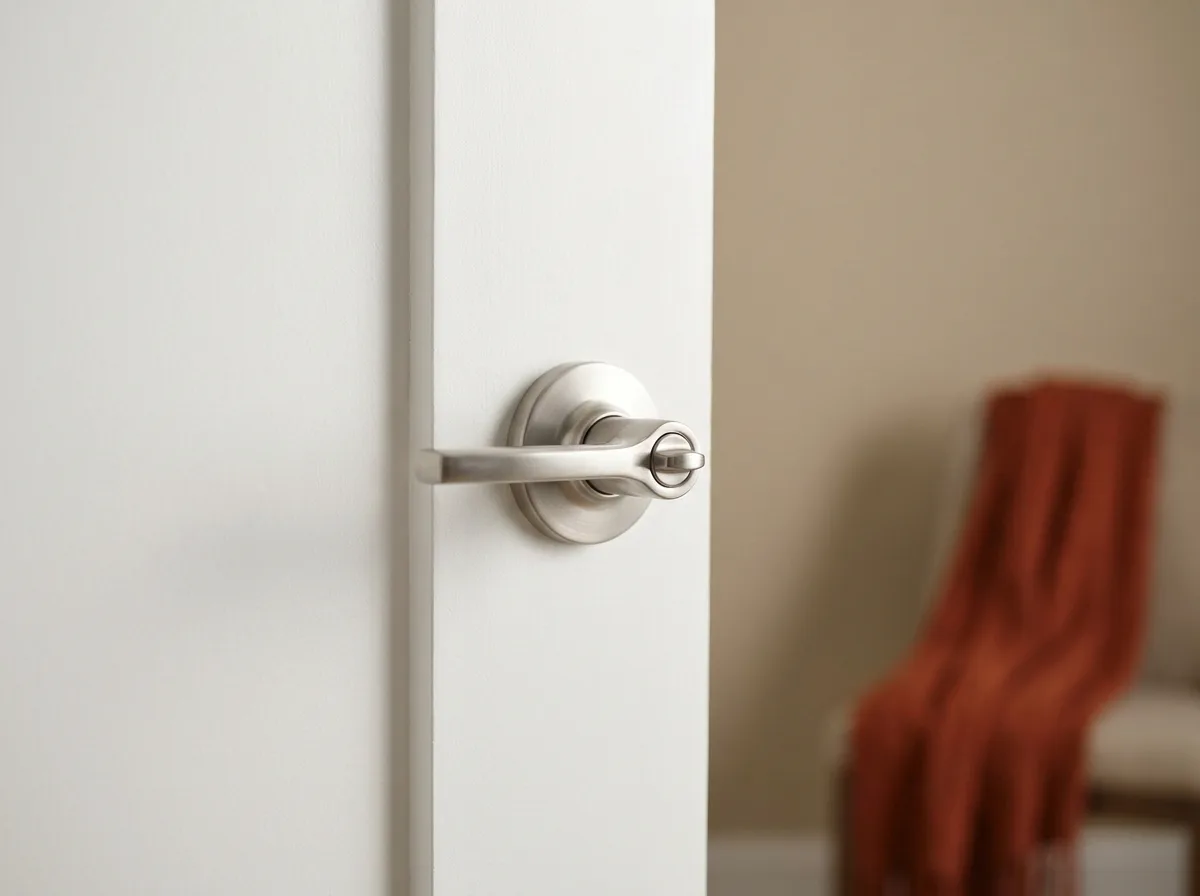
A hollow core bathroom door is a light shell with a cardboard honeycomb. It’s cheap and tinny. Solid core feels heavier and quiets a shower fan or a late-night call. Wood and MDF can swell if bare edges soak up steam, which is why people complain about doors that start sticking after a few months of showers.
The fix is cheap: prime and paint all six sides, including the top and bottom edges, and run the exhaust fan during and after showers. An undersized fan will beat any door finish.
On looks, a finish is a style choice, not a performance one. Matte black, brushed nickel or brass hardware all work if the plating is rated for humid rooms, and a satin or semi-gloss paint wipes clean better than flat. Match the hinges, knob and trim so the door reads as one piece.
How wide should a bathroom door be?
Bathroom door widths vary a lot. Owners commonly mention 28 or 30 inches in older homes and 36 inches in roomier or accessible layouts, so check your own frame. For comfort and mobility, aim for a 32-inch clear opening if your layout allows it.
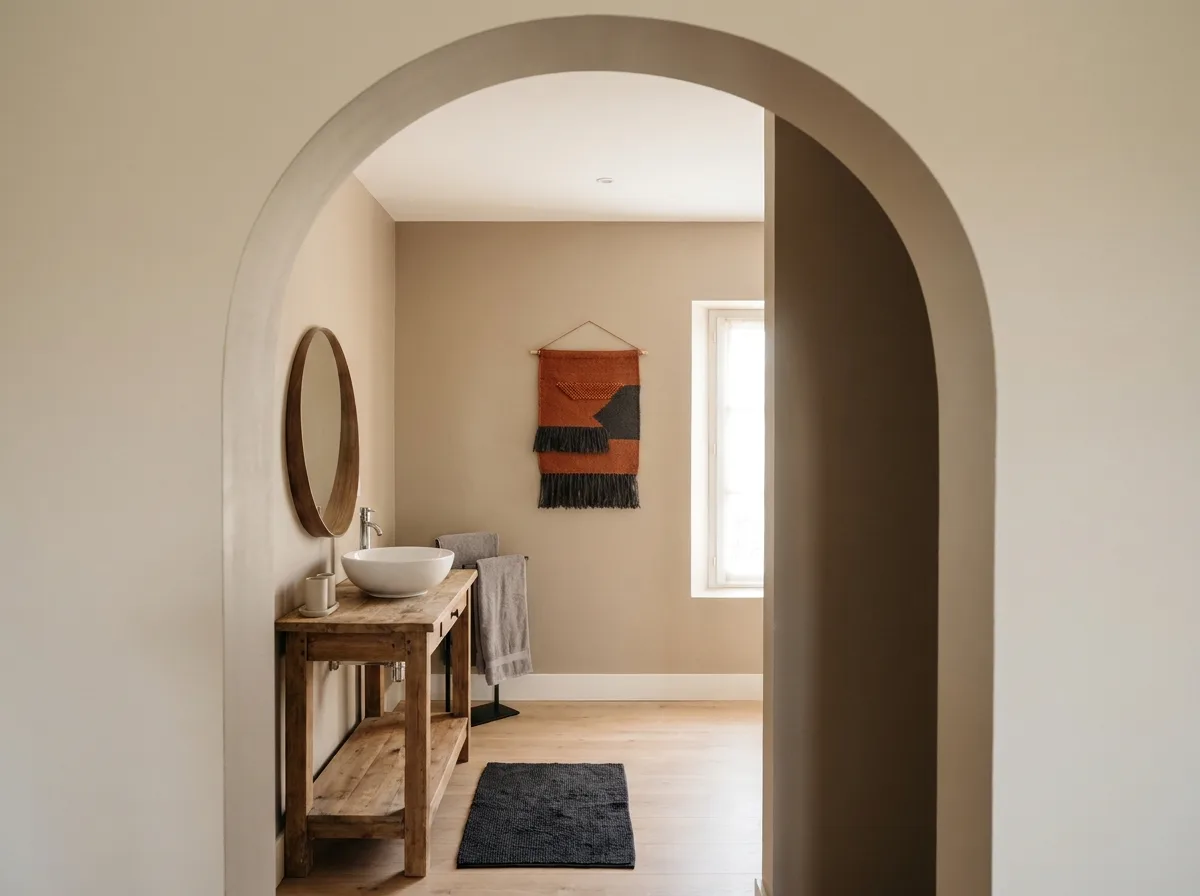
The U.S. Access Board suggests a 32-inch minimum clear width for accessible doorways, and 36 inches if the opening is deeper than 24 inches. That rule binds public buildings, not your house, but it’s a handy guide for anyone planning to stay put for decades.
Measure the rough opening, the swing arc and the distance to the vanity. A tidy vanity like a 48 inch bathroom vanity can clip an inward swing, so check the numbers before ordering.
Which lock works best, and how do you open it in an emergency?
A simple privacy knob or lever lock works best. It locks from inside and opens from outside with a small tool in the hole. Skip deadbolts and keyed locks. Everyone should know where the emergency release is, especially in a house with kids or older adults.
Push-button privacy locks often have a small pin or slot on the outside. People keep the pin on top of the frame, or use a thin flat tool as an emergency key. Test yours today, because a lock you can’t open from the hall is a safety problem, not a minor annoyance.
How much does it cost to replace a bathroom door?
Cost depends on the slab, the frame and the labor, not just the door. A basic hinged swap is the cheapest. Prehung, solid core and glass options cost more. Pocket and barn doors add framing, drywall and hardware, so the price can jump well beyond the door.
I won’t invent a price, because it varies by region, brand and who’s hanging it. Here are the cost drivers instead.
- Slab only vs prehung: a slab fits an existing frame. A prehung door includes the frame and is easier to install square.
- Material: hollow core costs least, solid core costs more, composite and fiberglass cost more again.
- Wall work: pocket doors involve opening, reframing and patching.
- Hardware: quality hinges, locks and tracks can cost more than the slab.
A comfortable DIYer can swap a bathroom door slab in an afternoon. Anything involving wiring, plumbing or a structural wall is a job for a licensed pro, and local codes vary. Plan door changes early in your bathroom remodel, before tile and trim go in.
Frequently Asked Questions
What is the standard bathroom door size?
There is no single size. Owners commonly report 28 or 30 inch doors in older houses and 36 inch doors in roomier or accessible layouts, so check your own frame. Measure your existing frame before buying, since a slab and a prehung unit are sized differently. If you’re redoing the whole room, plan door width before you order a vanity.
Can a bathroom door open outward?
Yes. An outswing door saves floor space inside a tight bathroom and works with a standard lock or bolt. The risk is the hallway, since a door that opens outward can hit someone walking by. Check the swing arc with tape, and confirm the lock opens from outside before you hang it.
Do bathroom doors need locks?
Not by any rule I can point to, because codes vary. Most households add a privacy lock for guests and teens, and it should always have an outside release. If young children live with you, pick one that opens easily from the hall, and keep the tool nearby.
Are pocket doors noisy in a bathroom?
Often, yes. The door rides on a track inside the wall, so it can rattle or scrape, and it doesn’t seal at the edges. Better tracks and soft-close hardware help, but they don’t create a sound barrier. For quiet, a solid core hinged door is better.
Is solid core better than hollow core for a bathroom?
Usually, yes. A solid core door is heavier, so it blocks more sound and feels sturdier. It won’t fix moisture problems alone, though. Seal every edge, and run your exhaust fan, or even a solid door can swell and stick. With no window in the room, a fiberglass or composite slab is the safer pick, since those materials ignore steam.
Can you use a barn door on a bathroom?
You can, but expect gaps. Barn doors hang on an exterior track, so sound and smell pass around the edges. Magnetic latches and edge gaskets help. Use the style on a half bath or a primary suite, not on a shared bathroom next to a bedroom. Our barn door hardware guide shows how to choose a kit.
What is the best door for a small bathroom?
Often just a narrower or outswing hinged door. Swapping a 32-inch slab for a 28-inch one can free up clearance without cutting a wall. Pocket doors work best when the wall is clear and long enough. Try the cheap fixes first, then spend money on the hard ones.
How do you soundproof a bathroom door?
Start with a solid core slab, then seal the gaps. Add a door sweep at the bottom, weatherstripping around the frame and a tight latch. Those steps matter more than a thicker slab, and they cost little. Check the gap under the door first, since that’s where most hallway noise sneaks through. Perfect silence isn’t realistic, but the difference is noticeable.
Can wood doors go in a bathroom?
Yes, if you seal them well and ventilate the room. Wood swells when bare edges absorb steam. Seal every edge, and use the fan during showers. In a steamy bathroom with no window, a fiberglass or composite slab is the safer bet, and it pairs well with waterproof shower floor tile.
Is it true that bathroom doors must be narrower by code?
That’s a myth I couldn’t back with a verified rule. Many older homes simply used smaller doors because less furniture moved through them, and codes differ by city. Check your local building department before changing a width, especially in a remodel that touches walls. If you only swap a slab inside the same frame, the width stays put and the question rarely comes up.
Conclusion
The best bathroom door isn’t the one in the prettiest photo. It’s the one that quietly blocks sound, shrugs off steam, locks when you want and opens when you need help. For most homes that’s still a solid core hinged door, sealed on all sides, with a privacy lock you can open from the hall.
Pocket, barn and bifold styles solve space problems, but each one charges you back in noise, repairs or wall work. Try cheap fixes first: a narrower slab, an outswing, a better fan. If you do choose a slider, buy the best hardware you can afford and tape out the clearances first.
Your next step is simple: measure your opening this week. Planning a bigger update? Our guides to a garden tub that stays or goes and waterproof shower floor tile are good next reads. So, which problem is your door really solving?