Toilet Dimensions: What Actually Fits Your Bathroom
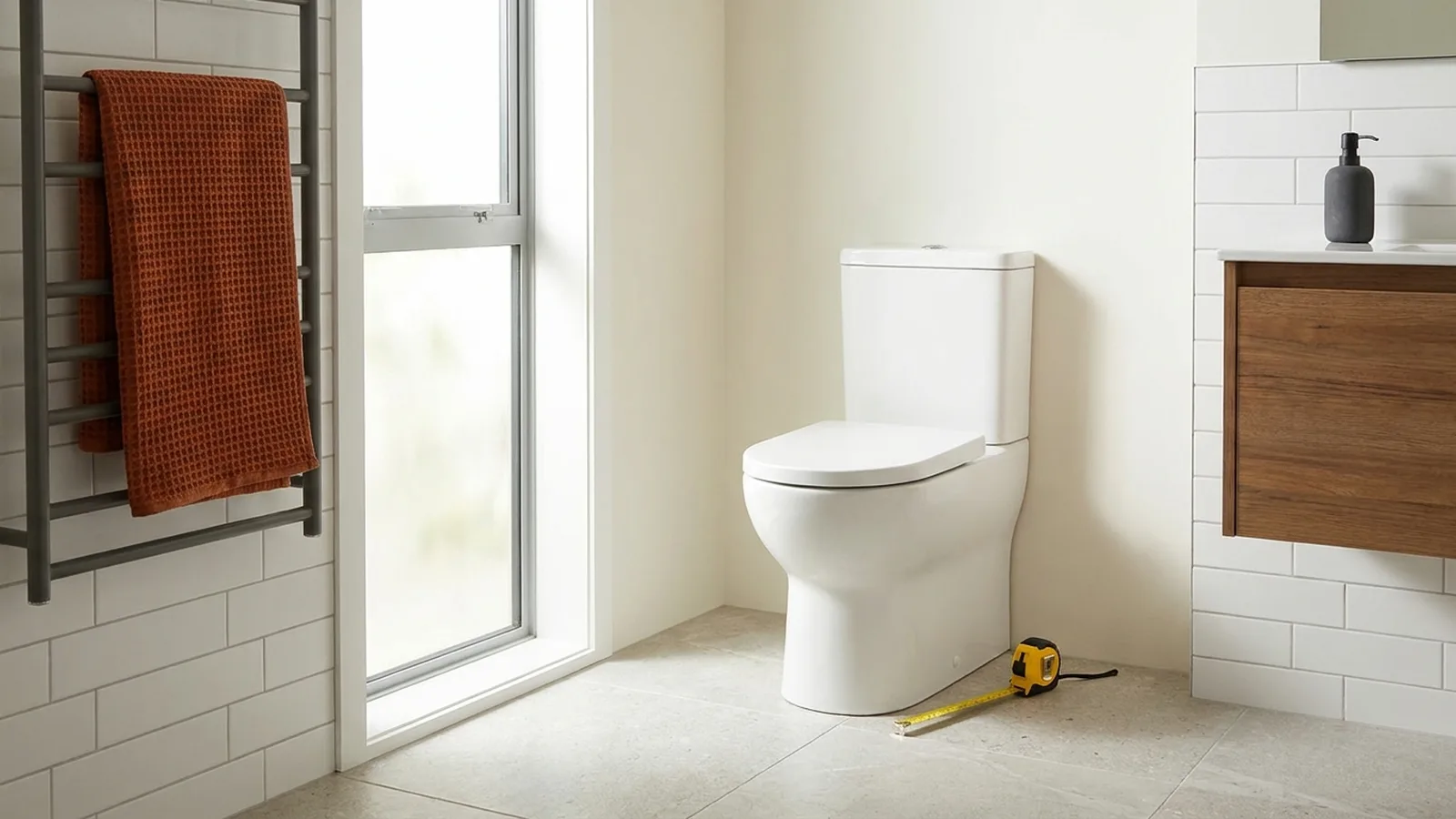
Say a homeowner orders a new toilet online on a Friday. It arrives Monday, the old one comes out Tuesday, and the new one refuses to sit flat. The tank hits the wall, or the bowl sits two inches too far forward, and the door now bumps the front rim. The store won’t take back an opened box. Most of these stories start with one wrong assumption: that toilet dimensions are standardized. They aren’t. They’re ranges, and your bathroom decides which end of the range works. A tape measure and ten minutes will tell you more than any "standard size" chart.
This guide is one part of planning a bathroom remodel, and it’s the part that saves you the most regret. You’ll get the numbers first, then the measuring method, then the traps people fall into.
Executive Summary
You’ll leave knowing which four toilet dimensions decide whether a toilet fits: rough-in, projection from the wall, seat height, and the clear space around the bowl. The overall size ranges are wide, so treat any chart as a starting guess, not a spec.
Three insights matter most. First, measure rough-in from the finished wall, never the stud or baseboard. Second, the bowl is usually the same across 10, 12 and 14 inch versions, and only the tank changes. Third, comfort height isn’t a free upgrade. Elongated bowls and taller seats both cost something.
The biggest objection is "I’m not a plumber." You don’t need to be. Everything here uses a tape measure, a pencil and one phone photo of the closet bolts.
What are standard toilet dimensions?
There is no single standard. Most toilets are about 27 to 30 inches deep, 15 to 20 inches wide and 27 to 32 inches tall overall, with the bowl rim near 14 to 15 inches high. Tanks and bowls vary by brand, so use these as a planning range, then check the exact spec sheet of the model you want.
Here is the glance table. The ranges come from retailer and reference guides, including Home Depot, Lowes and Dimensions.com.
| Measurement | Typical range | What it affects |
|---|---|---|
| Depth (projection) | 27 to 30 in | Door swing, knee room |
| Width | 15 to 20 in | Side clearance |
| Overall height | 27 to 32 in | Window sills, wall shelves |
| Rim height (standard) | 14 to 15 in | Sitting comfort |
| Rough-in | 12 in typical | Which model fits |
Wall-hung toilet dimensions play by different rules, projecting about 14 to 18 inches from the wall. I’d call that the only "small" toilet worth considering, and it comes with in-wall hardware, so it’s a remodel decision, not a swap.
What is a toilet rough-in and why does it matter most?
Rough-in is the distance from the finished wall behind the toilet to the center of the drain, which is also the center of the closet bolts. Twelve inches is the most common. Ten and 14 inches exist, especially in older homes. If this number is wrong, nothing else about the toilet matters.
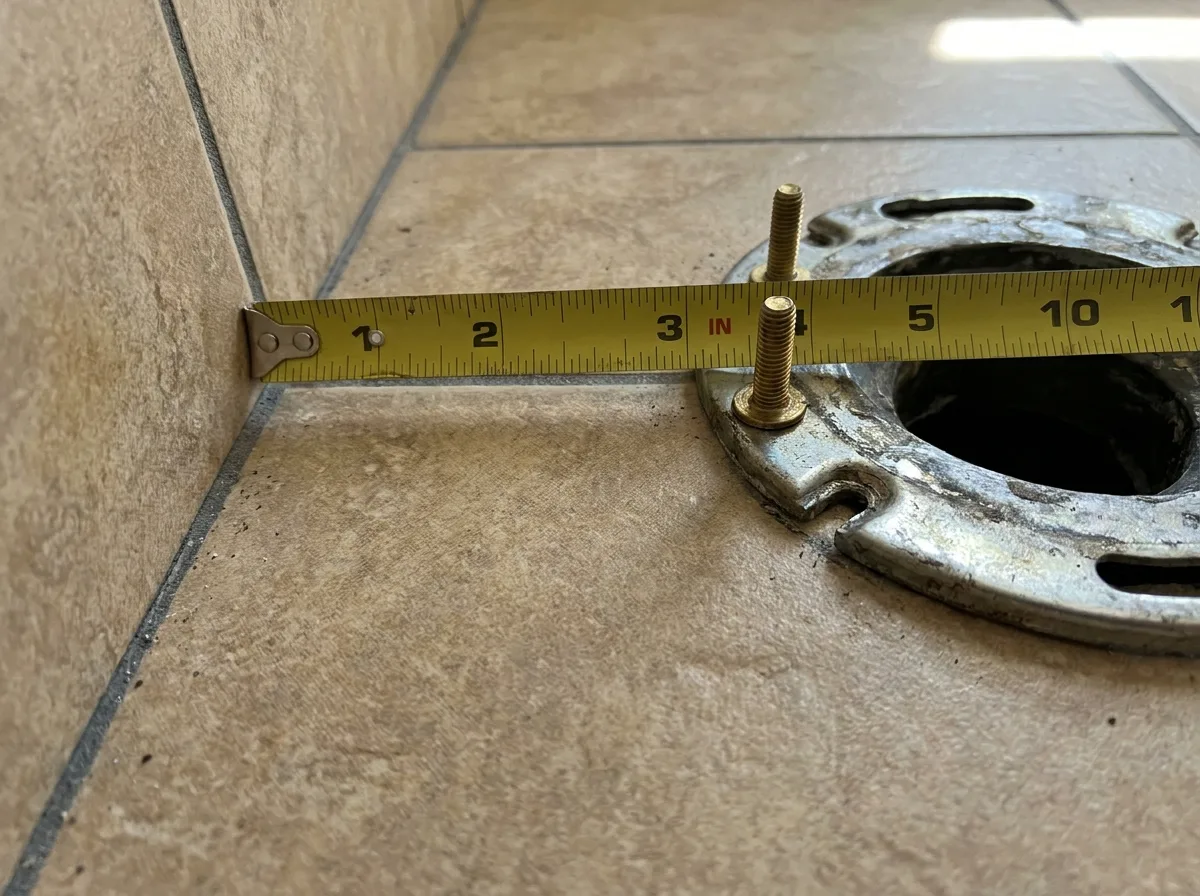
Of all toilet dimensions, rough-in is the one you can’t negotiate with. You can change a seat, a lid, even the flapper. You can’t move a drain without opening the floor.
The flange is the ring on the floor that the toilet bolts to. It sits over the drain pipe. A wax ring seals the toilet to it. Here’s the pattern that surprises people: the bowl is often identical in the 10, 12 and 14 inch versions of a model. Only the tank changes shape to match. The drain sits nearer the wall on a 10 inch rough-in, so the bowl sits closer to the wall too, but the bowl itself doesn’t shrink. Check the projection on the product drawing.
One-piece and two-piece models matter here as well. A one-piece toilet often has a slightly different depth than a two-piece with the same bowl, so compare the drawings rather than assuming. One-piece units are also heavier to lift into place.
If you’re tearing out the whole room anyway, the plumbing location is worth settling before you pick tile or a 48 inch bathroom vanity, because both crowd the toilet’s side space.
How do you measure toilet dimensions and rough-in correctly?
Measure from the finished wall surface to the center of the closet bolts. Do not measure from the baseboard, the stud or the tank. Then measure the bowl’s front rim to the wall, the distance to side obstacles, and the clear floor space in front. Write all four down before shopping.
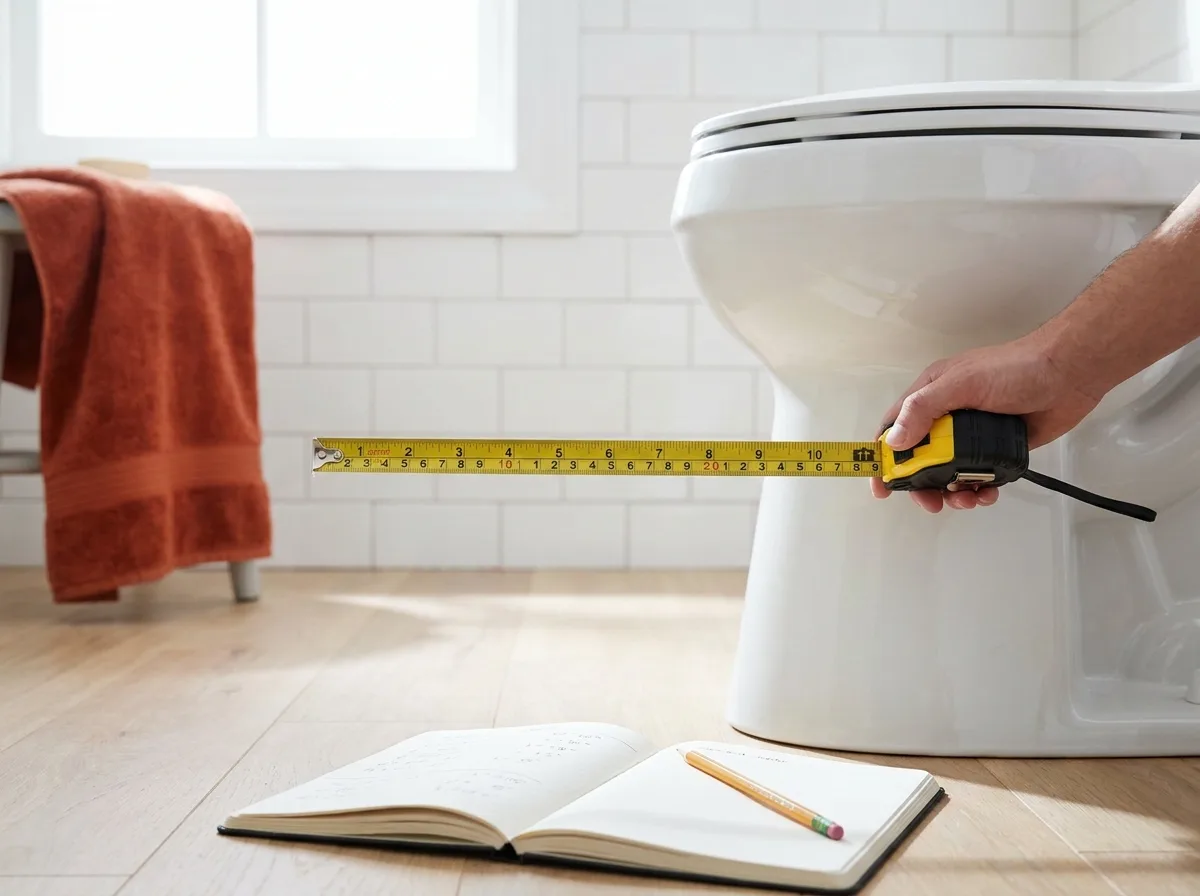
The stud-versus-wall argument is the most heated one in homeowner forums, and the answer is boring. Manufacturers measure to the finished wall. So do you. Takes about ten minutes.
- Take the old toilet’s tank lid off and look at the floor. Find the two bolt caps.
- Hold the tape against the finished wall, not the baseboard, and measure to the center of a bolt. The caps aren’t always centered, so check the flange itself if you can.
- Measure from the wall to the front of the current bowl. That’s your projection.
- Measure from the bolt center to the nearest side wall, tub or vanity.
- Measure from the front rim to the door, tub or opposite wall.
- Photograph the bolts with the tape in frame.
One common version of this mistake: a homeowner removes tile and baseboard, remeasures, and finds the number changed by half an inch. Tile added later shrinks the rough-in. Measure after the final wall surface is in, or account for it.
Can a 12 inch toilet go on a 10 inch rough-in?
Sometimes, but only if your drain sits far enough out. A 12 inch toilet generally fits if you measure about 11.5 inches from the finished wall. Under 11 inches, buy a 10 inch model, and between 11 and 11.5 inches, check the drawing first. At 14 inches, a 12 inch toilet fits but leaves a gap behind the tank.
Homeowner threads repeat this rule of thumb often enough that I’d treat it as a guide, not a guarantee. Always confirm with the model’s product drawing.
| Your measurement | What to buy | Watch for |
|---|---|---|
| 9 to under 11 in | 10 in rough-in toilet | Fewer models to pick from |
| 11.5 to under 13 in | 12 in rough-in toilet | Most common, widest choice |
| 13 to 14.5 in | 14 in model, or 12 in with a gap | Tank lid and wall gap |
| Under 9 in | Check the flange again | Claims of "8 inch" are often a 10 |
| 11 to under 11.5 in | Borderline, check the drawing | Buy 10 if unsure |
An offset flange can shift the drain a little in some cases, but a flange on concrete slab is a bigger job. A floor joist in the way is also a plumber’s call. Moving a drain may need a permit, and local code varies.
Standard, comfort or ADA height: which toilet height do you need?
Standard toilets have a rim around 14 to 15 inches high. Comfort height (also called chair height) has a seat around 17 to 19 inches. That range matches what the ADA calls accessible seat height, but ADA compliance is measured with the seat on, not the rim, and includes other rules.
Comfort height is not automatically better. It helps people with stiff knees or hips, and taller adults often like it. It can feel awkward for shorter users and for kids, whose feet may dangle. One commenter in a forum thread called it "the worst" for posture. That’s an unproven opinion, not medical fact, but it points to a real trade-off.
My view: pick comfort height for a primary bathroom shared by adults, and think twice for a kids’ bathroom. For an ADA-compliant room, read the ADA Standards or ask your local building department, since requirements cover more than seat height.
Round vs elongated: how much space does the bowl cost?
A round bowl measures about 16.5 inches from the bolt holes to the front rim. An elongated bowl measures about 18.5 inches. So elongated costs roughly 2 inches of projection. It’s more comfortable for most adults, but only worth it if the room has the space.
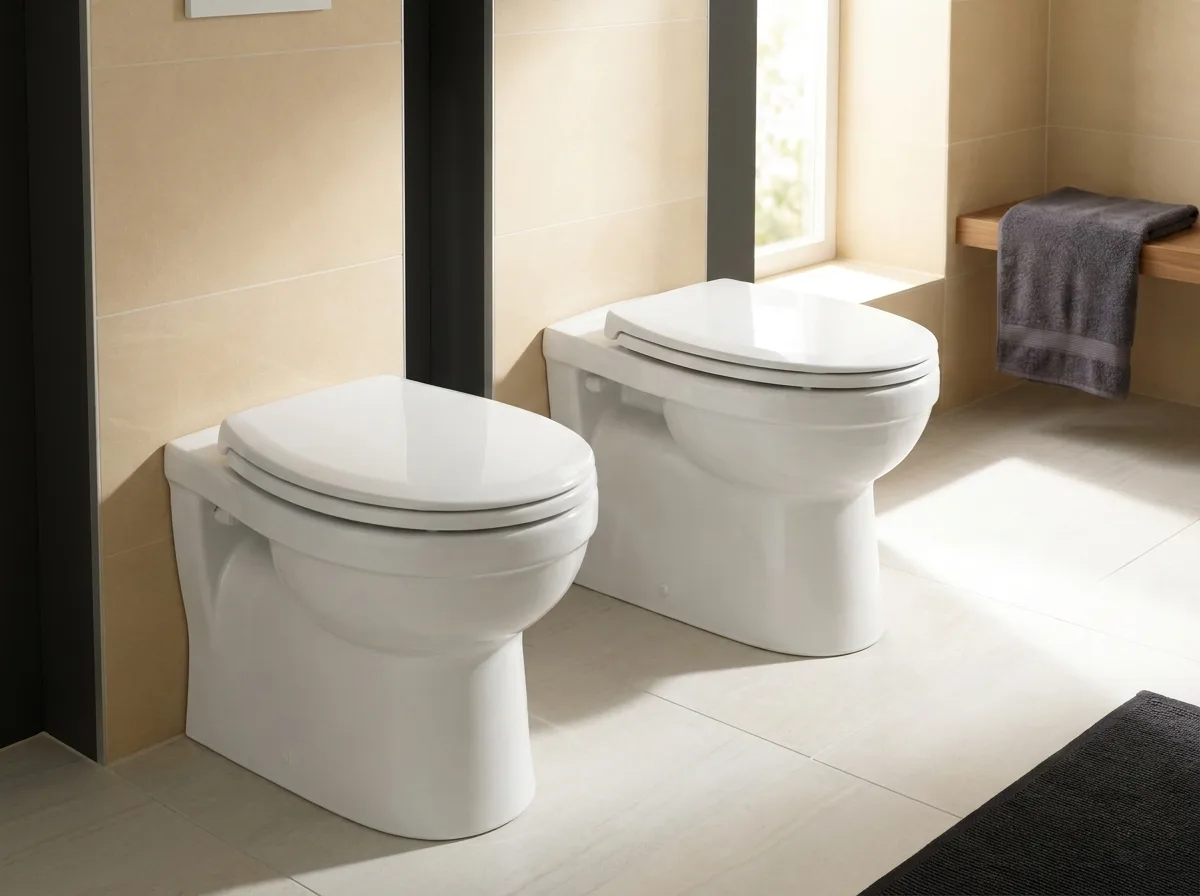
Two inches sounds small. In a tight room it decides everything. A compact elongated bowl splits the difference, usually giving the longer shape with less projection.
Seat fit matters too, because toilet dimensions drive which seat works. Measure bolt holes to the front of the bowl, and buy a seat or bidet seat (TOTO Washlet, for example) that matches round or elongated. A round seat on an elongated bowl won’t fit. A seat designed for an elongated bowl stays crooked on a round one.
Say a small powder room has 27.5 inches of toilet projection and the door swings in. A homeowner who picks an elongated model adds roughly 2 inches of bowl and finds knees touching the wall. A common fix is a compact elongated or round bowl, or a skirted or wall-hung style with a cleaner footprint.
Do your toilet dimensions fit a tight bathroom?
Model plumbing codes (IPC and UPC) call for 15 inches from the toilet’s center to a side wall or fixture, and 21 inches of clear space in front. That makes a 30 inch minimum width. Codes vary locally, so check yours, especially for a remodel or permit.
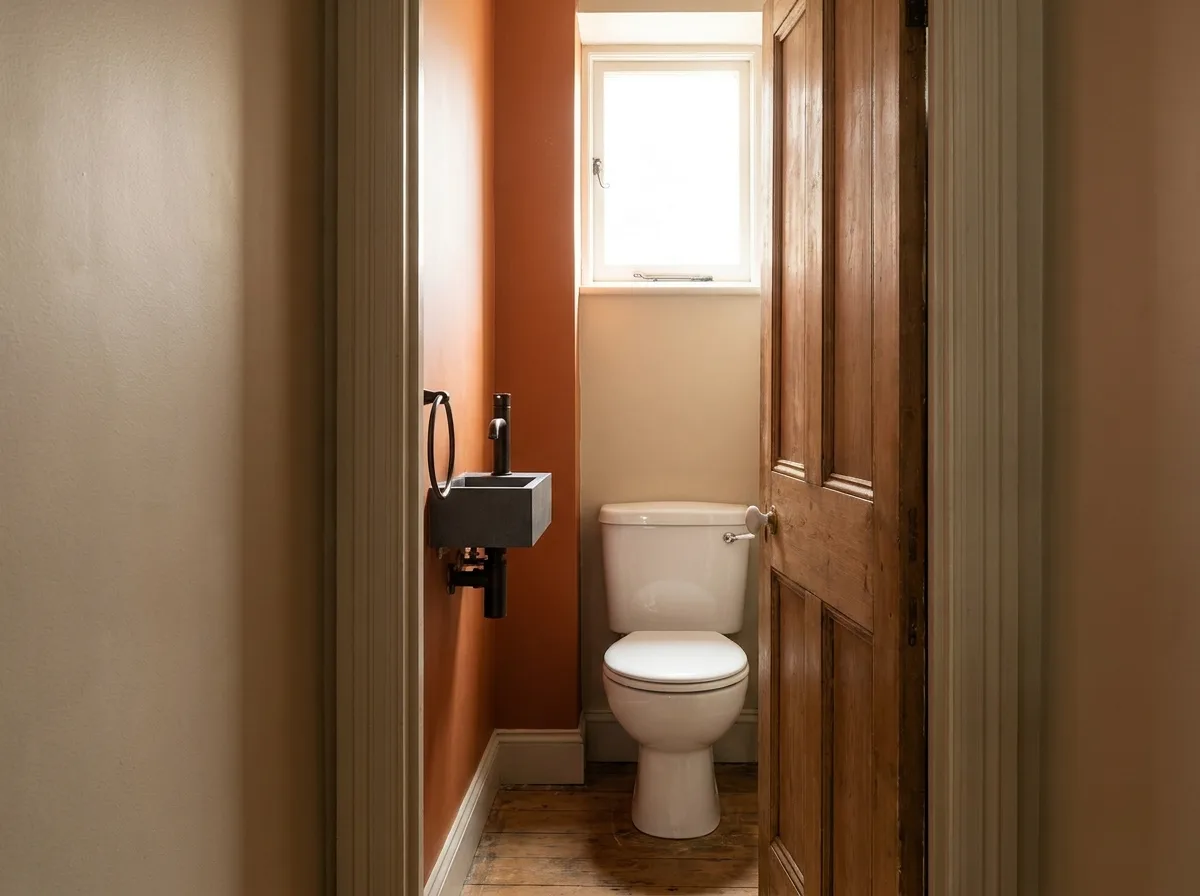
Check your toilet dimensions from the center of the toilet, not the edge. A 30 inch wide spot means 15 inches each side of the bolt center. Commercial restroom guides use about 30 by 60 inches of clear space for a toilet room, a handy sanity check.
Now the worked example. Say your toilet projects 28 inches, and the door is 36 inches from the wall behind it. That leaves 8 inches of space from the front rim to the door, well under the 21 inches code expects. The fix is not "squeeze it in." Try a shorter bowl, a wall-hung toilet, or an outward-swinging door. If you’re replacing the door anyway, see this guide to a bathroom door that fits tight rooms.
What mistakes do people make when buying by toilet dimensions?
The big five: measuring from the stud or baseboard, trusting a "standard" number, ignoring tile thickness, forgetting door swing and knee room, and buying without reading the product drawing. Each is cheap to prevent with a tape measure and ten minutes.
Here’s the toilet dimensions checklist I’d run before clicking buy:
- Rough-in measured from the finished wall, written down.
- Projection plus 21 inches of front space checked against the door.
- Side distance from bolt center at least 15 inches.
- Round or elongated chosen on purpose.
- Seat height picked for who actually uses the room.
- Product drawing read, not the headline numbers.
- Tank lid clearance confirmed if the rough-in is 14 inches.
If you’re retiling the floor around the toilet, settle the tile first, as in this guide to shower floor tile that won’t fail, since thickness changes your rough-in reading.
Frequently Asked Questions
Are all toilets the same size?
No. Most toilets are 27 to 30 inches deep and 15 to 20 inches wide, but the exact numbers vary by brand and model. Round, elongated, one-piece, two-piece and wall-hung all differ. Read the product drawing for the exact toilet instead of relying on a general chart, because toilet dimensions differ even within one brand.
What is the standard toilet size?
There isn’t one official size. The common planning ranges are 27 to 30 inches deep, 15 to 20 inches wide and 27 to 32 inches tall. A 12 inch rough-in and a rim near 14 to 15 inches are typical. Treat these toilet dimensions as a starting point, then match the model to your measured room.
How do I tell a 10 or 12 inch rough-in?
Measure from the finished wall to the center of the closet bolts. Around 12 inches means a 12 inch rough-in, and around 10 inches means a 10. If you land near 11 inches, a 10 inch toilet is the safer buy. A reading near 11.5 inches usually still fits a 12 inch model.
Where do I measure from, the stud or the finished wall?
Measure from the finished wall. Manufacturers specify rough-in that way, so a stud or baseboard reading can leave you half an inch or more off. If tile or a new wall surface is still coming, subtract its thickness from your reading before you order, and confirm the final number with the product drawing for the model you want.
Is comfort height the same as ADA height?
Not exactly. Comfort height usually means a seat around 17 to 19 inches high, which matches the ADA seat height range. But ADA compliance also covers clearances, grab bars and measurement with the seat on. Read the ADA Standards or ask your local building department before assuming a comfort height toilet qualifies.
Can I put an elongated seat on a round toilet?
No. The seat has to match the bowl shape, because the bolt holes sit in different places relative to the rim. Round bowls measure about 16.5 inches and elongated ones about 18.5 inches. Measure from the bolt holes to the front of the bowl, then buy a seat or bidet seat to match.
How far should a toilet be from the wall?
Behind the toilet, the distance is the rough-in, usually 12 inches from the finished wall to the bolt center. To the side, model codes call for 15 inches from the center to the nearest wall or fixture. Local codes vary, so confirm yours.
Why is there a gap behind my tank?
Your rough-in is probably longer than the toilet expects. A 12 inch toilet on a 14 inch rough-in leaves a gap of about 2 inches. It’s usually harmless, but you can buy a 14 inch model next time. A tank that touches the wall or won’t let the lid sit has the opposite problem.
Does a 10 inch rough-in toilet move the bowl closer to the wall?
Partly a myth. What’s false is that the bowl shrinks. The bowl shape and size stay about the same across 10, 12 and 14 inch versions, and the tank is what changes shape. What’s true is that the drain is nearer the wall, so the bowl sits closer to it. Always check the projection on the drawing.
How much room is needed in front of a toilet?
Model plumbing codes call for 21 inches of clear space in front of the bowl. Many people want more for comfort, and about 24 inches is a common recommendation. Local codes vary, and tight rooms may need a shorter bowl or a wall-hung toilet. Check your door swing, too.
Conclusion
Toilet dimensions aren’t a mystery. They’re four numbers: rough-in, projection, seat height and clear space. Stop searching for "standard" and measure your room instead. Do that, and the wrong-toilet Friday from the opening never happens.
If you add a bidet seat or consider a skirted or wall-hung design, the same measuring habit still works.
Your next step is simple. Grab a tape measure, find the bolt caps, write down the four numbers, and then shop. If you’re planning the whole room, start with our bathroom remodel guide, then see how a 48 inch bathroom vanity changes your side clearance.
So here’s a question: when you measured, did the number match what you assumed?