Shower Floor Tile: Pick a Style That Won’t Fail in Year Three
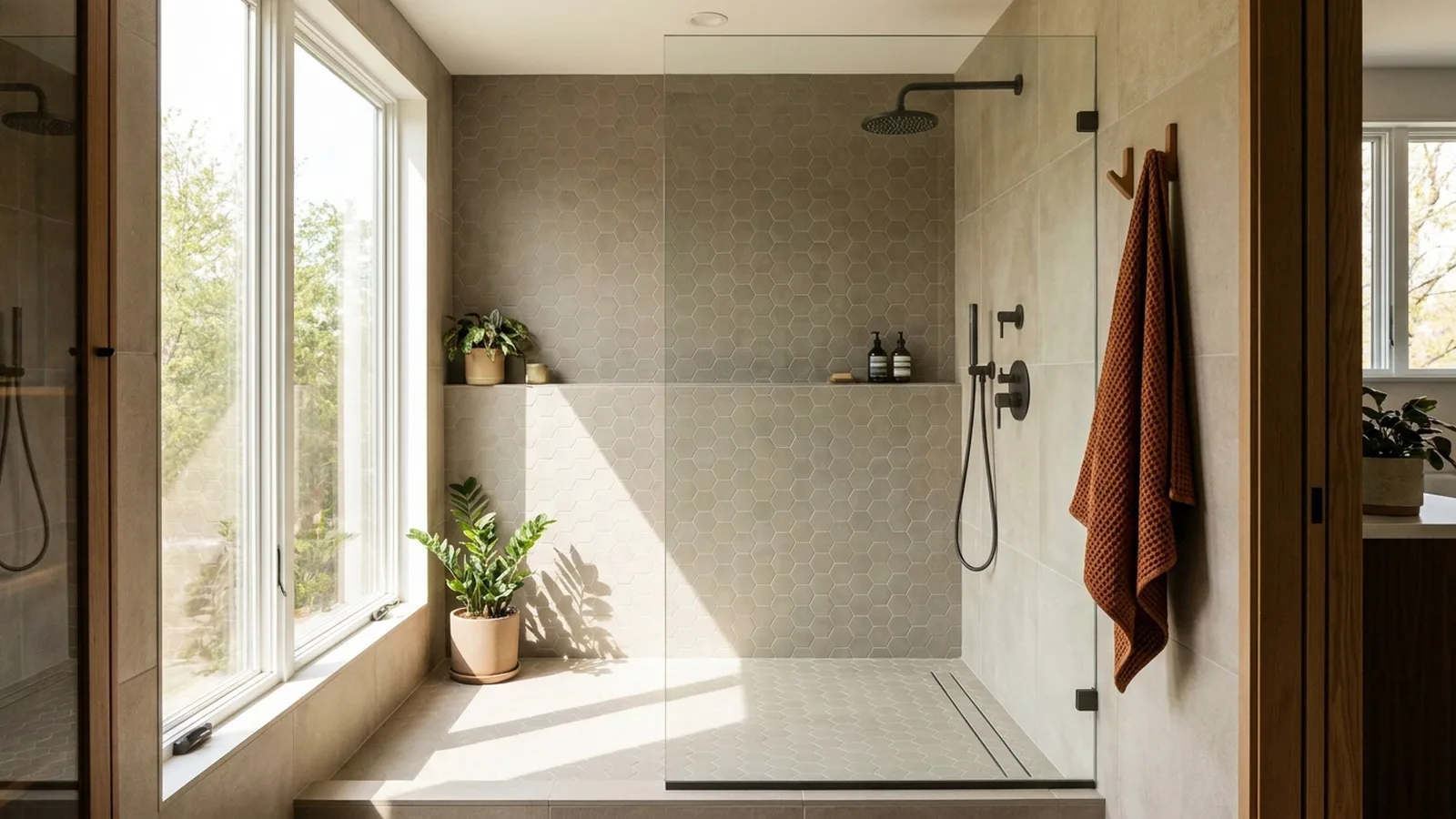
Say a homeowner falls for a tiny hexagon mosaic in a showroom. Three years later the grout is cracked, a few tiles rock when she steps on them, and the tiler’s quote to fix it is bigger than the original job. Was the tile the problem? Often not the tile alone.
Shower floor tile gets judged on looks, but it fails on layers you never see: the slope, the waterproofing and the grout between every piece. This guide flips the usual order. You’ll choose the material, size and pattern with the failure points in mind, so the floor still feels solid and grippy years from now.
This is one part of planning a full bathroom remodel, and shower floor tile is the part most people rush.
Executive Summary
The best shower floor tile is a matte, textured porcelain mosaic, set on a properly sloped base with a waterproof membrane and grouted with epoxy or a high-quality cement grout. That’s the short version, and the rest of this guide is where your money is saved.
You’ll see why small tile grips better only because of its grout lines, and why that same grout is the weak spot. Reading this first saves you from choosing shower floor tile on looks alone. You’ll learn what a DCOF rating means in plain English, when large-format tile works with a linear drain, and why natural stone costs you upkeep. You’ll also get typical cost drivers, a short list of mistakes to dodge and a hiring and flood-test checklist.
The biggest objection is "I just want it pretty." Fair. Pretty is fine here, as long as the layers under it are right first.
What is the best shower floor tile material?
Matte porcelain is the best all-round shower floor tile. It absorbs almost no water, resists staining, and the textured versions grip bare, wet feet. Ceramic is another option, glass is usually better on walls, and natural stone needs regular sealing. If you want one safe default and don’t want to babysit your floor, choose porcelain.
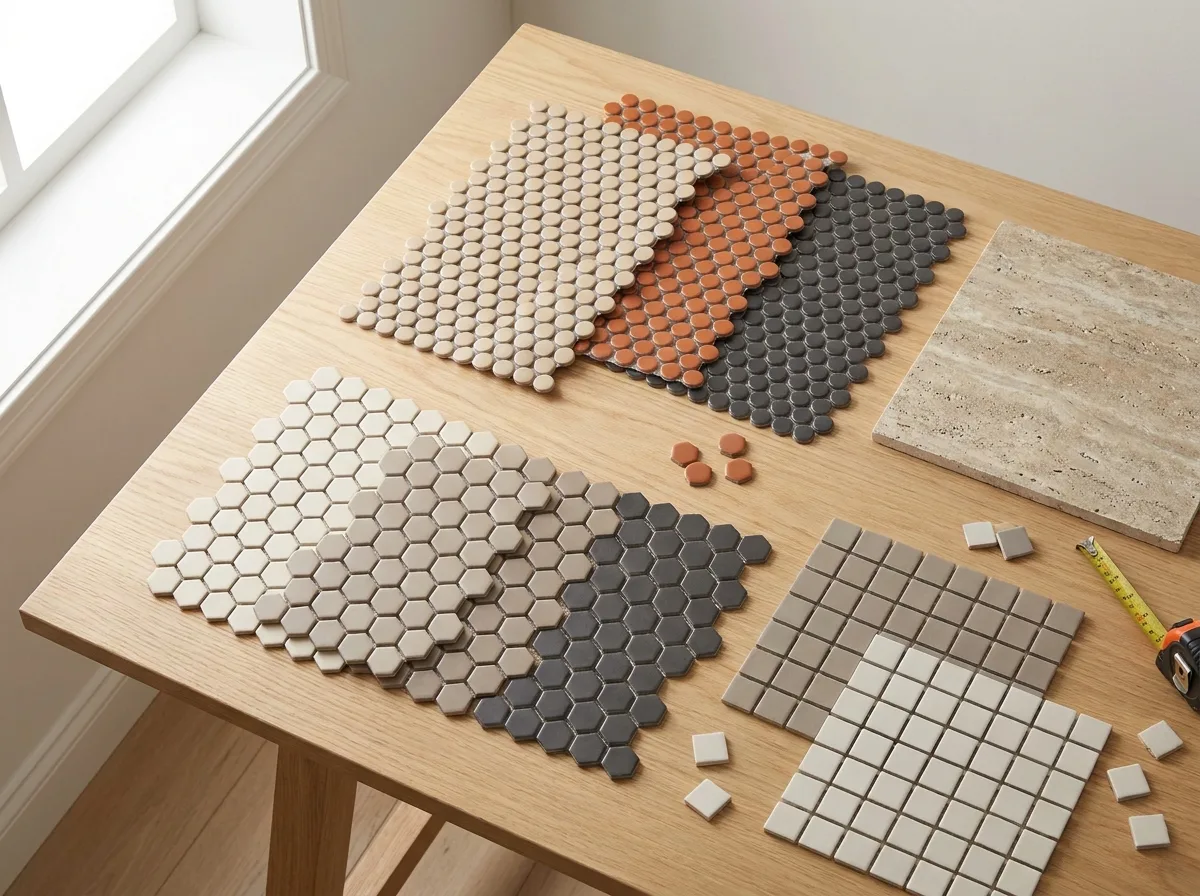
Homeowner threads on Reddit’s tile community say the same thing again and again about shower floor tile: matte, non-porous porcelain is the safe pick. Grip varies by product and finish, so check the wet DCOF number on the specific tile rather than trusting the material name.
| Material | Grip | Upkeep | Verdict |
|---|---|---|---|
| Matte porcelain | Check the DCOF | Low | Best default |
| Ceramic | Check the DCOF | Low | Fine for budgets |
| Pebble or river rock | Check the DCOF | High (grout nooks) | Spa look, more scrubbing |
| Marble, limestone | Check the DCOF | High | Sealing and staining risk |
| Glass | Check the DCOF | Low | Often better on walls |
Porcelain is "already sealed," so nothing can go wrong is a myth. The tile won’t leak, but the grout between it will.
How small should shower floor tile be?
Pick mosaics roughly 2 inches or smaller for most shower floors, because more grout lines mean more grip and easier slope-following. Penny, hex and 2×2 tiles all work. The catch is that all that grout is also the part that cracks and stains, so the install quality matters more than the shape.
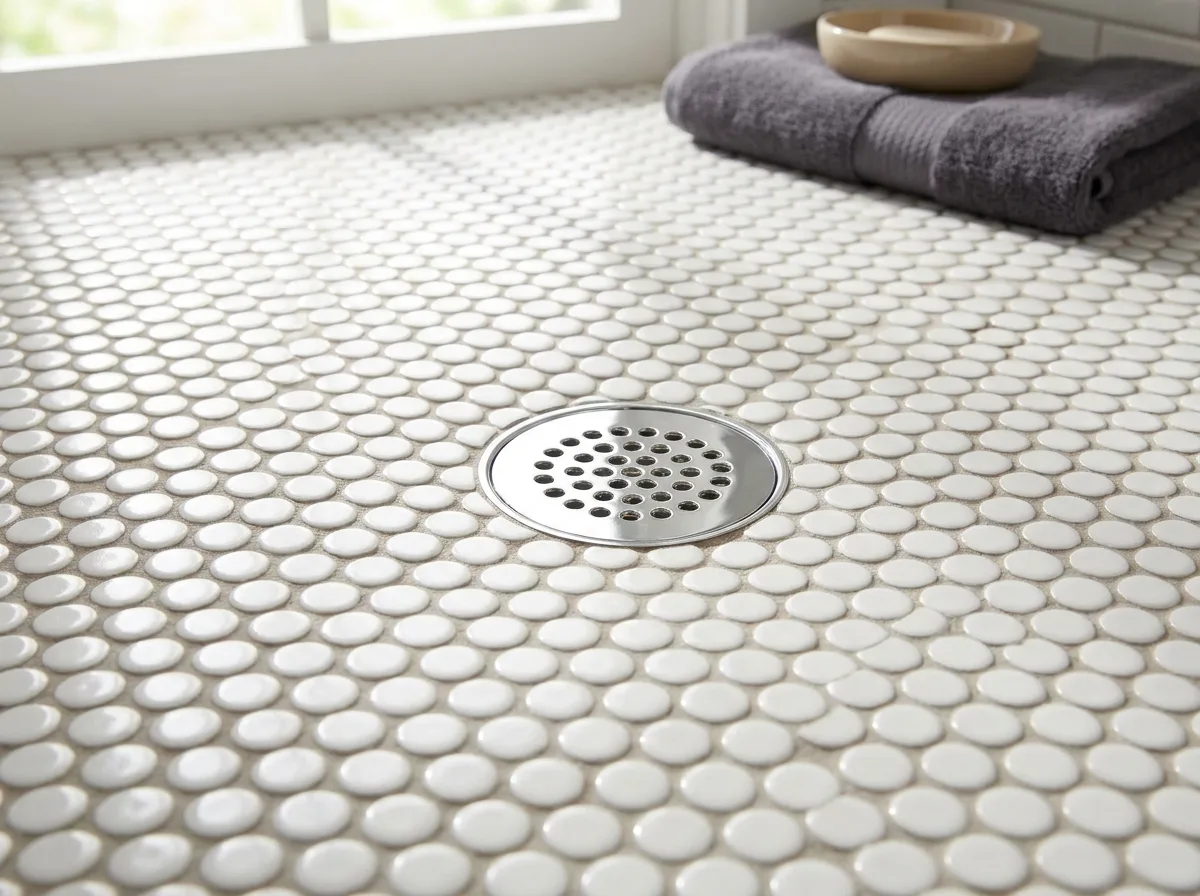
Small pieces follow the slope without awkward cuts.
One Reddit poster blamed it after a three-year-old floor failed with cracked grout and popping tiles. I’d blame the flexing base and the cement grout, not the circle. Penny tile on a solid base with well-installed grout is fine, and many people defend it.
Can you use large-format tile with a linear drain?
Yes, but only with planning. Large tiles can struggle to follow a single-point slope toward a center drain, so they are often paired with a linear drain, which lets the floor tilt in one direction. Expect careful layout and a tiler who has done it before. Confirm the plan with your tiler and local code.
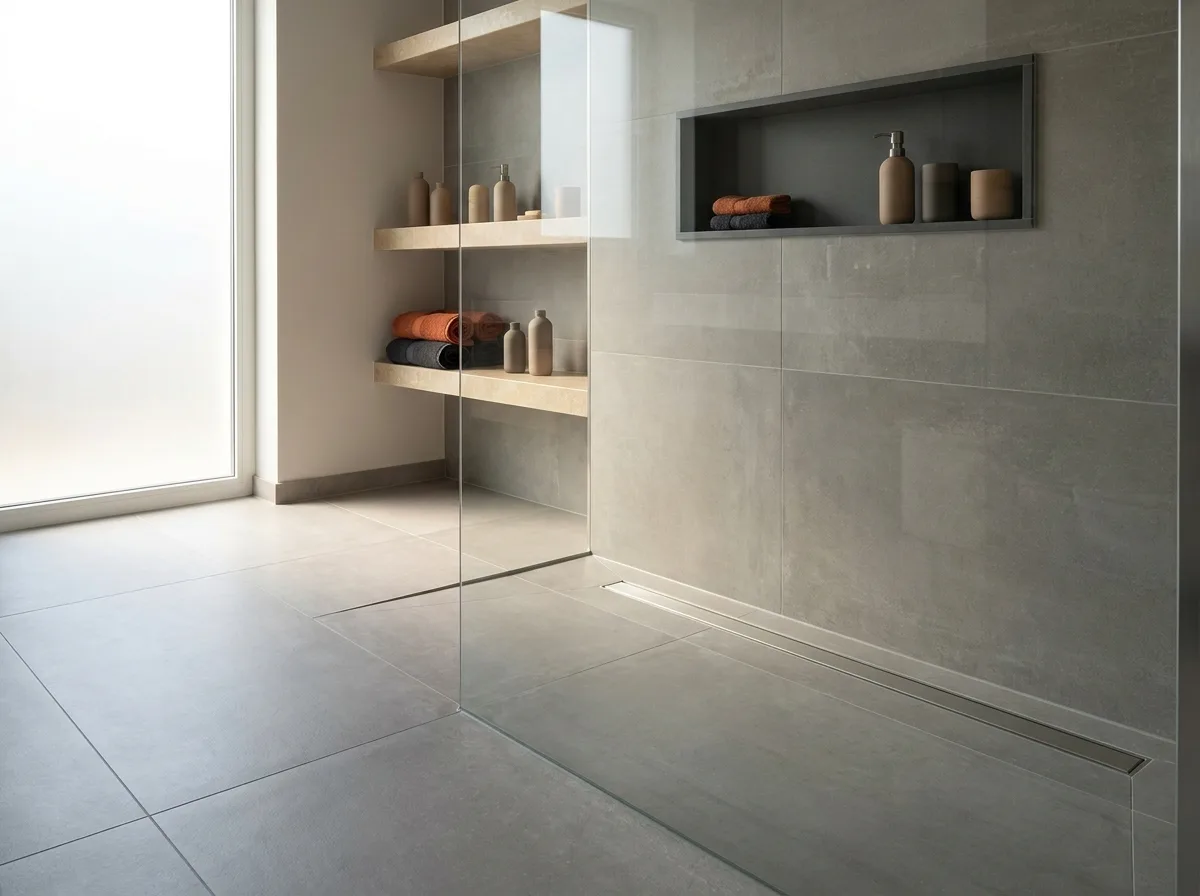
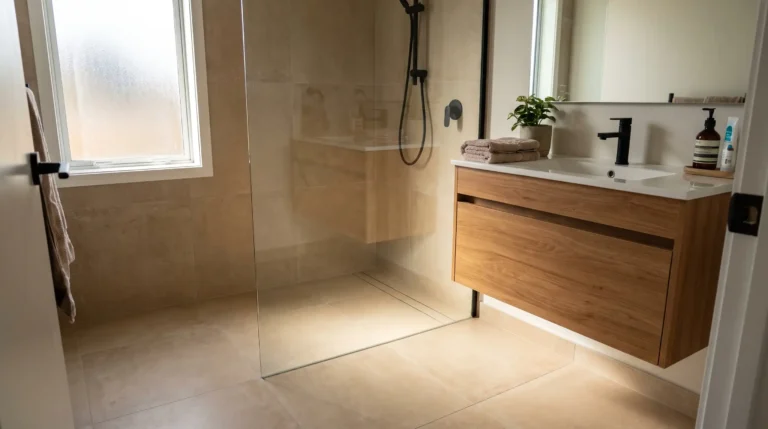
A linear drain sits along one wall or the threshold, so the entire floor can slope one way at the same quarter inch per foot. Take a curbless walk-in shower with a 12 by 24 inch porcelain tile. The base must match that tilt before a single tile goes down.
Is natural stone worth the upkeep?
For most people, no. Marble, limestone and travertine are porous, so they stain, discolor and need resealing in a wet shower. They’re beautiful, and some owners accept the upkeep. If you want low maintenance, choose porcelain that looks like stone instead.
One Reddit commenter guessed a chalky limestone floor might need resealing every 6 to 8 months in a daily shower. That’s one person’s estimate, not a rule, so ask your supplier for the real interval.
Use unsanded grout with soft stone, since sanded grout can scratch it. Stone-look porcelain gives you most of the effect with none of that.
Which styles and patterns are trending?
Penny rounds, hexagons, pebbles, brick-style rectangles and zellige-look tiles all come up often in homeowner threads. Each has a trade-off between looks and cleaning. Pick the pattern that suits your room, then confirm the finish is textured, because style never matters if the floor is slick.
Here’s a rundown of shower floor tile styles.
- Penny and hex mosaics: Classic, grippy and slope-friendly.
- Pebble and river rock: Natural underfoot, but soap scum loves the grout.
- Brick or subway floor tile: Rectangular tile laid in a running bond looks clean and works on larger floors. Choose a small format and a textured finish, since smooth subway tile is a wall tile in disguise.
- Zellige and cement tile: Handmade character, but cement needs sealing. One specialty retailer lists cement and limestone mosaics at about $18 to $31 per square foot, as an example only.
How slippery is too slippery? DCOF in plain English
DCOF, short for dynamic coefficient of friction, measures how slippery a wet tile is. For interior wet areas, standards call for a wet DCOF of 0.42 or more. That’s the minimum, not a guarantee, so look for a higher number on a shower floor.
The 0.42 figure comes from ANSI A326.3, as explained by tile maker Crossville, and the same source says that number isn’t suitable for every project.
Here’s the trap. A grippy porcelain floor can be ruined by the wrong sealer. One homeowner’s contractor applied a gloss sealer film over a textured tile, and the grip dropped. Write the finish into your contract, and don’t let anyone coat it.
If an older adult will use the shower, add a mat and grab bars.
Which grout is best for a shower floor?
Epoxy grout is the best choice for most shower floors because it is typically recommended for shower floors because it resists water and stains. It usually costs more and can be harder to work with, so follow the manufacturer’s instructions. If you use cement grout, seal it, and pick sanded for joints 1/8 inch and wider.
Grout is the real weak point. Cement grout is porous and can crack where the floor flexes. Epoxy is generally described as non-porous, which is why the Reddit poster above said penny tile "sucks" without it.
A quick decision rule helps.
- Joints 1/8 inch or wider: sanded grout.
- Narrow joints or soft stone: unsanded grout.
- Penny, hex or pebble floors: lean toward epoxy.
- Tight budget: quality cement grout, sealed, and ready to maintain.
Epoxy is usually more demanding to install than cement grout, so ask whether your tiler has used it and follow the product’s instructions.
What goes under shower floor tile?
A shower floor needs a sloped base (about 1/4 inch per foot toward the drain), a waterproof membrane, and the right backer. The slope and membrane keep water out of the walls and subfloor. Codes vary, so confirm yours. Use a licensed plumber or installer, and a permit where your jurisdiction requires one.
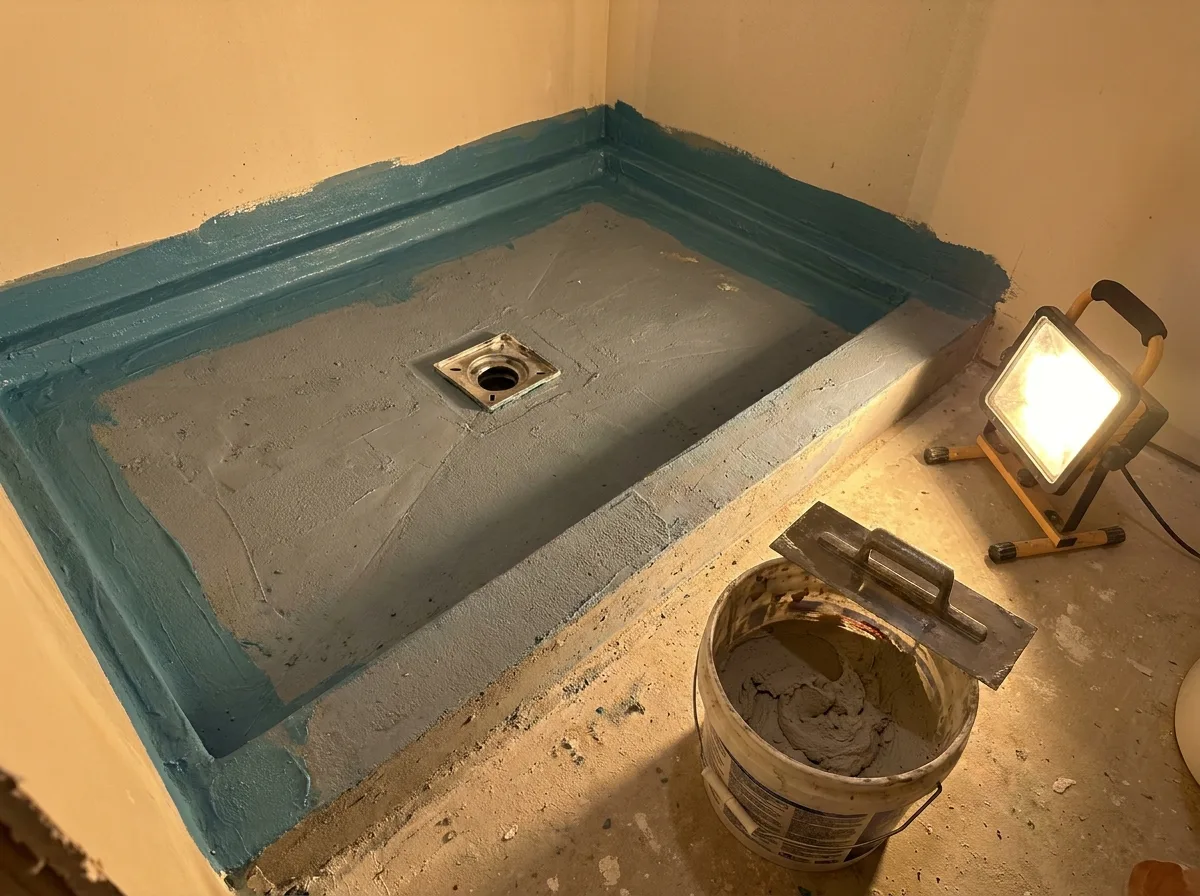
This is where most shower floor tile installs really fail. The Ceramic Tile Foundation notes that shower floors slope 1/4 inch per foot to the drain, per plumbing code and ANSI A108.01. Skip that, and water pools, then leaks.
Common setups include a mortar bed with a pre-slope (a first sloped layer under the membrane), a PVC liner, a sheet membrane such as Schluter Kerdi or Wedi, a liquid membrane, or a foam base like Built with Foam.
Here’s a pattern from homeowner threads. A PVC liner goes down flat with no pre-slope, then the mortar sits on top and water collects against the liner. The tile looks fine for years while the base stays soggy. The fix is to slope under the membrane and on top of it.
A few material warnings:
- Greenboard resists mildew, but it’s not waterproof. Use cement backer board.
- Mastic adhesive doesn’t belong near water. Use thinset.
- Acrylic or vinyl pans: tile can’t bond directly to them. Use a surface made for tile.
How much does shower floor tile cost?
Shower floor tile itself is often the smaller cost. Labor, the pan build, waterproofing and grout type drive the total, and no reliable average exists. Homeowner anecdotes for full small-bathroom tile jobs ranged widely, so treat any single price as an example, and get written quotes that list every layer.
Here are anecdotes from homeowner threads. Quotes for a full small-bathroom tile job reportedly ran from about 6k to 32k. One person said they paid roughly 15k to 25k, while another estimated 7k to 10k in materials for a DIY route. Replacing a single shower tile was described as $10 to $25 for the tile plus a day of drying.
What pushes your number up or down:
- Mosaic complexity, epoxy versus cement grout, drain type, a rebuilt pan, stone sealing, demolition and local labor rates.
What mistakes do homeowners regret, and how do you hire well?
The costly regrets sit under the tile: greenboard, mastic, a gloss sealer over textured tile, no pre-slope and no flood test. Avoid them by putting each layer in writing, asking a few pointed questions before work starts, and checking the answers against the manufacturer’s instructions and your local code. A good installer will not mind any of it.
Before you sign, run through this checklist:
- Ask which backer, membrane and adhesive will be used, and whether each is rated for wet areas.
- Ask how the slope is built and whether a pre-slope goes under the membrane.
- Confirm the grout type and finish, and that no sealer will coat textured tile.
- Ask for a flood test: the pan is filled with water for a set time before tile goes down, then checked for leaks.
- Ask who pulls any permit your area requires.
Frequently Asked Questions
What is the best tile for a shower floor?
Matte porcelain mosaic is the best default for most homes. It absorbs little water, resists stains and gives good grip when textured. Choose a small format, such as 2 inch penny or hex, and pair it with epoxy grout. Check the wet DCOF number before you buy, and look for a matte finish you can feel under bare, wet feet.
Is penny tile slippery in a shower?
Penny tile is usually grippy because of its many grout lines, not the tile itself. The risk is dirty or worn grout, which gets slick and traps soap. Keep it clean, use epoxy grout, and choose a textured or matte surface. A flexing base is the bigger enemy, so build it right first.
Do I need to seal porcelain shower tile?
Usually not. Porcelain absorbs very little water, so the tile itself rarely needs sealing. The grout is different. Cement grout is porous and should be sealed, while epoxy grout needs none. Never put a gloss sealer on a textured floor, since it can remove the grip you chose the tile for.
Should I use sanded or unsanded grout?
Use sanded grout for joints 1/8 inch and wider, and unsanded for narrower joints and soft stone like marble. Sanded grout gives strength in wider gaps but can scratch delicate surfaces. Many mosaics have tight joints, so check the sheet’s recommended width, or ask your tiler to choose before mixing anything.
Is greenboard okay behind and under a shower?
No. Greenboard is mildew resistant, not waterproof, and it can soften when it stays wet. Use cement backer board with a proper membrane. This is a common myth that costs people a full rebuild. Local code varies, so ask your inspector or installer what your area requires.
Can I use large tiles on a shower floor?
Yes, with a linear drain. The floor then slopes in one direction, so big tiles can follow it more easily. With a center drain, large tiles struggle to follow the slope. Pick a textured finish, since fewer joints mean less natural grip, and confirm the plan with your tiler and local code.
How often should natural stone be resealed?
It depends on the stone and how often you shower. One homeowner guessed 6 to 8 months for a chalky limestone, but that is only an estimate. Follow your stone supplier’s guidance and test with a few drops of water. If they soak in instead of beading, it’s time.
How long does a tiled shower floor last?
A well-built floor can last for many years, but there is no honest single number. Lifespan depends on the slope, the membrane, the grout and your maintenance. Most early failures come from the layers below, not the tile. Ask your tiler for a flood test before any tile goes down.
What is the best shower floor tile for seniors?
Choose slip-resistant porcelain with a high wet DCOF and a texture you can feel. Then add the extras that matter more than the tile: a non-slip mat, grab bars and good lighting. A curbless entry also helps, since there is no step to trip on.
Is small tile always safer on a shower floor?
No, that’s a myth. Small tile only helps because it adds grout lines, and grout does the gripping. A glossy mosaic can still be slick, and worn grout loses its bite. A textured large tile with a high DCOF can beat a smooth small one. Judge by the rating and finish, not the size.
Conclusion
Back to the homeowner with the cracked hex floor. The tile likely wasn’t the whole story. The base flexed, the cement grout gave up, and nobody tested the slope. The best shower floor tile is the one chosen alongside its grout and its layers.
So your next step is simple. Pick a matte, textured porcelain, choose epoxy if you can, and write the slope, membrane, finish and flood test into the quote. Look for a certified installer, such as a CTEF Certified Tile Installer, and follow your local code.
For the bigger picture, the 48 inch vanity guide helps you finish the room, and the garden tub ideas are worth a look if you’re weighing a soaking tub alongside the shower. Now that you know the layers matter more than the look, what will you ask your tiler first?