Barn Door Hardware: How to Pick a Kit That Will Not Fail
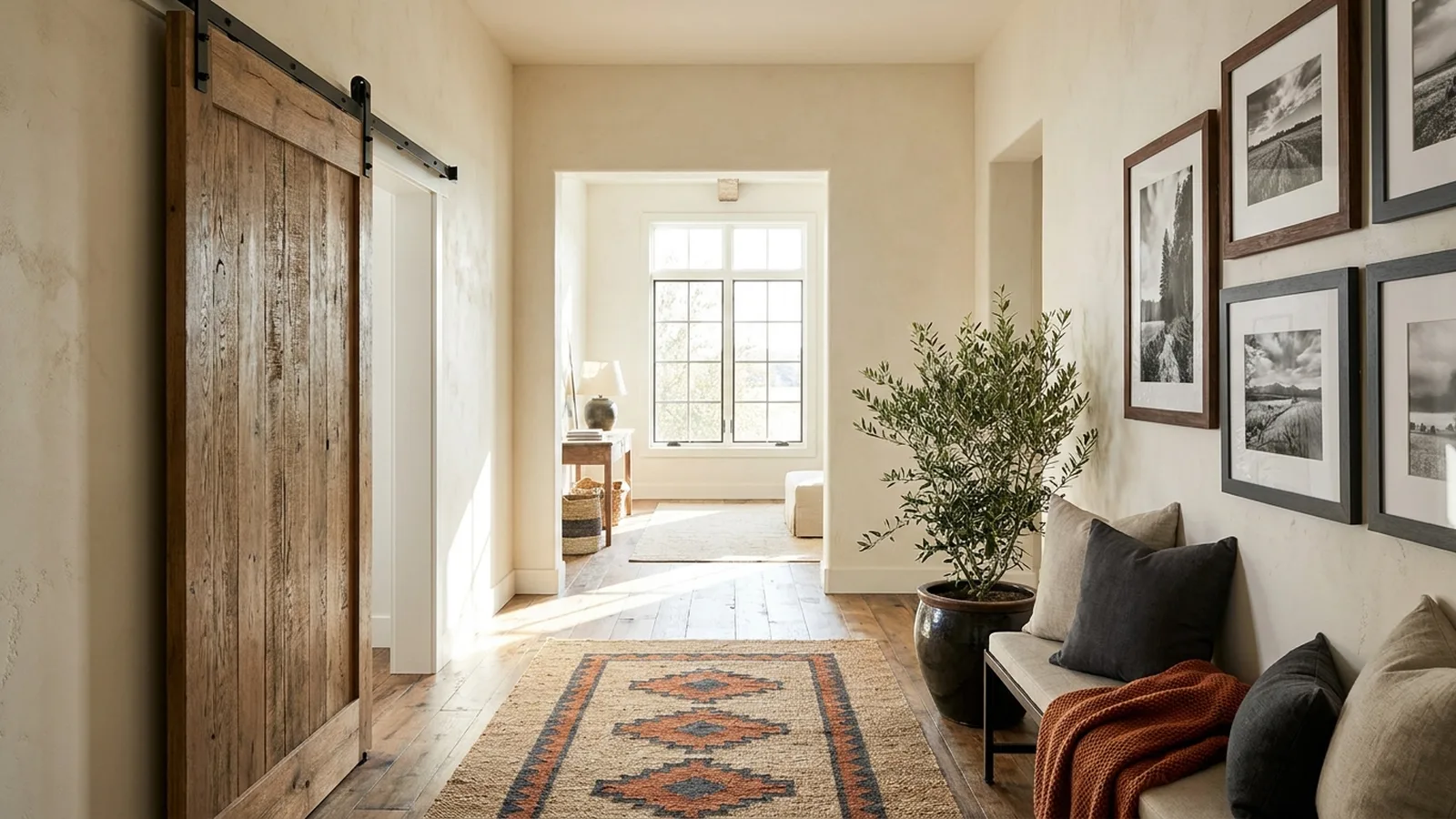
Say you found a gorgeous solid slab at a salvage yard for a bargain. You carry it home, order the cheapest black kit with four-and-a-half stars, and hang it on a Saturday. By Tuesday the door scrapes, the rail leans away from the wall and your toddler has discovered the gap at the edge. Here’s the part most shoppers miss. The door gets the compliments, but barn door hardware does all the work. It carries the weight, guides the motion and decides whether the whole thing glides for twenty years or rattles for twenty days.
This guide is one part of choosing doors for your home, and the styles and looks of sliding doors are covered separately. Here you’ll learn how to match a kit to your door’s weight and your wall, size the track, avoid knockoffs and spot the jobs where this hardware is the wrong tool.
Executive Summary
Good barn door hardware is a track, hangers and a few small parts, matched to your door’s weight and bolted into solid wood. Start with the weight and the wall, then pick the style.
Most kits cover the basics, but the details decide whether it works. Below you’ll find:
- Why a kit’s weight rating quietly assumes studs
- How to size the track from the door width
- Which finish and hanger styles matter least
- A room-by-room decision table
- How to read a listing without trusting star ratings
The biggest objection is usually money. A decent kit often costs less than the door, and spending a little more on the track and hangers is cheap insurance. We’ll also say plainly where a swinging, pocket or french door is the smarter choice.
What is barn door hardware and what comes in a kit?
Barn door hardware is the set of parts that lets a door slide along a wall instead of swinging on hinges. A typical kit includes a steel track, two hangers with wheels, a floor guide, door stops and the bolts and spacers that attach everything to the wall.
The track is the rail you mount above the opening. Hangers are the brackets that bolt to the top of the door and roll along that rail. Standoffs, also called spacers, hold the track away from the wall so the door clears your trim. A floor guide keeps the bottom from swinging. Bump stops keep the door from rolling off the end.
Notice what’s often missing: a handle, a latch and the lag bolts for your particular wall. Check the listing before you click buy.
What types of barn door hardware are there?
The main types are flat track, box rail, bypass, bifold and concealed systems. Flat track suits most interior doors, box rail handles heavy or wide doors, bypass lets two doors pass each other, and concealed systems hide the rail for a cleaner look.
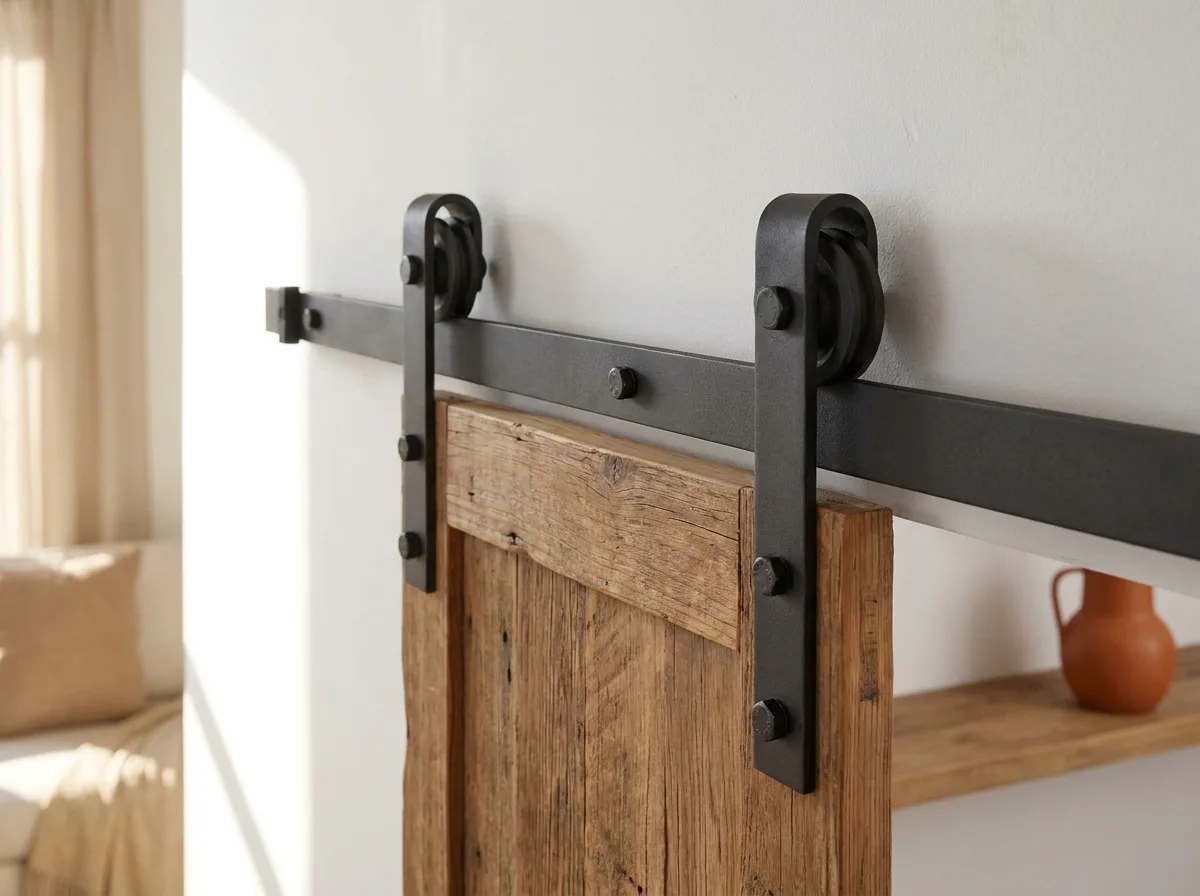
Flat track is a thin steel bar with exposed hangers, the classic look. Box rail is a hollow rectangular tube that holds heavier doors. Bypass kits run two doors on parallel tracks, handy for wide closets. Bifold kits fold a pair of panels. Concealed systems, such as Hawa or Hafele Slido, tuck the mechanism out of sight. Cabinet makers use these often.
| Type | Best for | Honest limit |
|---|---|---|
| Flat track | Interior doors, closets | Lower weight ratings |
| Box rail | Heavy or oversized doors | Bulkier look |
| Bypass | Wide closets, pantries | Needs deeper wall space |
| Bifold | Tight rooms | More moving parts |
| Concealed | Cabinets, modern spaces | Harder install, costs more |
Judged by: weight capacity first, then install difficulty, then looks.
How do you choose barn door hardware for your door weight and wall?
Weigh or estimate your door, add a safety margin, then pick a kit rated well above it. Check what the wall can hold, because most ratings assume the track is bolted into studs or solid blocking, not just drywall. Weight first, style second.
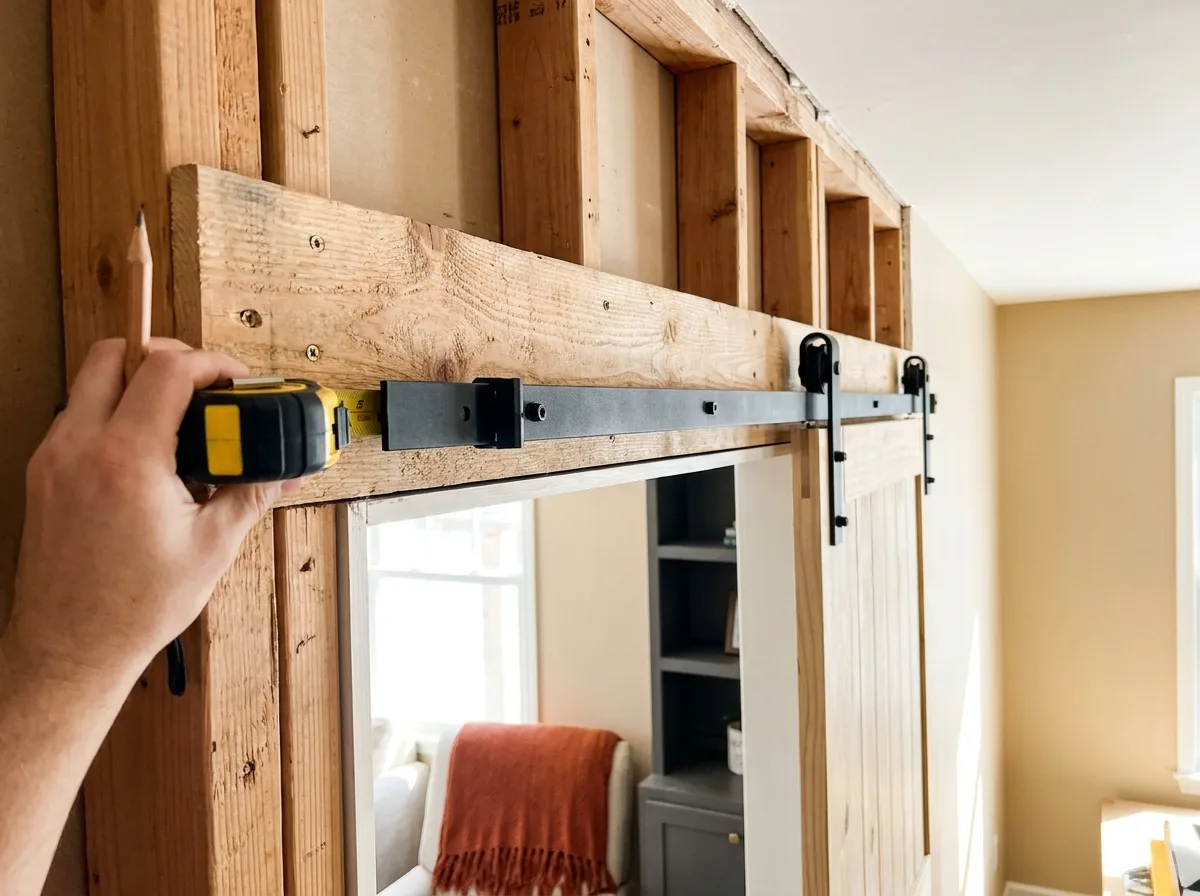
Here’s the gap competitors skip. A solid wood door can weigh far more than a hollow-core slab, and no listing knows which you own. Weigh it on a bathroom scale if you can. When in doubt, choose the next rating up.
Then look at the wall. Vendors state ratings with conditions. One maker lists 220 pounds, rising to 300 pounds when lagged into studs. That small print matters. Drywall alone is a weak anchor for a moving load.
Say you hang a heavy door on a rail screwed only into drywall anchors. It may work for a week. Over months the anchors loosen and the rail tilts. The fix is a header board, a solid piece of lumber screwed to the studs first, then the track on top. Pre-drill the holes and use blocking or studs every time.
My opinion: spend on the track and hangers, not on the door. Wires, gas lines or pipes in that wall? Know where they run before you drill, and ask a licensed pro if unsure. Codes vary.
How long should the track be?
The track should run about twice the width of the door opening, plus a little extra for the casing. A 36-inch door generally needs a 72-inch track or longer. Too short and the door never fully clears the opening, which defeats the point of the whole setup.
Fine Homebuilding’s installation guide frames it as twice the opening width plus one side casing and about a half inch each side. Keep roughly a half inch between the door bottom and the floor, and mount the track at least a quarter inch above the casing.
Double openings are where people struggle. One Reddit owner with a 77-inch opening found kits either too long or built for a single door. The common answer was to buy a kit, cut the rail, center the cut so the mounting holes stay symmetrical, then add end caps and bump stops. Also leave headroom. Some kits need about a foot above the opening, so measure up there first.
Which finish, hanger style and soft close are worth paying for?
Finish and hanger style are mostly about looks. Matte black, brushed nickel, stainless steel and brass all work if the steel underneath is sturdy. Soft close is a nice extra, but good bump stops and a smooth wheel matter more.
Powder-coated matte black is a very common finish. Stainless usually handles moisture better, a plus in bathrooms. Brass and nickel suit traditional spaces. Hanger shapes such as strap, arrow or spoke wheel are mostly decoration. What usually counts is a smooth wheel that fits the track.
Soft close uses a small damper to catch the door in the last few inches. It’s lovely for slam-prone households, but optional if your stops sit right. Swapping the pull on the door itself? See how to replace a door handle without drilling new holes.
How do you install barn door hardware?
Mount a header board into the studs, fix the track to it on spacers, hang the door on its hangers, then add the floor guide and stops. Pre-drill every hole, keep about a half inch under the door, and get a helper for the lift.
- Find the studs and check for wires or pipes. Ask a licensed pro if unsure, and follow local codes.
- Screw a header board into the studs, level it and pre-drill the track holes.
- Mount the track and spacers on the board.
- Bolt the hangers to the door, then lift it onto the track with a helper, since heavy doors are a real lifting hazard.
- Set the floor guide, then fit the bump stops and test the glide.
Kit contents vary, so follow the maker’s sheet for the small parts.
How much does a kit cost, and how do you spot a knockoff?
Most kits run roughly $100 to $350, and premium or heavy-duty systems go much higher. Check current prices, because they shift. To avoid knockoffs, trust rated capacity, steel thickness and replaceable parts over star counts, since stars are the easiest thing to fake.
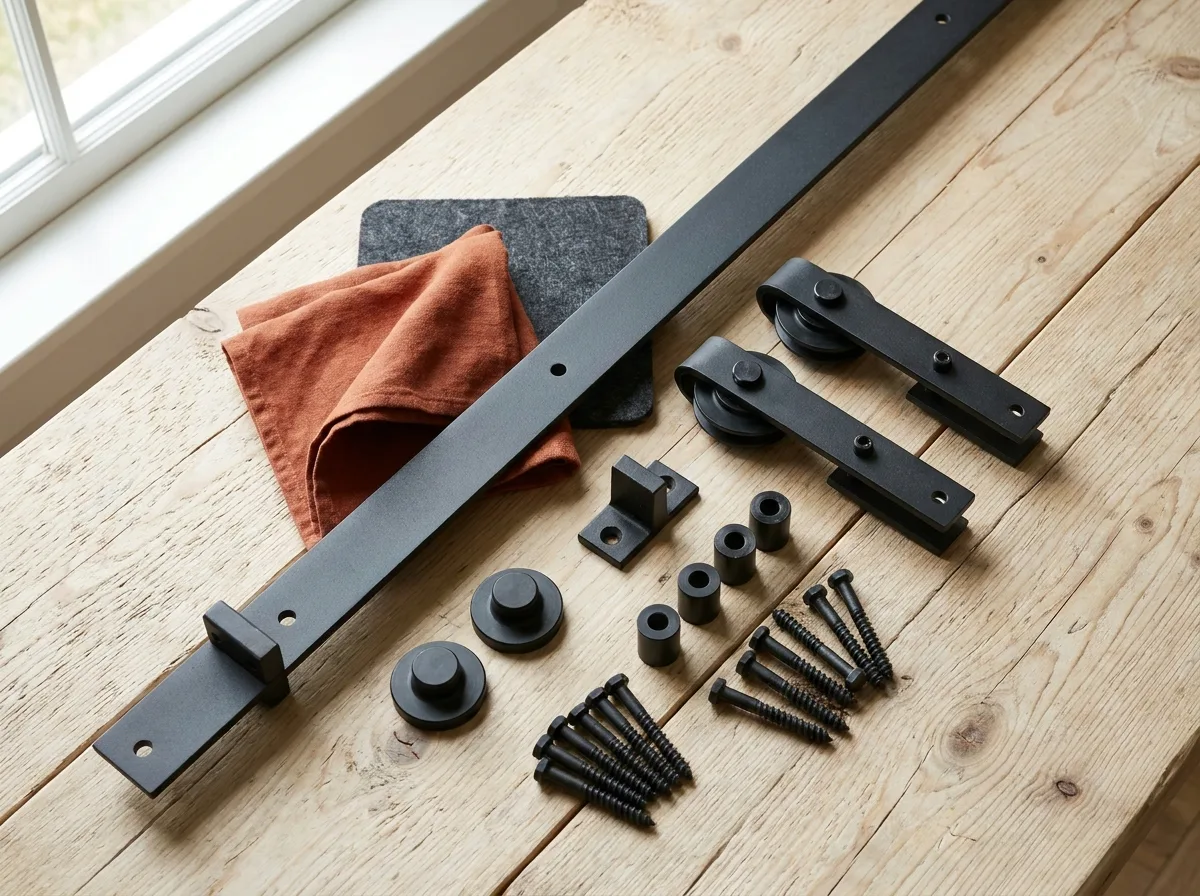
Vendor pages list kits from about $94 up to about $1,448 at the high end, with common ones around $114 to $287. Treat those as sample ranges. Weight rating, track length, finish and brand drive the spread.
Reddit threads are blunt about Amazon: many readers distrust "knockoff fake reviewed" kits and ask for real brands. Johnson Hardware, which advertises American manufacturing, came up often. A quick filter:
- A stated weight rating in pounds, not just "heavy duty."
- Steel thickness listed, such as one-quarter inch.
- Spare wheels or hangers sold separately.
- A named company, not a string of random letters.
Heavier hardware isn’t automatically better, either. Rating and mounting matter more than shipping weight.
Which kit fits each room?
Match the job to the kit. Closets and pantries often suit flat track or bypass, bathrooms do well with a moisture-tolerant finish and a latch, home offices may need heavier kits and extra sound thought, and cabinets are better with concealed systems or mini kits.
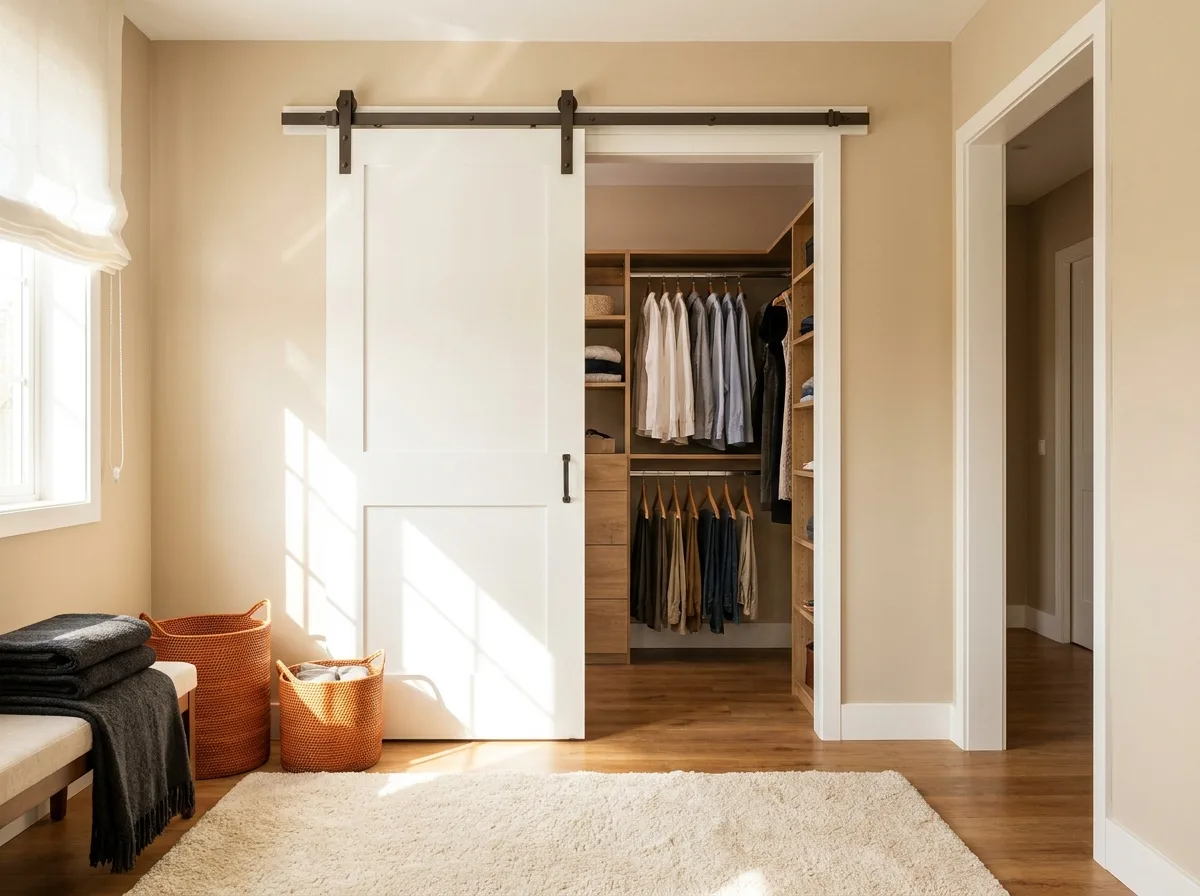
These are typical picks, not rules. Door weight and wall construction still decide.
| Room or job | Typical pick | One thing to check |
|---|---|---|
| Closet | Flat track or bypass | Wall depth for two tracks |
| Bathroom | Flat track, stainless | Privacy latch, moisture |
| Pantry | Flat or mini kit | Clearance for shelves |
| Home office | Box rail | Gaps leak sound |
| Wide opening | Double or bypass | Track length, header board |
| Heavy exterior | Box rail, weather rated | Interior kits rust |
| Cabinet | Concealed or mini | Panel straighteners |
One composite example. A couple turns a spare bedroom into an office and puts a double bypass kit across a wide entry. It looks sharp. Then the calls start and the whole house hears them through the gaps. The hardware was fine. The door choice was the issue.
Can you use a barn kit on an exterior door?
Only with barn door hardware labeled for outdoor use. Interior kits and untreated doors warp and rust in rain. Exterior setups need weather-rated steel, a sealed or treated door and a sturdier mounting plan than any indoor closet would ever need, so read the listing closely.
A Reddit owner who hung interior doors on a real barn called it "Big regret." Painted interior doors won’t weather, and hollow cores fail in moisture. Suggested fixes were three-quarter-inch treated plywood doors, box rail hangers and farm-supply hardware.
Garage doors are a different animal. They run on springs and cables, so see how garage door cables get replaced before assuming a barn kit swaps in. For entry doors that need light, glass front door options fit most homes better.
What goes wrong with barn door hardware, and when is it the wrong choice?
The common problems are noise, derailing, sagging, gaps and slamming. Most come from loose mounting, a bent track or missing stops. If you need quiet and privacy, a pocket, french or swinging door is often the better answer, and no kit will change that.
- Noise: wipe the track, check wheel alignment, replace worn wheels.
- Derailing: add bump stops and a floor guide.
- Sagging rail: re-mount into studs with a header board.
- Slamming: try soft-close dampers.
- Gaps: sliders never seal like a hinged door, so accept it or choose another door.
Say a family with a toddler hangs a heavy slider on a hallway bathroom. The door glides, but small fingers find the edge. That concern shows up in homeowner threads, and it’s a good reason to add soft close or rethink the plan.
French door hardware is the usual alternative. It means hinges, handlesets, levers and sometimes pivot hinges, and it gives better sound and privacy because the door seals against the frame. Pocket doors hide in the wall but cost more to install. Are barn doors still in style? Some say the fashion has cooled, yet a well-hung one still earns its place in a tight room.
Frequently Asked Questions
What parts are available for barn doors?
Most makers sell replacement wheels, hangers, floor guides, bump stops, end caps and handles separately. Parts rarely swap between brands, which is why replaceable parts are a good sign when you shop. If a handle is all you need, our guide on replacing a door handle may help.
Can you cut the track?
Yes, with a hacksaw or metal-cutting blade. Measure twice and cut so mounting holes stay balanced on both sides, since most barn door hardware is drilled symmetrically. Smooth the edge with a file and cover it with end caps. If you cut off the factory ends, you also lose any pre-drilled holes, so mark new ones before mounting.
Can you install on drywall alone?
Not safely for heavier doors. Ratings usually assume studs or solid blocking, and drywall anchors loosen over time. Screw a header board into the studs first, then mount the track on that. Always find studs, check for wires or pipes behind the wall and follow local codes.
Do you need a floor guide?
Almost always. A floor guide stops the bottom of the door from swinging, which protects the wall and keeps the door tracking straight. Skip it only when the manufacturer clearly says the kit works without one, and then watch for wobble in the first few weeks.
Can any door work as a barn door?
Not any. The door must be solid enough to hold hanger bolts and light enough for the kit’s rating, because barn door hardware only works within its limits. Hollow-core slabs are a gamble, so check the maker’s limits. Weigh it, measure thickness and confirm the kit’s limits before you buy.
What is the difference between single and bypass?
A single kit slides one door across the opening and needs wall space beside it. A bypass kit uses two parallel tracks so two doors slide past each other, which suits wide closets. The tradeoff is depth, since bypass needs room for both doors plus spacers.
How much clearance do you need above the door?
Plan for roughly a foot of headroom, because many kits need more than people expect. The track sits above the door on spacers, and the hangers add height. One Reddit thread mentioned about 8 to 9 inches for a door and closer to a foot for the kit.
Can you use a barn door kit on cabinets?
Yes, but mini kits or concealed systems are usually better. Tall MDF panels may need panel straighteners so they do not bow. Reddit cabinet builders mentioned systems such as Hawa, Hafele Slido and Salice. Confirm the weight limit for each panel and mount into solid material.
How do you clean antique barn door hardware?
Go gentle. Wash with mild soap and water, use steel wool only if the finish allows, then wipe on a very light coat of oil. Reddit restorers keep repeating "less is more," because over-cleaning strips the patina. Check old pieces for cracks before you rehang them.
Does heavier hardware mean a better door setup?
No, that’s a myth. Weight on the scale doesn’t tell you the rating, the steel thickness or how well it’s mounted. A lighter kit bolted into studs often outperforms a heavy one hanging off drywall. Check the stated capacity, how it attaches and the spare parts. Rating first, looks second.
Conclusion
Back to that salvage-yard slab. It would’ve hung fine if the buyer had weighed it, picked a rated track, found the studs and fitted stops. Barn door hardware isn’t glamorous, but it’s the part you live with every day.
The takeaway: choose the hardware before you fall for the door. Spend on the track and hangers, check the wall, size the rail from the opening and be honest about noise and privacy. Interior kits stay indoors. If the room needs quiet, a swinging door may beat any slider.
Your next step is simple. Measure the opening, weigh the door and write both numbers on your list.
For more ideas, read our guide to sliding door styles or see how a glass front door can brighten an entry. Which door in your home is quietly begging for better barn door hardware?