
Fruit Charcuterie Board: Amounts, Styling and Food Safety (2026 Guide)
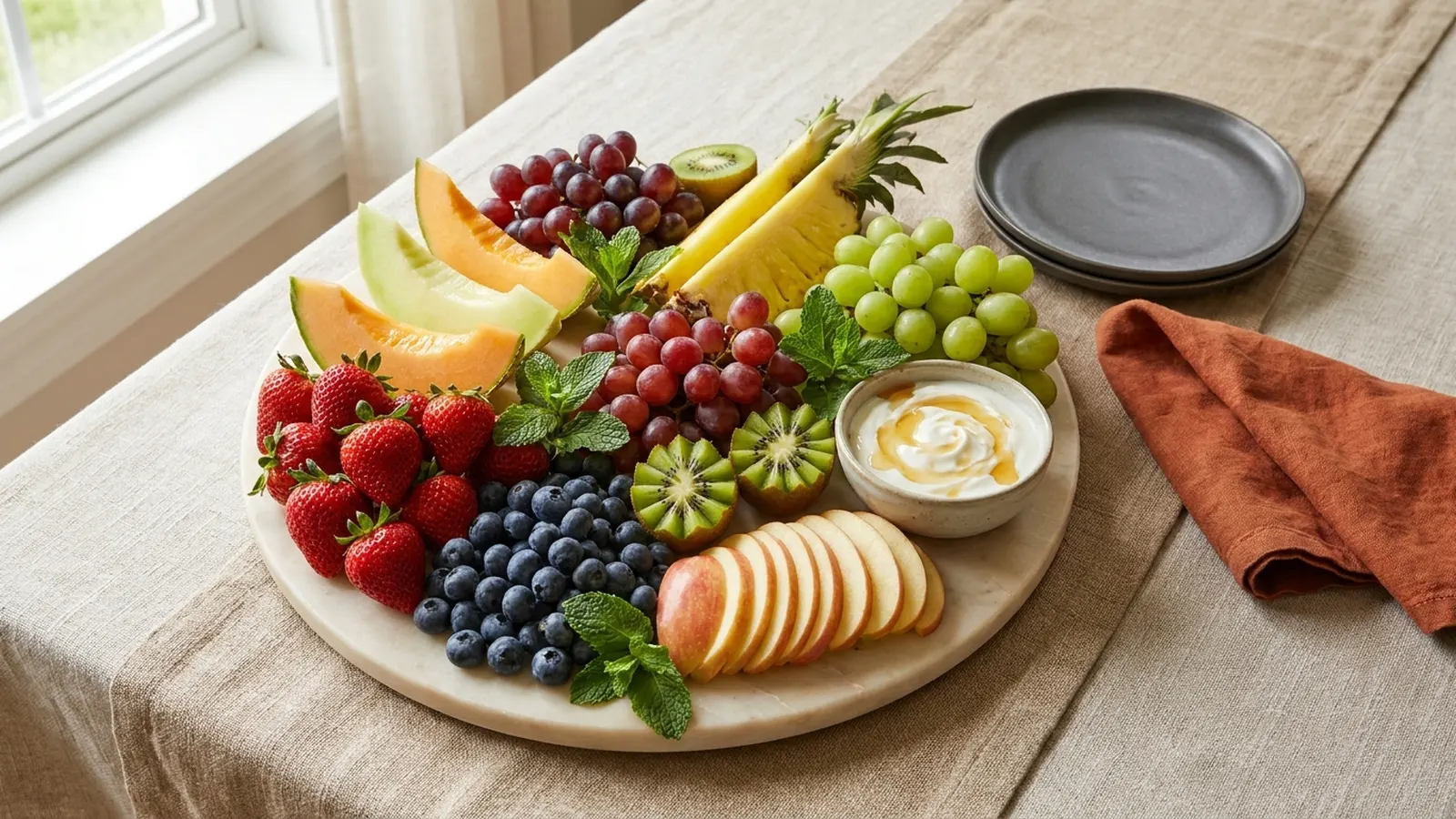
You’ve got guests coming Saturday, a cutting board that has seen better days, and a grocery cart full of berries. Will it look like a magazine spread or a sad pile of melon? A fruit charcuterie board is one of the easiest things to host with, and the gap between generous and sloppy usually comes down to quantity and prep. How much fruit do you buy? Which board won’t turn soggy? How long can it sit on the table before it’s unsafe?
This guide answers those questions in plain terms. You’ll get a quantity chart, a cost range, a step-by-step build, fixes for browning, and a few styling moves that make the board feel like part of your home, not just a snack. I’m treating the board as table decor as much as food, because that’s where most recipe posts stop short.
The Short Version
- Plan roughly 4 to 6 ounces of fruit per guest as a snack and more if it’s the main event.
- Use a non-porous or lined board, build big items first, and cut fruit into bite-size, easy-grab pieces.
- Put it out cold, keep it out no more than 2 hours (1 hour when it’s above 90°F), and refrigerate leftovers promptly.
What Is a Fruit Charcuterie Board?
A fruit charcuterie board is a grazing platter built around fresh fruit instead of cured meat. Traditional charcuterie centers on meats and cheese. This version swaps in berries, melon, grapes and sliced orchard fruit, then adds dips, a few cheeses, nuts or dried fruit for contrast.
People also call it a fruit board, a fruit platter or a grazing board. The difference is in the arrangement. A platter is a tidy fan of slices. A board is layered, with bowls, clusters and small gaps filled with garnish so guests can graze all evening. It suits brunches, baby showers, holiday tables and quiet weeknights alike.
Which Board or Tray Works Best for Fruit?
The best surface for fruit is one that resists moisture and wipes clean, such as marble, slate, glazed ceramic, or a wood board with a food-safe finish and a liner. Fruit is wet, and wet fruit stains and swells porous wood over time.

Here’s how the common options compare.
| Surface | Strength | Limit | Best for |
|---|---|---|---|
| Acacia or hardwood | Warm look, sturdy | Juice stains, needs liner | Dry items, lined builds |
| Marble | Stays cool, wipes clean | Heavy, can chip | Hot rooms, formal tables |
| Slate | Dramatic contrast | Scratches, chalky marks | Light-colored fruit |
| Ceramic tray | Fully washable | Can crack if dropped | Everyday hosting |
| Bamboo | Light, affordable | Stains and splinters with age | Casual gatherings |
My pick for a first board is a lined wood board. Parchment under the fruit and small bowls for the wettest items protect the surface and keep the look warm.
What Do You Need Before You Start?
You need a board, two or three small bowls, a sharp knife, a cutting board that never touches raw meat, and a few serving tools. That covers nearly every build. Gather everything first so you aren’t hunting for a ramekin with sticky hands.
- Small bowls or ramekins for dips, berries and nuts.
- A paring knife and a chef’s knife for clean cuts.
- A melon baller for round, uniform pieces.
- Cookie cutters or a crinkle cutter for shapes and ridged edges.
- Skewers or cocktail picks for grapes, cubes and kebab-style bites.
- Small tongs, cheese knives and a dip spoon so hands stay off the food.
- Parchment paper to line a wood board.
What Fruit Goes on a Fruit Charcuterie Board?
Choose a mix of colors, textures and sizes: something juicy like melon, something small like berries, something crisp like apple, and one showpiece such as pineapple or dragon fruit. Variety matters. In a Reddit thread on fruit platters, one cook’s regret was a tray for a big crowd that looked sloppy and low on variety, and the advice was to buy more grapes and strawberries because they aren’t garnish.

Common choices include strawberries, blueberries, raspberries, blackberries, red and green grapes, cantaloupe, honeydew, watermelon, pineapple, mango, kiwi, oranges, apples and pears. Banana works but is the most fragile of the group.
Which Fruit for Charcuterie Board Holds Up Best?
The fruit for a charcuterie board that survives the longest is firm and low-juice: grapes, berries, whole clementines, pineapple chunks and thick melon cubes. Soft fruit like banana and ripe peach goes mushy fast.
A useful rule is to anchor the board with sturdy fruit, then fill gaps with delicate pieces just before serving. If you can only make part of the board ahead, make that sturdy part.
What Fruit Is Best by Season?
Seasonal fruit tastes better and usually costs less, so let the calendar guide you in general terms. Summer favors berries, melon, peaches and cherries. Fall brings apples, pears, grapes and figs. Winter leans on citrus, pomegranate seeds and pineapple, and spring is a good time for strawberries and kiwi.
I’d skip exact seasonal charts, since growing regions and store supply vary across the US. Check what’s on sale in your local store and build around it.
How Much Fruit Do You Need per Guest?
One recipe blog suggests about 4 to 5 ounces of fruit per person when the board is one of several snacks. My own planning guide is 4 to 6 ounces per guest, and 6 ounces or more if the board is the main dish at a brunch. There’s no official standard, so treat this as a planning guide rather than a rule.
Here’s the math at 4 to 6 ounces per guest. Board sizes and bowl counts are typical suggestions, not sourced standards.
| Guests | Fruit to buy (approx.) | Typical board size | Bowls for dips |
|---|---|---|---|
| 4 to 6 | 1 to 2.25 lb | 12 to 14 inch board | 1 to 2 |
| 10 to 12 | 2.5 to 4.5 lb | Large board or 2 trays | 2 to 3 |
| 20 to 24 | 5 to 9 lb | 2 large boards or a tray plus board | 3 to 4 |
| 40 | 10 to 15 lb | Several boards, refill from the fridge | 4 or more |
These weights are for edible fruit, so buy extra to cover melon rind and pineapple tops. One mistake that catches first-timers is splitting a big crowd across one giant board that gets picked over. Two smaller boards, with one kept cold in the fridge, look fresher longer.
How Do You Build a Fruit Charcuterie Board Step by Step?
Build from big to small. Place bowls first, then large items, then medium fruit, then berries and grapes to fill the gaps, then garnish. This order keeps the layout stable and stops small pieces from rolling into the wrong spots.

- Wash and dry. Rinse produce under running water and dry it with a clean towel. The FDA says to skip soap and produce washes.
- Line the board. Add parchment if using wood.
- Anchor with bowls. Set dips off-center, not dead in the middle.
- Add the big pieces. Melon wedges, pineapple, a cluster of grapes or a halved citrus.
- Layer medium fruit. Fan apple slices and pear fans in curved lines.
- Fill gaps with berries. Pack them tight so nothing slides.
- Finish with extras. Cheese, nuts, dried fruit, mint or edible flowers.
- Chill until serving. Cover loosely and refrigerate.
How Do You Cut Fruit So It Looks Good and Is Easy to Grab?
Cut fruit into uniform, bite-size pieces and leave a few intact items for texture. Uniform cuts look intentional, and guests can pick them up with one hand. Cooks in kitchen forums repeat this: symmetry and consistent size separate a nice tray from a messy one.
- Melon: wedges with the rind left on make a natural handle, or peel it fully. Cooks tend to dislike half-peeled skin. Peel honeydew if the green blends into the board.
- Pineapple: cut into spears or chunks, and a hollowed half can hold dip.
- Apples and pears: thin slices, fanned or cut in a zigzag.
- Citrus: wheels or segments with skins removed.
- Strawberries: leave small ones whole with the leaves on and halve big ones.
- Kiwi and mango: peel and cut into half-moons or cubes.
- Grapes: keep them in small clusters, which look natural and are easy to snip.
What Dips, Cheeses and Extras Go with Fruit?
Yogurt-based dips, chocolate, nut butter and a few mild cheeses all work. A vanilla yogurt with honey is the easiest crowd-pleaser, while melted chocolate and a cream cheese fluff are popular dessert-style options. Add contrast with something salty or crunchy.
- Dips: honey-cinnamon yogurt, whipped cream cheese, nut butter, chocolate hummus.
- Cheeses: brie, fresh goat cheese and mild cheddar are common picks. Take them out of the fridge about 30 minutes ahead, as cheese groups like Wisconsin Cheese recommend, but the 2-hour food safety clock still applies once they are out.
- Crunch: almonds, pistachios, granola or crackers.
- Dried fruit: apricots, cranberries or banana chips for chewy contrast.
- Garnish: fresh mint, rosemary sprigs or edible flowers.
If you’re serving nuts, keep them in a separate bowl and tell guests, since nut allergies are common. A cheese board with fruit is a close cousin, so a small hard cheese plus a soft one is plenty.
How Do You Keep Fruit from Browning?
Cut apples, pears and bananas brown fast because the flesh reacts with air. A light toss in lemon juice or another citrus juice slows it, and the easiest fix is timing: cut those fruits last, as close to serving as you can.
Some home cooks prefer a quick vinegar-water rinse, then patting the slices dry. Results vary, so test on one apple before you commit. Other tricks help too.
- Dip slices briefly, then drain and pat dry so the board stays crisp.
- Keep banana as a last-minute add, or serve it with the peel on in a separate bowl.
- Place browning-prone fruit next to berries or citrus, which hides small color changes.
- Choose slower-browning apples and cut thicker slices.
What Are the Best Fruit Charcuterie Board Ideas by Occasion?
The best fruit charcuterie board ideas follow the event’s theme. Pick one organizing idea, such as color, season or a holiday, and let it drive your fruit list, cuts and garnish.

- Rainbow board: arrange fruit in color order, from strawberries to blueberries. Small pieces and a scoop of vanilla dip like "clouds" make it feel playful.
- Brunch board: pair berries with mini pastries, yogurt cups and a cheese or two.
- Holiday board: cranberries, pomegranate seeds, clementines and rosemary sprigs for a winter look, or a red-and-green mix for December.
- Baby shower board: soft pastels, shaped cutouts and dragon fruit slices, as some party hosts have done.
- Family-friendly board: keep pieces small, add skewers and put the kid favorites in easy reach. Bite-size strawberries and grapes usually disappear first.
- Fruit and vegetable board: carrots, cucumber, snap peas and a ranch or hummus dip fit alongside fruit for a lighter table.
- Dessert board: chocolate dip, marshmallows and a few cookies.
For single-serve versions of the same idea, try our guide to charcuterie cups, which suits crowds where nobody wants to share a platter.
How Much Does a Fruit Charcuterie Board Cost?
There is no national price for a homemade board, so take this as approximate. In a budget thread on Reddit, commenters estimated roughly $10 to $30 of fruit for about eight people, and berries were the biggest cost driver. Those are anecdotes about a fruit bowl, not a full board with cheese and nuts, so expect more once you add extras.
Season, berry prices and how much cheese and nuts you add will move the total. For comparison, one Chicago-area custom board shop lists its base board at $78, with extra fruit charged on top. That is one vendor, not a national price, but it shows what you pay for when you buy ready-made.
To lower the bill, use the biggest-value fruit first: watermelon, pineapple, grapes and apples. Add a small bowl of berries as accents. Frozen berries won’t work for the board but can go in the dip or a smoothie later.
How Far Ahead Can You Make It, and How Long Can It Sit Out?
You can prep sturdy fruit up to a day ahead, and you should assemble the board close to serving. Once it’s out, the USDA Food Safety and Inspection Service says perishable food shouldn’t sit out more than 2 hours, or 1 hour when the temperature is above 90°F.
Cold food should stay at 40°F or below, and the USDA notes that bacteria can double in as little as 20 minutes in the danger zone. The FDA also says to refrigerate cut produce at 40°F or below.
Here’s a practical plan.
- The day before: wash and cut sturdy fruit, store it in airtight containers, and chill dips.
- Morning of: prep the delicate items and build the board without browning fruit.
- At serving: cut apples, pears and banana, then add them.
- During the party: keep a refill tray in the fridge and swap it in.
- After: discard anything that sat out past the time limit and refrigerate the rest.
Dairy-based dips and cut melon are the items most worth watching.
What Mistakes Make a Fruit Board Look Cheap?
The most common mistakes are uneven cuts, empty gaps, too little variety and a board that has been out too long. Each one is fixed before guests arrive, with a sharper knife, one extra bowl or a second trip to the store.
- Sparse spacing: fill gaps with berries, grapes or mint so the board looks full.
- Inedible skins: guests shouldn’t have to guess what to do with rind. Peel it or offer a clear handle.
- No serving tools: add tongs, picks and a small plate stack.
- Everything in one color: mix reds, greens, oranges and purples.
- Wet fruit on bare wood: it stains and softens the board.
- Too much of one cheap fruit: a heap of melon cubes can’t stand in for variety.
- No plan for cleanup: put a small bowl out for pits, picks and stems.
How Do You Style and Serve a Fruit Charcuterie Board at Home?
Place the board where guests can reach it from two sides, away from direct sun and heat vents, and use small plates, napkins and picks. Styling is where a fruit board becomes decor. Choose a serving surface that suits the room, then repeat one color from your table, like the orange of clementines or apricots, so it looks planned.
- Mind the height. Set the board on a table or sideboard where guests can reach it without bending, and raise one bowl or a small cake stand to add a second level, the way you’d layer a shelf.
- Anchor it on a runner or tray. A linen runner, wood tray or large charger frames the board and makes it easy to carry to the fridge.
- Repeat one color. Echo a tone from the room, such as the orange of clementines against a rust throw, in a napkin or a bowl.
- Light it softly. Warm lamp light or candles nearby flatter berries and citrus. Keep flames and heat well away from the food.
- Stack plates and napkins at one end. A tidy stack with picks beside it signals where to start and keeps the center of the board clean.
- Add flowers or greenery nearby. Keep them beside the board, not on it.
- Mind the room temperature. A packed, overheated winter room shortens how long fruit stays fresh. If your heating runs hot or uneven, our furnace replacement guide covers when it may be time for a new unit, and a licensed HVAC pro should handle that work.
A board also pulls guests through the house, and the powder room is usually on that route. If yours is overdue for an update, our bathroom remodel ideas are a good place to start.
How Do You Clean the Board Afterward?
Scrape off food, wash by hand with mild dish soap and warm water, and dry fully. Never soak a wood board or run it through the dishwasher, since moisture can warp or crack it. Marble and slate also do best with hand washing.
For juice stains on wood, a paste of baking soda and water can lift some marks. Once the board is dry, a coat of food-safe mineral oil helps protect it. Ceramic trays can usually go in the dishwasher if the maker says so.
Fruit Charcuterie Board FAQs
How do you make a fruit charcuterie board?
Wash and dry your fruit, line the board, place bowls first, then add large pieces, medium fruit and berries to fill gaps. Finish with cheese, nuts or garnish, and chill until serving so the board looks fresh when guests arrive.
What fruits are best?
Grapes, strawberries, blueberries, melon, pineapple, kiwi, orange segments and apples are reliable. Mix colors and textures, and add one showpiece such as dragon fruit or pomegranate. Firm fruit holds up better than very ripe or soft fruit, which belongs on the board at the last moment.
How much fruit per person?
A good planning guide is 4 to 6 ounces per guest. That’s roughly a large handful of berries and grapes plus a few slices of melon or pineapple. Go higher if it’s a main dish at brunch, or lower if there are many other snacks on the table.
What dips go well with fruit?
Vanilla yogurt with honey, whipped cream cheese, chocolate, nut butter and chocolate hummus all work well. Sweet dips suit melon and strawberries. Tangy dips suit apples and pears. Offer two choices at most, so the board stays focused and nothing sits warm for too long.
Can you make it the night before?
You can prep the sturdy fruit and dips the night before and store them separately in airtight containers. Assemble the board close to serving. A fully built board will look tired by morning, because cut fruit weeps and softens.
How long can it sit out?
The USDA says perishable foods shouldn’t sit out more than 2 hours, or 1 hour when the temperature is above 90°F. Outdoor summer parties are the main risk. Set out a small portion and refill from the fridge, rather than leaving one large board in the sun.
How do you stop apples and pears from browning?
Toss slices in lemon juice or another citrus juice, drain them and pat dry. Cutting them last matters more than any treatment. Some cooks use a quick vinegar-water rinse. Results vary by variety, so test one apple first if the board is for a special event.
Do you put cheese on a fruit board?
Yes, but keep it simple. One soft cheese like brie or goat cheese and one firmer cheese like cheddar is plenty. Cheese adds a salty counterpoint that makes the sweetness taste brighter. Take it out of the fridge about 30 minutes before serving for better flavor, but still watch the clock.
What is the best size board for 10 people?
As a rough rule of thumb, not a sourced standard, a large board of 16 to 20 inches or two smaller boards fits about 10 guests. The exact size matters less than the layout. Using two boards lets you keep one chilled, which is better for food safety and freshness.
Can you use a wood board for wet fruit?
Yes, with a liner. Parchment or a thin food-safe tray keeps juice off the wood, and small bowls hold the wettest items. Bare wood will stain and absorb moisture over time. If you want zero worry, marble, slate or ceramic are easier choices.
The Bottom Line
Back to Saturday. You don’t need a perfect board, you need a plan: pick the right surface, buy roughly 4 to 6 ounces per guest, cut with intention, and respect the 2-hour clock. That’s what takes a fruit charcuterie board from a pile of fruit to a table centerpiece.
My advice is simple. Build the board around sturdy, seasonal fruit, keep a refill tray cold, and style it the way you’d style a console or coffee table, with one repeated color, a defined edge and a little height. If you want a smaller format next time, the idea scales down well.
What’s the first fruit you’d put on your board, and which dip are you going to try with it?



One Comment