River Table Ideas and Styles That Fit Your Room and Budget

Say you fall for a glossy blue-and-walnut dining table online. You love the look, but you aren’t sure the price makes sense or that it would suit your dining room. Is it a smart buy or an expensive mistake? It depends on the room, the maker and the wood.
A river table is the furniture piece that everyone recognizes and few people choose well. The look is dramatic, so mistakes show. A table that’s too big, too neon or too thin in the pour can feel like a mistake you walk past every morning. This guide is one part of furnishing a home with intention, much like picking a budget flat-pack dresser that holds up. You’ll get styles by room, honest cost logic, a buyer’s checklist and a straight answer on whether the trend is fading.
Executive Summary
You’ll leave knowing which river table style suits your room, what a fair price rests on and how to spot a risky build before you pay. The biggest surprise is that resin usually isn’t the main cost. The wood slab and the hours of labor are, which is why a cheap table often hides a thin pour or a weak span.
Here is what’s covered below. Quiet, wood-forward designs age better than loud neon channels. Sizing the table to the room matters more than the color. A short inspection checklist catches most problems in two minutes. And a solid slab with a clear coat can give you most of the look for less money.
The common hesitation is "isn’t a river table a fading trend?" Partly yes, so the timeless versions get their own section, along with a beginner’s view of building one yourself. Prices here are illustrative bands with their drivers, not market quotes.
What Is a River Table and Why Does the Look Stick?
A river table pairs two live edge wood slabs with a channel of cast resin between them, so the gap looks like water running through the grain. Most are epoxy, often clear or tinted blue, green or black. The look works because natural, imperfect wood meets a smooth, glassy surface, and your eye reads that contrast instantly.
"Live edge" just means the slab keeps its natural, uneven outer edge instead of being cut square. Walnut is the classic partner because its dark grain makes the resin pop. An epoxy river table is the same idea, and the two phrases are used almost interchangeably. Shops sell dining, coffee and console versions, plus headboards and bar tops.
Which River Table Style Fits Modern, Coastal, Farmhouse or Industrial Rooms?
Start from the room’s existing palette. Modern rooms suit clear or black resin with walnut. Coastal rooms suit pale ash or maple with soft blue. Farmhouse rooms suit oak with a clear or smoky pour. Industrial rooms suit dark wood, black resin and steel. Mid-century rooms suit walnut with a restrained channel.
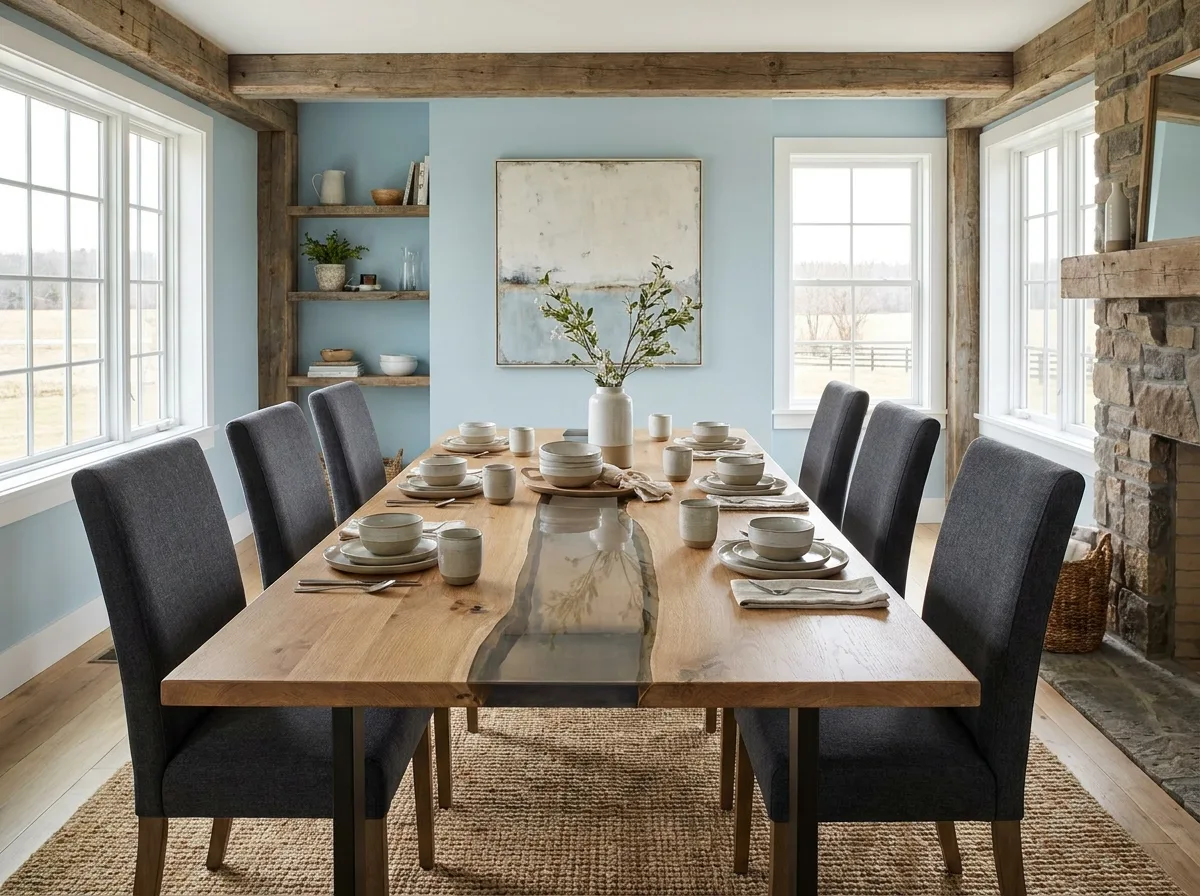
Here is a quick pairing guide, judged by how well each look blends with common US decor rather than by trend.
| Room style | Wood | Resin | Where it clashes |
|---|---|---|---|
| Modern | Walnut | Clear or black | Busy patterned rugs |
| Coastal | Maple or ash | Soft blue, translucent | Heavy dark wood |
| Farmhouse | Oak | Clear, smoky | Bright neon channels |
| Industrial | Walnut | Black | Delicate, thin legs |
| Mid-century | Walnut | Clear, subtle | Wide, chunky slabs |
My opinion: a vivid ocean blue in a small farmhouse dining room fights everything around it. If you’re unsure, go lower contrast.
Which Wood and Resin Color Work Best?
Walnut is the safest wood because its dark grain frames any resin color. Maple and ash give a lighter, airier feel. Oak and acacia suit warmer rooms. For resin, clear and smoky tones age best, while saturated blue, green and burgundy make a bolder statement that dates faster.
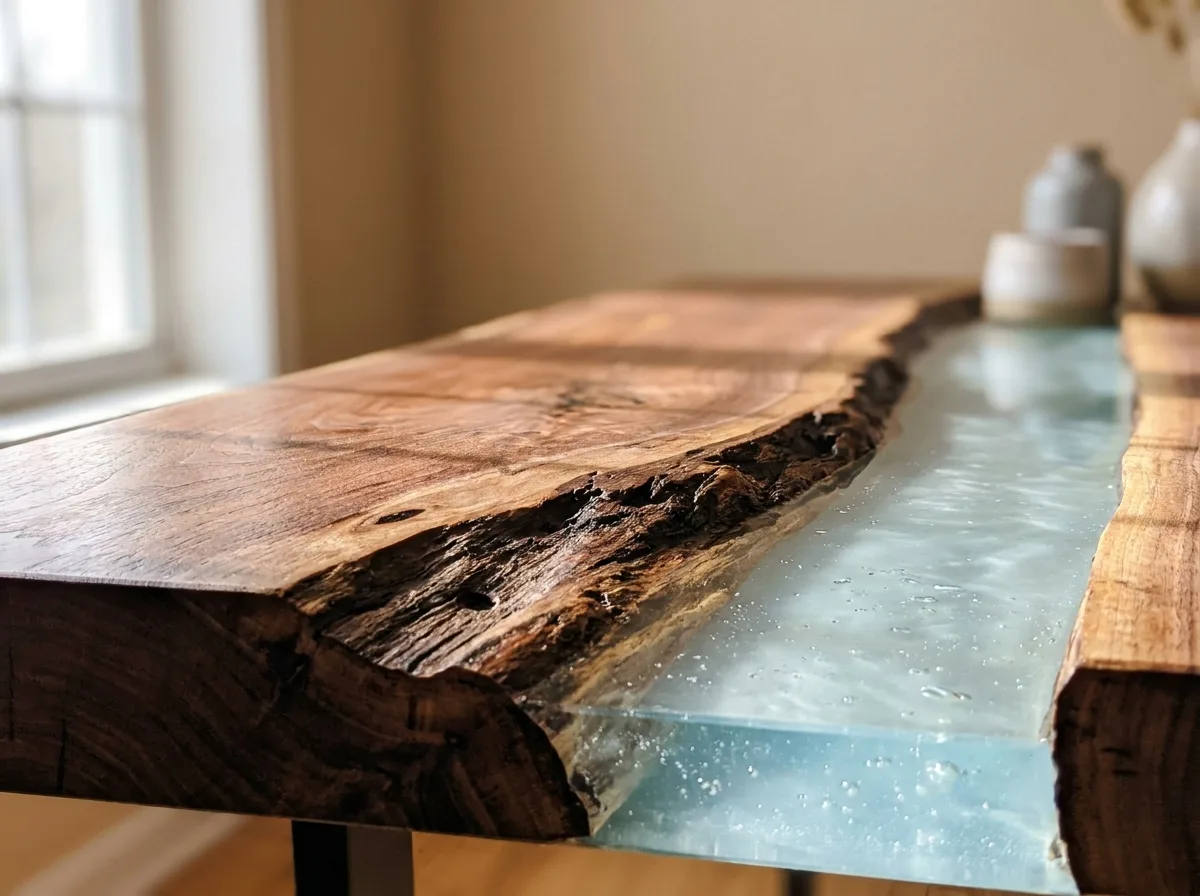
Any river table lives or dies by its colors. Say a homeowner picks a bright green channel because it looked great in a photo. Under warm evening lamps it can read as murky, and under daylight it can look like glass candy. Ask for a sample under your own lighting. Translucent and glow-in-the-dark finishes are fun for a bar top or a playroom, but they’re a lot to live with at a dining table.
Dining, Coffee, Console or Side: Which Type and Size Fits?
Pick the type by how you’ll use the room, then size it to the space. Allow generous walking room around a dining table, often cited as about 3 feet, though it varies by room. As a general guideline, keep a coffee table close to sofa seat height. Console and side versions suit tight rooms.

The commonest river table mismatch is a long, heavy slab table in a small US dining room. It looks great in the showroom and cramped at home. Tape the outline on your floor first and live with it for a weekend. Seating capacity matters too, so check how many people fit comfortably, not just the maximum the seller claims. Extendable and round designs help in small spaces. If you’d rather keep the room light, wall storage that adds warmth without crowding the floor pairs well with one bold table.
What Base Goes With a River Table?
Steel bases suit most rooms because they carry the weight and keep the slab as the star. Hairpin legs read mid-century, trestle bases read farmhouse, and a C-channel hidden underneath adds stiffness. Pick the base for support first and style second, since a heavy slab on thin legs can wobble or sag.
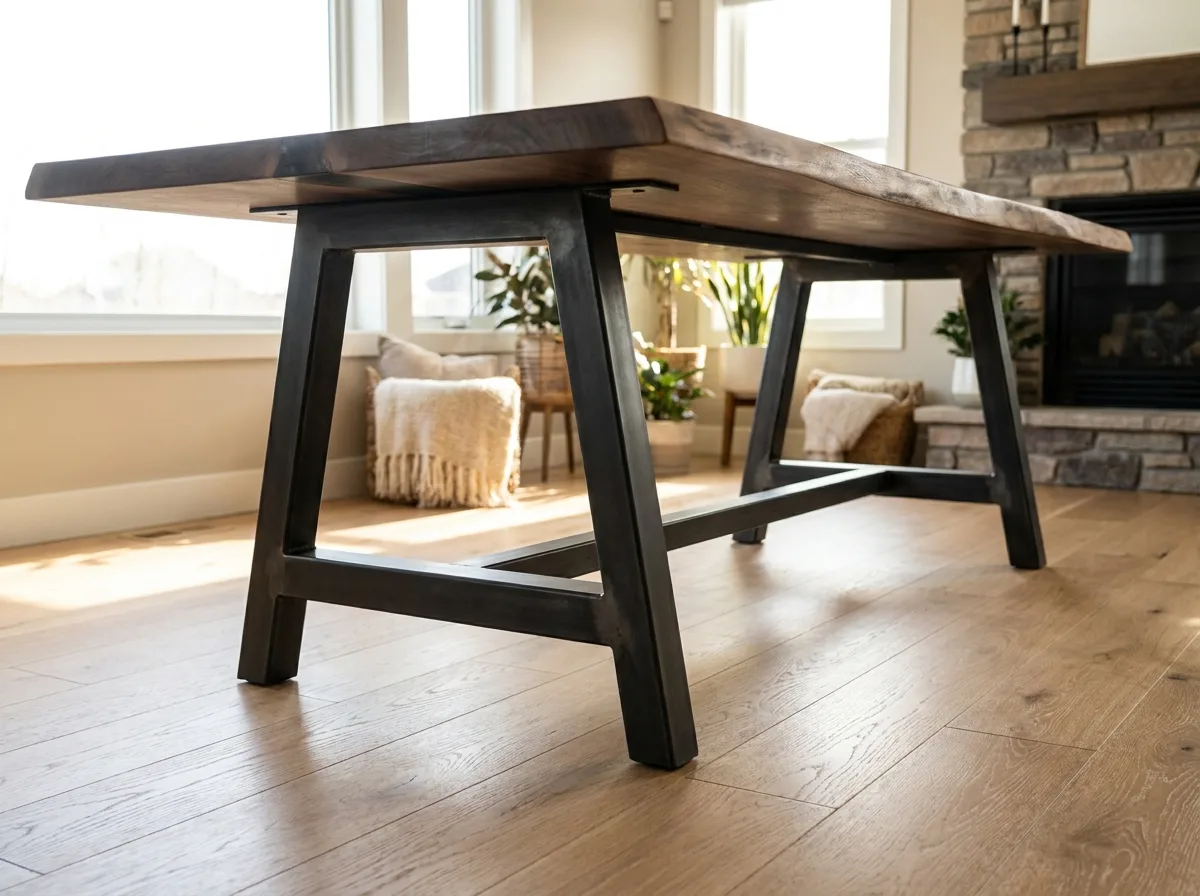
A river table has no hidden reinforcement inside the resin, so the strength comes from the wood and what holds it from below. On long spans, supports or a metal channel under the top matter a lot.
Why Are River Tables So Expensive, and What Is a Fair Price?
Cost comes mostly from the wood slab, the hours of careful labor and the long cure time, with resin as a smaller share. A fair price roughly equals labor hours times an hourly rate, plus materials and a modest margin. Very low prices usually mean thin pours, rushed work or weak construction.
One r/epoxy commenter described pricing as their hourly time plus about 15 percent for materials, then a small profit. That’s one opinion, not a rule, but the logic holds up. For illustration only, a small coffee table might land in the hundreds of dollars, a dining table in the thousands, and a big custom piece higher still. Size, wood rarity and finish drive the spread. One Reddit poster on r/ExpectationVsReality described a $6,500 green-and-blue dining table as a regret. Quotes you can’t break into wood, labor and finish deserve questions.
How Can You Tell a Well-Made Table From a Risky One?
Look at the surface flatness, bubbles, resin depth, support underneath and finish before you pay. A good table is flat across the top, free of cloudy pockets, firm when you press the middle and sealed with a durable finish. Ask what holds up a long span and how the maker cured the pour.
Use this two-minute inspection.
- Run your palm across the join. You shouldn’t feel a lip or dip.
- Look at the resin in angled light for tiny bubbles or cloudy layers.
- Press the middle of a long top. It shouldn’t flex.
- Ask about the support under the slab, such as a C-channel or mortised supports.
- Ask about the finish. Hardwax oils like Osmo and polyurethane behave differently with heat and scratches.
One r/epoxy poster warned that a thin epoxy pour with ash across roughly a 12-foot span invites bowing. Skip any seller who can’t explain what stops that.
How Do You Care for a River Table and Avoid Common Mistakes?
Treat it like fine wood furniture with a glassy accent. Use coasters and trivets, wipe spills quickly, avoid dragging heavy objects and keep it out of harsh direct sun. The common mistakes are skipping the maker’s care advice, ignoring the finish type and buying on color alone. Ask how to maintain your specific finish.
A common version of the mistake is a buyer who sets hot dishes straight on the top because the surface feels tough. Resin and finishes differ, so the maker’s guidance beats any general rule.
Are River Tables Going Out of Style, and What Are Timeless Alternatives?
Partly yes. Some woodworkers joke that the style is the "barn door" of the craft: loved, then overdone. Bold neon versions date fastest. Wood-forward designs with a subtle, clear channel, or a solid slab with a single butterfly key, stay good-looking much longer and cost less.
A solid slab with a clear coat, instead of a full river table, gives you most of the character without the large resin pour. Think of it as the calm cousin. If you love the look but fear fatigue, choose neutral colors and let the grain talk. A fair question: would you still like it in ten years if the trend vanished? If yes, buy it.
Is a DIY River Table Worth It for a Beginner?
It can be, if you enjoy slow, detail-heavy work and accept mistakes on the first try. Expect to build a form, seal the wood, pour in layers, wait through the cure, then flatten and sand. Cost savings are modest once you count resin, tools and wasted material.
Canadian Woodworking’s tutorial lists the same flow and notes a cure of roughly 2 to 7 days. Always follow the data sheet for your product, since pour depth and cure vary. West System advises gloves, eye protection and good ventilation, plus an N95 or better when sanding cured epoxy, because repeated skin contact can cause sensitization. "Floated on me" is the classic beginner story, where the wood lifts during the pour. Weigh it down. Frankly, for a first dining table, I’d buy and save the DIY for a small coffee table.
Frequently Asked Questions
What is a river table?
A river table is a table made from two wood slabs separated by a channel of cast epoxy resin that mimics a flowing river. The wood usually keeps its natural live edge. Makers build dining, coffee, console and side versions, and the resin can be clear, tinted or even translucent. It’s a decorative statement piece first and a practical table second.
Why are river tables so expensive?
Most of the price comes from the quality wood slab, many hours of labor and the long waiting time while resin cures. The resin itself is usually a smaller share than people assume. Add finishing, sanding and a sturdy base, and costs climb quickly. A suspiciously low price often means a thin pour or hurried work, so ask how it was built.
How much does it cost to build a river table?
It depends on the size, the wood and the resin volume, so any single number would mislead you. A small coffee table costs far less than a dining table, and deep pour resin isn’t cheap. Add tools, molds and wasted material on a first attempt. Check your product’s data sheet to calculate volume before buying anything.
How long does a river table take to make?
Plan on days of waiting and hours of hands-on work. Canadian Woodworking mentions a cure of about 2 to 7 days for its project, but products vary. Preparing the wood, building the form, pouring in layers, flattening and sanding all add time. Rushing the cure risks soft or sticky resin, so follow the manufacturer’s data sheet closely.
Are river tables durable?
Yes, when built well. Resin is hard and the wood is solid, but both can mark. The weak point is usually construction, such as a long span without proper support or a thin pour. A sturdy base, a flat top and a quality finish matter more than the color. Check the inspection list above before you buy.
Do river tables scratch or stain?
They can scratch. Resin is hard but not scratch-proof, and the wood can dent or stain depending on the finish. Use coasters, wipe spills promptly and avoid dragging heavy objects across the top. Some finishes can be refinished, so ask the maker. Pick a finish suited to daily use if it’s a dining table.
Can a river table go outdoors?
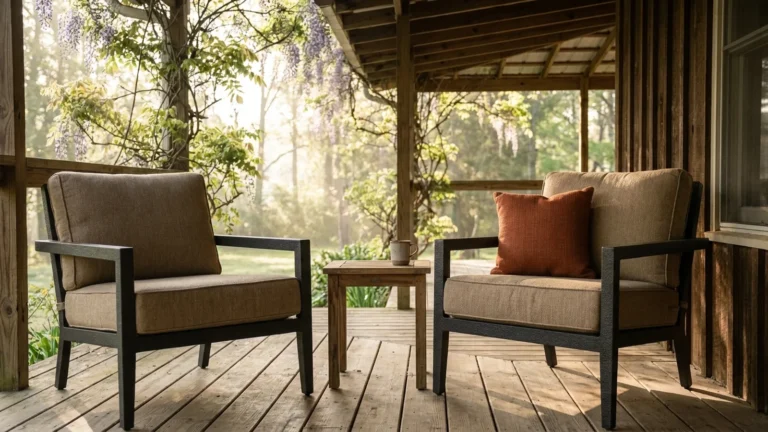
Some makers build outdoor versions, but sun, moisture and temperature swings are tough on wood and resin. Ask whether the piece is made and finished for exterior use, and cover it when idle. Pairing it with seating that survives weather makes a patio setup more realistic.
Are river tables heat safe?
Not completely. Hot pots and dishes can mark resin and some finishes, so use trivets and hot pads. Heat tolerance varies by product and finish, and a hardwax oil or polyurethane behaves differently. Ask the maker for the specific limits of their resin and finish rather than assuming it handles hot dishes.
Is epoxy safe once cured?
Cured epoxy is generally considered stable, but the risk is during mixing and sanding. West System advises gloves, eye protection, ventilation and an N95 or better when sanding cured epoxy. If you’re only buying a finished table, the concern mostly doesn’t apply. Follow the product’s own safety data if you build one.
Are river tables made of plastic or fake wood?
That’s a myth. The wood is real solid lumber, usually with the live edge intact, and only the channel is resin. Resin isn’t "cheating" either, since it is often used to fill voids and gaps in a slab. Poor quality can look plasticky, but good design looks natural.
Conclusion
Choosing a river table that you’ll still enjoy comes down to fit, honesty about cost and restraint. Match the style to your room, size it to your space and inspect the build before paying. The unique trick is to favor low-contrast, wood-forward designs and treat the channel as an accent, not the whole show.
Back to the blue-and-walnut table from the start: the real question was whether it suited the room and was built to last. Your next step is simple. Tape the outline on your floor, then ask any seller to explain the support, the pour and the finish. My opinion is that quieter, natural looks will outlast the loud ones.
If you’re furnishing the rest of the room, an honest dresser comparison and ideas for wall storage that keeps things light make good next reads. So, which will you pick: the bold channel, or the quiet slab?