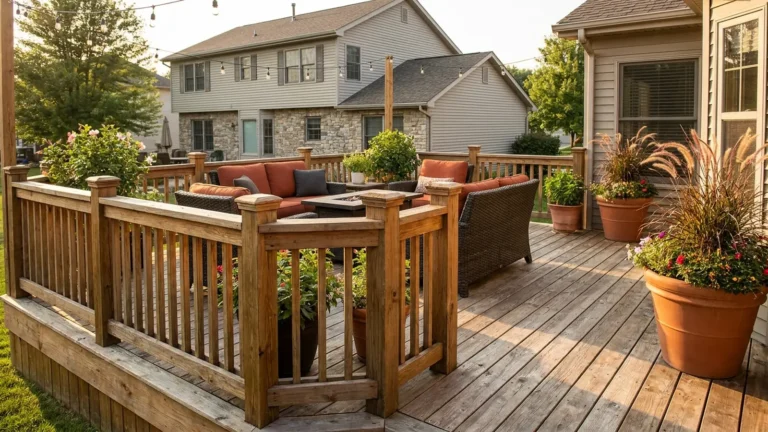
Deck Stain Ideas: Pick the Type and Color That Actually Last
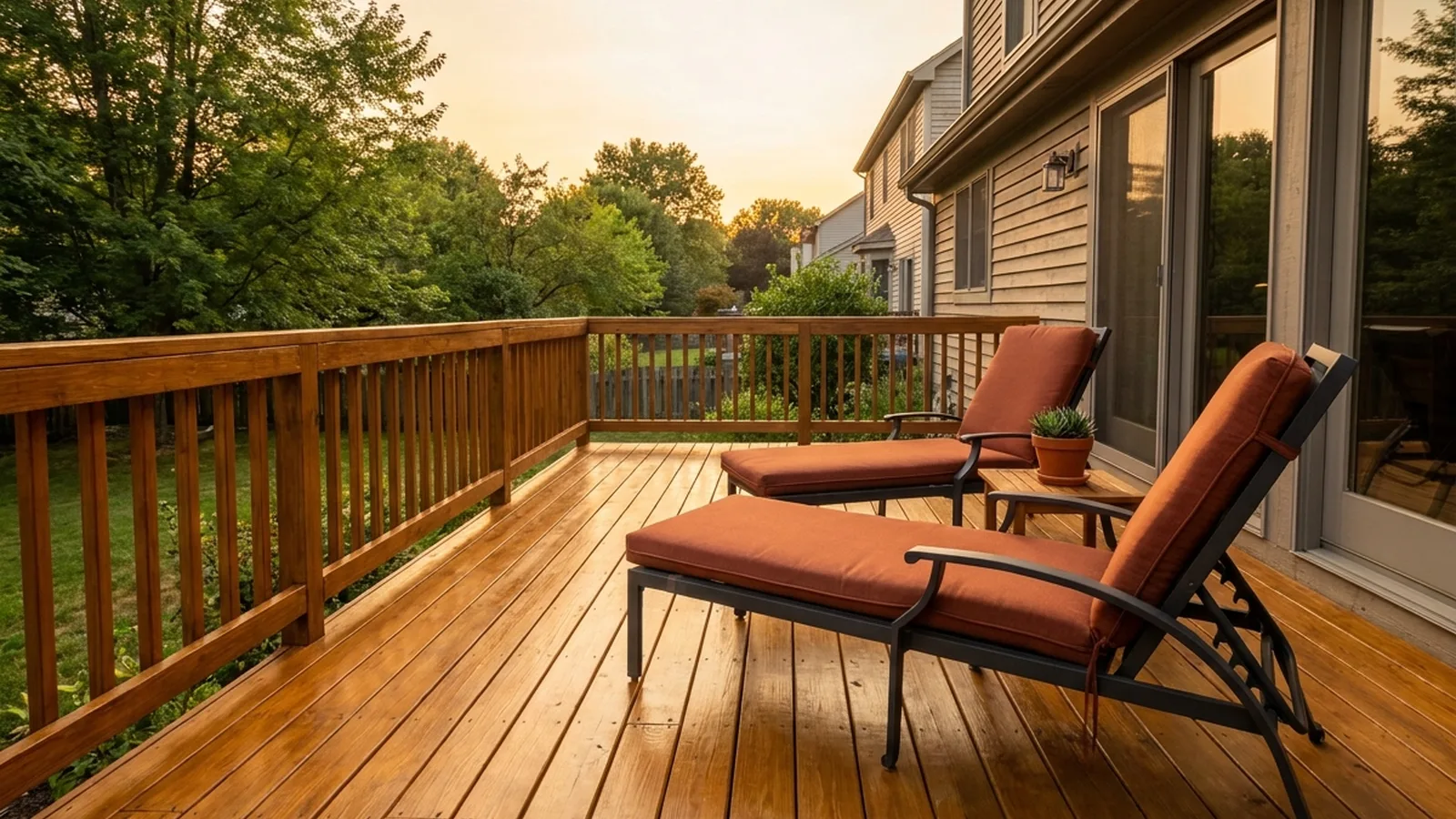
Say a homeowner spends a long Saturday scrubbing a gray deck, then paints on a rich honey-brown deck stain from the big-box aisle. It looks gorgeous for one summer. By the next spring the surface is flaking in sheets, and the only fix is sanding the whole thing back to bare wood.
Here’s the twist most labels skip. The color you pick matters less than whether the product soaks into the wood or sits on top of it like a skin. Skins crack, lift and peel. Soaked-in stains just fade, and fading is easy to fix.
This guide is one part of planning an outdoor living space, and it sits right beside deck railing ideas in that bigger project. You’ll learn which type to buy, which colors flatter your wood, what it costs, and how to avoid the peeling trap.
Executive Summary
You can stain a deck this weekend and have it still looking good for a couple of years (a typical claim, not a promise), if you match four things: stain type, wood, prep and sun exposure. That’s the whole game, and none of it needs special skills.
Inside, you’ll get a type chooser table, a color guide by wood species and trim, an illustrative cost walkthrough for a 300 square foot deck, a short numbered process, and a failure diagnosis list for peeling, blotches and tacky spots.
Expect a few opinions too. Semi-transparent is the safest bet for most sunny decks. Prep beats brand. And sometimes the smartest move is skipping stain entirely.
The biggest objection is usually, "Won’t a cheap stain do the same job?" Partly. Price isn’t the problem. A film-forming stain over old wood is. Penetrating stains cost more per gallon but ask far less of you at recoat time.
Which type of deck stain should you choose?
Choose semi-transparent deck stain for most decks. It soaks in, shows the wood grain, adds UV protection and fades instead of peeling. Pick transparent only for shaded, protected wood, semi-solid when you want more color, and solid when the boards are tired and you want them covered like paint.
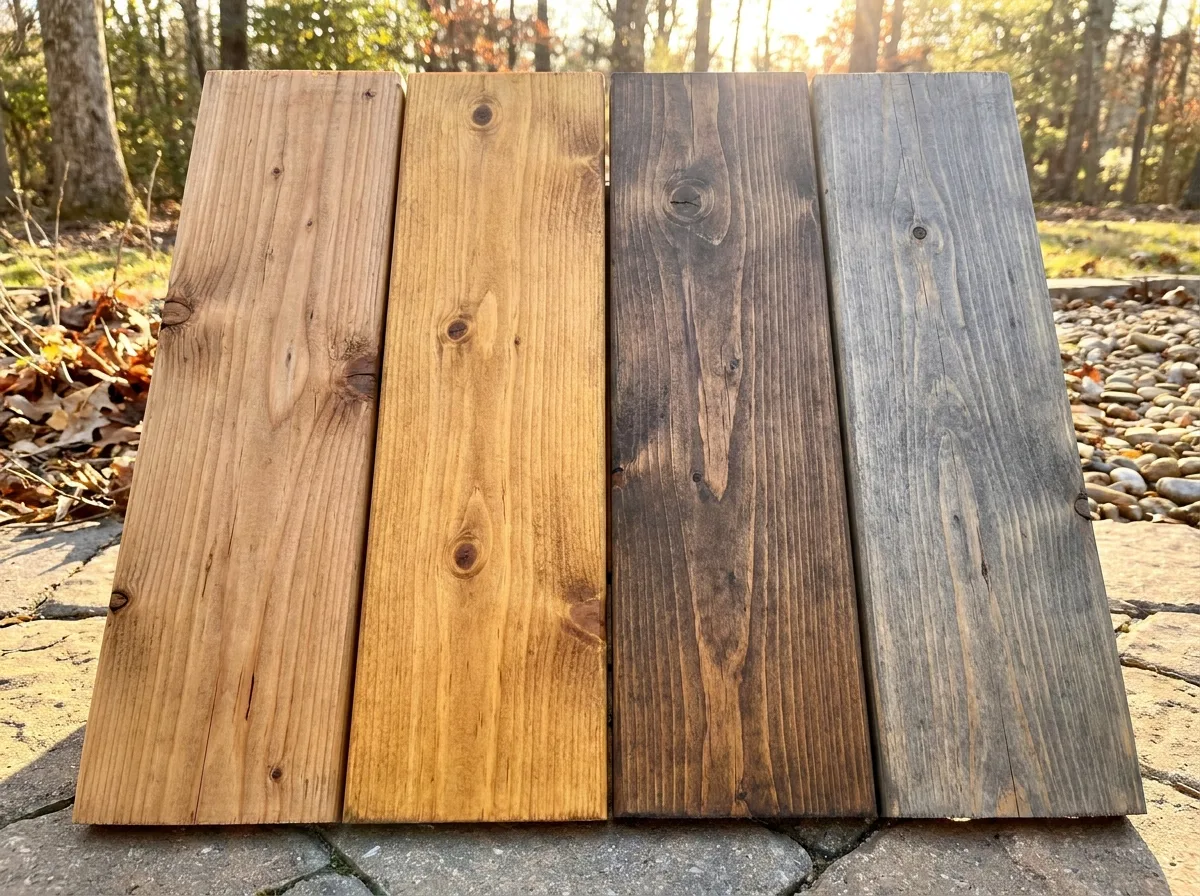
Lowe’s and other retailers sort each deck stain into four types: transparent, semi-transparent, semi-solid and solid. The more pigment, the more UV protection and the less grain you see. Forest products research on deck finishing points the same direction: penetrating semi-transparent oil stains weather gracefully. Treat that as general guidance on deck stain, not a promise.
| Type | Grain shows | Sun protection | Best for | Catch |
|---|---|---|---|---|
| Transparent | Fully | Low | Shaded, new cedar | Fades fast |
| Semi-transparent | Mostly | Good | Most decks | Color shifts with wood |
| Semi-solid | A little | Better | Older, mixed boards | Starts acting like a film |
| Solid | None | Best | Worn decks | Can peel, hard to reverse |
Some owners report that clear water sealers, Thompson’s Water Seal among them, lasted only a season or so on horizontal boards. Results vary with sun, wood and prep.
Oil-based or water-based: which stain is better?
Oil-based stains usually penetrate deeper and recoat easily, while water-based stains clean up with soap and water and dry faster. Oil suits bare or weathered wood. Water-based suits owners who hate the smell or live where VOC rules are tight. Neither is banned nationwide, and state rules vary.
Experienced owners on Reddit lean oil when choosing a deck stain. Brands named again and again include Cutek Extreme, Sansin DEC, Armstrong-Clark, TWP and Ready Seal. Water-based options such as Behr, Cabot and Sherwin-Williams SuperDeck are easier to find and easier to use, but a water-based solid on a horizontal deck is where many peeling horror stories start.
The "oil is going away" rumor is half true. Formulas changed to meet VOC limits, so the can you buy today isn’t your dad’s. My opinion? Buy the penetrating oil if your state sells it and you can stand the smell for one afternoon.
What deck stain color looks best on your wood?
Match the color to the wood and the house. Cedar and redwood glow in natural, cedartone or honey shades. Pressure treated pine looks best in warm browns or walnut. Gray and espresso suit modern homes. Test on a spare board first, because the same tint looks different on every wood.
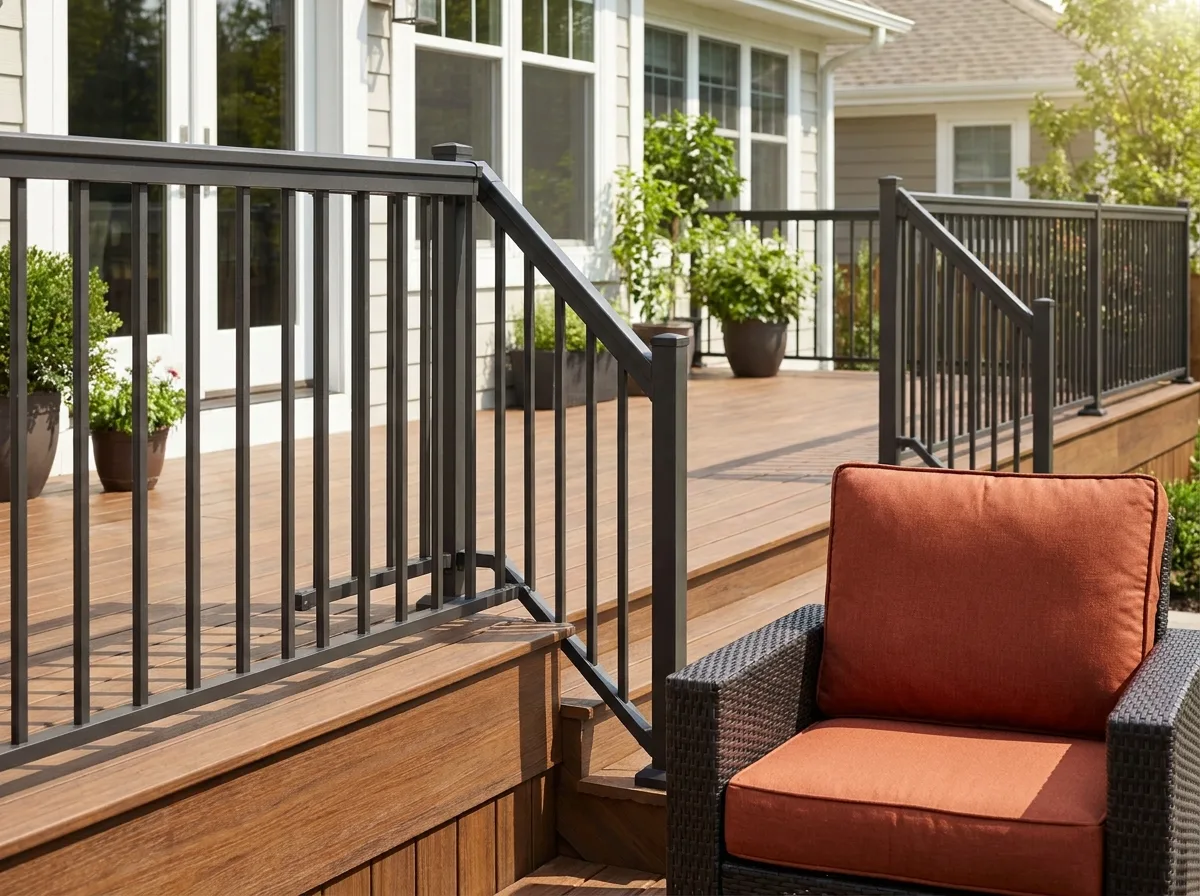
Wood color changes the result. A cedartone deck stain on fresh cedar looks warm and golden, while on old gray pine it can look muddy. Weathered gray wood also changes final color, which is why sample cans on a hidden board save regret.
- Modern home: gray, charcoal or espresso with dark railings.- Rustic or log style: walnut, autumntone or natural with the grain showing. Semi-transparent finishes keep the knots and texture that make this look work.
- Coastal: driftwood gray or light natural, with white trim. Lighter tints also hide salt, sand and sun fade a little better.
| Wood | Tints that usually work | Watch out for |
|---|---|---|
| Cedar and redwood | Natural, cedartone, honey | Very light tints fade quickly in strong sun |
| Pressure treated pine | Warm brown, walnut, autumntone | Green or gray cast shows through light tints |
| Weathered gray boards | Medium to dark browns, after cleaning | Muddy results over unbrightened wood |
Stain rails and lattice to match, or go one shade darker so the floor stands out. Planning a fence beside the deck? A coordinated picket fence can share the same tint.
How long does a stain last on a deck?
Expect roughly one to five years, depending on type, sun, foot traffic and prep. Some makers advertise a couple of years for semi-transparent and longer for solid, but treat those as marketing claims. Owners report everything from 8 months on cedar with some oils to still-fresh looks after 2 years.
Those are claims and anecdotes about deck stain, not lab results. Southern exposure, snow and pets all shorten the clock. Water beading is the cheap test: sprinkle water, and if it soaks in, the stain has done its job and the boards need a recoat.
The repeat-cycle trick is the sneaky saver. A penetrating stain needs only a clean and recoat. A film-forming one needs stripping. Over ten years, the second route costs more in weekends than any premium gallon ever did.
How much does deck stain cost?
A typical DIY job costs a few hundred dollars: stain, cleaner, brightener and tools. Say a 300 square foot deck needs 2 to 3 gallons, so stain alone runs about $110 to $250 at listed 2026 prices. A contractor adds labor, which varies widely by region and prep and isn’t verified here.
Here’s a hypothetical example, not a quote. Armstrong-Clark lists a gallon at $72.95 to $83.95 on its site, and Restore-A-Deck lists a semi-transparent gallon at $53.99. Coverage depends on wood age and product, so read the can.
| Item | Rough cost driver |
|---|---|
| Stain, 2 to 3 gallons | Brand and type |
| Cleaner and brightener | Deck size |
| Pad, brush, tray, pole | One-time buy |
| Contractor labor | Region, prep, railings |
Over a decade, a cheap stain redone every two years can cost more than a pricier one redone every three or four.
How do you prep and apply it without lap marks?
Clean, brighten, let the wood dry, then apply thin coats with the grain, working a few boards at a time. Expect a weekend: one day for prep and drying, one for staining. Skipping the cleaner and brightener is the most common mistake.
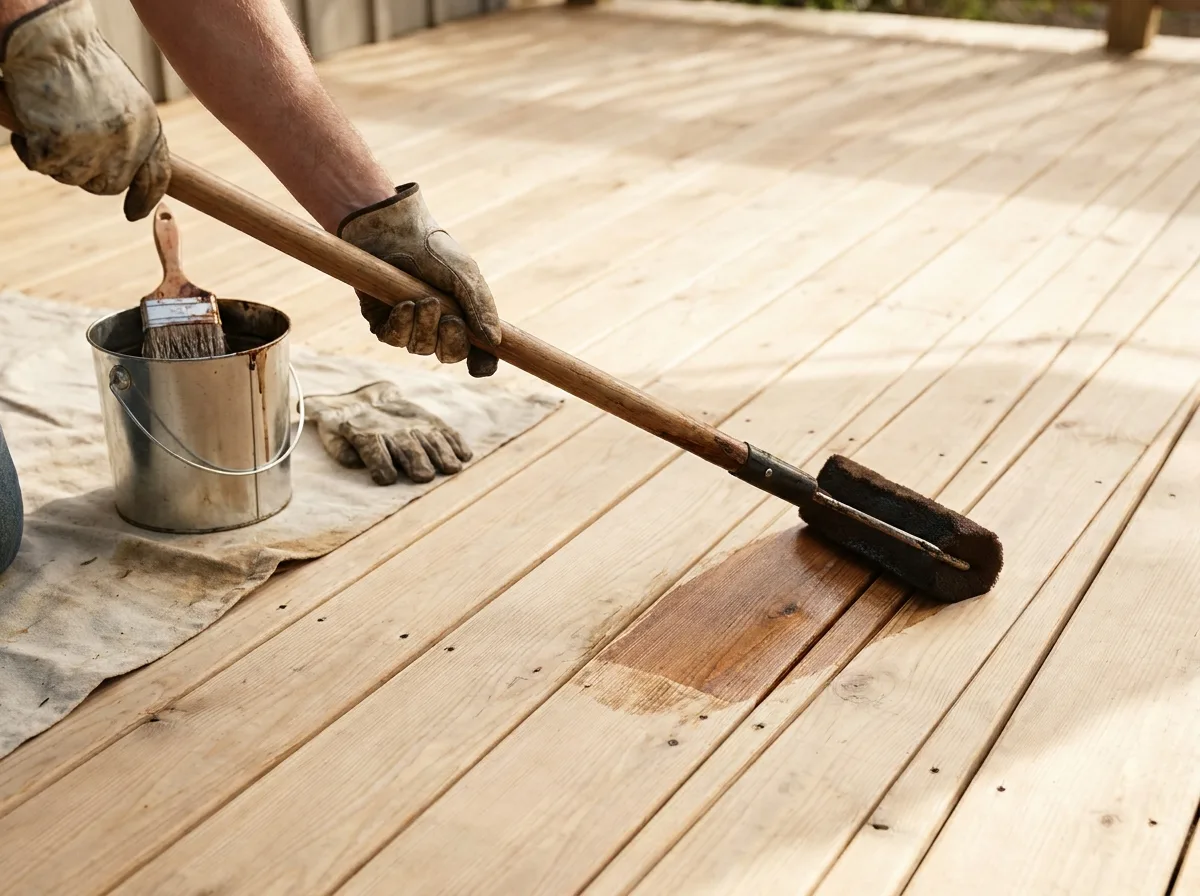
Most deck stain failures are prep failures. A handyman who brushes stain on thick like paint hides the grain and creates peeling later. Thin is right.
- Sweep and wash with deck cleaner to lift mildew and dirt.
- Apply brightener, which neutralizes the cleaner and prevents dark tannin spots after sanding.
- Sand rough or glossy boards lightly with medium grit paper to open the pores. This matters most on new lumber with mill glaze, the slick surface left by factory planing that can block absorption.
- Wait until the wood is dry. One manufacturer says new wood should be under 15 percent moisture, and a cheap moisture meter confirms it.
- Stain one or two boards at a time, full length, to avoid lap marks.
- Back-brush any puddles, then wipe the excess.
Pads, brushes and sprayers all work, but a sprayer still needs back-brushing. Check the label for ventilation. Oily rags can self-heat, so spread them flat outdoors to dry or soak them in water as the label says, and follow local disposal rules.
When should you stain a new or pressure treated deck?
Wait until the wood is dry enough to absorb stain. For new pressure treated lumber that can take weeks to months. One manufacturer says wood should read under 15 percent moisture. A simple water-splash test tells you if you’re there.
Sprinkle water on a few boards. If it beads and sits, the wood is still too wet or sealed by mill glaze, so wait or sand lightly. If it darkens and soaks in within a few minutes, the boards will accept a penetrating stain. Gray, weathered decks are the opposite case: dry but dirty, so clean and brighten first. For old stain or deck paint, use the patch test in the FAQ below.
Why is my stain peeling, blotchy or tacky?
Peeling usually means a film-forming product failed over old or damp wood. Blotches come from skipped brightener or uneven absorption. Tacky means too much stain went on. The fix is stripping for peeling, wiping back for tackiness and sanding with brightener for blotches.
A common version of this deck stain story: an owner buys a water-based solid in spring, and by autumn half the boards have lifted. Reports of warranty claims not being honored on such products show up in deck forums, so keep receipts and photos.
- Peeling: strip, sand, start fresh. Avoid putting a film over a film.
- Blotchy: brighten, sand and recoat, since tannins in the wood can show through.
- Tacky: wipe with a rag and mineral spirits or solvent per the label. Thin the next coat.
- Lap marks: work faster, shorter sections, and wet edges.
When should you skip deck stain altogether?
Skip stain when boards are cracked, soft or badly weathered. Solid stain, deck paint or a textured deck-over coating can cover worn wood, and composite decking removes the staining chore. If boards are sound, a penetrating semi-transparent is almost always the better first move.
Is it okay to leave a deck unstained? Treated wood can last a while, but it grays, cracks and cups faster. Stain slows that down, and it isn’t a permanent finish.
Pick a rule: replace the boards if more than a few are soft, and consider composite if you hate yearly chores. Pick a solid deck stain if the deck is sound but ugly. Otherwise keep it simple, and stay with penetrating stain.
Frequently Asked Questions
Is it okay to leave a deck unstained?
Yes, for a while, but it isn’t ideal. Bare wood grays, absorbs water and cracks faster in sun and rain. Treated lumber resists rot better than untreated, yet it still weathers. A penetrating semi-transparent stain slows that damage and keeps the boards looking intentional. If budget is tight, clean the deck yearly and stain when you can, rather than never.
How often should I restain a deck?
Most decks need a refresh every one to four years, depending on type and sun. Some manufacturers claim longer for solid products, but those are claims, not guarantees. Use the water test: if drops soak in, recoat. Penetrating stains only need a clean and fresh coat, which makes upkeep simple. Stain the rails to match, and plan their style with the railing guide linked earlier.
Can I stain a wet deck?
Better not to. Damp wood blocks absorption and can cause blotches or peeling. Some manufacturers, such as Restore-A-Deck, say their product works on damp wood, so follow your own label. Generally wait for a few dry days after cleaning, and use a moisture meter if you want certainty. New treated lumber often needs months to dry.
Is deck stain waterproof?
No, that’s a myth. Stain adds UV protection and water repellency but doesn’t make wood waterproof the way a film does. Water beads for a season, then soaks in as the stain wears. Think of it as a sunscreen with some water resistance. Expect to recoat on schedule so your deck stain keeps protecting the boards.
Should I use a brush, pad or roller?
A pad or brush gives the best control. Brushes work stain into the grain and handle rails. Pads move fast on flat boards. Rollers speed things up, but you still need back-brushing so the stain soaks in. Sprayers work too, but they also need back-brushing and plenty of masking.
How much stain do I need for 300 square feet?
Plan on roughly 2 to 3 gallons for the floor of a 300 square foot deck, more for rails and for dry, weathered wood. That’s a hypothetical estimate. Check the coverage on your can, because rough wood drinks more. Buy a little extra so batch colors match across the whole job.
Is Thompson’s Water Seal enough?
Usually not for decks in strong sun. Some owners report that clear water sealers and transparent products lasted only a single season on horizontal boards. A semi-transparent stain with pigment protects against UV much better. If you already used a sealer, test whether new stain absorbs before committing.
Do I have to strip old stain?
Not always. Penetrating stains usually need only a clean and recoat. Film-forming products and failing paint do need stripping or sanding before anything new sticks. Do a small test patch: if the new stain soaks in evenly, you can skip the strip. If it beads or flakes, strip it.
Is oil-based stain being banned?
No nationwide ban exists. Rules on VOCs vary by state, and formulas changed to meet them, which fueled the rumor. Some oil stains remain on shelves while others became water-based. Check what your state allows and read the label. A good penetrating oil is still a smart choice where sold.
Does deck stain make a deck slippery?
Deck stain itself isn’t usually slippery, but thick, glossy film or algae growth is. Semi-transparent penetrating stains leave a more natural texture than solid coatings. Clean mildew yearly and avoid heavy gloss near steps and pools, where boards stay wet. Check the label before adding any grit additive, and test a small area first, because grip and looks both change.
Conclusion: The Bottom Line
Back to that honey-brown Saturday. The fix wasn’t a prettier color, it was choosing a penetrating deck stain that fades gently instead of peeling. Prep beats brand, thin coats beat thick ones, and semi-transparent is the safest starting point for most sunny decks.
Rules vary by state and formulas keep changing, so reading the label matters every time you buy. Start small: test two or three colors on a spare board, and let them weather for a few days before you commit.
When you’re ready for the next project, our deck railing ideas and picket fence guides pair nicely with a fresh finish, and the hog wire fence guide covers a wood-and-wire look.
So which would you rather do this year: spend one careful weekend on prep, or a whole weekend sanding peeled stain next spring?