
Hog Wire Fence Ideas and Styles for a Clean, Durable Yard
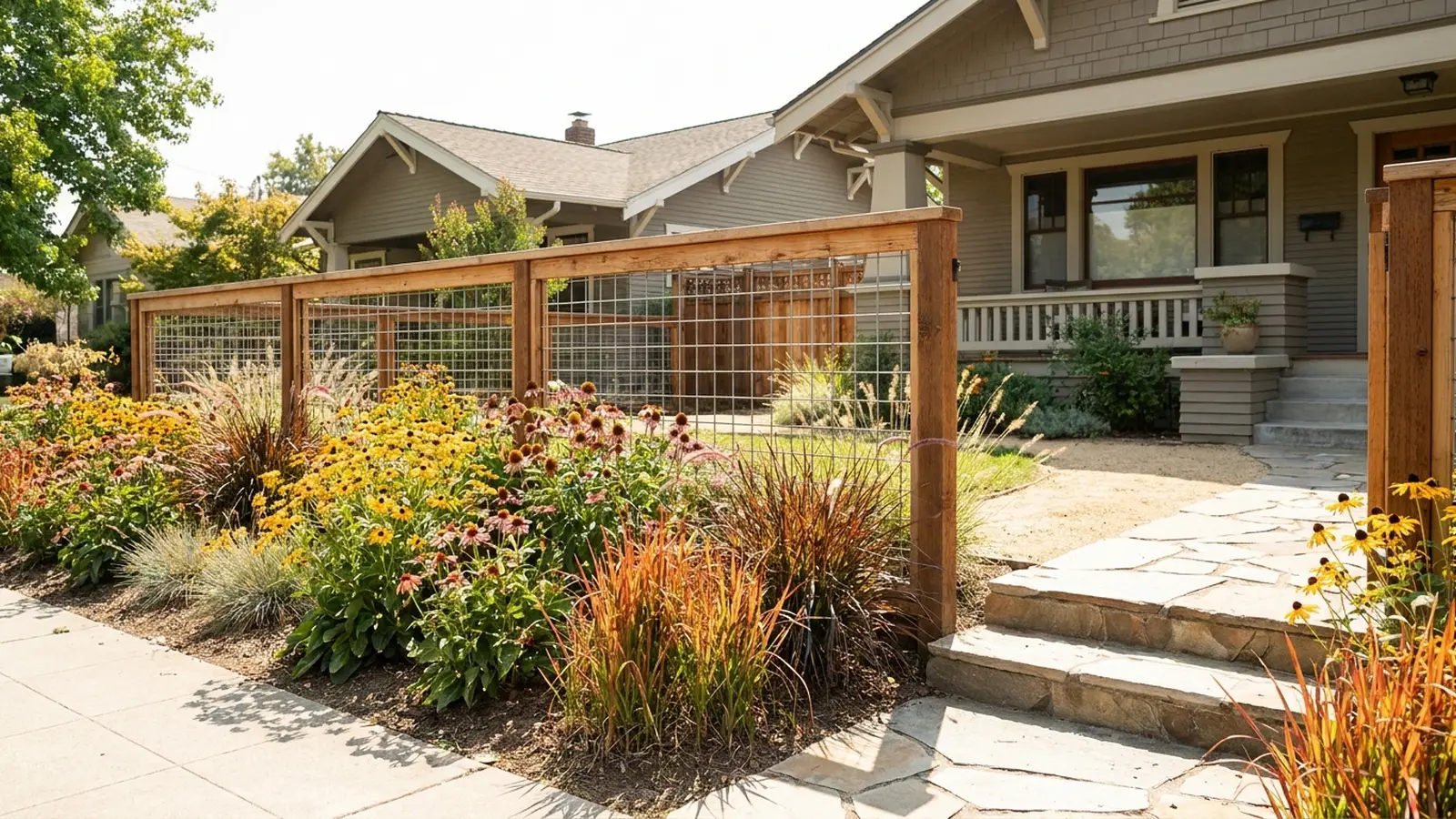
Picture this. You love the look of a framed wire fence on a neighbor’s lot, so you ask for a quote. The number comes back far higher than the price of the wire suggests. That surprise is a common story in homeowner threads about the hog wire fence, which is why this guide spends as much time on cost and build method as it does on pretty ideas.
A hog wire fence is a welded wire panel, usually set inside a wood or metal frame. It looks tidy, lets light through and keeps a yard feeling open. The catch is that the frame and posts, not the wire, decide most of your bill. Below you’ll find the styles worth copying, realistic cost drivers, a build order, and the mistakes that make these fences fail or blow a budget.
The short version
- Hog wire is welded wire mesh, most often 6-gauge with 4 inch openings, sold as flat panels or rolls.
- Wire is the cheap part. Posts, framing, gates and labor drive the price, so quotes vary a lot.
- Standard 4 inch openings are a weak point for small pets and railings, so check your use case before you buy.
What is a hog wire fence?
A hog wire fence is built from heavy welded wire mesh that was originally made to contain livestock. Today the same panels serve as a residential fence, a garden enclosure, a deck railing infill or a topper on another fence. The wire is usually galvanized or powder coated, and the openings are most often 4 inches square.
The name causes confusion, so a few definitions help. "Hog wire" is a style, not one product. "Hog panel" and "cattle panel" are rigid, flat sections of welded wire, often 16 feet long in the farm version. "Wild Hog" is a brand of premium residential panels, not a type of wire, even though shoppers use the word that way.
Rolls of woven field fence show up in the same search results. They’re agricultural products stretched between posts and don’t give the crisp look most people picture.
What are the best hog wire fence styles and ideas?
The best styles are a wood-framed panel, a black powder-coated metal frame, a low garden border, a topper over a solid fence and a railing infill. Each solves a different problem. Pick by what the fence must do first, whether that’s pets, plants, view or curb appeal.

- Wood-framed panels. Cedar or treated lumber surrounds each panel, with the wire set in a routed groove, sandwiched between boards or held by trim. This is the classic wood and wire fence look and the most common homeowner choice.
- Metal-framed. Steel posts with a welded or bolted frame give a slim, modern line and avoid the rot risk of wood. They often cost more up front.
- Black powder-coated panels. Dark panels fade into the landscape and make plants stand out. They suit front yards where you want a boundary without a wall.
- Garden borders. A 3 to 4 foot hog wire garden fence can fence off a bed from larger animals, but 4 inch openings will not stop small dogs, rabbits or similar. The mesh also doubles as a trellis for beans or tomatoes.
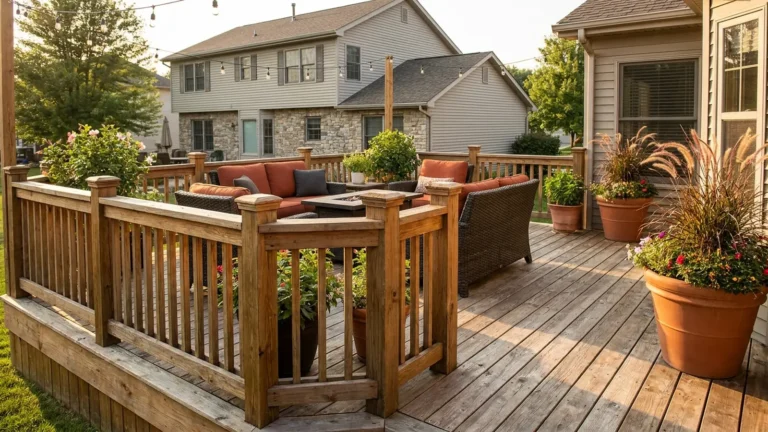
- Deck and stair railing. Hog wire works as infill, but guard rules apply, covered in the FAQ.
- Pool-area screens. If you’re planning a stock tank pool corner, a wire panel screen can define the space and keep airflow. Pool barriers often need specific spacing and a permit, and rules are local, so confirm yours with your building department before relying on any mesh.
How does a wood and wire fence compare to chain link, wood privacy and field fence?
A wood and wire fence usually costs more than chain link and basic field fence, can land close to a custom wood privacy fence once the frame is built, and has the best looks of the group. It offers no privacy on its own. Chain link and field fence win on price. Solid wood wins on privacy.
| Fence type | Look | Privacy | Cost trend | Best for |
|---|---|---|---|---|
| Framed hog wire | Modern, open | Low | Mid to high, frame driven | Front yards, gardens |
| Chain link | Utility | Low | Lowest | Large yards, dogs, tight budgets |
| Wood privacy | Traditional | High | Mid to high | Privacy and noise |
| Field or farm fence | Rural | Low | Low | Acreage, boundary lines |
One contractor cost guide from Scheiderer Fence puts the average installed fence at roughly $20 to $60 per linear foot, with wood privacy about $13 to $45 and chain link about $8 to $20. Treat that as a ballpark from one contractor’s blog, not a quote.
How much does a hog wire fence cost per foot?
Cost per foot depends on whether you buy bare panels or a finished framed fence. Unframed premium panels can be cheap, but a framed, installed fence often lands in the same range as other custom fences. The honest answer is typical ranges with big drivers, not one number.
BarrierBoss, a retailer, listed premium unframed panels from about $25 each and gates from about $325 in October 2026. Agricultural cattle panels sell for less. Those prices cover wire only, with no posts, lumber, concrete, fasteners, stain or labor.
What homeowners report is a wide spread. These are anecdotes, not averages:
- An r/landscaping poster got two quotes near $22,000 for about 170 to 180 feet of 4 foot wood and hog wire fence. Replies said to get three quotes.
- Another poster in that thread paid about $5,500 for roughly 350 feet plus an 8 foot double gate.
Those numbers disagree because the jobs don’t match. The drivers are height, frame type, post material and spacing, terrain, gates, and local labor rates. A 6 foot fence uses far more of everything than a 3 foot border, and one gate can cost as much as many feet of fence.
A clearly hypothetical example helps. Say you want 100 feet of 4 foot fence. With posts about 7 feet apart, you’d need roughly 15 spans and 16 posts. That’s before rails, caps, panels, concrete, a gate and a day or two of digging. You can see why the total climbs even though the panel looks cheap.
Is it cheaper to DIY or hire a pro?
DIY is cheaper in cash, often by a wide margin, but only if you own or can borrow the tools and have a few free weekends. A pro costs more but pays off on slopes, long runs and gates. Labor is about half of installed fence cost, according to one contractor guide.
A Marin County homeowner on r/HomeImprovement shared a useful comparison. Pro quotes on uneven ground came in at about $3,000, then $4,600 with a gate, while the DIY materials list was around $652. Another poster priced about 500 feet with three gates at roughly $5,000 DIY versus $8,000 pro, and said the pro was worth it.
My rule of thumb: DIY the straight, flat runs if you’re handy. Hire out the gates, corners and any run on a slope, or at least get a bid so you know what you’re saving. It’s the same trade-off you face on a bathroom remodel or any other home project, where doing the simple work yourself and hiring for the hard parts can keep the total down.
Check your city and any HOA before you buy, because fence height, setback and permit rules vary by location.
What gauge and mesh size should you buy?
For most yards, buy 6-gauge welded wire with 4 inch by 4 inch openings in panels about 3 to 4 feet tall. Lower gauge numbers mean thicker wire, so 6-gauge is heavier than 14 or 16. Vendors list 6-gauge as about 4.9 mm. Smaller mesh may cost more.
BarrierBoss and Wild Hog both list standard panels with 4×4 openings, in sizes from roughly 3 by 6 feet up to 8 by 8 feet. One Reddit buyer wanted 3 inch squares and learned they’re custom and costly, which fits 4×4 being the standard.
Hog wire panels vs rolls
Panels are rigid, flat sheets. Rolls are flexible and must be stretched tight. Panels make a clean line and suit framed designs. Rolls suit long, cheap runs. Amazon’s results are mostly rolls of welded wire and cattle fence, so first-time buyers often end up with the wrong product. For a framed fence, make sure the listing says panel.
Should you choose cattle panels or premium hog panels?
Choose cattle or utility panels for the lowest price when looks matter less. Choose premium hog panels when the fence is visible and you want even spacing and a coated finish. Both are welded wire, but they differ in wire weight, spacing and finish.
In a Reddit thread comparing Wild Hog to 4×4 utility panels, the poster said utility panels used thicker wire at about half the price. The premium panels were powder coated with even spacing, while utility panels were galvanized with tighter spacing near the bottom. Those are one buyer’s observations, so measure what’s in front of you.
Be careful with cheap rolls. According to a Quora answer, 16-gauge welded wire isn’t strong enough for full-size farm pigs, and it can bend under a determined dog too.
How do you frame a hog wire fence?
You frame hog wire by holding the panel in a wood or metal frame. The three common methods are a routed channel, a sandwich of boards and a track kit. A routed channel looks best. A sandwich is easiest. A track kit is fastest but costs more.
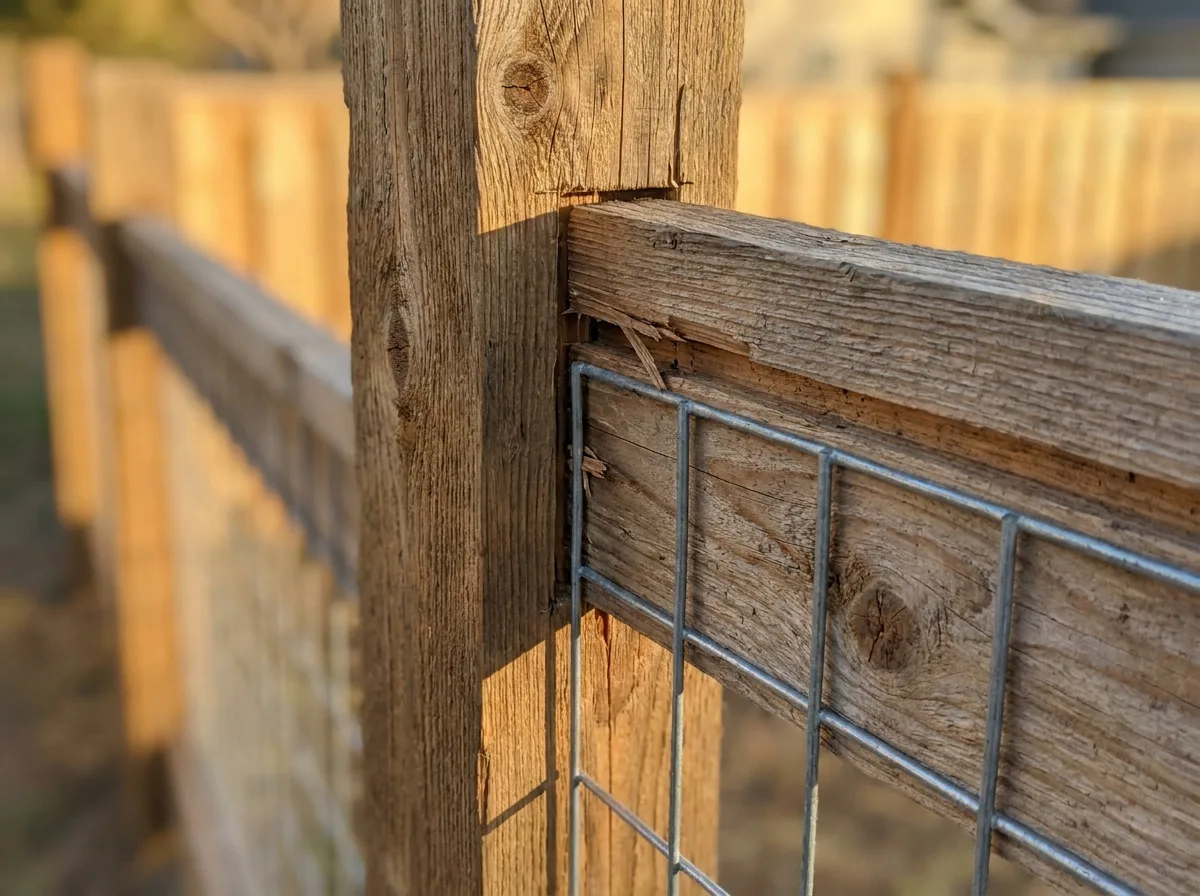
Routed channel. You cut a groove in the frame boards and slide the wire inside. A DIY Network demo used a channel about 1/2 inch deep and 3/8 inch wide, with 6×6 cedar posts roughly 7 feet apart and a jig to keep the offset consistent. Pre-drill cedar to prevent splitting.
Sandwich. The panel sits between two boards, fastened through the layers. One poster described a sandwich of 5/4 treated decking and plastic-coated wire that still looked great after 10 years. It’s the most forgiving method for beginners.
Track kit. Manufactured channels, such as Hog Tracks, clip the wire in place. One poster called them "too pricey," though they save labor.
How do you build a hog wire fence step by step?
You build it by laying out the line, setting posts, adding frame boards, mounting the panels and finishing with caps, gates and sealant. Give yourself more time than the video builds suggest, because digging and framing take longer than mounting the wire. Work in order and check level at every stage.

- Check rules and mark utilities. Confirm height limits, setbacks and HOA review, then call 811.
- Lay out the line. Use string and stakes. Measure panel width and post spacing so you don’t end with a short odd section.
- Set the posts. Dig below your local frost depth where it applies, add gravel for drainage, set posts plumb and let concrete cure.
- Add the frame. Build the rails or routed frame boards. On a slope, keep rails parallel to the ground.
- Mount the wire. Slide panels into the channel or sandwich and fasten them every few inches. Keep tension even so welds don’t tear.
- Cap and seal. A top cap sheds water. Stain or seal exposed wood on all sides, including end grain.
- Hang gates last. Gates need heavy posts and good hardware. Test swing and latch before final tightening.
How do you handle slopes, gates and corners?
Handle slopes by stepping panels or stretching wire up the incline with even pressure. Handle gates with heavier posts and solid hardware, and brace corners properly. Hog wire is hard on hills because rigid panels don’t bend, so slopes raise both effort and cost.
A Marin homeowner got a tip to stretch the wire up the incline instead of angling it, and to keep pressure even so welds don’t tear. If you use panels, a stepped design works. Each panel stays level and the bottom gap changes with the grade.
For gates, use a post thicker than your line posts and set it deeper. A wire gate is light, but the frame around it can be heavy. A wood and wire fence gate that sags is almost always a post problem, not a hinge problem. Corners and ends carry the pull of the wire, so brace them with a second post or a diagonal rail.
Will a hog wire fence keep dogs in?
It can keep large dogs in if it’s tall enough and tight at the bottom, but it often fails with small dogs and diggers. Standard 4 inch openings let small dogs through. A big dog can also climb or dig, so height and a dig barrier matter.
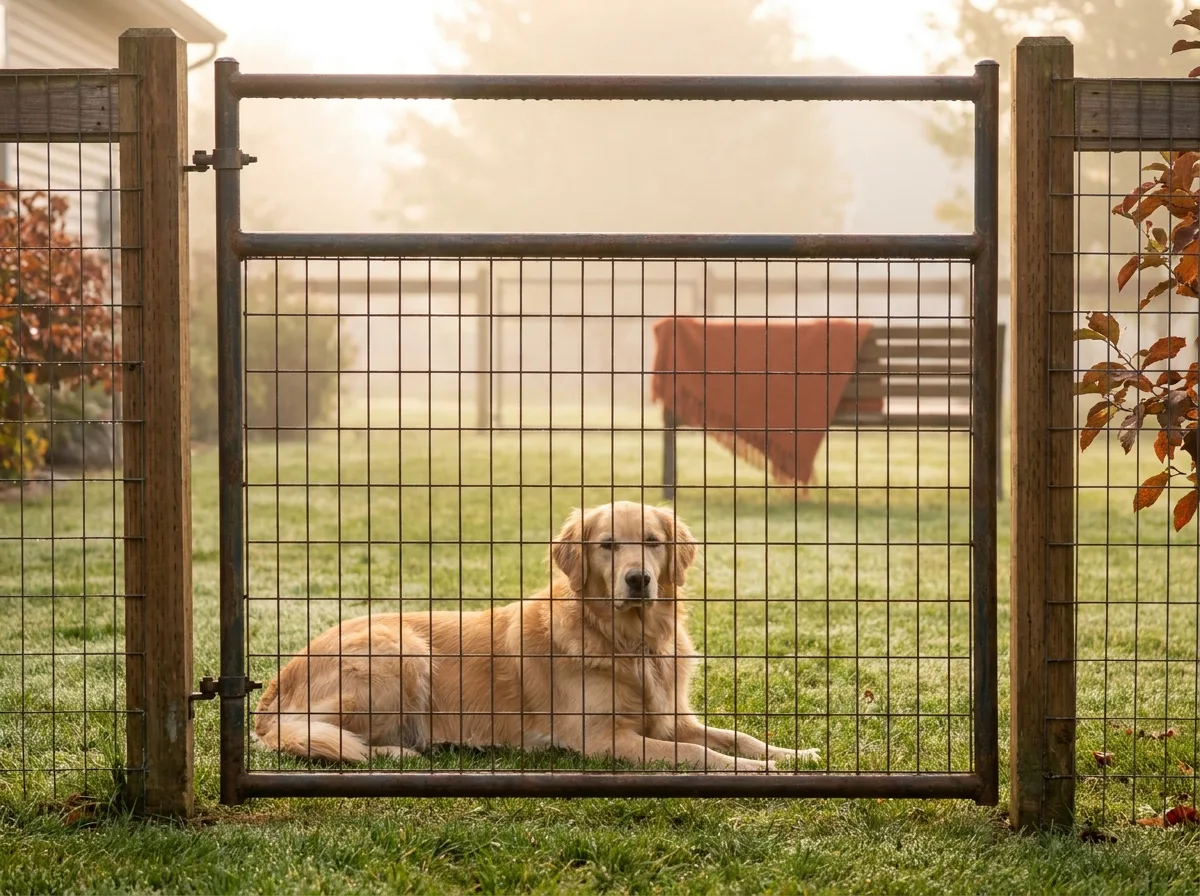
BarrierBoss’s pet-owner guide suggests 5 to 6 feet of height for large dogs and narrower spacing for small ones. For small breeds and puppies, the usual fixes are smaller mesh or a second layer of fine wire. Check gate gaps too, since that’s where many escapes happen.
For diggers, run a tension wire along the bottom, bury wire below the line or lay gravel along the base. A fence pro on Reddit said hog wire struggles with a determined dog because of ground contact. A Quora answer on dig defence recommends buried wire.
Be honest about your dog. If yours digs or jumps, a hog wire fence is decoration, not containment.
How do you make a hog wire fence more private?
Add privacy by layering a second material, such as slats, outdoor privacy fabric, bamboo or dense plants. Wire alone isn’t private. Pick the method based on how much privacy you want, how much airflow you need and how much upkeep you’ll accept.
One Reddit poster listed bamboo, privacy fabric (about $25 for 50 feet, per that poster), plants and slats. Here’s how I’d choose:
- Slats or inserts give the most privacy and last longest, but cost more and block airflow.
- Privacy fabric is cheapest, but it fades and catches wind, so it needs sturdy fasteners.
- Bamboo or reed screening looks natural and costs little, but won’t last as long outdoors.
- Plants and hedges build slowly and give the softest look. Some vines climb the mesh.
How long does a hog wire fence last, and how do you maintain it?
A well-built one can last many years, but life depends on the coating, the wood and your climate. Galvanized coating life varies with thickness and environment, according to the American Galvanizers Association. Wood framing can fail first, depending on the wood, the sealing and the drainage, so those matter as much as the wire.
Vendors often advertise long warranties, but read the fine print before treating those numbers as life expectancy. Coastal air, deicing salt and constant moisture all speed up rust on any steel product.
A simple routine keeps the fence looking good:
- Rinse off dirt and salt once or twice a year.
- Touch up scratched coating with matching paint or cold galvanizing spray.
- Re-seal wood every couple of years, depending on the product and sun.
- Trim vines and keep mulch off the bottom rail so water doesn’t sit there.
- Check posts, gates and latches each spring.
What mistakes make hog wire fences cost more or fail?
The biggest mistakes are buying the wrong product, ignoring the 4 inch opening, skipping drainage and underbuilding gates and corners. Most come from treating hog wire as a simple wire job. It’s really a carpentry and post job with wire in the middle.
- Buying rolls when you need panels. Rolls sag in a rigid frame.
- Assuming any mesh is dog-safe. Match the opening to your smallest pet.
- Skipping the code check on railings. Guards generally can’t let a 4 inch sphere pass.
- Setting wood posts in dirt with no gravel. Water sits and rot starts at grade.
- Ignoring slope. Panels cut for a flat line leave odd gaps on a hill.
- Cheap fasteners. Rust streaks ruin a good-looking fence.
- Not comparing quotes. Get three, and make each bidder list posts, frame, finish, gate hardware and cleanup. Comparing itemized bids is a good habit on any large job, including something far from fencing like a furnace replacement.
Hog Wire Fence FAQ
What is hog wire fencing made of?
Hog wire fencing is steel wire welded into a grid, most often 6-gauge with 4 inch squares. The steel is galvanized or powder coated to resist rust, and some budget versions use thinner wire or a PVC coating. Check gauge, opening size and coating before you buy, because the listing title alone won’t tell you.
Is hog wire fence good for dogs?
It works for large dogs if the fence is tall enough, tight at the bottom and free of gaps at gates. It’s a poor fit for small dogs, puppies and diggers, since a digger can go under panels that don’t touch the ground.
What size squares are standard?
The standard opening for residential hog wire is 4 inches by 4 inches. Smaller mesh, like 2×2, 2×6 or 1×1, exists and may cost more. Three inch squares are custom and pricey. Pick the opening based on what you need to keep in or out.
Can you use hog wire as deck railing?
Sometimes, but code applies. The 2021 International Residential Code section R312.1.3 says required guards can’t have openings that let a 4 inch sphere pass. Standard 4×4 mesh sits right at that limit, so test the actual panel and ask your building department. Local codes vary, and the inspector has the final word.
Does a hog wire fence need a permit?
It depends on your city, county and HOA. Many places regulate fence height, setback and materials, and some require a permit or review even for decorative fences. Check with your local building department and HOA before you buy anything, and call 811 before digging.
How far apart should posts be?
One DIY Network build used 6×6 cedar posts roughly 7 feet apart, a reasonable starting point for a framed fence. Match spacing to your panel width so panels meet at a post, and follow the panel maker’s instructions. Gates, corners and slopes may need closer or heavier posts.
Can hog wire keep deer out?
Usually not well. Deer fencing needs to be tall, and a tall hog wire fence gets expensive fast. A Reddit poster called a 7 foot version "extraordinarily expensive." Plant protection, dedicated deer fencing or repellents often make more sense than a decorative panel fence.
Is hog wire the same as cattle panel?
Not exactly. Both are welded wire panels, but cattle panels are farm products, often 16 feet long with a raw galvanized finish. Premium hog panels are shorter, evenly spaced and often powder coated. Many people use the terms loosely, so compare gauge, spacing and finish rather than the name.
How do I add privacy to a hog wire fence?
Layer something over the wire, since the mesh alone shows everything. The options run from slats to fabric, bamboo or climbing plants, and the section above compares them. Your wind exposure and upkeep tolerance should decide.
How do I stop a hog wire fence from rusting?
Start with a good coating, such as heavy galvanizing or powder coat, then follow the upkeep routine above. Early touch-ups and keeping the bottom edge dry do most of the work.
The Bottom Line
Back to that surprising quote. The wire in a hog wire fence is cheap, and the frame, posts, gates and labor are what you’re really paying for. Once you know that, you can make smart choices. Use a simple sandwich or staple frame to save money. Spend on premium panels only where people will see them. Pick a different fence if your goal is pure containment.
Your next step is easy. Decide what the fence must do, measure the run, and get three itemized quotes next to your own DIY materials list. Check local rules and call 811 before any digging. If your project includes a railing, a pool or a dog, confirm those details with your building department first.
Are you leaning toward a wood and wire fence for the front yard, or do you need something tougher for a backyard dog run?



One Comment