
Stock Tank Pool: Real Costs, Styles and Setup Advice
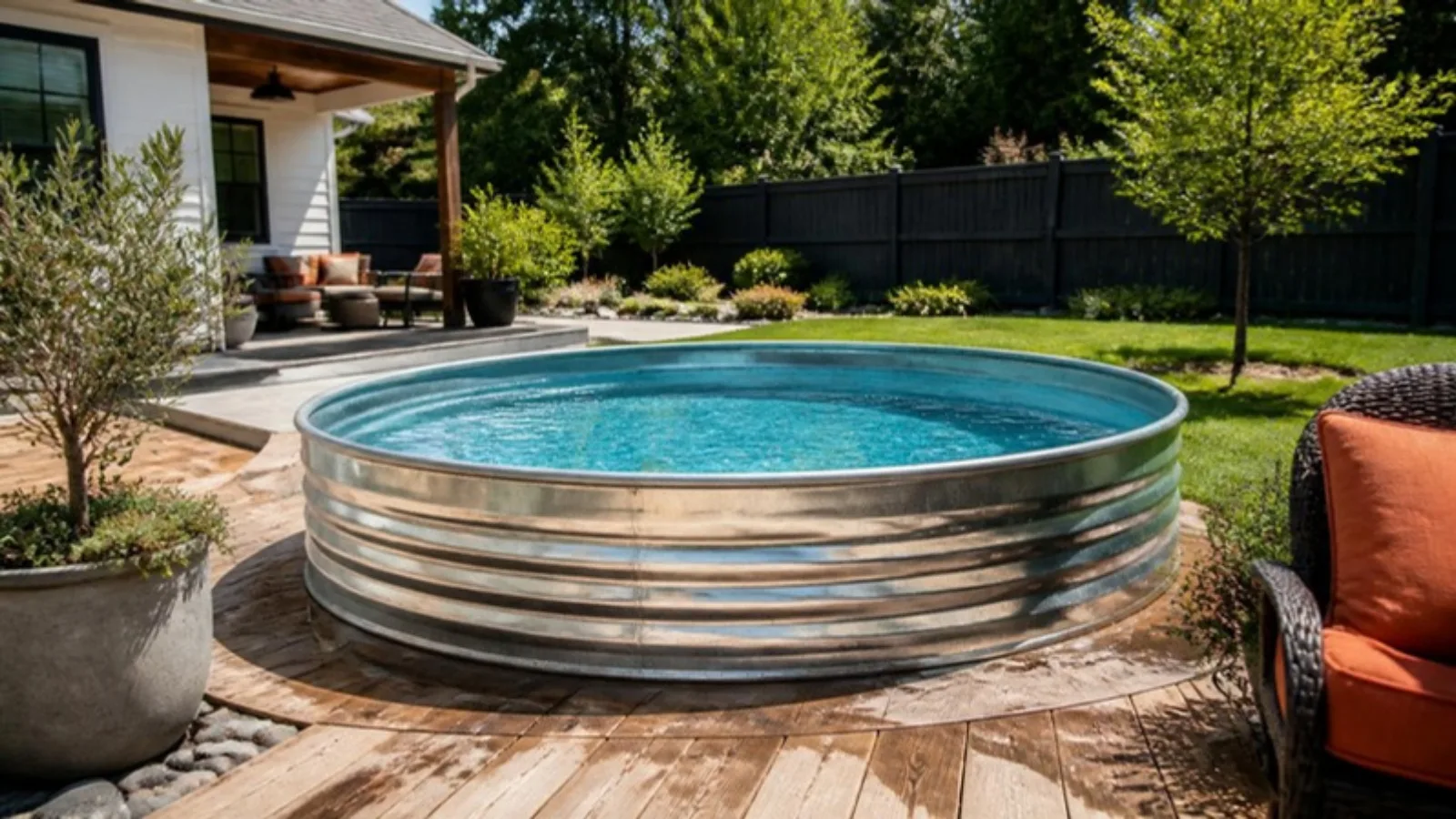
You spot a shiny galvanized tank on a neighbor’s patio, ringed with string lights, and a cold plunge on a hot July afternoon suddenly sounds like the best $4,000 you could spend. Or maybe you want the $400 version. A stock tank pool can be either one, and the gap between those two numbers is where most of the regret (and most of the fun) lives.
Below you will find the real cost after year one, the styles worth copying and the mistakes owners regret. I’ll also say plainly when you should skip it.
The short version
- A stock tank pool is a livestock water tank, usually 6 to 10 feet wide and about 2 feet deep, set up with a pump, filter and sanitizer.
- Plan on a level base, a GFCI-protected outlet installed by a licensed electrician, and a fence or barrier around it.
- A DIY setup is far cheaper than a packaged kit, but the water still needs weekly attention.
- It is not a certified swimming pool, so treat it like a small plunge pool, not a lap pool.
What is a stock tank pool and how big should it be?
A stock tank pool is a galvanized steel or polyethylene livestock tank that has been turned into a small plunge pool. Common diameters are 6, 8 and 10 feet, and most are about 24 inches deep. The manufacturer Cowboy Pools lists its 6, 8 and 10 foot sizes as fitting roughly 2 to 4, 4 to 6 and 6 to 8 people, with the 10 footer standing 28 inches tall.

Size decides almost everything else, including cost, weight and how much yard you give up. A 6 footer suits a couple who wants to cool off. An 8 footer is the usual family pick. A 10 footer starts to feel like a real social space, but it needs more ground prep and more water. For a pool party, charcuterie cups are an easy way to serve snacks without passing around a big board.
For capacity, an 8 foot round tank 24 inches deep works out to roughly 750 gallons if filled to the brim. Most people fill it a few inches lower, so expect something closer to 600 to 700. That matters for chemicals and for weight. At that volume the water alone weighs roughly 5,000 to 5,800 pounds, which is why the base matters so much.
How much does a stock tank pool really cost?
A DIY build can start at a few hundred dollars for a tank and a basic pump kit, then climb once you add a proper base, a cover and a deck or seating (my rough estimate, not a quoted price). Packaged setups from pool companies start around $3,300 and climb with options. Prices below are vendor listings as of October 2026 and they change often.
| Route | Typical starting price | What you get |
|---|---|---|
| DIY pump kit only | About $400 to $480 | Pump and filter kit, no tank (Stock Tank Pool Products) |
| Mid package | From about $3,275 | A 9 foot package with tank, steps and seating (Tipsy Tank Pools) |
| Full package | From about $3,625 for 6 ft | Tank, filtration and setup items, with heater, chiller and cover as add-ons (Cowboy Pools, linked above) |
A diy stock tank pool is where the savings are. An older Greenhouse guide put a tank at about $500 and supplies at about $300 back around 2020, and tank prices have moved since, so use that only as a rough floor. The tank itself is rarely the big spend. The base, the electrical work, the fencing and the deck usually are.
What drives the stock tank pool cost over time:
- Electricity. A small pump on a timer is cheap to run, but a heater or chiller is not.
- Water. Plan on a full refill once or twice a season, more in hot, dusty climates.
- Chemicals and test strips. A modest but never-ending expense.
- Replacement parts. Pumps, hoses and filter media wear out.
- A cover. It cuts debris, evaporation and kid risk, and it is worth budgeting for.
If a vendor quote seems low, ask what is missing. Delivery, ground prep and electrical are the usual gaps.
Galvanized steel or poly: which tank is better?
Galvanized steel is the classic look and the sturdier choice, while polyethylene is lighter, softer to the touch and does not rust. Pick steel if you care about the look and can tolerate some upkeep. Pick poly if you want fewer worries about rust and hot metal edges, or if you plan to move it.
Here is the honest trade-off:
- Galvanized steel: Strong, handsome and widely sold, including at farm supply stores like Tractor Supply. The coating can wear at seams and drilled holes, and the rim can get hot in direct sun.
- Poly tanks: Lighter and no rust risk, but they may flex or bulge if the base is uneven and they tend to look more utilitarian.
Neither is made as a swimming pool. Stock Tank Pool Products says so directly, noting its tanks are not factory-manufactured or certified swimming pools and need supervision. Read that as a reminder, not a scare. You are adapting a product, so you own the safety planning.
What are the best stock tank pool ideas and styles?
The best looks pair the tank with a deliberate surround, not a bare tub on grass. Painted tanks, deck surrounds, in-ground installs and hot-tub conversions each suit a different yard and budget. Choose by how permanent you want it to be, because that one decision drives the base, the plumbing and the cost. Rustic, farmhouse-style details also pair well with the look, as in our guide to barn doors.
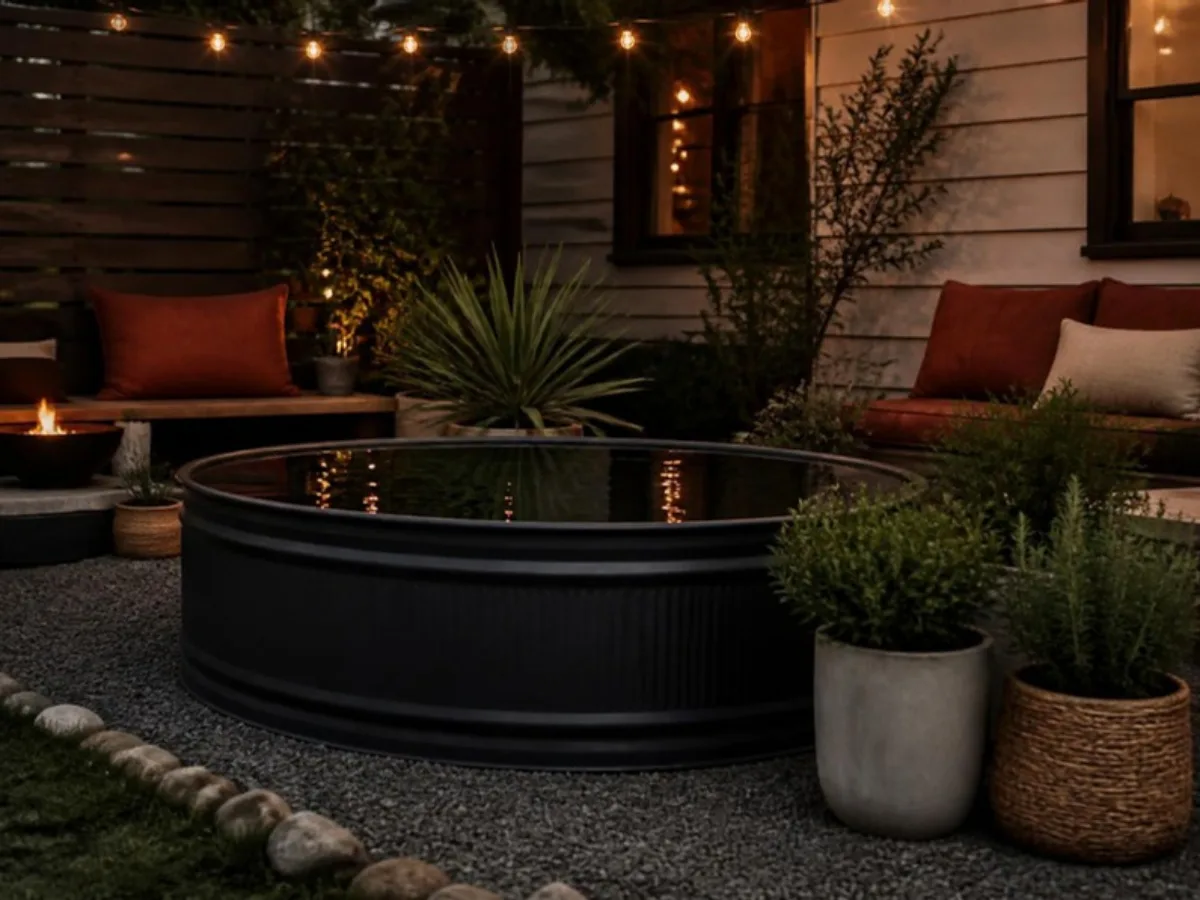
Stock tank pool ideas for different yards
- The modern black tank. A matte black or charcoal exterior with a dark gravel base looks sleek and hides dirt. Use paint rated for the job and plan on touch-ups.
- Natural wood and plants. Wrap the tank in cedar slats or lean a bench against one side, and soften the edges with tall grasses in pots. This is the easiest way to make it look intentional.
- Deck surround. Set the rim near deck level so it reads like a built-in plunge pool. It is the most polished look and also the most expensive, so read the deck section below first.
- Partial or full in-ground. Burying the tank gives a cleaner sightline and keeps water cooler. It also makes drainage, removal and mole or rodent issues more serious. Some owners later regret how hard it is to take out.
- Hot-tub conversion. Add a heater, a bench and a cover and you have a cold-weather soak. Safety and electrical rules get stricter here.
- Shade and lighting. A sail, umbrella or pergola cuts algae and keeps the metal rim comfortable. Warm string lights or low-voltage lighting finish the look.
Say your yard is small and mostly lawn. A 6 foot tank on a gravel pad, a cedar privacy screen and two potted grasses will look far better than an 8 footer jammed against the fence.
How do you prepare the ground so it does not leak or tip?
You need a flat, firm, well-drained base wider than the tank. Cowboy Pools recommends about 3 inches of decomposed granite, extended roughly a foot past the tank’s edge, with no sand underneath. Level matters because water pushes outward and a tilted tank puts stress on the walls and seams.
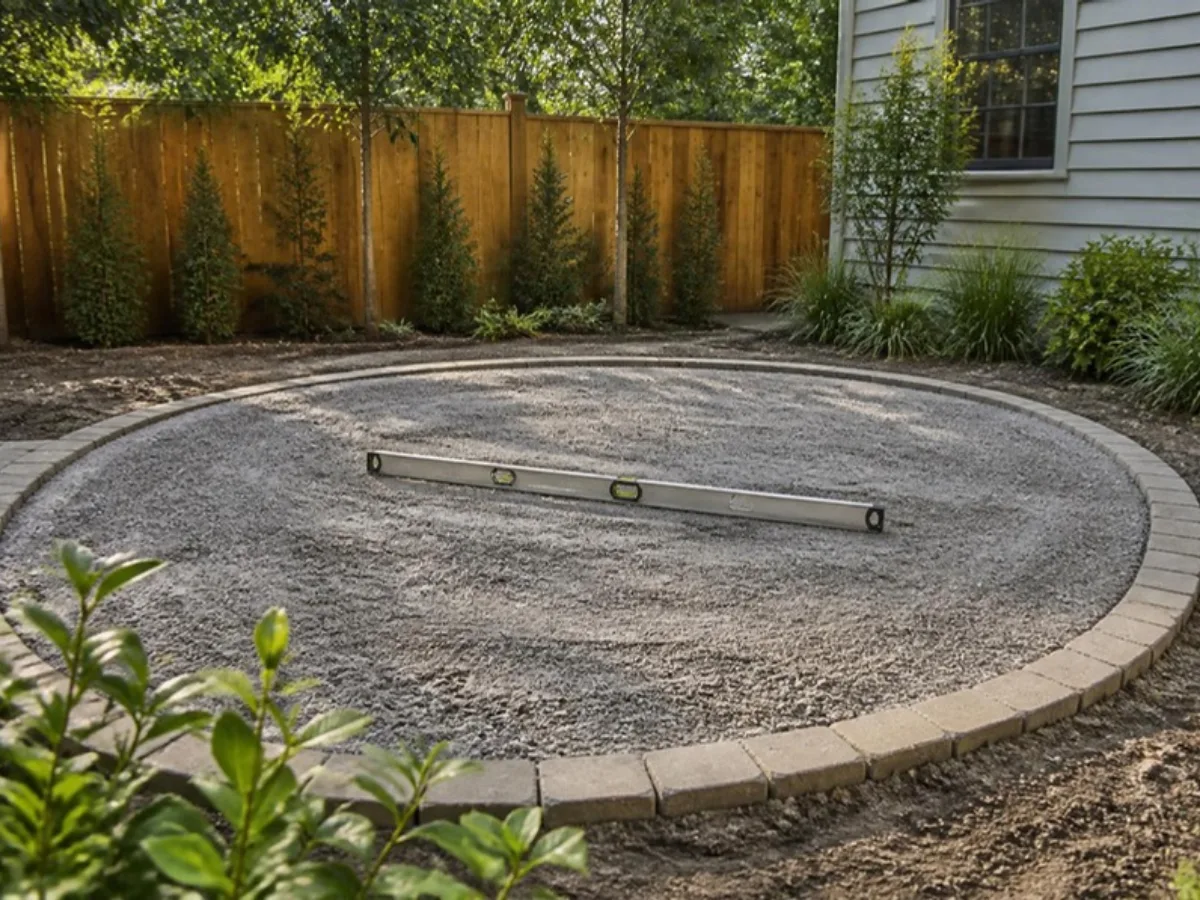
Follow these steps:
- Pick a spot away from tree roots, low spots and overhead power lines.
- Mark the circle and add about a foot all around.
- Remove sod and soft soil, then compact what remains.
- Lay and compact the base material, checking level in several directions with a long level.
- Set the tank, then recheck level before you fill.
Skip a base on bare lawn. Soft soil settles unevenly, and a heavy tank can slowly lean or sink on one side. Also call 811 before digging so buried lines are marked. Local rules on setbacks vary.
Can you put a stock tank pool on a deck?
Probably not on an ordinary deck. A filled 8 footer carries thousands of pounds in a small footprint, which is a structural question and not a decorating one. Most residential decks are not designed for that load, so you need a structural review by a qualified pro and often a permit.
The safer way to get the deck look is to set the tank on the ground and build the deck around it. That keeps the weight on the earth and gives you steps and a ledge. Include a hidden access hatch for the pump and filter, because they will need service. Codes and permit rules vary by city, so check with your local building department before you build.
What equipment do you need (pump, filter, no-drill options)?
At minimum you need a pump, a filter, hoses or fittings and a way to power them safely. Many kits are built around sand filters, and Maker Gray’s guide walks through drilling the tank and installing plunger valves. If you would rather not cut a tank, no-drill kits that hang hoses over the rim exist, though they can look cluttered.
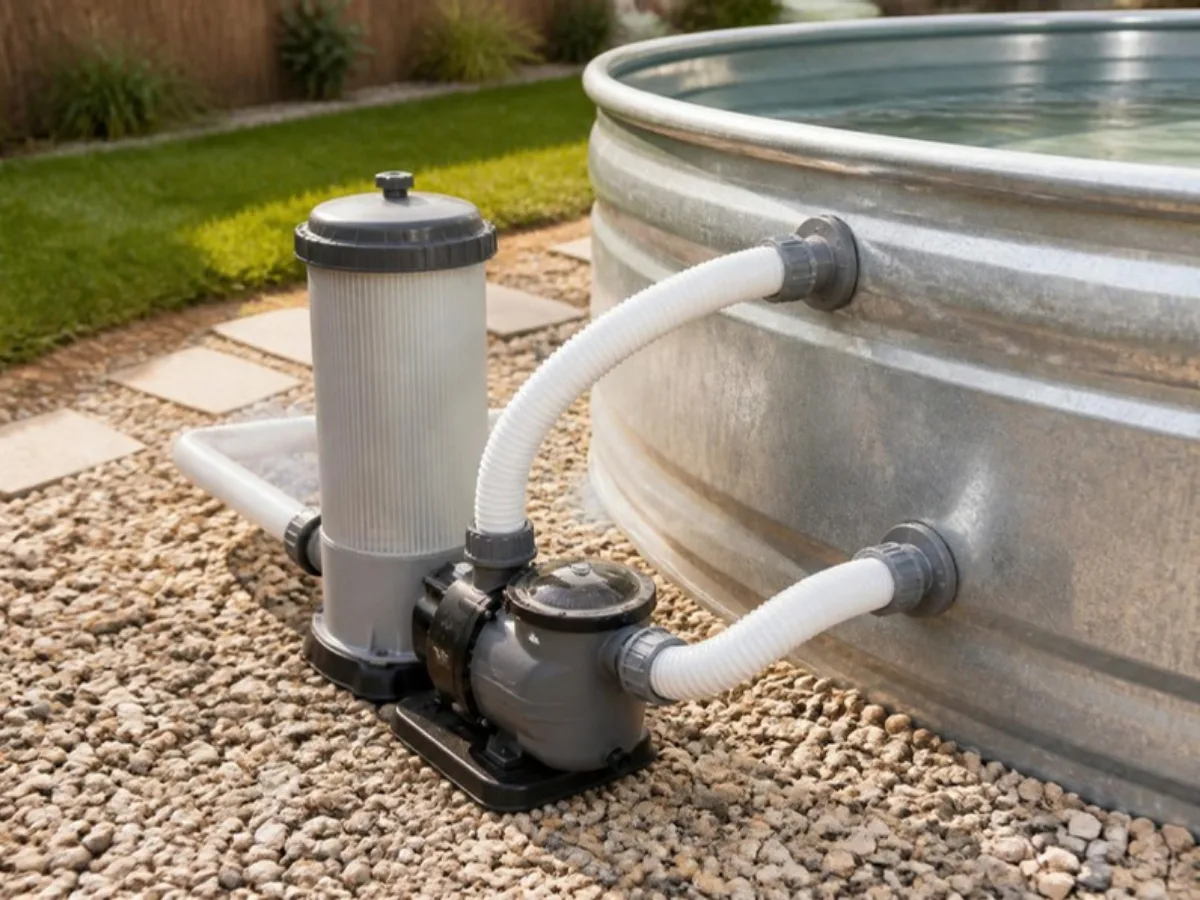
A basic equipment list:
- Pump and filter. Size them to the water volume. Cartridge pumps similar to those on inflatable pools suit smaller tanks. Sand filters handle bigger loads.
- Fittings and valves. If you drill, use proper bulkhead fittings and seal them well.
- Timer. Running the pump on a schedule saves power.
- GFCI outlet. A 120 volt, 15 amp GFCI circuit is the baseline Cowboy Pools lists. Have a licensed electrician install and inspect it, since electricity near water is not a DIY risk worth taking. Electrical codes differ by location.
- Test kit. Strips or a liquid kit for pH and sanitizer.
A common mistake is assuming a tank of water needs no filter. It does. Without circulation, a warm, still tank turns green fast.
How do you keep the water clean (chlorine, peroxide, testing)?
Run the filter daily, test often and sanitize steadily. The CDC says pool pH should stay between 7.0 and 7.8 with free chlorine of at least 1 part per million, and hot tubs need at least 3 ppm. Chlorine is the usual starting point. Some prefer hydrogen peroxide, but treat dosing claims from blogs cautiously and follow the product label.
A simple routine looks like this:
- Test pH and sanitizer a few times a week at first, then settle into a rhythm.
- Skim leaves and debris daily.
- Shower or rinse before getting in, since sunscreen and sweat feed algae.
- Cover it when not in use.
- Drain and refill on a schedule, more often with heavy use or heat.
Salt systems are a common question. The Greenhouse guide says salt water is too corrosive for a galvanized tank. Check with the tank maker before trying one. Small volumes also swing in chemistry quickly, so testing is not optional. The CDC’s home pool and hot tub guidance is the standard to check against.
How do you stop rust and what about painting or lining?
Keep the zinc coating intact, keep water chemistry balanced and touch up any scratches or drilled edges. Rust shows up first at seams, fittings and the rim. If it spreads, you can sand, treat and coat the area. A poly tank sidesteps this problem entirely.
Owners report mixed lifespans. One Reddit poster in Austin said their tank rusted after about three years. Lifespan claims online are mostly anecdotal and not confirmed, so treat them cautiously. Water balance, climate and coating quality all play in, and nobody can promise a number of years.
If you want to paint the outside, use a product made for galvanized metal and prep the surface first. Painting the inside is trickier because paint sits in water, so use only products rated for pool or potable water contact and follow the label. A liner or epoxy is another route, but it adds cost and has its own maintenance.
How do you keep it cool, shaded and bug free?
Shade first, then circulation, then a cover. In direct sun, a dark tank can get warm enough that the water stops feeling refreshing, and some owners in hot regions report needing a chiller or lots of shade. Mosquitoes breed in still water, so the pump and a cover are your best defense.
Ways to help:
- Add a sail, umbrella or pergola.
- Keep the pump running during the day.
- Cover the tank at night.
- Trim plants that overhang and drop leaves.
- If animals chew at hoses or fittings, protect the lines with conduit.
Metal edges can burn bare skin in strong sun, so a rim cap or a towel helps. Check it with the back of your hand before kids climb in.
Can you heat it for a hot tub style soak?
Yes, but it takes more equipment and more care. Cowboy Pools offers a heater and chiller add-on at about $1,950 as of October 2026. Heaters near water need proper electrical work, so hire a licensed electrician, and use a cover to keep heat in.
In cold weather the tank loses heat fast because it is thin metal in open air. Insulating the base and using a tight cover help, and so does placing it in a spot sheltered from wind. If your goal is winter soaking, price a real hot tub too. For some households, the total comes out similar, and a hot tub is built for it.
Is a stock tank pool safe for kids (fence, covers, supervision)?
It can be, with barriers and constant supervision. Any standing water is a drowning risk for small children, and a 2-foot-deep tank is still deep enough. Treat it the way you would treat any pool, with a fence, a locked gate and a cover.
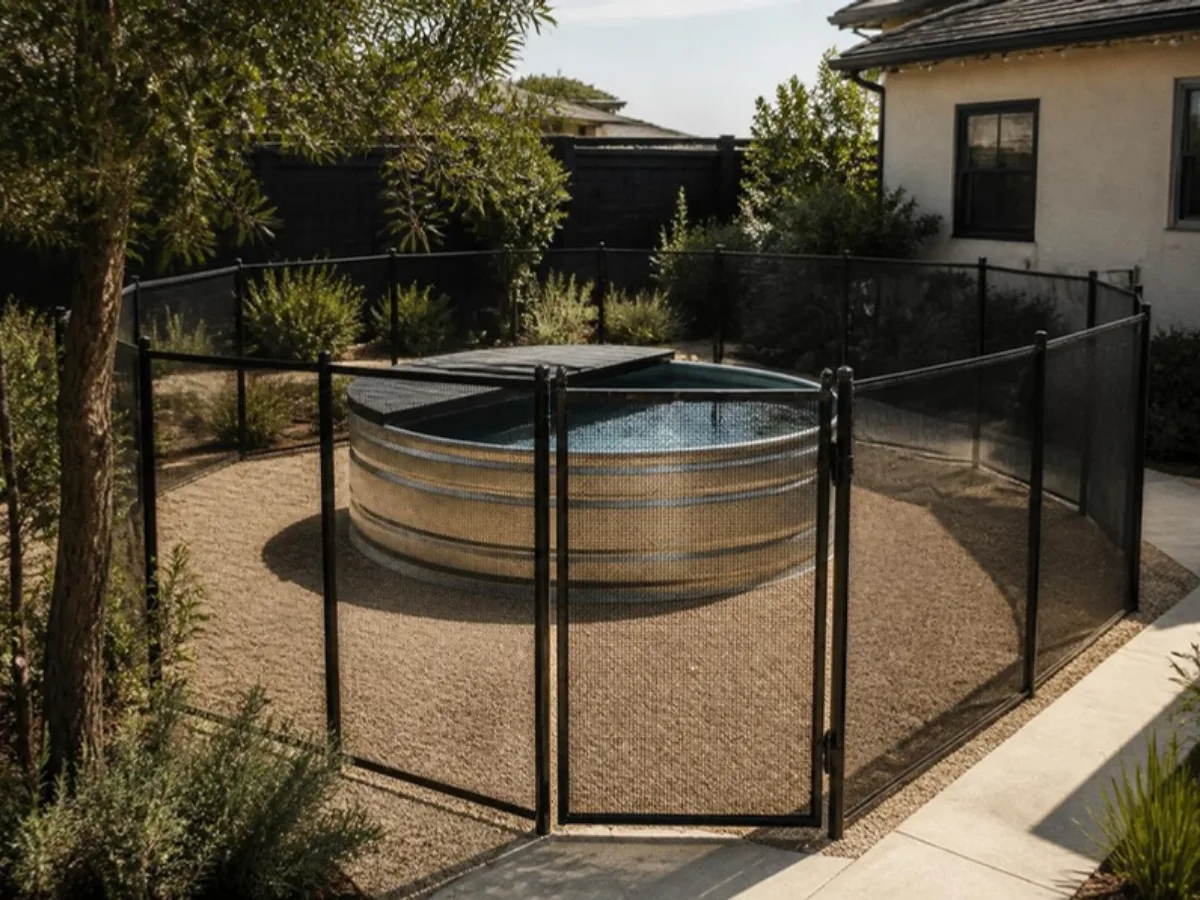
The U.S. Consumer Product Safety Commission’s Pool Safely program advises a fence at least 4 feet high on all sides that children cannot climb. Cover or drain the tank when you are not around, and keep chairs and toys away from the fence so they cannot be used as a step.
Local rules differ. Some cities treat any structure holding a certain depth of water as a pool, with fence and permit requirements. Your homeowners insurer may also have opinions, so call before you fill it. Access is a quieter safety issue. Some owners say kids and older adults struggle to climb over the rim, so add a sturdy step and a grab handle. Permit questions come up with other home projects too, such as a bathroom remodel, so it is worth calling early.
Stock tank pool vs inflatable vs above-ground vs in-ground
A tank pool sits between an inflatable and a built pool. It costs more than a vinyl or inflatable option and far less than an in-ground pool, and it lasts longer than most inflatables. Compared with an above-ground pool, it is smaller, quicker to install and a lot better looking.
| Option | Cost level | Best for | Main drawback |
|---|---|---|---|
| Inflatable or vinyl | Lowest | Short-term fun | Short lifespan, plain look |
| Stock tank pool | Low to mid | Plunge and cool-off, style | Small, needs upkeep |
| Above-ground pool | Mid | Swimming with family | Larger footprint, setup |
| In-ground pool | Highest | Laps, resale appeal | Cost, permits, long project |
If you want to swim laps, this is the wrong tool. If you want a stylish place to cool off with a drink in hand, it is hard to beat for the price.
What do owners regret?
The common regrets are underestimating upkeep, skipping the base and fencing, and choosing the wrong size. One Reddit commenter said the costs were mostly up front and the pool was worth it. Another regretted theirs quickly because they could not climb in. A third owner of an in-ground tank dropped it after two years, because upkeep was not worth it, and then had to figure out removal.
Here are the mistakes I would steer you away from:
- Buying the tank first and planning the base later.
- Treating it like a tub that needs no filter.
- Putting it on a deck without a structural check.
- Ignoring fencing and local rules.
- Choosing steel in a very hot, sunny spot with no shade.
The pattern is that people love it for the first month and then feel the weekly work. If you will not test the water, skip it.
Frequently Asked Questions (FAQ)
Do stock tank pools need a filter?
Yes. Without a filter and circulation, a warm tank grows algae and attracts mosquitoes quickly. A small pump and filter kit on a timer, plus a sanitizer, keeps the water usable. Some people drain and refill often instead, but that wastes water and still leaves you cleaning the walls.
How long does a stock tank pool last?
It depends on the tank material, coating, water balance and climate, so nobody can give a firm number. Reports vary widely and are anecdotal. A poly tank avoids rust. A galvanized one lasts longer when you keep the coating intact and the water balanced.
Is salt water safe in a galvanized tank?
Generally no. The Greenhouse guide warns that salt is too corrosive for galvanized steel. Because coatings vary, check with the tank maker before trying a salt system. A poly tank is a safer bet if you want salt.
How much water does an 8 ft tank hold?
An 8 foot round tank that is 24 inches deep holds about 750 gallons when full to the rim. Most people fill it a bit lower, which puts the working volume closer to 600 to 700 gallons. Check your tank’s rated capacity before you buy chemicals.
How often do you change the water?
It varies with use, heat, filtration and how well you keep the chemistry. Many owners drain and refill once or twice a season, and more often in hot weather or with heavy use. Cloudy water that will not clear after balancing is a sign it is time.
Do stock tank pools get hot or burn you?
The water can warm up a lot in direct sun, and bare metal rims can get hot to the touch. Shade, a light-colored cover and a rim guard reduce both problems. Check the edge with your hand before children climb in.
Can you swim laps in one?
No. Even the 10 foot size is too small for real lap swimming. You can float, paddle, play and cool off, which is what it does well. For laps, look at a swim spa or a longer above-ground pool.
Do you need a permit or fence?
Often yes, depending on where you live. Many cities treat any structure holding a set depth of water as a pool, with fence and permit rules. The CPSC advises a barrier at least 4 feet high on all sides. Call your building department and your insurer first.
Can you use it in winter?
You can with a heater, a cover and some insulation, though heat loss is high. If you do not want winter use, drain it and cover it to prevent freeze damage. Never leave water in a tank that can freeze solid.
How do you remove or dispose of one?
Drain it away from the foundation, following local rules for discharge. Disconnect and drain the equipment, then lift out an above-ground tank. In-ground tanks mean excavation, so hire help. A steel tank may be sold or recycled as scrap metal, and a poly tank may find a second life as a planter.
The Bottom Line
So, is that tank on your neighbor’s patio worth copying? If you want a stylish plunge pool for far less than a built one, yes, as long as you plan for the boring parts.
My advice is to start small. Pick a 6 or 8 footer and add styling once you know you will use it. If weekly water care sounds like a chore, buy a good soaking tub instead and skip the pump.
Your next step is a call to your city’s building department and your insurer, then a quick sketch of where the tank and fence will go. Which style are you leaning toward, the sleek black tank or the cedar and plants look?



2 Comments