Dining Room Storage That Fits: Sizes, Costs and Smart Picks
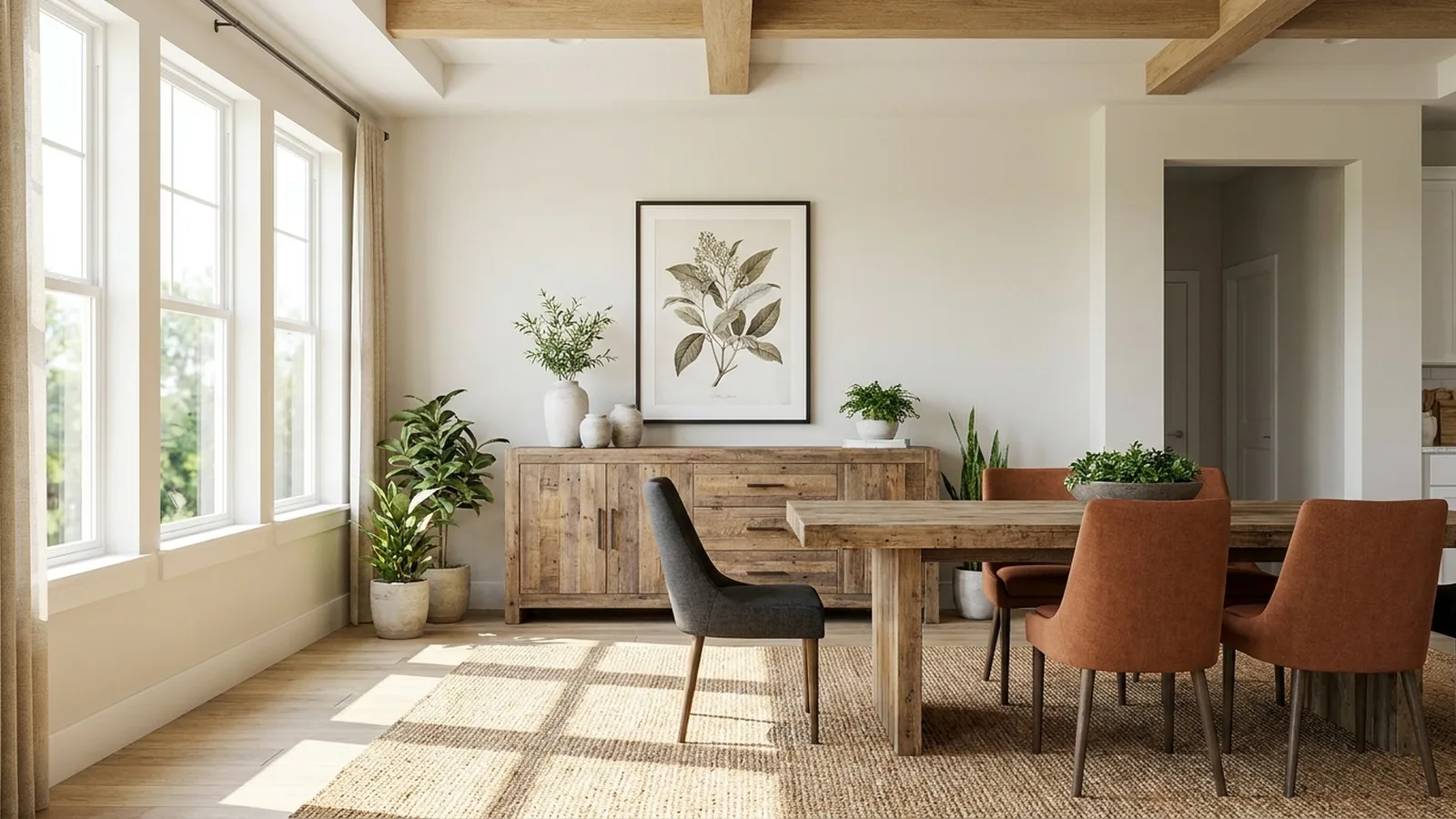
Say you find a gorgeous 60-inch buffet on a Saturday. It’s solid, it’s on sale, and it just barely clears the doorway. You wrestle it home, slide it against the wall, and then sit down at your table. Your chair hits the front of the cabinet. Now you have a very expensive wall ornament and a return policy that stopped at 30 days.
That’s the usual story with dining room storage. People shop by looks, then discover the room has opinions. Why do so many buyers measure the cabinet but not the space it has to share?
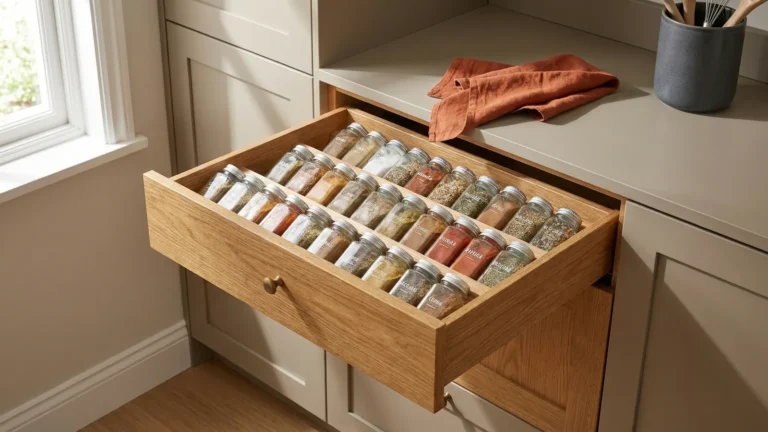
This guide flips the order: fit first, style second, with clearance math, honest price context (observed examples, not verified bands) and what to do with the china cabinet nobody wants. It’s one part of the bigger job of keeping things within reach where you use them, the same idea behind a spice rack organizer for the kitchen, applied to the room where you eat.
Executive Summary
You’ll leave knowing how to choose dining room storage that fits your room, your budget and your real habits. The big idea is simple: measure the walking space first, then pick the piece. A shallow cabinet often does more for a room than a large buffet, because shallow units leave room for chairs and people.
Here’s what this guide covers. You’ll learn the difference between a sideboard, buffet, credenza and hutch, a measuring method for chair pull-out and walkway space, and how solid wood, veneer and MDF compare on price and wear. You’ll also get a fair look at secondhand shopping, including the china cabinet problem, where an inherited piece is worth far less than the family story suggests.
The biggest worry is regret, and it is fair. The costly regret is a wrong size, not a wrong style, since almost any finish can be fixed later with paint or new hardware.
What is the difference between a sideboard, buffet, credenza and hutch?
A sideboard and a buffet are the same idea: a low cabinet with drawers and doors that sits against a dining room wall. A credenza is a sleeker, often mid-century version. A hutch adds a tall shelving or glass-door unit on top of a base. China cabinet and curio cabinet usually mean the tall, glass-front pieces.
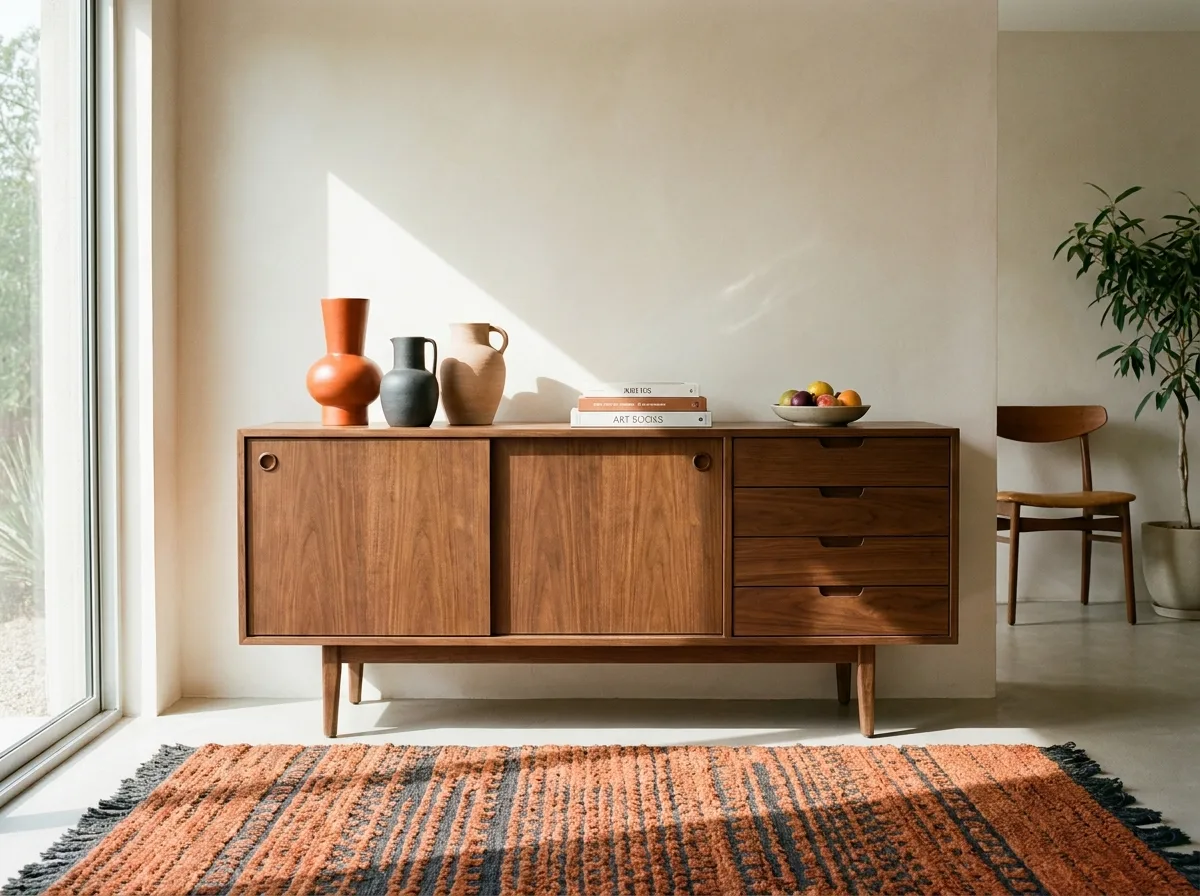
In dining room storage, a low piece gives you a serving surface. A tall piece gives you vertical storage but eats visual space and weighs a lot.
Here’s a quick way to decide:
| If you want… | Pick this | Watch out for |
|---|---|---|
| A serving surface plus hidden storage | Sideboard or buffet | Depth that crowds chairs |
| A slim, modern look | Credenza | Fewer shelves inside |
| Maximum storage on a small footprint | Hutch | Weight and tip-over risk |
| Display for glassware or collections | Curio or display cabinet | Glass shows every bit of clutter |
Judged on storage per square foot of floor and ease of living around it.
How much space do you need around dining room storage?
Plan on roughly 36 inches between the table edge and any wall or cabinet so people can slide chairs out and pass behind them. Many designers like 42 to 48 inches for comfort. These are common rules of thumb, not building codes, so test them in your own room before you buy.
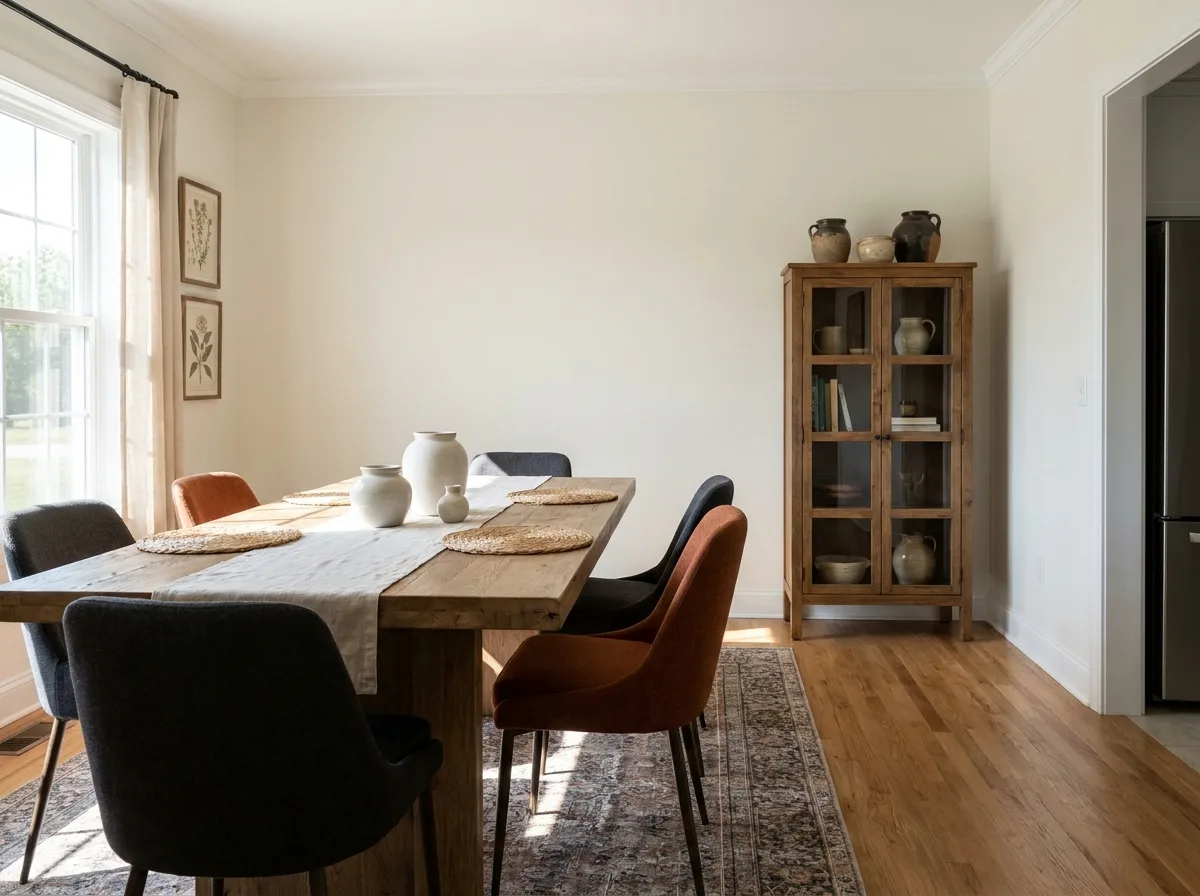
Most shoppers skip one thing. Your table doesn’t end at its edge. Add the chair, the person in it, and room to stand up. That’s your real footprint.
Try this ten-minute method:
- Pull out every chair and mark where the chair backs end with painter’s tape.
- Measure from that tape line to the wall. This is your usable depth.
- Subtract about 24 to 30 inches if you want people walking behind seated guests. What’s left is the deepest cabinet that works.
A common version of this mistake: the chair backs sit 40 inches from the wall, and a 20-inch-deep sideboard goes there. That leaves 20 inches behind seated guests, below the 24 to 30 inch walking space, so dinner now involves a lot of apologizing. The fix is a shallower unit of about 14 to 16 inches (common for slim sideboards), which leaves 24 to 26 inches, or moving the table.
What works in a small dining room?
In a small dining room, go shallow and go vertical. A slim sideboard, a corner cabinet, wall-mounted shelves or a bench with storage underneath all add space without stealing floor area. Choose closed doors, since open storage looks messy fast.
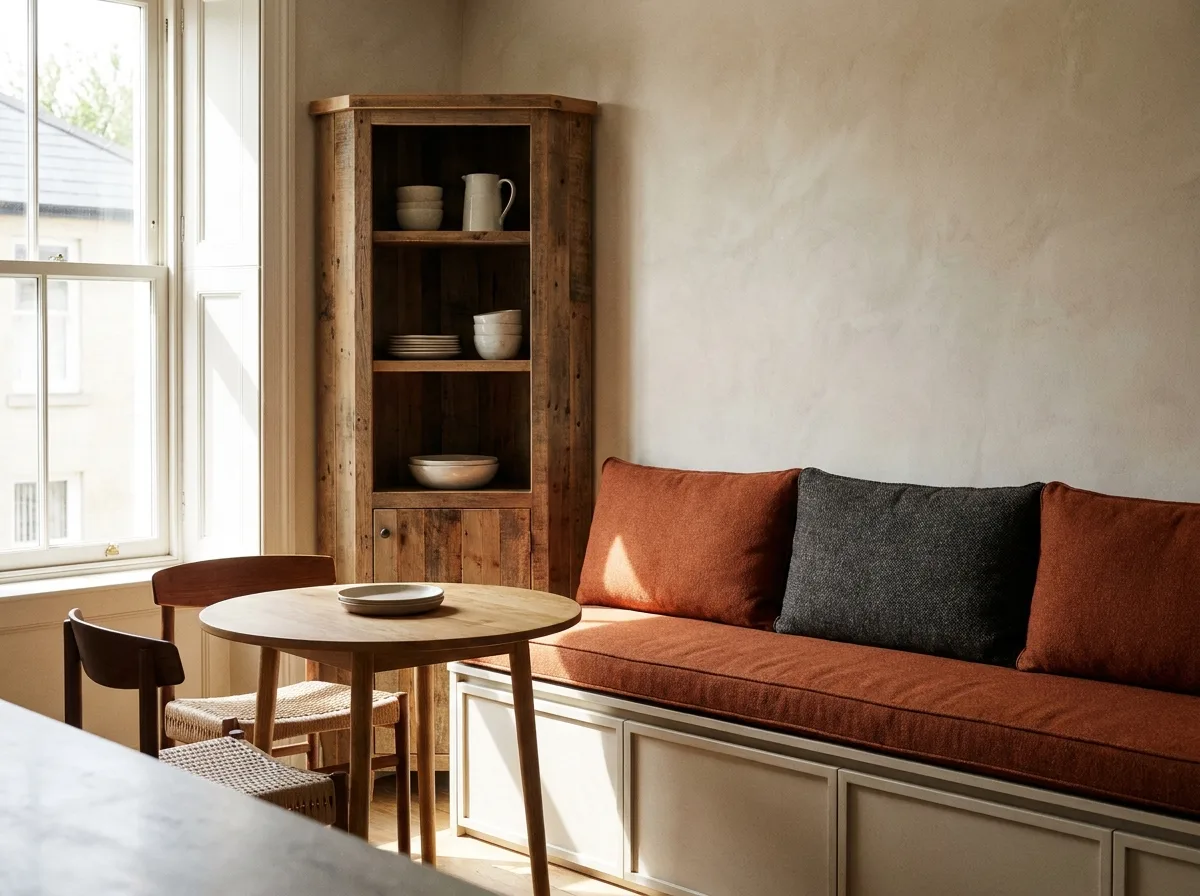
A storage bench along one wall seats people and swallows table linens, board games and the rarely used serving platter. A narrow corner cabinet often works where a full buffet can’t.
A built-in banquette along one wall saves the floor space chairs would need, and a room divider shelf or an archway niche can hold serveware without touching your walkway. Under-stair space, if your dining area sits near one, suits a slim cabinet or drawers.
Also borrow from another room. A bar cart, console table or hallway bookcase can hold plates and glasses.
One opinion worth saying out loud: formal china storage is fading. Most households need dining room storage for placemats, candles, chargers, a laptop and homework far more than for a 12-piece china set. Plan around what comes out of the cabinet every week.
Is built-in dining room storage worth the money?
Built-ins are worth it when you plan to stay for years, your wall has an awkward nook, or standard cabinets leave gaps. They cost much more than freestanding pieces and can’t move with you. For renters or short stays, a good sideboard gives most of the benefit.
Built-in dining room storage fits your walls exactly, so nothing wastes space. It can wrap an archway or turn a dead corner into a wine and glassware zone. The trade-off is price: carpentry, finishing and sometimes a permit if electrical or structural work is involved. Rules vary locally, so check.
Floating shelves are the cheaper middle path. They need solid wall anchoring and show dust, so check the bracket weight rating before loading plates.
Which materials hold up best, and how much does dining room storage cost?
Solid wood lasts longest and can be refinished, veneer over wood or MDF looks similar for less money but chips more easily, and MDF is stable but dislikes water. Prices swing widely by size, material and region, so set a budget range first, then shop inside it.
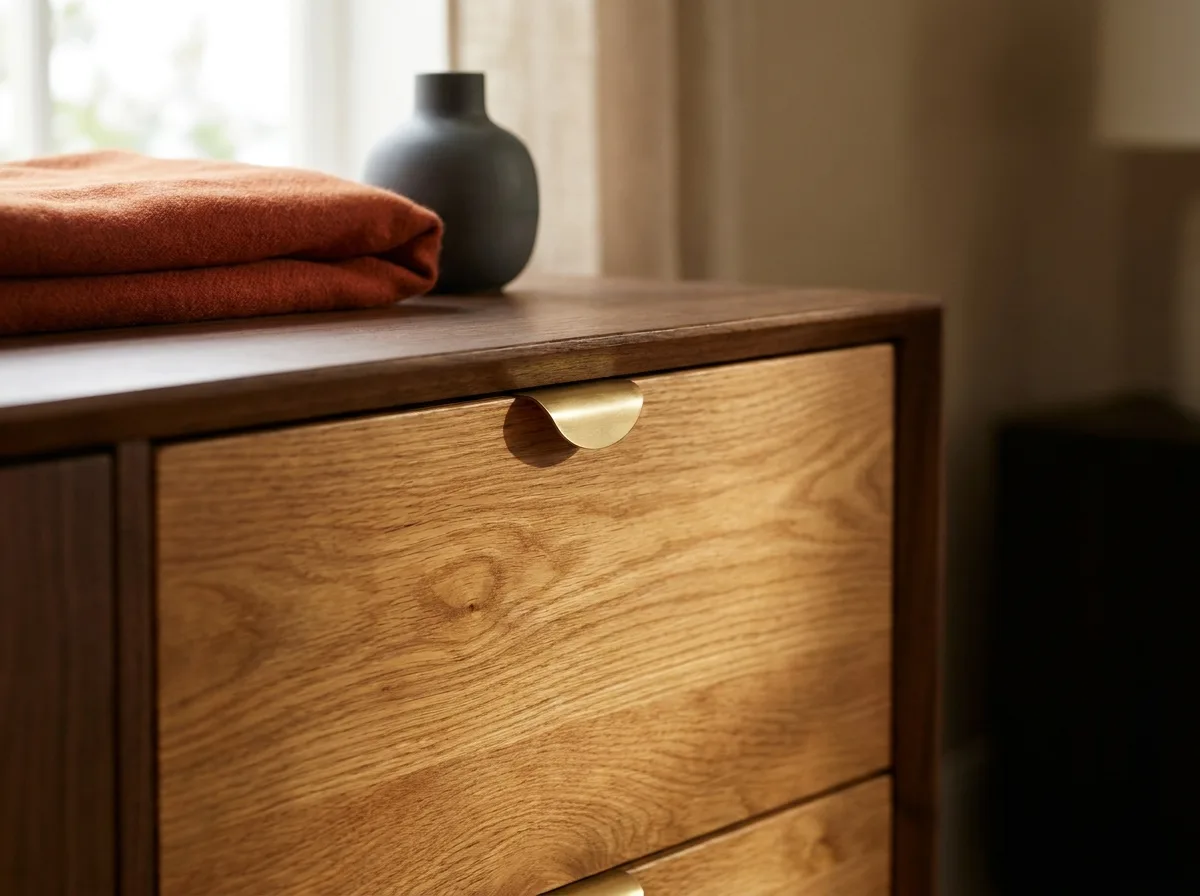
With solid wood you pay for weight, joinery and the ability to sand and refinish. With veneer you pay for the look. With MDF or particle board you pay for a clean surface and a lower price, with the risk of swelling if a leaking glass sits on it.
Retail ranges are broad. At the premium end, large storage pieces from a retailer like Crate & Barrel have shown prices of roughly $1,700 to $4,000. IKEA lines such as BESTA and HAVSTA are generally priced lower, and Ashley offers many pine, MDF and veneer options in the middle. I have no verified price bands for those two, so check current listings. Prices change often, so treat the Crate & Barrel figure as an observed range, not a quote.
Region matters too. Reddit threads describe one mid-century hutch selling near $2,000 in a high-cost area and a similar one for a few hundred in Florida.
Pick solid wood for decades. Pick veneer or IKEA if life might change in five years. And "solid wood always beats IKEA" is a myth. Plenty of showroom pieces are veneer over pine or MDF, so ask what’s under the surface.
Should you buy dining room storage new or secondhand?
Secondhand dining room storage is often the best value, because heavy older furniture is cheap to buy and sturdy once cleaned or refinished. Buy new when you need exact dimensions, soft-close drawers or a warranty. Always measure, check drawers and smell inside for mildew before paying.
Reddit anecdotes put mass-produced 1950s hutches anywhere from free to a few hundred dollars. The smart budget plan is to spend little on the piece and set money aside for refinishing, new pulls or felt liners for drawers.
Check these before you hand over cash:
- Drawers slide without sticking, and joints aren’t loose.
- No musty smell, insects or water rings.
- The piece fits through your doorway and stairwell, since many split into two parts.
- You’ve seen the back panel, because replaced backs signal repairs.
A sturdy older credenza also makes a good base for vinyl record storage if you have a collection to house.
What can you do with an inherited china cabinet?
Start by deciding if you’ll use it. If not, selling is harder than most families expect, because big china cabinets have weak resale demand. Repurpose it for glassware, linens, bar supplies or collections, or list it as a curio or display cabinet to reach a better audience.
Age isn’t value, and that surprises many families. Reddit sellers describe asking $1,300 for a full set, then hearing buyers say it was worth closer to $500. Others gave pieces away on Facebook Marketplace.
What worked was reframing. A cabinet marketed as a collector’s curio or glass display unit drew more interest than one called a china cabinet. If the top and base separate, selling them individually sometimes worked better.
Reuse it as a home bar or a glass collection case. If it might be antique, a local appraiser can tell you in one visit whether you’re sitting on something special or just something heavy.
How do you keep tall cabinets safe?
Anchor any tall cabinet, hutch or bookcase to the wall using the hardware and instructions from the manufacturer. Tall units can tip, especially with open drawers or kids climbing. Put heavy items low, and find a stud or use the proper wall anchors for your wall type.
This is the unglamorous section, and it matters most with small kids or pets. Anti-tip kits are cheap and quick to install. Follow the instructions for your piece, and if your wall is plaster or masonry, ask a pro or a hardware store for the right anchor. Codes and rules on wall anchoring vary, and rentals often limit what you may drill, so check your lease first.
The same care applies when the dining room doubles as an office or playroom. Keep cords tidy, heavy items low and any climbable shelving anchored.
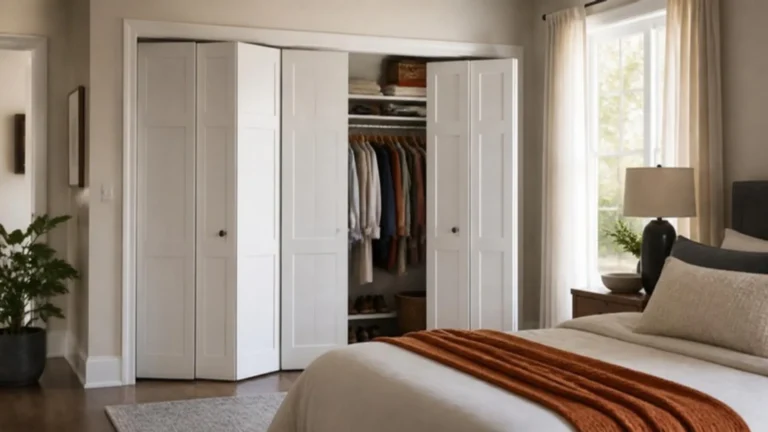
Tempered or safety glass doors are a safer choice around children, and soft-close hinges stop slamming. If you’re adding a closed-door unit in a hallway or nearby space, sliding or folding doors can save swing room where a normal door would hit something.
Frequently Asked Questions
Is there a difference between a sideboard and a buffet?
Not really. Both are low cabinets with doors and drawers for serving and storing dishes. Stores use the names interchangeably, and credenza is simply a more modern-sounding cousin. Ignore the label and compare depth, height and storage layout against your room. A tape measure tells you far more than a product name.
How deep should a dining room sideboard be?
Many sideboards run about 16 to 22 inches deep, and slim ones sit closer to 14 to 16. In a tight room, pick the shallower option. Measure from your chair-back tape line to the wall, then leave walking space. A few inches of depth can decide whether guests move freely or turn sideways.
How much space should be between the table and storage?
A common rule of thumb is at least 36 inches, with 42 to 48 inches feeling more comfortable. It is a design guideline, not a code. Pull out your chairs, sit down, and have someone walk behind you. If they pass without a squeeze, the layout works.
Is a china cabinet outdated?
The formal version is fading, but the piece itself isn’t useless. Many households now use it for glassware, bar supplies or collections instead of fine china. If you like the look and have the wall space, it can still work. If you don’t, a sideboard with a mirror or art above it does the job more lightly.
Can a hutch go in the living room?
Yes. A hutch works as dining room storage in a living room too, holding books, games or media gear just as well as dishes. Keep the scale in proportion to the room, anchor it to the wall, and match the wood tone to nearby furniture. Closed lower doors hide clutter, while the upper shelves or glass section show off the things you like.
What can I use instead of a china cabinet?
A sideboard, open shelving, a bar cabinet or a banquette bench all work. For small rooms, floating shelves and a slim console take less floor space. Choose closed doors if you want fewer visual distractions. The best replacement depends on whether you need display, hidden storage or a serving surface.
Is IKEA storage good enough for a dining room?
It can be, particularly for renters or short-term budgets. Lines like BESTA and HAVSTA give flexible layouts for modest money. Expect more MDF and particle board than solid wood, so keep it away from moisture and follow the assembly and wall-anchor steps. For a piece you want to last decades, solid wood is better.
How do I store table linens without wrinkles?
Roll them or lay them flat in a wide, felt-lined drawer instead of folding them into tight squares. Folds create creases that set over time, so avoid long storage in one fold. Wash and fully dry linens first. Stains and damp fabric get worse in storage.
Is solid wood worth it over veneer?
Often yes, if you want the piece to last and be refinished. Solid wood handles scratches and can be sanded. Veneer is fine for lighter use and tighter budgets, though deep chips are harder to fix. The myth is that all solid wood is better, so inspect the drawers and back panel before paying extra.
How do I add storage without a dining room?
Dine in the living room or kitchen and keep the serveware close. A slim console behind the sofa, a drop-leaf or small round table, floating shelves and a bench with storage all work. Keep a small, closed unit in the nearest corner for plates, glasses and linens, and store the rest of the set elsewhere.
Conclusion
The best dining room storage is the piece your room can actually hold. Measure the chair pull-out, leave walking space, pick closed doors where you can, and spend your money on size and sturdiness before finish. A shallow cabinet that fits beats a showpiece that blocks traffic every time.
Remember the opening buffet that wouldn’t clear the chairs? With a tape measure and ten minutes, that purchase becomes a non-event. And if there’s an inherited hutch in the garage, you now know that its value may be more sentimental than financial, and that repurposing it can beat hauling it away.
My opinion: if your table also serves as a desk or homework spot, slim, closed storage earns its place. Your next step: tape out your room tonight, then shop for dining room storage.
If you’re planning other spaces, our post on storage bed ideas for a small bedroom pairs well with this one. What’s the one thing in your dining room that has no home yet?