
Vinyl Record Storage: Ideas, Styles and Real Costs (2026 Guide)

Say a box of your dad’s old LPs just landed in your living room. Or maybe your own stack has finally outgrown the floor beside the turntable. Either way, you need a home for those records that protects them, carries a surprising amount of weight and doesn’t look like a dorm room. Good vinyl record storage comes down to three things. Stand the discs upright, keep them cool and dry, and pick furniture that can hold the load. This guide covers all three. You’ll get care rules from the Library of Congress, simple shelf math, an honest look at IKEA Kallax cubes, cabinets, consoles and wall displays, plus a price table, so you can match storage to your collection size and budget.
The short version
- Store records on their edge, never in long flat stacks, and keep each size on its own shelf.
- Plan on roughly 60 to 75 LPs per foot of shelf and at least about 35 pounds of load per foot.
- A cube shelf is the budget pick, a cabinet is the front-facing pick, and a console is the pick for looks.
How should you store vinyl records at home?
Store them upright on their edge, in a cool, dry room, away from sunlight, heat vents and speakers. Use shelves or bins that support the full face of each disc, keep records in clean sleeves and don’t mix sizes. That’s the whole game. Everything else here is about doing those things in a room you actually like living in.
The Library of Congress treats upright storage as the baseline for grooved discs. It also warns against direct light and vibration. A record rarely fails in one dramatic moment. It slowly picks up warp, dust and scuffs from small habits.
How to store vinyl records: a five-rule checklist
If you only keep one list from this article, keep this one. Each rule is cheap to follow and expensive to ignore.
- Stand records on their edge. Skip flat stacks for anything beyond a few days.
- Keep the room cool and relatively dry, with no big swings in heat or moisture.
- Support the whole face of each disc, with snug neighbors or dividers.
- Give every record a clean inner sleeve and, ideally, a clear outer sleeve.
- Keep 12-inch, 10-inch and 7-inch records apart, since mixed sizes lean and slump.
Should you store records vertically or flat?
Vertically. Records are designed to stand on edge. Flat stacks let the weight of every record above press down on the ones below, which can warp the bottom discs and crush the jackets. Lying flat is fine for a small pile of new arrivals for a day or two. It isn’t a storage plan.
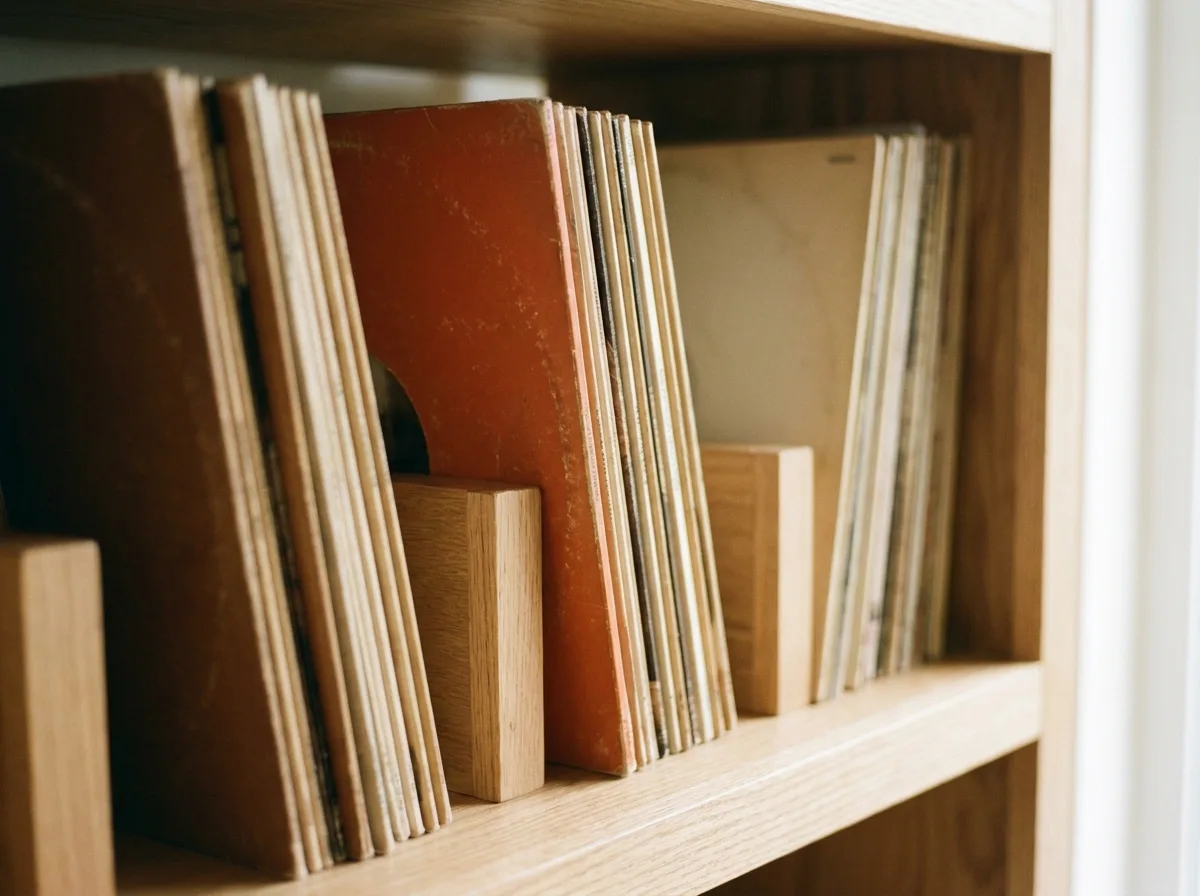
The catch is that vertical only works if records are supported. A half-empty shelf lets them lean, and a leaning record can slowly bend. Fill the shelf snugly, or add a bookend or divider. The Library of Congress suggests sturdy dividers about every 4 to 6 inches so each disc is held across its whole face.
What temperature and humidity work best for record storage?
Aim for cool and relatively dry. The Library of Congress describes audio disc storage as cool (room temperature or below) and relatively dry (35 to 40 percent relative humidity). The practical rule is to avoid extremes and sudden swings. A comfortable living room, den or spare bedroom beats an attic, a garage or a damp basement.
As general guidance, heat is bad for vinyl and moisture invites mold on jackets and paper sleeves. Light fades cover art even when the disc is fine. Walk the room before you choose a spot and look for the usual trouble:
- A window with direct afternoon sun.
- A heat register, radiator or fireplace within a few feet.
- An amp or receiver that runs warm right under the shelf.
- A steamy bathroom. Even after a bathroom remodel with a new exhaust fan, humidity there swings too much for records.
- A basement corner that smells musty.
Near a furnace or ductwork, check where the registers sit before you commit. If you ever plan a furnace replacement, that is a good moment to think about where new registers will land relative to your shelves. A cheap hygrometer shows what a room is really doing, and a dehumidifier can tame a damp basement.
How many records fit per foot, and how much do they weigh?
Many collectors plan on about 60 loose and up to 75 snug LPs per linear foot of shelf. The weight is the surprise. The Library of Congress suggests planning shelf strength for at least about 35 pounds per foot for grooved discs. A full shelf behaves less like a bookshelf and more like a tool rack.
Here’s a rule-of-thumb table you can use before you buy anything.
| Shelf width | Approximate LPs | Plan shelf strength for |
|---|---|---|
| 1 foot | 60 to 75 | 35 pounds or more |
| 2 feet | 120 to 150 | 70 pounds or more |
| 3 feet | 180 to 225 | 105 pounds or more |
| 4 feet | 240 to 300 | 140 pounds or more |
Now a hypothetical. Say you eye a bookcase with 3-foot shelves. That shelf needs to carry 180 to 225 records, so plan for over 100 pounds on one board. Shelves rated for paperbacks and picture frames often can’t take that, so check the maker’s load rating. If a spec sheet doesn’t list one, assume the shelf is built for light loads.
What are the best vinyl record storage furniture options?
Most homes land on one of six types: crates and bins, cube shelves, cabinets, consoles, turntable stands with storage, and wall displays. Each trades cost, capacity and looks differently. Cubes win on price per record. Cabinets and consoles win on style. Wall frames win on art, but hold very few discs.

- Crates and bins. Cheap, portable and fine for small collections. LPBIN sells a smaller Bin-e option, listed at roughly $55 to $78 in October 2026.
- Cube shelves. The collector default, since a 12-inch record fits a square opening. Way Basics and IKEA both make versions.
- Cabinets. They hide the records and keep dust off. LPBIN’s cabinets were listed at about $330 to $480. One r/vinyl user says the LPBIN3 holds around 450 LPs, but that’s a user claim, so confirm capacity with the seller.
- Consoles and credenzas. The furniture-grade choice. Solid-wood pieces from shops like Tomfoolery run roughly $1,350 to $4,200, and Ocean Beach Pallet Co lists pieces from about $229 up to about $2,933.
- Turntable stands with storage. They keep the player and some records in one footprint. Tomfoolery lists a walnut stand at about $100.
- Wall displays. Great for showing a few covers, not for storing a collection.
Is an IKEA Kallax good for vinyl storage?
Often, yes. It’s the cheapest way to get real vinyl storage at scale. The square cubes fit 12-inch albums, units stack or sit side by side, and the price is hard to beat. A 2025 eCoustics roundup lists the Kallax at roughly $25 to $330 depending on size, with capacity from about 100 to more than 500 LPs.
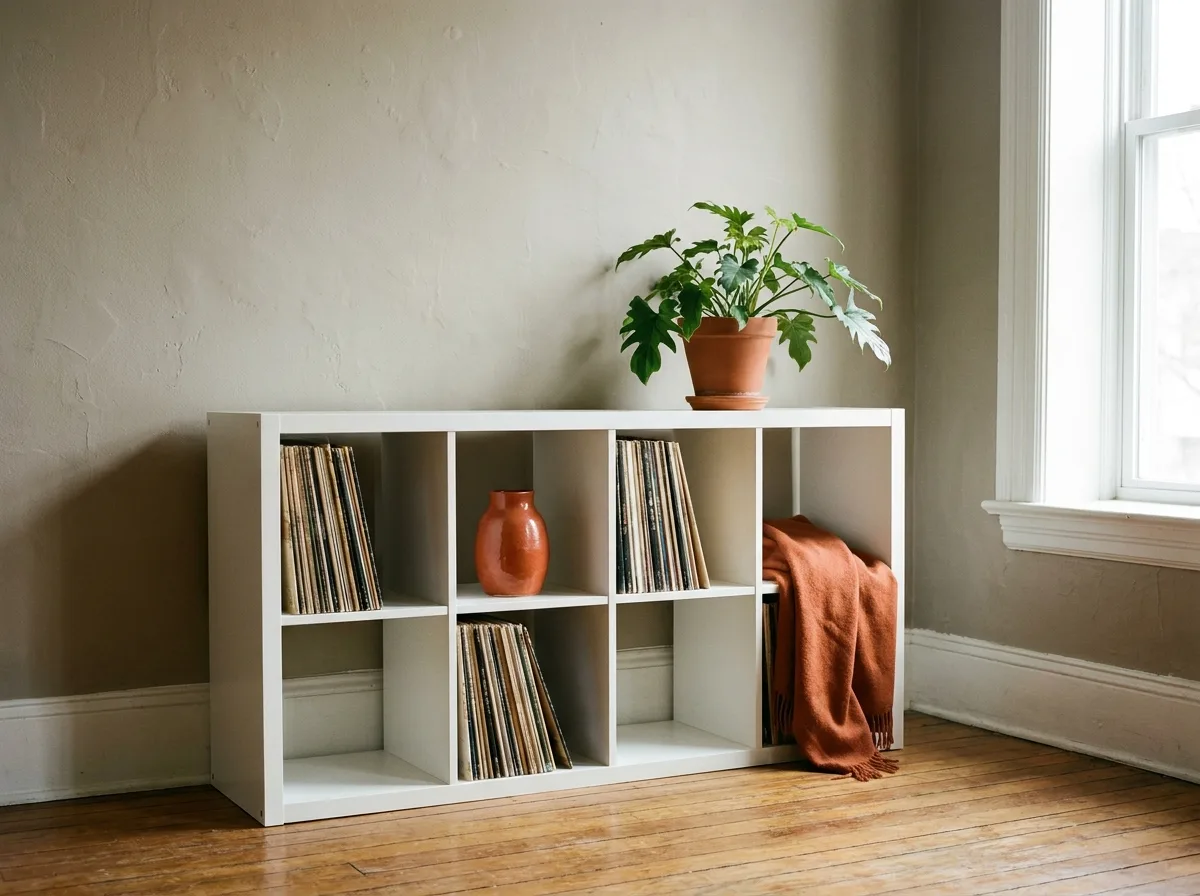
It’s not perfect. Kallax units are particleboard and aren’t designed to be modified. Users also complain that the doors are flimsy and make it harder to pull records from edge slots. Skip the doors if you can.
One safety note. Anchor any tall loaded unit to the wall, because a full stack is top-heavy. If the load worries you, spread records across more units.
What is the best storage for a small collection under 100 LPs?
For under 100 records, pick the smallest unit that leaves room to grow. A crate, a two-cube shelf or a turntable stand with a built-in rack all work. You get the same protection a bigger setup gives, without paying for empty space.
Some options with listed prices from the eCoustics roundup:
- A Way Basics Dylan cube, about $41, holding around 70 LPs.
- A Simple Wood Goods cube, about $189, holding about 70 records.
- A Symbol Audio Dovetail crate, about $285 for around 75 records, a splurge for a single crate.
Renters have good options, because freestanding furniture leaves the walls alone. A hall closet can hold a bin or short shelf, and if the closet door gets in the way, our guide to closet doors covers styles that open up more of the space. One caution: closets can run warm or damp, so check before you commit your best records.
What about a large collection of 500 or more LPs?
Past 500 records, you’re planning shelf footage, not furniture. At 60 to 75 LPs per foot, 500 records need about 7 to 8 feet of shelf. By the Library of Congress planning figure, that’s roughly 230 to 290 pounds or more. A thousand records doubles all of it.
Three approaches work. You can group several Kallax units, and one collector reports about 1,000 records across two 2 by 4 units. You can buy dedicated cabinets, where LPBIN models run from about $330 to $480 each. Or you can build a wall of shelves. If a thousand records will sit in one spot, ask a licensed contractor about your floor first, since floor capacity and building codes vary by home and location.
At this size, organization matters as much as vinyl record storage itself, so build in dividers from day one.
Cabinet, console or crate: which style fits your room?
Match the furniture to how you use the records and how much room you can give up. Use these quick decision rules.
- Pick a crate or bin if you own under 100 records, rent, or move often.
- Pick cube shelves if you want the most records for the least money and don’t mind a casual look.
- Pick a front-facing cabinet if you flip through covers a lot. Reddit collectors love this style.
- Pick a console if the records live in a main room and the furniture has to earn its place.
- Pick a wall display if you only want a few favorites on show.
- Skip solid wood if the price outweighs the value of your gear. One poster found a piece near $600 and still wanted cheaper options.
How do you display records on the wall without damaging them?
Use a purpose-made frame or ledge, anchor it into studs or proper wall anchors, and rotate what you show. Andover Audio’s fabric wall frame measures about 29.5 by 54.5 inches, shows 8 LPs and was listed at around $65 in October 2026. Show a handful of favorites and keep the rest on shelves.
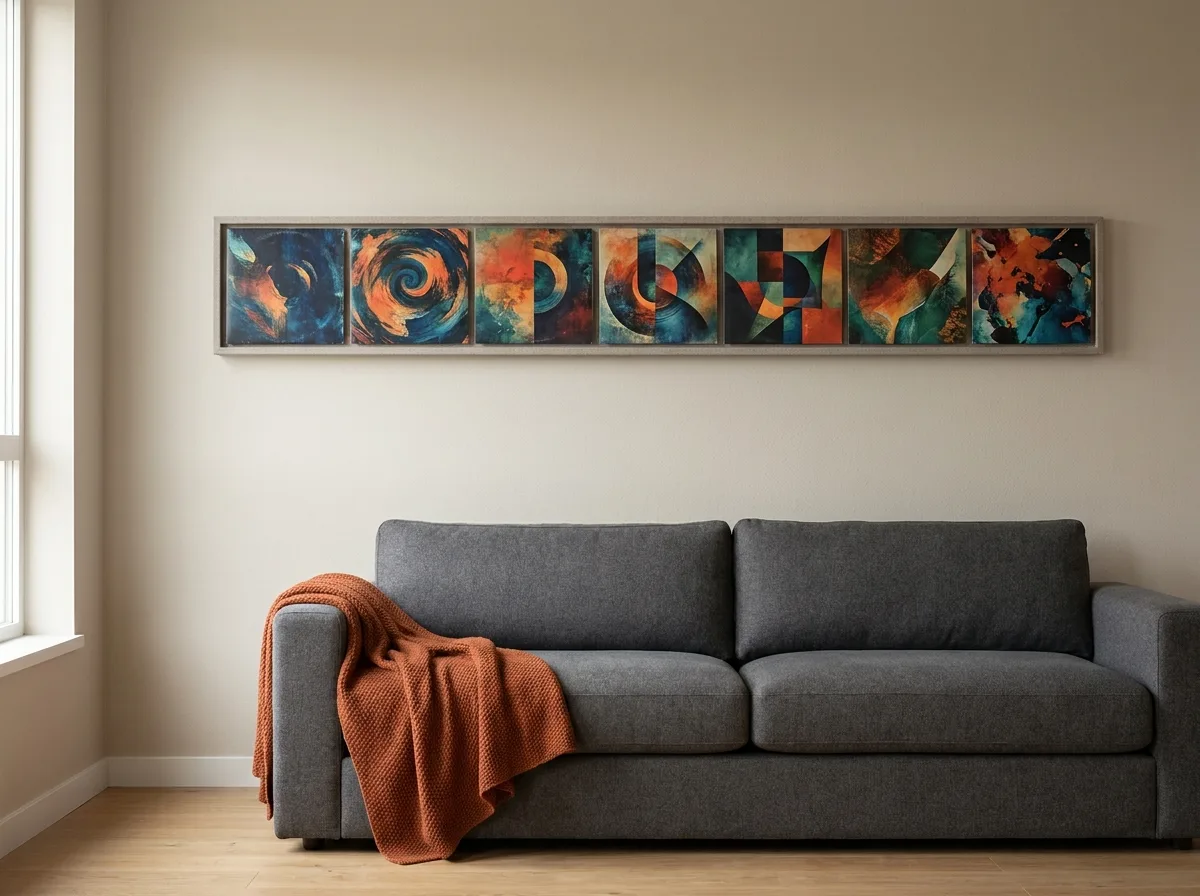
Sunlight is the main threat. It fades jackets, and the Library of Congress also lists light as a risk to discs. Keep displays off any wall that gets direct sun, and rotate covers every few weeks. Heat from a nearby lamp or radiator is the second threat. Eight records are light, but a loaded frame still needs solid mounting, so ask a pro if you’re unsure about your wall.
How do you organize a vinyl collection?
Pick one system you’ll really follow. The common choices are alphabetical by artist, by genre, by year, or a mix, such as genre first and artist second. Dividers make any system easier, and they double as support.
A few details help:
- Leave a hand’s width of free space at the end of each shelf so new records don’t force a reshuffle.
- Keep a "now playing" crate near the turntable, then return records afterward.
- Put the records you reach for most at chest height and the heavy, rarely played ones lower.
What sleeves do you actually need?
Most records need two layers. The inner sleeve touches the disc, and the outer sleeve wraps the jacket. For inner sleeves, the Library of Congress prefers polyethylene when feasible over the original paper. Collectors also use poly-lined or rice-paper options.
An outer sleeve is a clear plastic cover over the jacket. It protects against shelf wear, moisture and scuffs, and many collectors pick a thicker one, often sold at around 3 mil. If you only buy one kind, buy inner sleeves for the records you play a lot. Opinions differ on anti-static sleeves, so treat that claim as contested.
Should you build a DIY record shelf?
Yes, if you’re handy and willing to over-build. A DIY shelf can give a custom fit for less money, but the rules are strict because records are heavy. Short spans, thick boards and solid support matter more than looks. Sagging is the most common failure.
Two low-cost ideas come up on Reddit. One is cinder blocks and boards with felt pads, which is cheap and movable. Keep that build low, brace or anchor it so it can’t tip or shift, and never stack it high with heavy loads. The other is a front-facing cabinet where each shelf holds around 150 records. One builder found casters made the finished unit hard to move once loaded. If you use wheels, choose locking ones rated far above the load.
If your project means cutting into a wall, adding wiring or changing anything structural, hire a licensed pro and pull permits where your local codes require them.
What mistakes ruin records in storage?
Most damage is slow, so it goes unnoticed until a record skips. Here are the common mistakes, each with a simple fix.
- Flat stacks. Stand records on edge instead.
- Damp basements and hot garages. Move to a stable, cool, dry room.
- Sun and heat. Keep shelves away from windows and registers.
- Shelves rated for books. Check the load rating and add supports.
- Unanchored tall furniture. Anchor it to the wall.
- Speakers inside a cabinet. Vibration is a risk for records.
- Half-full shelves. Add bookends or dividers.
How much does vinyl record storage cost?
Typical vinyl record storage runs from under $50 for a basic cube to well over $1,000 for a solid-wood console. Capacity matters as much as price, so compare cost per 100 records. The numbers below come from the 2025 eCoustics roundup and vendor pages checked in October 2026. Prices can change. Capacity is as listed per unit, and cube counts vary between units, so check what each listing includes.
| Option | Listed price (per listed unit) | Approx. capacity | Approx. cost per 100 LPs |
|---|---|---|---|
| Way Basics Dylan cube | about $41 | about 70 | about $59 |
| Simple Wood Goods cube | about $189 | about 70 | about $270 |
| Symbol Audio Dovetail crate | about $285 | about 75 | about $380 |
| Line Phono station | about $329 | about 200 | about $165 |
| IKEA Kallax | about $25 to $330 | 100 to 500+ | varies by size |
| Andover wall frame | about $65 | 8 on display | not comparable |
| Solid-wood console | about $1,350 to $4,200 | varies | varies |
The price drivers are material (particleboard versus solid wood), capacity, finish, doors and brand. Say you own 150 records and add a few dozen a year. A pair of cubes handles that now, and you can add a third later. Spend the savings on sleeves and a hygrometer.
Frequently Asked Questions (FAQ)
How do you store vinyl albums?
Stand them upright on a sturdy shelf in a cool, dry room, away from sun and heat. Keep each record in a clean inner sleeve inside its jacket, and keep different sizes on separate shelves.
Can you store records flat?
Only briefly. A small pile for a day or two won’t hurt, but long-term flat stacks put pressure on the bottom records. If you have no choice, keep the stack short.
What is a vinyl outer sleeve?
It’s a clear plastic bag that slips over the album jacket to guard the cover. The inner sleeve is a different layer, since it sits inside the jacket and touches the record itself.
How do you store 45s and 78s?
Store both upright, apart from 12-inch LPs, since mixed diameters lean and slump. Shellac 78s are more fragile than vinyl, so handle them gently. Some archivists on Reddit suggest swapping old paper sleeves for safer ones, and the Library of Congress prefers polyethylene. A small divided box suits 45s well.
What is the best way to store records in a basement or garage?
Avoid it if you can, because both swing in heat and humidity. If a basement is your only option, make sure it’s dry, run a dehumidifier, and keep records off the floor on a shelf. Skip an unconditioned garage entirely.
How many LPs fit in a Kallax cube?
Users commonly report about 50 records per cube, though it depends on jacket thickness and how tightly you pack them. Treat that as a rough guide, not a spec. A unit with eight cubes would hold roughly 400 on that math, so think about weight before filling it.
Do records need dividers?
Not always. A tightly filled shelf supports records without them. When a shelf isn’t full, dividers keep discs upright and make a collection easier to browse.
How do you store vinyl when moving?
Pack records upright in small, sturdy boxes so the weight stays manageable. Fill gaps with paper so records can’t lean or slide, and don’t leave boxes in a hot car or a damp truck.
How do you store records with a CD collection?
Give each format its own shelf or cube. Records are larger and much heavier than CDs, so the vinyl shelf needs the higher load rating. A cube unit can hold records in some cubes and CDs in others, as long as they don’t share one compartment.
How do you prevent shelf sagging?
Pick a shelf with a stated load rating, then keep spans short. Add a center support or a thicker board if the span is long. If you see a bow forming, unload that shelf right away.
The Bottom Line
Back to that box of your dad’s records. You don’t need a fancy cabinet to give them a good home. You need a cool, dry spot, an upright row with solid support, sleeves that fit, and a shelf that can handle the weight. Start with the setup that fits your budget today, whether that’s a crate, a cube unit or a console, and leave room to grow.
Smart vinyl record storage is simple to remember. Upright, cool, dry and supported beats any clever trick. If you’re torn between a budget cube and a console, how many records do you expect to own five years from now?


One Comment