Concrete Patio Ideas That Still Look Good After Ten Winters
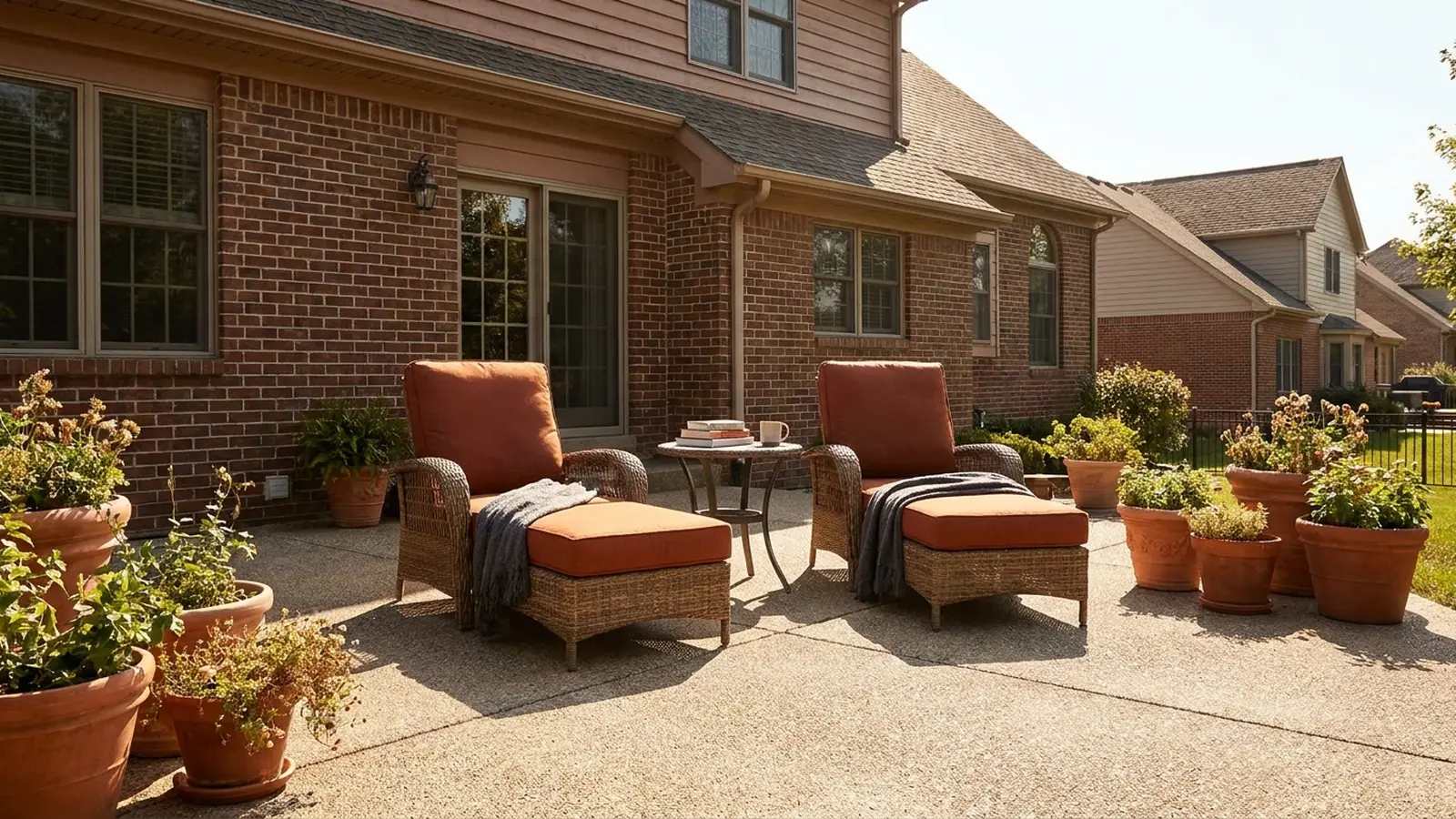
Say you’ve sketched a 12 by 16 slab behind the house, and three quotes come back. One is a modest number, one is more than double that, and the third contractor stops answering texts. Same yard. Same drawing. What did the cheap bidder leave out?
That’s the hidden trouble with a concrete patio. It looks like the simplest outdoor project there is, a flat gray rectangle, yet it’s the one people regret most when small details slip. Cracks appear. A stamped pattern fades. Winter turns a pretty surface into a skating rink.
So this guide treats design and durability as one question. Instead of a gallery of pretty photos, you’ll get patio ideas ranked by how they age, plus cost, quote checks, thickness, pavers and sealing. It’s one piece of planning your whole backyard, so if you’re also weighing a fence style that frames the space, keep that tab open.
Executive Summary
Short on time? These four points cover what you need before calling a contractor.
- Finish: A broom finish, stain or exposed aggregate on a plain slab has fewer seams and surface layers than a stamp, so in my opinion it tends to age more gracefully.
- Cost: Typical stamped installs run about $3,000 to $8,000 according to Angi data cited by US News, with high-end jobs climbing past $14,000.
- Quote: A fair bid lists thickness, mix strength, reinforcement, base depth, joints and sealing, so compare scope before price.
- Cracks: Some hairline movement is normal, but trip-hazard cracking is avoidable when the base, joints and curing are done right.
Which Concrete Patio Ideas and Finishes Look Best?
The best finishes are the ones that match your climate and tolerance for upkeep. Broom finish gives grip and a clean look. Stain adds color without a thick layer. Exposed aggregate shows pebbles and hides dirt. Stamping imitates stone, brick or wood. An overlay refreshes an older slab. Each ages differently, which matters more than the photo.
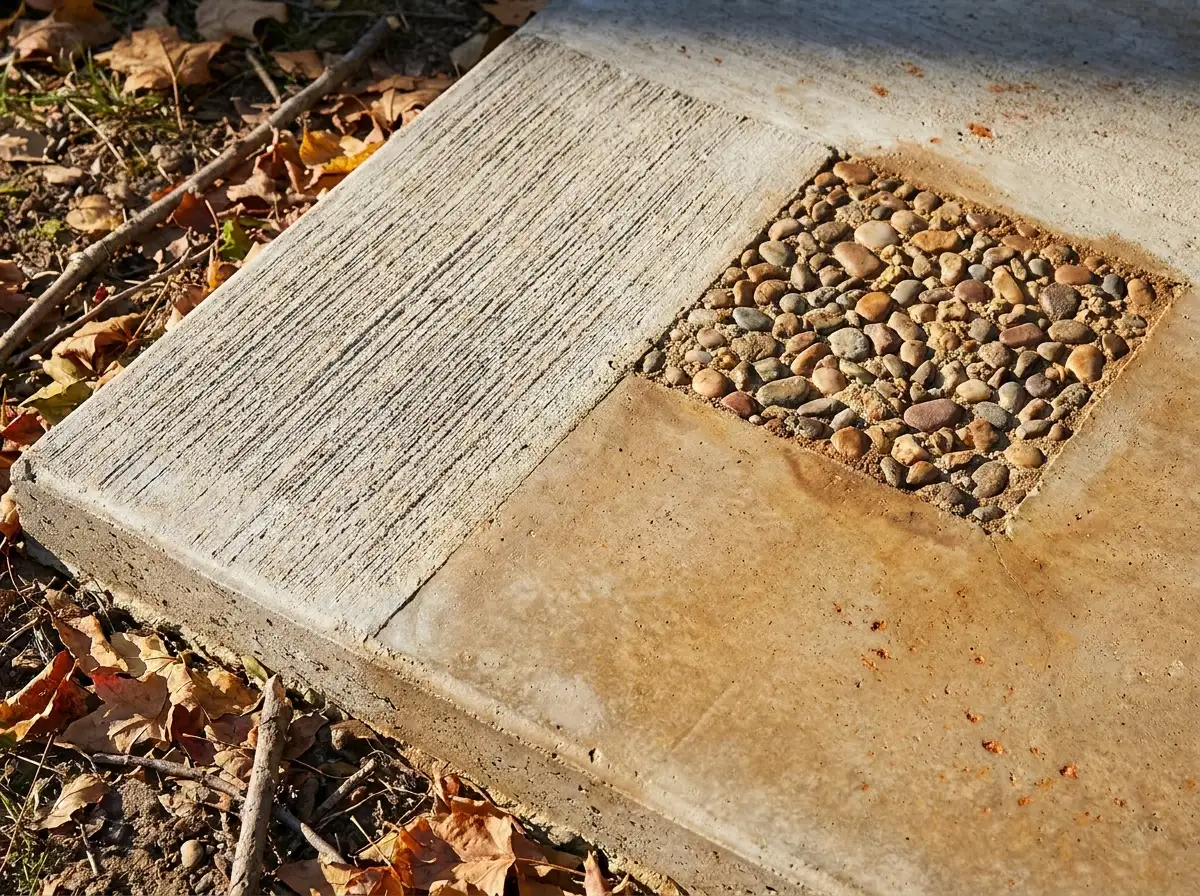
Here’s a quick way to judge them. The "ages well" column is my general opinion based on typical practitioner advice about wear and weather, not measured data, and results vary by climate and installer.
| Finish | Look | Ages well? | Best for |
|---|---|---|---|
| Broom finish | Fine ridges, simple | Very | Snow zones, budgets |
| Acid or water-based stain | Mottled, earthy | Good, needs resealing | Warm modern yards |
| Exposed aggregate | Pebbled, textured | Very | Hiding dirt, grip |
| Salt finish | Small pits, soft | Good | Pool-adjacent areas |
| Stamped | Slate, brick, wood plank | Mixed | Mimicking stone |
| Overlay | Fresh skin on old slab | Depends on the slab beneath | Tired but sound patios |
One caution on overlays: they can’t fix a slab that’s heaving or badly cracked. They hide it for a season or two. Want something different? Plain concrete with great furniture and a pergola can look more expensive than a stamp that fights your house.
Is a Stamped Concrete Patio Worth It, or Will You Regret It?
A stamped concrete patio is worth it when the pattern suits your home, the installer is experienced and you accept maintenance. It’s a poor bet if seams crack through the pattern or snow makes the surface slick. Many homeowners say a clean plain slab looks better than a cracked fake cobblestone.
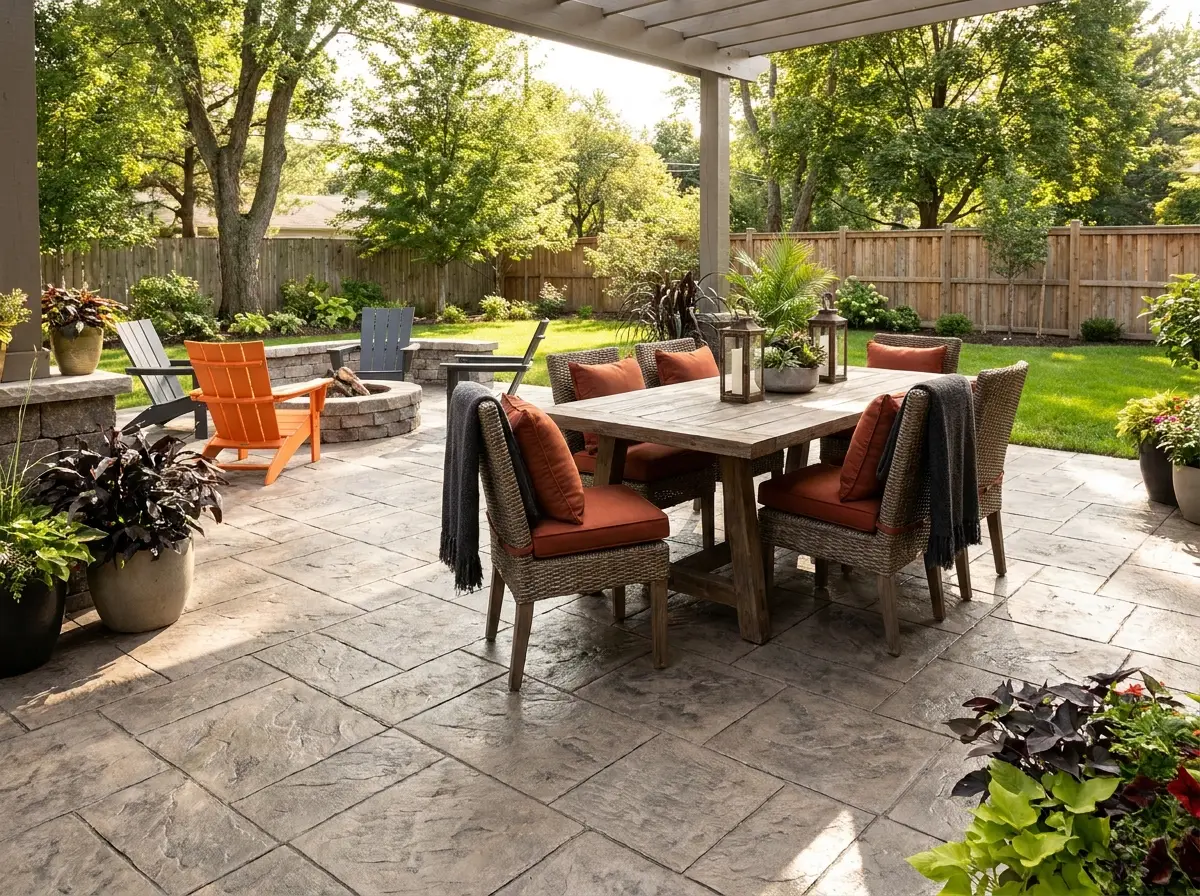
Stamping presses texture into wet concrete, then color is added with integral pigment or a release agent. US News lists typical stamped costs of about $9 per square foot for brick, $11 for slate and $14 for cobblestone. Look at the trade-offs honestly. Gains: the stone look at a lower price. Losses: sealing every two to three years, and a pattern that interrupts any crack line. Reddit threads are full of "pound cake" complaints, where cracks follow the pattern seams.
My pick? Choose a simple pattern like ashlar slate, skip dark colors in hot sun, and ask the installer where the joints will fall.
How Do You Pick a Style for Your House and Climate?
Match the surface to your weather first and your siding second. Freeze-thaw regions need air-entrained concrete and a textured finish. Hot, sunny regions need lighter colors that don’t scorch bare feet. Wet, shaded yards need traction. Then echo your home’s materials: brick houses suit brick-tone stamps, modern homes suit plain stained slabs.
Think about cold first. Water seeps into the surface, freezes, expands and flakes it off, which is called spalling. A smooth, glossy sealer on a stamped patio is also slippery when icy, so ask for a traction additive in the sealer. In hot regions, dark charcoal slabs can get uncomfortable by afternoon. Pick medium tones. A deck nearby? A coordinating finish like a weather-matched deck stain keeps the two spaces from clashing.
How Much Does a Concrete Patio Cost?
Cost depends on size, finish, site prep and region. For stamped work, Angi data reported by US News puts typical installs near $3,000 to $8,000, with high-end jobs above $14,000. Plain slabs cost less per square foot. Demolition, grading, stairs and reinforcement push totals up fast.
Use the square footage first. The stamped figures below simply multiply the US News range of $9 to $14 per square foot, so treat them as rough anchors, not quotes.
| Size | Square feet | Stamped, rough range |
|---|---|---|
| 10 x 10 | 100 | $900 to $1,400 |
| 12 x 12 | 144 | $1,300 to $2,000 |
| 20 x 20 | 400 | $3,600 to $5,600 |
Real bids run higher once base prep, demolition and a pump truck for hard-to-reach yards get added. Resealing costs about $200 to $600, and repairs about $300 to $1,000, per the same US News piece. A plain slab usually lands below these numbers, though your region and the contractor decide how far.
What Should a Fair Contractor Quote Include?
A fair quote lists slab thickness, concrete strength, reinforcement, base depth, finish, sealing, control joints, demolition and cleanup. If any are missing, ask. Vague quotes hide the shortcuts that cause cracking later, which is why the cheapest bid is often the least complete.
Here’s the part most people miss. Compare scope, not price. A quote that says "pour 4 inch patio" tells you nothing about the stone base underneath or whether sealing is included. Use this list:
- Thickness (4 inches is the usual practitioner standard)
- Mix strength, often 4,000 psi with air entrainment in freeze-thaw areas
- Rebar or wire mesh, and how it’s supported
- Compacted crushed-stone base, commonly 4 to 6 inches
- Where control joints go
- Sealer, color matching and cleanup
Those engineering numbers are common practitioner advice rather than code, so confirm local requirements and whether a permit applies.
Pavers or Poured Concrete: Which One Wins?
Choose a poured concrete patio for a large, seamless area and lower long-term fuss. Choose pavers if you want easy repairs, a DIY-friendly build or a surface that flexes instead of cracking. Pavers aren’t always cheaper once base, edging and labor are counted, so compare full installed costs.
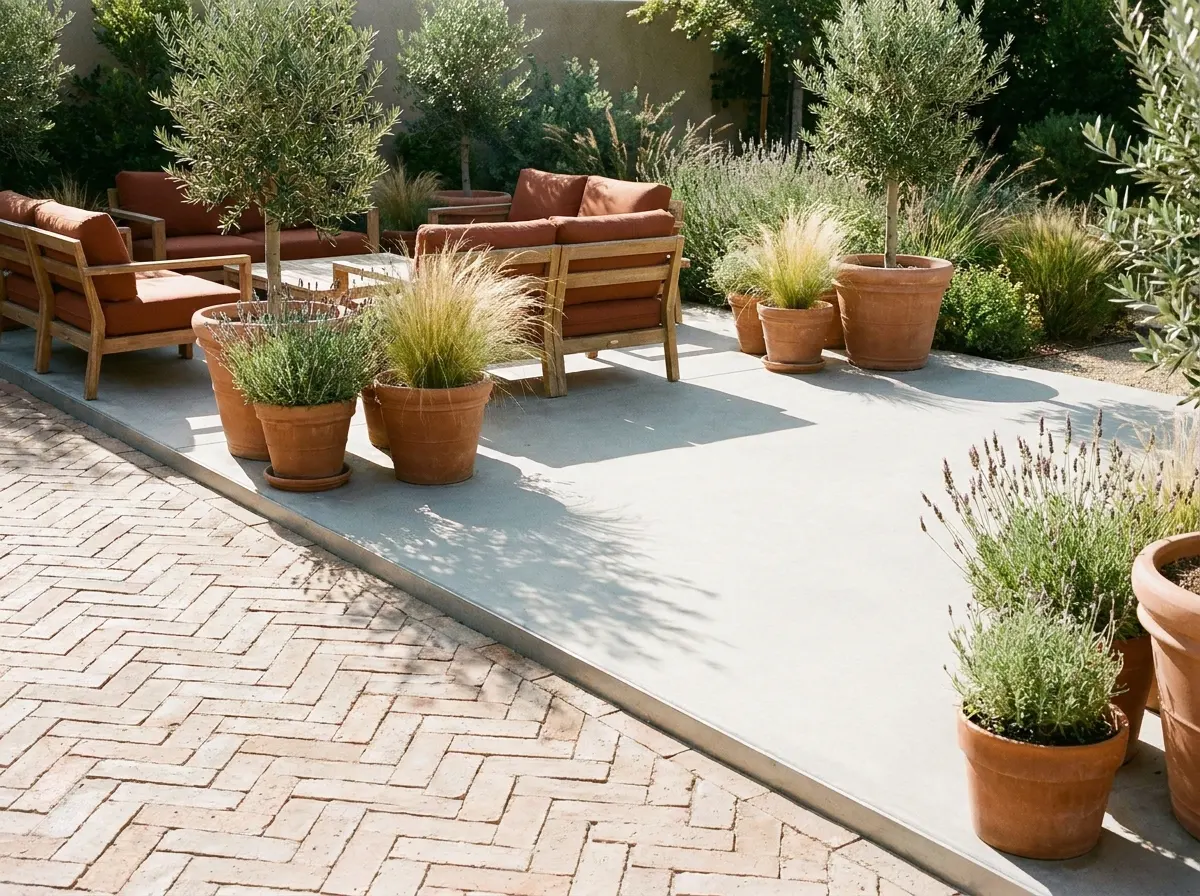
| Factor | Poured concrete | Pavers |
|---|---|---|
| Cracks | Likely, controlled by joints | Rare, but can shift |
| Repairs | Patch or replace slab | Swap single units |
| DIY | Hard in one pour | Easier by section |
| Weeds | Few | Between joints |
Say a first-time owner wants 200 square feet and has a weekend. Pavers can be laid in sections. Poured concrete demands speed once the truck arrives. Judged on crack resistance, repair ease and DIY friendliness, pavers win for hands-on owners and concrete wins for hired crews.
How Thick Should the Slab Be, and Does It Need Rebar?
Four inches is the common patio thickness, laid on a compacted stone base with reinforcement such as rebar or wire mesh. Five inches mostly wastes money unless a hot tub or heavy planter sits on it. Reinforcement in a concrete patio controls cracks and keeps them tight. It doesn’t stop them.
Beverly Companies suggests 2×6 forms staked about every two feet, a 4 to 6 inch compacted base and a 12 by 16 inch rebar grid, then curing for seven days. Fiber additives only help with shrinkage. For a hot tub, check the tub maker’s spec sheet and ask a structural pro. Slope the surface about a quarter inch per foot away from the house for drainage.
Why Do Concrete Patios Crack, Scale or Peel, and How Do You Prevent It?
Most concrete patio failures trace to a thin or poorly compacted base, missing joints, poor drainage, early drying or the wrong mix. Spalling and scaling happen when water freezes in the surface. Peeling usually means paint or sealer sitting on a damp slab. Prevention is cheap compared with repair.
A common version of this story: an owner skips control joints to save money, the slab dries too fast in July sun, and random cracks run across the middle in the first year. The fix is planned weak points. Control joints are cut grooves that guide cracking into straight lines. Expansion joints separate the slab from the house. Keep it damp during curing and don’t add water at the truck. Pro tip: use stain, not paint. Paint peels, stain bonds.
How Do You Seal and Maintain a Concrete Patio?
Seal your concrete patio after the slab has cured and reseal about every two to three years. Acrylic sealers give color and sheen. Penetrating sealers protect with less gloss and less slip. Sweep often, wash gently and avoid de-icing salts, which speed scaling.
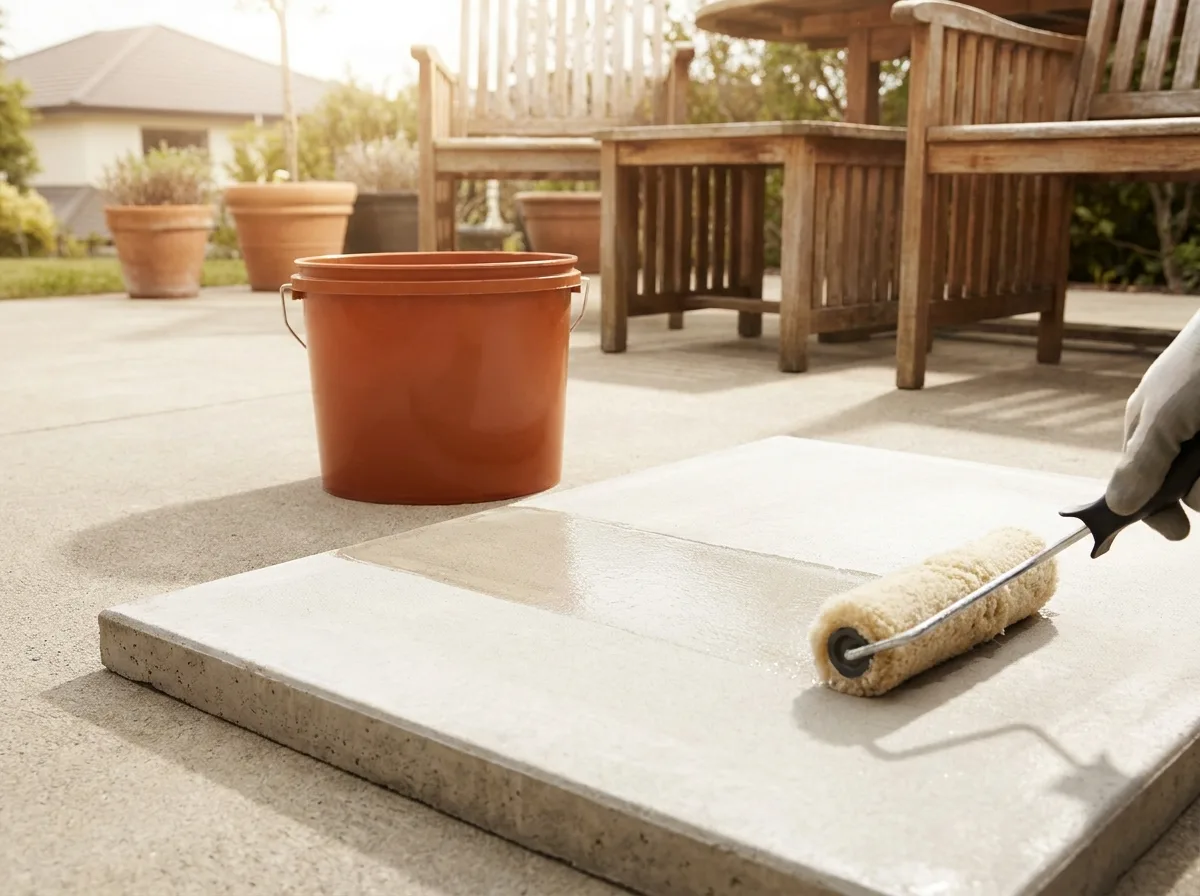
Schedule a quick check each spring. Water that beads on the surface means the sealer is still working. Water that darkens the slab means it’s time. Block off a weekend, rinse, let it dry fully, then roll on thin coats.
Can You DIY a Concrete Patio, or Should You Hire Out?
A small, simple slab such as 10 by 10 is a realistic DIY job if you have helpers, but a 10 by 20 or larger pour is usually better hired out. Concrete sets on its own schedule, so finishing, joint cutting and curing all need to happen on time.
Pavers are the gentler DIY route because you can work in sections. If you do pour yourself, line up two or three helpers, have forms and base finished the day before, and check local rules on permits first.
Frequently Asked Questions
How much does a 20×20 concrete patio cost?
A 20×20 patio covers 400 square feet. Multiplying the US News stamped range of $9 to $14 per square foot gives roughly $3,600 to $5,600 for stamped work before extras. Plain finishes typically cost less, while demolition, stairs and tough access cost more. Get at least three itemized quotes, since regional pricing varies widely.
What is the average cost to pour a patio?
Angi data cited by US News puts typical stamped installs at about $3,000 to $8,000. Plain slabs usually cost less per square foot. Your price moves with size, base prep, finish, reinforcement and local labor. Always compare scope line by line, because a lower total often means a thinner base or no sealing.
What does a 12×12 concrete patio cost?
A 12×12 patio is 144 square feet, so a stamped version at $9 to $14 per square foot works out to about $1,300 to $2,000 in rough math. Real bids often land higher once base, forms and finishing are included. Small jobs sometimes carry minimum charges, so ask whether pricing is per square foot or a flat fee.
What are the downsides of a concrete patio?
Cracking is the big one. Even a well-built concrete patio develops hairlines, and repairs rarely blend perfectly. Concrete also gets hot in full sun, can be slippery when wet or icy, and is hard to move once poured. Smart joints, a lighter color and a textured finish reduce most of these problems.
Can you stamp over an existing patio?
Yes, a stamped overlay can be applied over a sound slab. A thin layer is troweled on, stamped and colored. It won’t fix major heaving or deep cracks, which usually telegraph through. A pro should assess the slab first. Expect it to look good but wear faster than integrally stamped concrete poured fresh.
Are stamped patios slippery?
They can be, especially glossy sealed ones when wet or icy. Brickform notes that traction additives can be mixed into the sealer to improve grip. Ask for this in your quote. A broom or exposed-aggregate finish is naturally grippier, so choose one of those in snow zones or around a pool.
How long does a concrete patio last?
A well-built concrete patio can last decades, and Reddit owners mention stamped patios still fine after 16 years. Longevity depends on base prep, mix, joints, drainage and regular sealing. Climate matters too, since freeze-thaw cycles shorten lifespan without air-entrained concrete. Plan to reseal every two to three years and fix cracks early.
Does a patio add home value?
Usually some. Angi figures cited by US News suggest a return of roughly 30 to 60 percent of cost, so it’s a lifestyle upgrade first and an investment second. Buyers respond best to clean, well-sealed surfaces. A cracked or stained slab can pull the value down, so maintenance counts. Our deck railing ideas pair well with it.
Can a concrete patio hold a hot tub?
Often yes, with the right pad. Tubs are heavy when full, so the slab needs proper thickness, reinforcement and a solid base, and the spot should drain well. Check the tub maker’s spec and ask a structural pro to confirm before you pour, since local codes and soil conditions vary. A stock tank pool needs a level, supported pad too.
Does rebar stop concrete from cracking?
No, that’s a myth. Rebar holds cracks tight so the slab stays level, but it doesn’t prevent them. Control joints tell the slab where to crack, and a good base and curing keep the cracks small. If a contractor promises "crack-free," treat that as a red flag and keep shopping.
Conclusion
The best concrete patio isn’t the fanciest one. It’s the one designed around how concrete behaves: it moves, it cracks a little, and it wears where people walk. That’s why, in my view, broom, stain and aggregate finishes tend to age better than many stamps, and why a complete quote matters more than a low one. The three-quote mystery from the start usually comes down to base, joints, reinforcement and sealing.
Your next step is simple: pick a finish, measure the area and ask for itemized bids. Then explore our deck stain guide or the picket fence ideas to finish the yard. So here’s the real question: will your slab be the calm backdrop or the thing guests keep asking about?