Elongated vs Round Toilet: How to Choose for Your Bathroom
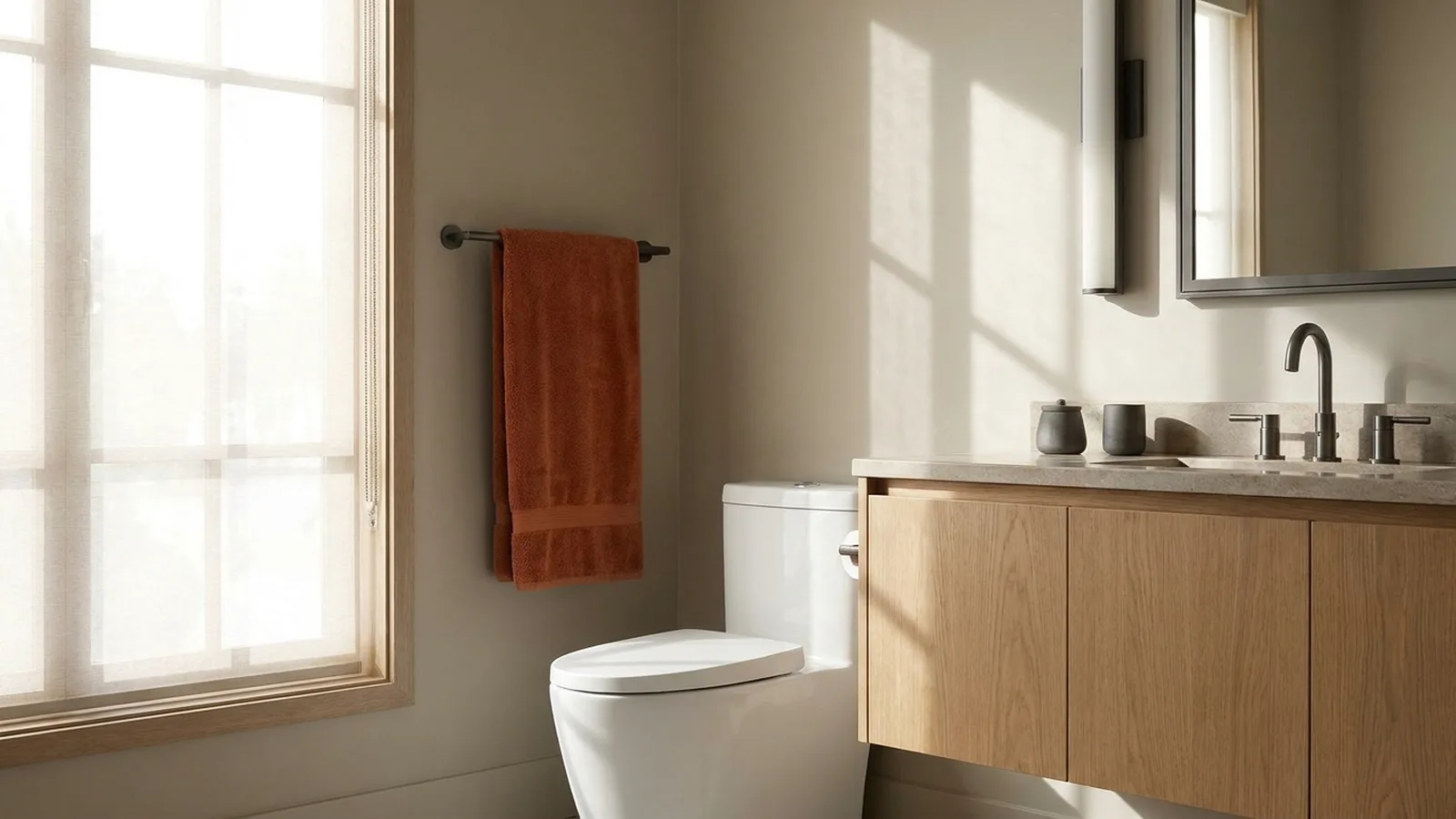
Say a homeowner orders a new toilet online on a Tuesday night. It arrives Friday, the old one comes out in twenty minutes, and the new bowl settles into place with its front edge a few inches from the door. The door closes. Barely. Every single time. That’s the kind of regret a two-inch difference can cause, and it’s why the elongated vs round toilet question deserves a tape measure before a shopping cart.
Most guides treat this as a matter of taste. It isn’t that simple. Shape interacts with your door swing, your vanity, the people who use the room and even the seat you’ll buy next year. Get it right and you’ll never think about it again. Get it wrong and you’ll think about it daily.
This guide gives you the real numbers, a floor-tape test, honest verdicts by user and a swap checklist. It’s one small piece of planning a bathroom remodel, but it’s the piece you sit on every day.
Executive Summary
You’ll be able to pick the right bowl shape in about ten minutes with a tape measure and painter’s tape, and you’ll see what most articles skip.
First, the bowl is only part of the story. What matters is how far the front of the toilet sticks out from the wall, because that number runs into plumbing code and your door. Second, round isn’t outdated. In a tight half bath it’s often the smarter answer. Third, shape barely changes flushing or cleanliness, so ignore the myths. Fourth, seats and bidet seats are shape-specific, which means you should decide the seat and the bowl together.
The biggest worry is usually price. The gap is typically small, so comfort and clearance should drive the decision, not the sticker.
What Is the Real Difference Between an Elongated vs Round Toilet?
An elongated bowl is oval and measures about 18.5 inches from the seat bolts to the front rim. A round-front bowl is nearly circular at about 16.5 inches. That two-inch difference changes seating comfort, how far the toilet projects into the room and which seat you can buy. Everything else is mostly marketing.
Retail guides such as Home Depot’s put the wall-to-front distance at up to about 28 inches for round and up to about 31 inches for elongated, though models vary.
| Feature | Round-front | Elongated |
|---|---|---|
| Bolts to rim | About 16.5 in | About 18.5 in |
| Wall to bowl front | Up to about 28 in | Up to about 31 in |
| Seat sold as | Round only | Elongated only |
| Best for | Small rooms, kids, short users | Most full baths, taller users |
Not sure which one you have now? Measure from the center of the two seat bolts to the front edge of the bowl. About 16.5 means round, about 18.5 means elongated, and anything else suggests a compact elongated model, which splits the difference. Our guide to toilet dimensions covers the rest of the sizing numbers.
How Much Space Does an Elongated vs Round Toilet Need?
Plan on at least 21 inches of clear floor in front of the bowl and at least 15 inches from the toilet’s centerline to any side wall or obstruction. Those are International Plumbing Code minimums, and some towns require more. A bigger bowl uses up that front clearance faster, so measure before you buy.
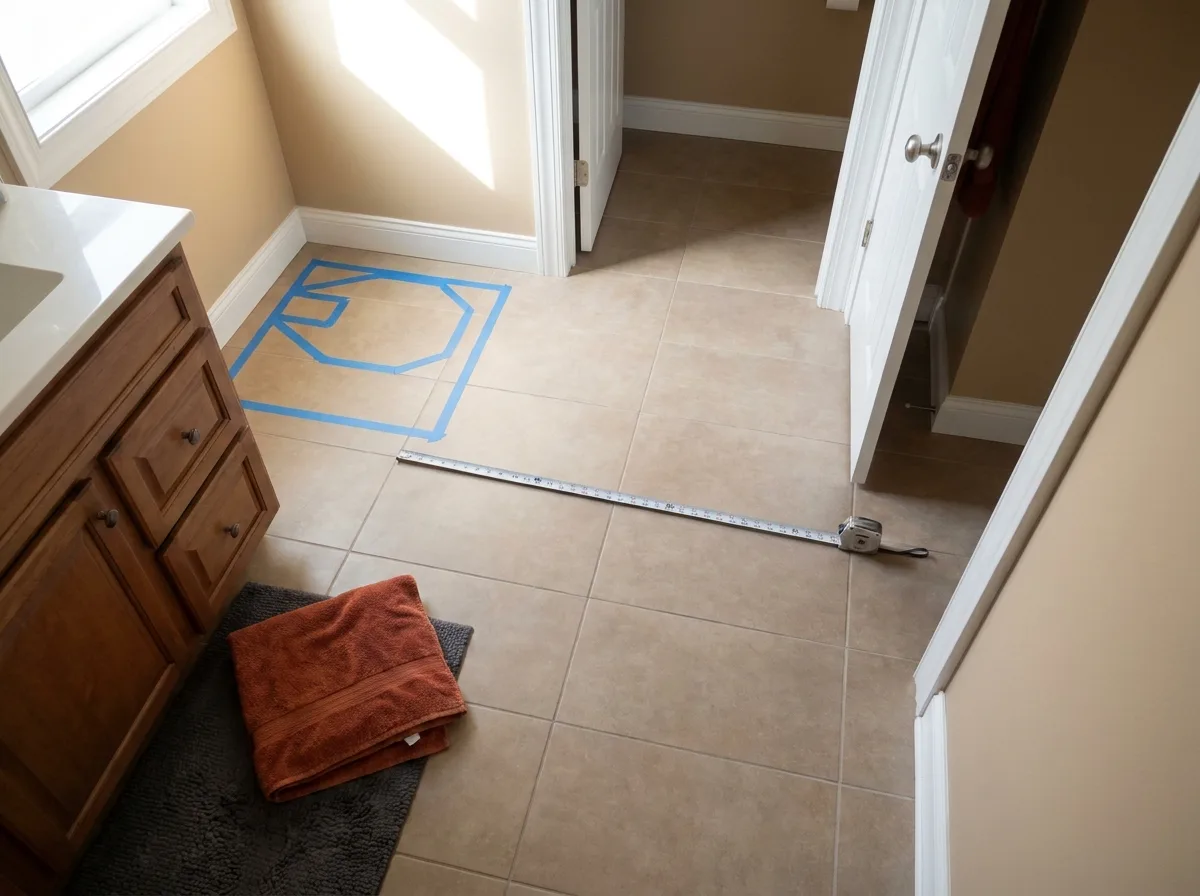
Code measures from the front of the bowl, so a 31-inch elongated toilet in a bathroom with 50 inches of wall-to-door space leaves under 20 inches. That fails the 21-inch rule. Check your local code, since one town in a homeowner thread reportedly enforced 24 inches.
Try the tape test for any elongated vs round toilet choice. Mark the footprint on the floor with painter’s tape: toilet depth from the wall, then 21 inches beyond that. Swing the door. Stand where the vanity sits. If anything crosses the tape, go round or compact elongated.
Half baths and compact elongated. Picture a half bath with 48 inches from the back wall to the door and a 30-inch toilet. That leaves about 18 inches in front, which fails the 21 inch rule. A compact elongated toilet keeps the oval seat with a shorter projection, and a narrower pedestal sink helps too. In a larger bath, a slim 48 inch bathroom vanity can pair well with either shape. Door swing matters as well, so see our notes on the bathroom door if yours opens inward.
Is an Elongated Toilet Really More Comfortable?
For most adults, yes. The longer bowl supports more of your thighs, gives you extra room and keeps the front edge from pressing into you. Comfort is personal, though, and height matters as much as shape. For many people, a comfortable seat height counts for more than a comfortable bowl length.
Reddit threads lean hard toward elongated, with "always elongated" among the most upvoted answers.
But here’s a pattern worth knowing. Shorter users, say someone around 5 feet 1, often say round feels better to them. Comfort height, usually 17 to 19 inches, helps taller users and older adults stand up easily. The 2010 ADA Standards set that 17 to 19 inch seat height range for accessible toilets. Notice what ADA doesn’t say: it doesn’t require elongated. Plenty of people repeat that myth.
Here’s a quick verdict by user, with the trade-off for each:
- Taller adults: elongated, as long as the front clearance still works. The cost is a couple of inches of floor space.
- Shorter adults: try both if you can, since round is often preferred but it’s personal.
- Older adults: seat height matters most, so look at 17 to 19 inches first and shape second.
- Young kids: round is easier to fit in a tight bath, though they’ll outgrow it.
- Renters: the landlord picks the bowl, so your move is the seat.
As for resale, there’s no solid evidence that a buyer pays more for elongated. Treat the "wow factor" claim as a myth and let fit decide.
Does a Round Toilet Still Make Sense?
Yes. A round toilet suits small bathrooms, kids and shorter users. It saves a couple of inches of depth, it costs a little less and seats are easy to find. When the front clearance after the bowl would fall under 21 inches, round is often the right answer, not the lazy one.
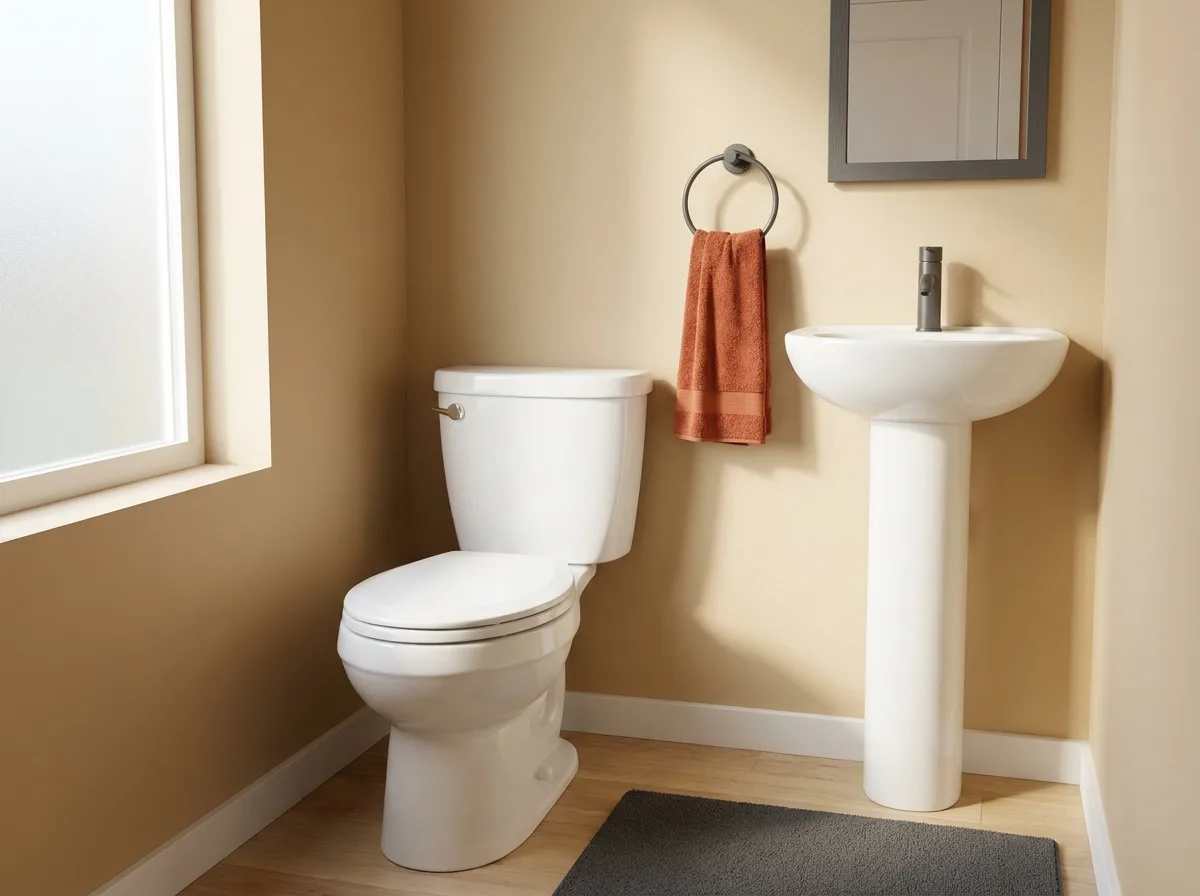
Consider a family with two young kids and a tight upstairs bath. Round gives them a bowl they can sit on without feeling swallowed, and it leaves room to open the door fully.
My view: "round toilets are for tiny people" is a shrug dressed up as a fact. In the elongated vs round toilet debate, fit beats fashion.
Does Bowl Shape Change Flushing, Cleaning or Hygiene?
No. Flush power comes from the trapway, the glazing and the rim design, not from whether the bowl is oval or round. A good model of either shape flushes well and a poor one of either shape doesn’t. Cleaning difficulty depends on the surface and the rim, not the outline, so shop by tested performance.
That busts the rumor that elongated bowls flush worse or get dirtier. Shopping by tested flush performance is the smarter move.
Cleaning is similar. An elongated bowl has slightly more surface, but a brush reaches the same places.
Does an Elongated vs Round Toilet Cost More?
Usually only a little. Retail guides point to a typical gap of about $20 to $50, or roughly 10 to 20 percent, with elongated costing more. The bigger costs come from the toilet’s features, replacement parts and seat, not the bowl outline, so compare models before you compare shapes.
Treat those as loose retail ranges, since brands and sales swing them. A plumber’s installation charge depends on your area and any surprises under the old toilet, so see our overview of bathroom plumbing before you budget.
One honest trade-off: brand-specific fill valves and flappers can cost more to replace than the shape premium ever did, so check parts availability before you buy.
Which Toilet Seat and Bidet Seat Will Fit?
Seats are shape-specific. An elongated seat will not fit a round bowl, and a round seat looks stubby on an elongated one. Bidet seats follow the same rule, and round bidet seats are fewer and often cost more, so settle the bowl shape first.
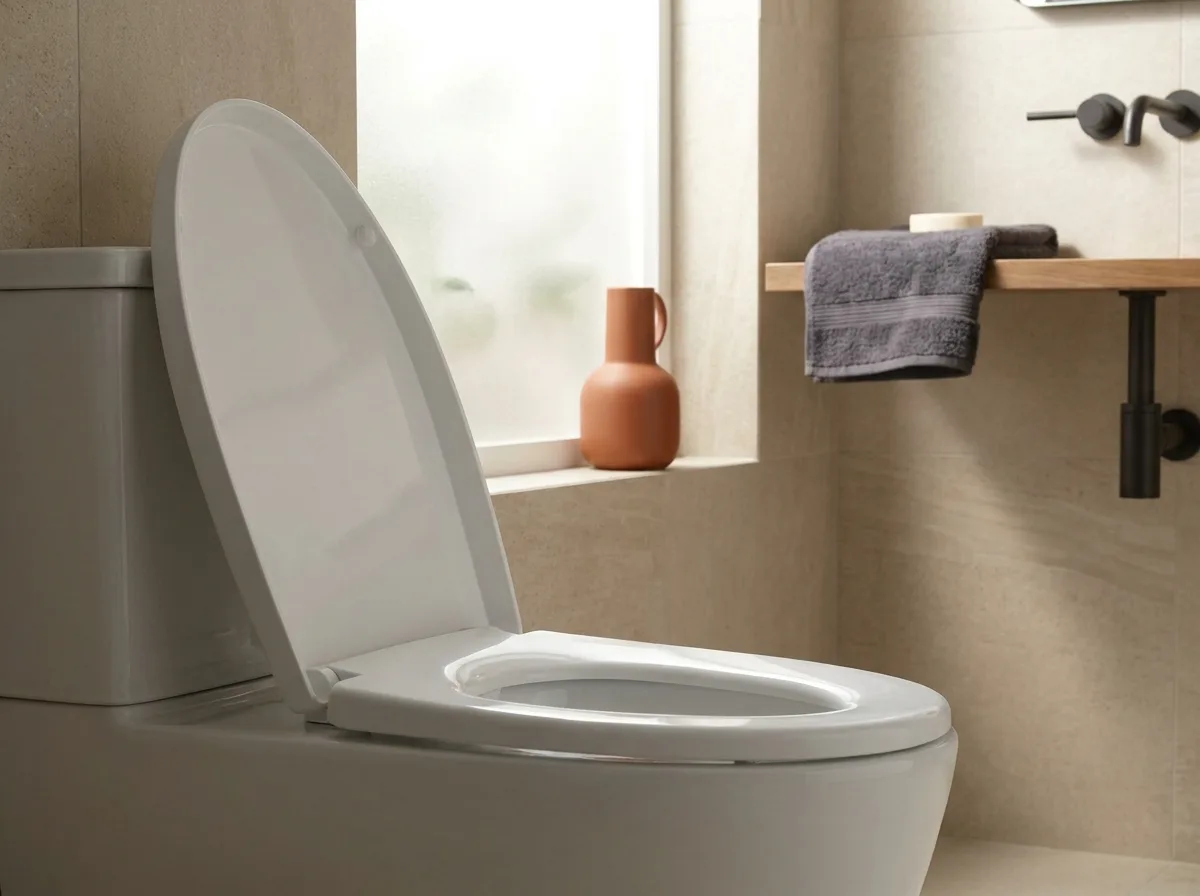
A common version of this mistake goes like this. Someone buys a round bidet seat for an old round bowl, later upgrades to elongated and has to buy again. Brands like TOTO sell both shapes, but the choices usually run wider for elongated.
Bolt spacing and the shape name on the box are your two checks. For a plain seat, you can usually swap in minutes. If you’re renting, your landlord decides the toilet, though a seat is often yours to change.
Can I Replace a Round Toilet With an Elongated One?
Yes, if the rough-in matches and the extra depth fits. Rough-in is the distance from the wall to the floor drain center, usually 12 inches, sometimes 10 or 14. Same rough-in means the toilet fits the drain, but depth and clearance still need checking.
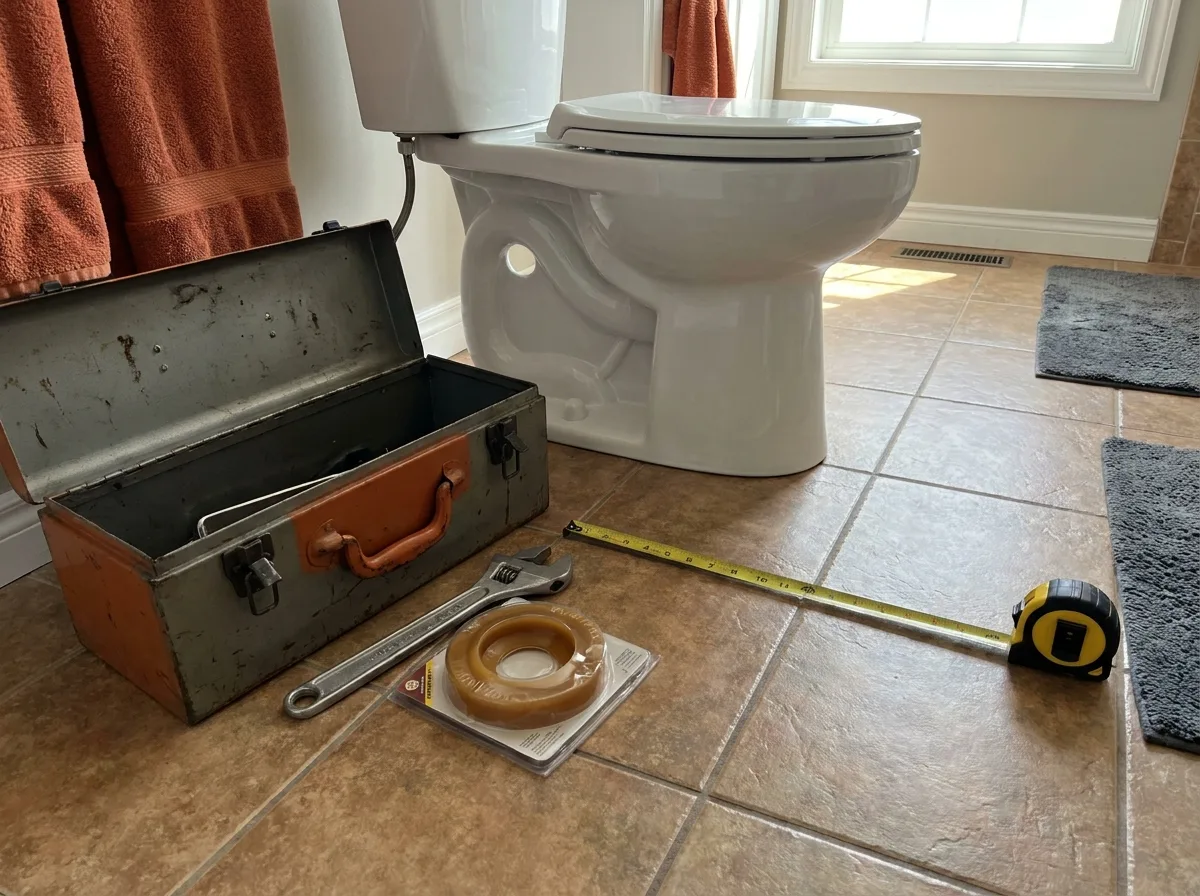
A homeowner who measures the old bowl first can swap it in one weekend morning. As a rough guess, a first-timer should plan a few hours. If you’re unsure about the drain, the flange or any water damage, call a licensed plumber, and check whether your town requires a permit, since local codes vary. Here’s the checklist:
- Measure rough-in from the wall to the closet bolts.
- Tape out the new toilet’s depth and the 21 inch clearance.
- Confirm the seat shape before ordering any seat.
- Shut off the water, drain the tank and remove the old toilet.
- Check the floor flange and replace the wax ring.
- Set the new bowl, tighten bolts gently and test for leaks.
Got a 14 inch rough-in? Some manufacturers sell adapters, but ask a plumber. Local codes vary, and some towns require permits.
Why Are Public Restrooms Elongated?
Plumbing codes require elongated bowls with open-front seats in public and employee toilet facilities. That rule covers shared spaces only, so your home isn’t bound by it. Your own bathroom follows your measurements, your door swing and the people in your household, which makes the code rule a hint rather than a mandate for the elongated vs round toilet choice.
Homes don’t carry that requirement. So "elongated is only for public use" is a half-truth, and "round is outdated" is too.
What Mistakes Do Homeowners Make Choosing Between Them?
The biggest mistake is buying by looks without measuring. Others include ordering the wrong seat, ignoring rough-in, forgetting that door swing counts and assuming the box photo shows the real shape. A ten-minute tape check prevents almost all of them, whichever bowl you end up choosing.
A tenant might pick elongated for comfort, then finds the vanity door hits the bowl. The fix? Return it for a compact elongated. Another pattern: someone orders a small round bowl online when they meant elongated, because the listing never mentioned shape. Read the spec line, not the photo.
Quick Decision Guide: Elongated vs Round Toilet by Room
Subtract the bowl’s projection from your wall-to-door distance. If at least 21 inches remain, elongated is a safe pick for full bathrooms. If not, pick round, or compact elongated when you want the oval seat. Kids’ rooms and half baths usually land on round. When in doubt, tape it out.
| Situation | Best pick |
|---|---|
| Full bath, tall users, 21 in or more left in front | Elongated |
| Half bath, under 21 in left with elongated | Round |
| Small room, want comfort | Compact elongated |
| Short users or young kids | Round |
| Accessibility needs | Either, with 17 to 19 in seat |
Frequently Asked Questions
Can I put an elongated seat on a round toilet?
No. The seat has to match the bowl shape and the bolt position. An elongated seat overhangs a round bowl and sits unevenly, while a round seat leaves a gap on an elongated one. Buy the seat that matches your measurement from the bolts to the rim. Check the box before ordering.
Is elongated worth the extra cost?
For most adults in a full bathroom, yes, an elongated vs round toilet upgrade is worth it. The typical price gap is small, roughly $20 to $50 in retail guides, and the comfort payoff shows up daily. If your clearance is tight or short users dominate the household, the money is better spent on a quality flush and a good seat instead.
Are round toilets being phased out?
No. Elongated has grown in popularity, but round remains widely sold, especially for small spaces and kids. Manufacturers keep making both because bathrooms differ. The better question is which shape fits your measurements, since a toilet that doesn’t fit is worse than one that’s out of fashion.
Do elongated toilets need more plumbing work?
Not if the rough-in matches. The drain connection is the same, so a swap is usually a like-for-like job. The extra work comes from the added depth and clearance, not the plumbing itself. If your rough-in is unusual or the floor flange is damaged, call a licensed plumber.
Which shape is best for a small bathroom?
Round or compact elongated. In an elongated vs round toilet showdown for a small room, both cut down on how far the bowl sticks out, which protects your 21 inch front clearance and your door swing. A tape outline on the floor settles it in minutes. Pair it with a slimmer vanity if the room is really tight.
Is an elongated toilet ADA compliant?
Shape isn’t what ADA regulates. The 2010 ADA Standards set accessible seat height at 17 to 19 inches and require specific clearances, but they don’t demand an elongated bowl. Many accessible toilets happen to be elongated, which is why the myth sticks.
Which is easier to clean?
Neither, really. In an elongated vs round toilet comparison, cleaning depends on the glaze, the rim design and the trapway rather than the outline. An elongated bowl has a bit more surface, and a round one is slightly more compact, but one brush handles both. Skip square bowls if easy cleaning is the goal, since the corners trap grime.
What is a compact elongated toilet?
It’s an elongated bowl with a shorter overall depth, so it projects less into the room than a full-size elongated model. You keep the oval seat while saving some space. Seat and bidet options can differ, so check availability first.
Does shape affect flush power?
No. Between an elongated vs round toilet, flush power comes from the trapway size, the glazing and the rim and jet design. Shape is just the outline. Pick a model with a proven flush record instead of choosing by outline.
How do I know my rough-in?
Measure from the finished wall behind the toilet to the center of the closet bolts at the base. Don’t measure from the baseboard. Most homes are 12 inches, with 10 and 14 inch versions also common. Your answer decides whether a new bowl will line up with the drain.
Conclusion
Here’s the whole thing in one sentence: measure first, then choose. The elongated vs round toilet debate is rarely about style. It’s about two inches, a door, a vanity and the people who use the room.
In most full bathrooms, elongated wins. Round wins when space is tight or the user is small. Compact elongated rescues the stubborn in-between cases. And shape won’t change your flush, so don’t pay for the myth.
Your next step is simple: tape the footprint on your floor tonight and swing the door.
Planning more of the room? Our guide to bathroom plumbing and the shower repair walkthrough are good next reads. Now the real question: will your door close with room to spare?