Natural Pool Ideas: Styles, Real Costs and What Year One Looks Like
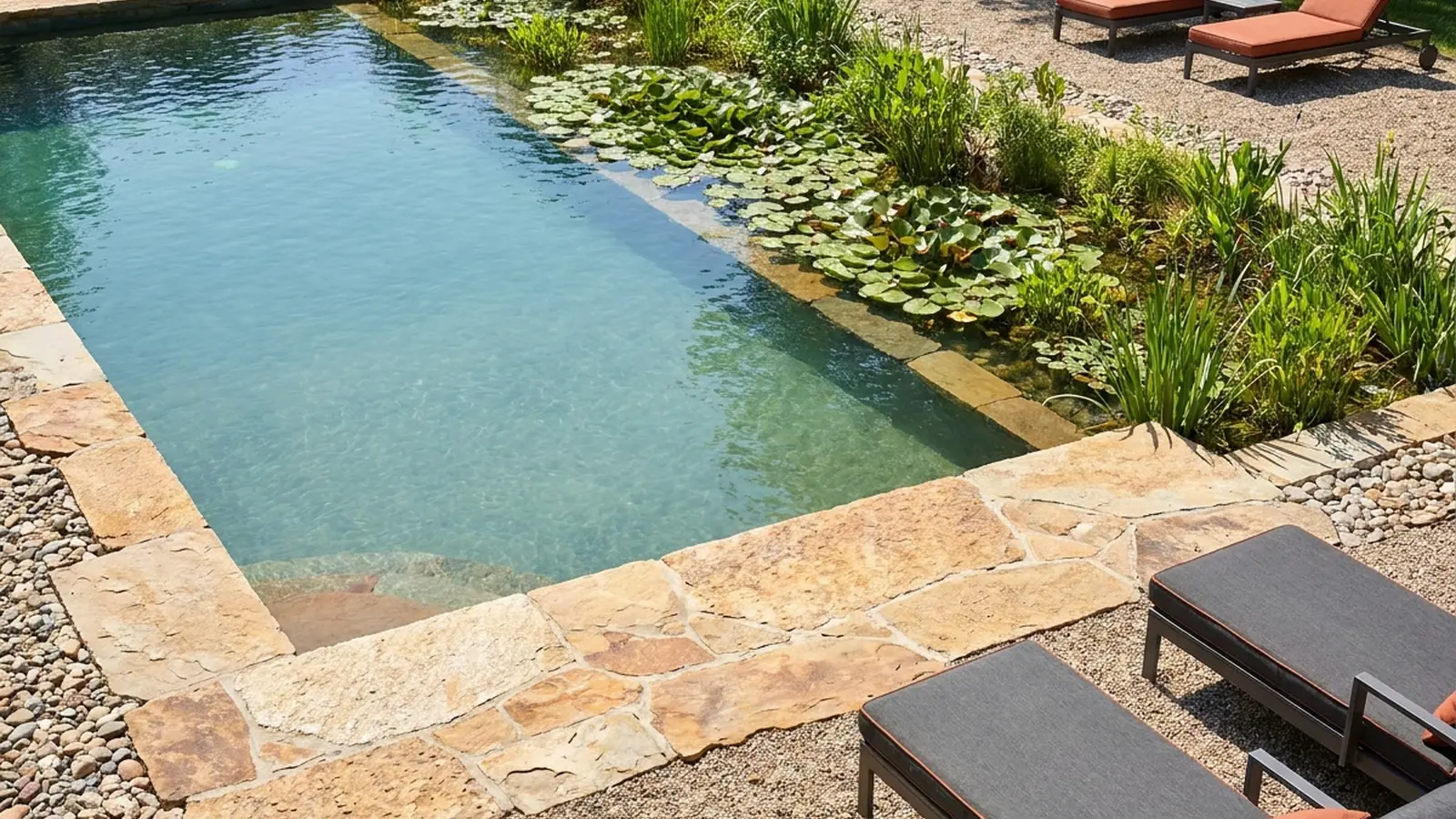
Say you have a flat backyard, a big budget idea and a growing dislike of the chlorine smell that follows your kids around all July. A friend mentions a natural pool, a swimming pool cleaned by plants and friendly bacteria instead of chemicals. It sounds like a postcard. Then you read a few installer pages and every one promises crystal clear water, zero chemicals and almost no upkeep. That’s three promises, and at least one is shaky.
Here’s what the glossy pages skip. A natural pool is less like a pool and more like a garden you can swim in. It can look stunning, and it can also run green and cloudy for a season while the plants find their feet. It usually costs as much as a conventional pool, sometimes more.
This guide gives you the honest version: the styles, the real US costs, what year one looks like, which climates cooperate and what to do if your yard is small. Think of it as one chapter of planning a backyard around water and seating, so let’s keep it practical.
Executive Summary
A natural pool is a swimming pool that uses plants, gravel and bacteria to clean the water, with a pump moving water through them. It works well when you accept it as a living system and budget for that.
You’ll learn four things the sales pages rarely say together. First, costs start around $60,000 and often climb well past $100,000, according to HGTV’s guide. Second, year one is the hardest, because new plants and bacteria take time to settle. Third, a natural pool needs real space, with Gardenista citing a minimum of about 322 square feet. Fourth, climate and wildlife tolerance decide whether you’ll love it.
The biggest objection is "won’t it just turn into a pond?" It can, if the filtration is undersized or fish and fertilizer feed algae. Done right, it stays swimmable. You’ll also see cheaper compact options if the full build doesn’t fit your yard or your wallet, plus a short decision rule at the end.
What is a natural pool and how does it clean the water?
A natural pool is a backyard swimming pool that cleans itself biologically instead of with chlorine. Water circulates from the swim area into a planted regeneration zone, where plants, gravel and microbes absorb nutrients and keep algae in check. A pump and often a skimmer keep the water moving.
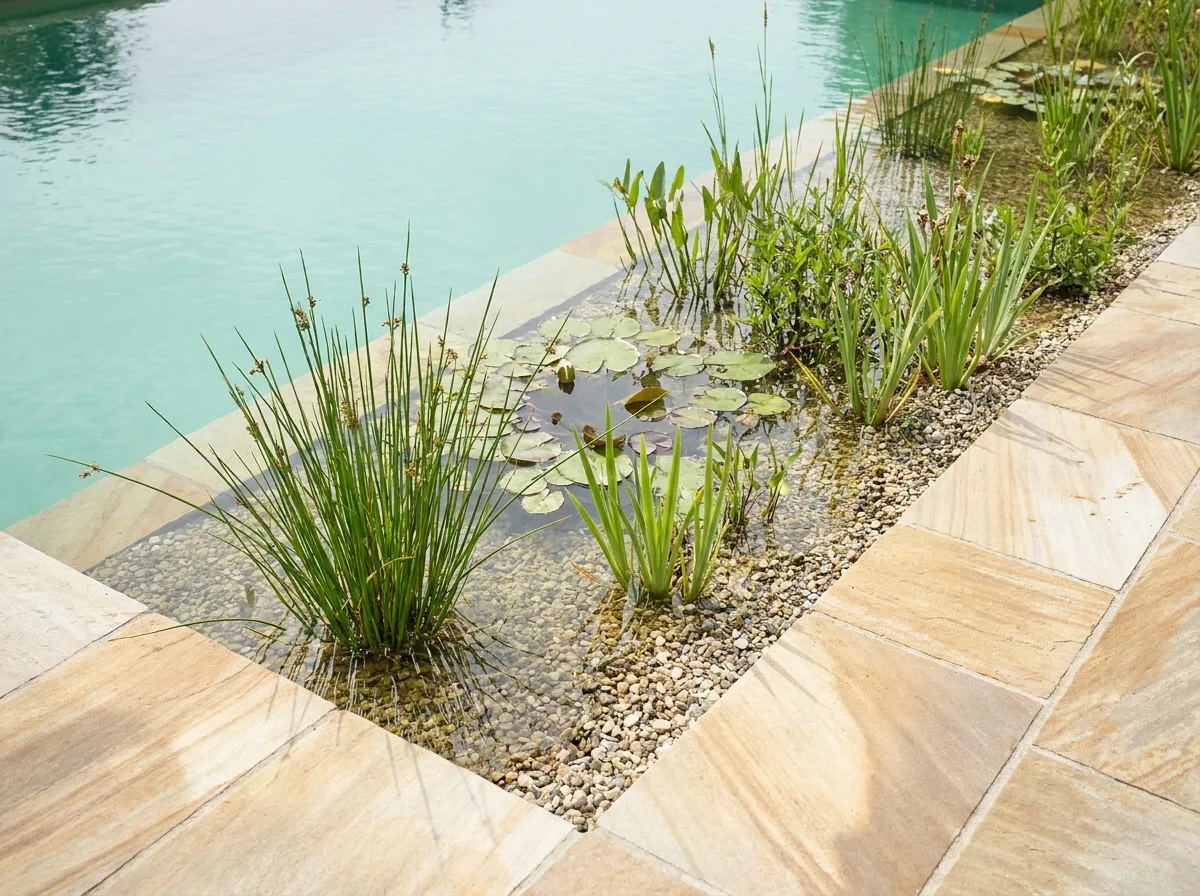
Most designs split the pool into two roughly equal zones, per Gardenista. The swim zone is the part you use. The regeneration zone is shallow, planted and works as a living filter. Roots and gravel feed microbes that eat the nutrients algae would otherwise live on.
Reddit’s pond community puts it bluntly: "natural" means biological filtration plus pumps, not an unfiltered hole. Some systems add a biofilter, a bog filter or a gravel and zeolite bed, and a skimmer catches leaves. It’s engineering with a planting plan.
Natural pool, swimming pond or living pool: which style fits your yard?
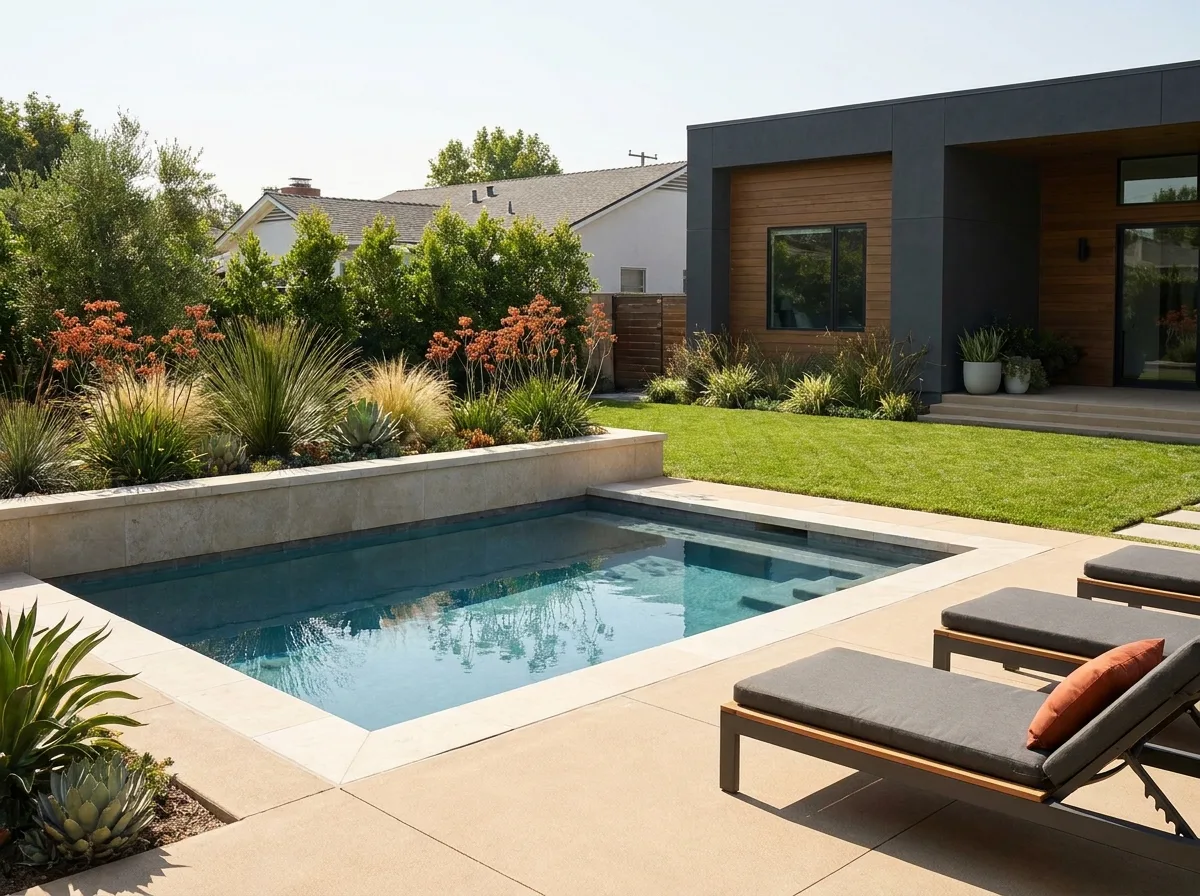
You have four options. A natural pool uses a planted zone beside the swim area. A swimming pond blends into the landscape with a looser, wilder edge. A living pool has no plants at all and relies on mechanical biological filters. Or you can convert an existing chlorine pool. Choose by space, look and tolerance for wildlife.
| Style | Look | Space need | Best for |
|---|---|---|---|
| Natural pool | Clean edges, planted shallows | Medium to large | Most homeowners who want a tidy yard |
| Swimming pond | Rocks, lilies, rushes | Large | Wooded or rural lots, wildlife fans |
| Living pool | Looks like a modern pool | Smaller | People who hate plants in the water |
| Converted chlorine pool | Existing shell | Existing | Owners with a pool they already have |
Choose by space, upkeep effort and how much nature you tolerate. Frogs and dragonflies will move into the wilder styles. Say a homeowner wants a sleek rectangle but dreads leaf litter. A living pool fits, although US vendors are scarce, since BioTop mainly serves the UK and Australia.
How much does a natural pool cost in the US?
A natural pool typically costs $60,000 and up in the US, according to HGTV. Installer ranges run from about $70,000 to $150,000 for Total Habitat, and BioNova quotes $100,000 or more for regeneration-zone models. Gardenista puts the install at about 10 percent above a conventional pool.
Those numbers come from installers, so treat them as ranges, not quotes. InTheSwim, citing HouseLogic, describes an average residential build at $50,000 to $75,000. Notice how the numbers disagree? That’s normal, and it’s why you collect three local bids.
What drives the price? Excavation, size, shell type, rock features, the pump and filter system, permits, a safety fence and electrical work. Add a concrete patio for the deck area, and the budget grows again. "Natural" does not mean cheaper.
Is a natural pool cheaper to maintain than a chlorine pool?
Often yes, but not always, and never zero. InTheSwim says annual upkeep can come in below a traditional pool, since you skip most chemicals. You trade chemical costs for plant care, filter cleaning, pump electricity and the occasional algae problem that needs attention.
Plants need trimming, leaves need skimming and some owners replace plants after a hard winter. Pump electricity is a real line item because water circulates constantly.
A common version of this story goes like this. An owner expects to save money, then spends a spring pulling out spent plants and a weekend rinsing the filter. If you hate weeding, you won’t enjoy it. Maintenance-free is the myth. Lower-chemical is the honest claim.
What will year one look like?
Expect clear to cloudy water, uneven plant growth and some algae in your first warm season. New systems need time for bacteria and plants to establish. Reddit’s pond community notes that new ponds are rarely clear at first, so plan for patience before you judge the result.
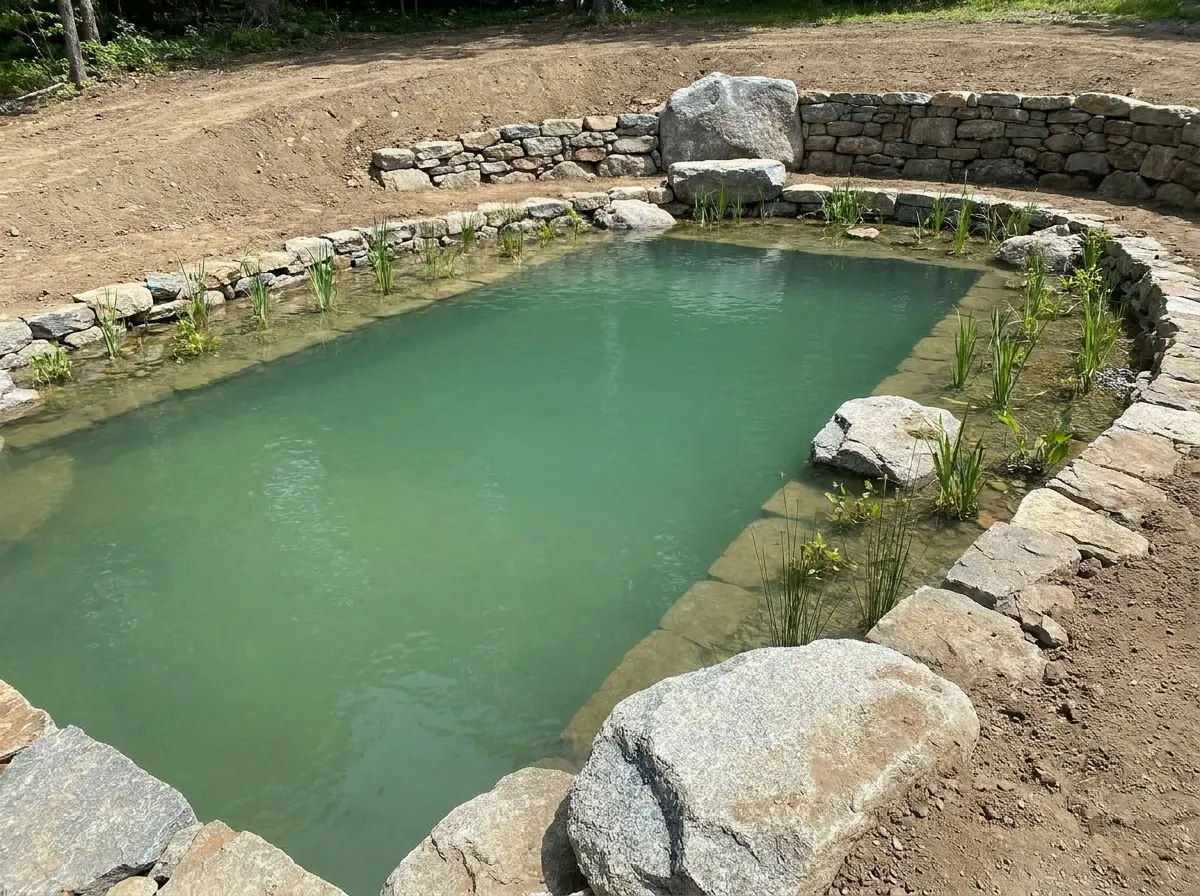
Here’s the part brochures leave out. Say a spring build. By June the water looks slightly green and the regeneration zone looks sparse. By August the plants have filled in and the water improves. Year two is usually better than year one.
What helps? Keep fish out or very light, because fish feed algae. Skip fertilizer near the water. Test pH regularly, but targets vary by system, so ask your installer which range they use. Don’t stir up the bottom sediment either. Patience really is a maintenance task here.
How big does it need to be, and which design ideas work?
Plan on about 322 square feet as a minimum for a true natural pool, according to Gardenista citing BioTop. That space has to hold both a swim zone and a similarly sized plant zone. Smaller yards should look at compact alternatives instead of squeezing a pool too tight.
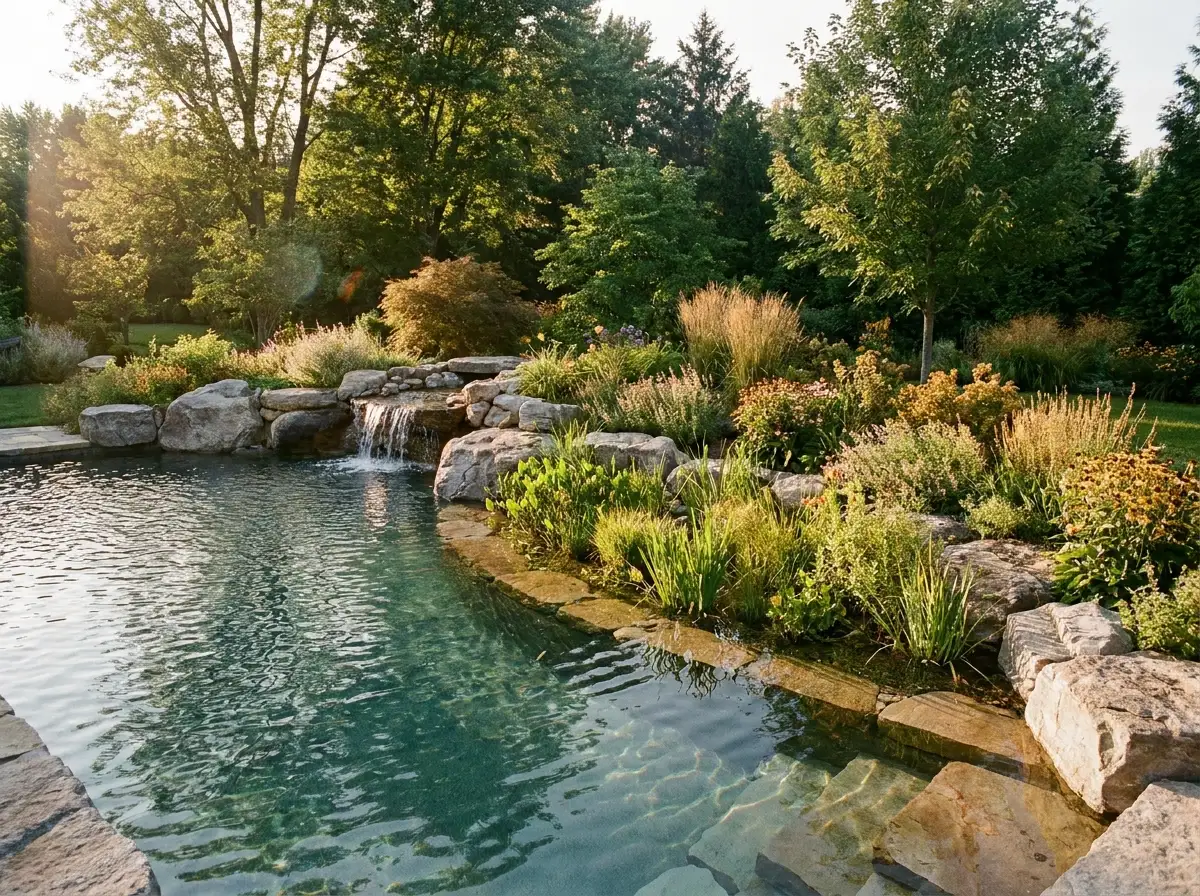
Ideas that work well include a boulder edge with a small waterfall, a sloped planted shelf and stone steps into the swim area. A Reddit owner in their second year described a swim area around 22 by 44 feet, built in about a week with an excavator, with boulders and pond dye to hide the bottom.
Small yard? A stock tank pool offers a cheap cooldown spot with simple filtering. The right fence style for a backyard frames the pool and handles safety too. A fence that blocks the view of your pond defeats the point, so pick open styles like hog wire.
Which liner, plants and filters keep the water clear?
Use an EPDM or TPO liner, a gunite shell or a prefabricated shell, plus a regeneration zone planted with water lilies, rushes and oxygenating plants. Singulargreen advises against PVC liner. Filters add insurance, from gravel and zeolite beds to skimmers and phosphate reactors.
Gunite concrete is the most common shell according to Singulargreen, and it lasts, though it costs more. Liners are cheaper, and a felt layer under them protects against punctures. Fiberglass and polypropylene shells install quickly but limit your shape.
Plants do the heavy lifting. Water lilies shade the surface, rushes and grasses pull nutrients, and oxygenating plants feed the water. Phosphorus and nitrates are what algae want, so plants and filters starve them. A phosphate reactor helps in warm regions. Pick the simplest system your installer can explain in plain words.
To stop algae, starve it: keep nutrients out and let plants and filters take up what remains. Skip fertilizer near the water, keep fish light, trim dead plant material and keep the pump running. If algae still blooms, ask your installer before adding anything.
Does it work in your climate, and can you convert a chlorine pool?
It works in most US climates, but heat, sun, rain and freezing change the effort. Hot sunny regions push algae risk up. Cold regions mean winterizing and seasonal plant loss. You can convert a chlorine pool, though the shell, plumbing and pumps often need real rework.
Nobody maps this well, so here’s a rough guide, not a rule. Hot, sunny areas need more shade and filtration. As a rule of thumb, cold states typically keep the water while plants go dormant, but ice and pump care need a plan. Wet climates add runoff that carries fertilizer into the water.
Converting means keeping the shell, stopping chlorine and adding a planted zone and biological filter. The catch? Space for the planting area, and clearing out the old chemistry. For an indoor setup the rules change entirely, and our indoor pool ideas cover what that involves.
What about permits, fencing and safety?
Yes, check permits and fencing before you dig. Many localities may treat a natural pool like any swimming pool, so ask your local building department about permits and safety barriers. Rules vary by city, county and state, so confirm locally before you design anything.
A licensed pool contractor or electrician handles the pump wiring, since electrical work around water carries real shock risk and local codes vary. Ask about setbacks, barrier height and gate latches. Skipping the permit can mean fines and trouble when you sell. Don’t swim after heavy algae blooms, supervise children and keep a rescue ring nearby. Natural does not mean automatically safe.
Frequently Asked Questions
Are natural pools safe to swim in?
Yes, when the water stays balanced and clear. Biological filtration keeps bacteria and algae in check, though a neglected system can turn green and unpleasant. Don’t swim if the water smells off or looks cloudy with algae. Supervise children as you would at any pool, and keep a fence and gate that meet local code. Test the water now and then, especially in the first year.
Do natural pools attract mosquitoes?
Standing water can, but a circulating pool with moving water and a skimmer is far less inviting than a stagnant pond. I wouldn’t promise a bug-free yard. Keep the water moving, trim the plant zone and clear debris. No source I opened gave hard numbers, so treat claims about mosquito reduction cautiously.
Can fish live in a natural pool?
They can, but keep the load light. Reddit pond owners warn that fish feed algae, and heavy feeding can cloud the water. A few small fish may help with larvae, but too many cause the exact problem you’re trying to avoid. Skip feeding altogether if you can, and talk to your installer first.
Can you winterize a natural pool, and do you drain it?
Usually you don’t drain it. In cold regions the water stays, plants go dormant and you protect the pump and plumbing from freezing. Your installer will advise on lowering the water level, running aeration or shutting down the circulation. Follow their plan, since mistakes can crack equipment. Drainage can also damage liners and shells.
Is a natural pool really chemical-free?
Mostly, yes. You skip chlorine and most chemical treatment, but you may still adjust pH, add pond dye or use a phosphate reactor. Marketing that says "completely chemical-free" is stretching the truth a little. It’s better to say low-chemical and biologically filtered. Ask what your installer expects you to add over a typical season.
Can a pond become a swimming pond?
Not safely by itself. A pond built for fish and looks lacks the depth, filtration and circulation a swimming pond needs. Reddit threads stress that a natural pool is not simply a hole filled with water. You’d need a proper swim zone, a regeneration zone, pumps and a design that accounts for sediment, so talk to a specialist before swimming.
How often do you clean the filter?
Singulargreen suggests roughly every six months for the filter, though your system and local conditions will change that. Skimmer baskets need more frequent attention, especially in leaf season. Plants need trimming through the year. Many owners check the pump and skimmer weekly in busy seasons and do a deeper clean once or twice a year. Keep notes on what you did and when, since your installer can then tune the schedule to your yard.
Does a natural pool add home value?
Possibly, but no source I opened backed a specific figure. One Quora user gave a 5 to 8 percent figure, but it was a generic pool answer, not about natural pools, so it’s an anecdote, not data. Buyers vary, and some see upkeep as a burden. Treat a natural pool as a lifestyle purchase first and an investment second.
Is crystal clear water possible?
Sometimes, but not always and not right away. Mature systems can look beautifully clear, though they may cloud after storms, algae blooms or heavy use. Year one is the hardest. Compare it with a chlorine pool and you’ll see why some owners accept a slightly softer look in exchange for fewer chemicals and a living landscape.
Is a natural pool maintenance-free?
No, that’s a myth. It cuts chemical work but adds plant care, filter cleaning, pump checks and seasonal prep. Think of it as a garden project, with a few weekends of attention each year. If you want less effort, pick a simpler setup, such as a small stock tank or plunge pool, and be honest about how much weekend time you really have.
Conclusion
A natural pool rewards the homeowner who wants a living, planted backyard and accepts the work and cost that come with it. The swim is lovely, but the price starts around $60,000, year one needs patience and the "chemical-free paradise" line oversells it. A good natural pool is a garden you can swim in.
Back to that flat backyard and the chlorine itch. If you’ve got the space, the budget and a tolerance for frogs, a natural pool could suit you. If you don’t, a compact option is a gentler first step.
Your next step is simple. Collect three local bids, ask each about year one and call your building department. For the surroundings, our guide to patio design and our indoor pool ideas are good next reads. So here’s the question: would you rather swim in a pool that feels like a garden or one that feels like a lab?