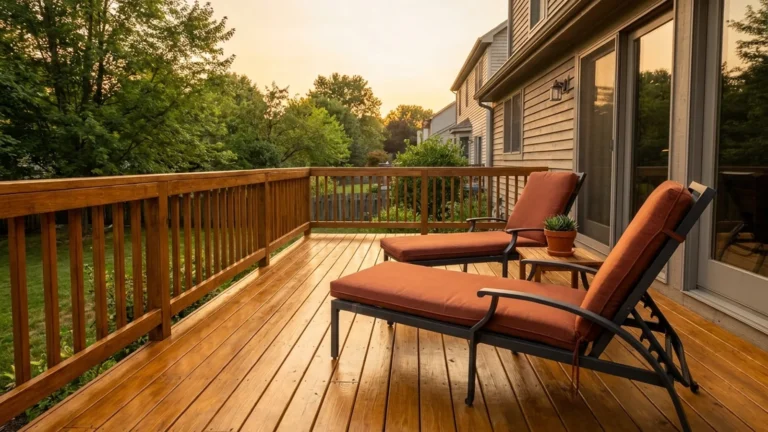
Deck Skirting Ideas That Look Sharp and Still Let Your Deck Breathe

Say you just paid for a new raised deck. The boards are gorgeous, the railing is crisp, and then you notice the gap underneath: a dark crawl space where skunks will soon move in. So you grab the cheapest thing at the store, nail it up tight, and feel smart. Two summers later the posts are damp and something is nesting behind the panels.
That is the trap with deck skirting ideas. Most lists show you looks. Almost none tell you that skirting has a job, and the job is airflow plus keeping animals out. This guide covers both, from the budget picks to the modern ones, with a cost method you can run on your own deck. It is one piece of planning a finished deck and railing setup, so we’ll keep the focus on what sits below the boards.
Executive Summary
You will leave with a clear pick for your deck, a rough budget you calculated yourself, and a short list of mistakes to dodge. Here is the short version of what the guide covers.
- Skirting should hide the underside without sealing it. Airflow is the first design rule, and looks come second.
- Lattice is the default among deck skirting ideas, but horizontal slats, composite boards and PVC panels often look better for similar money.
- Cost comes down to perimeter times height, then materials and labor. We walk through the math.
- Plan an access panel on day one, because someone will need to reach that space.
- On a high deck, skipping skirting and using landscaping can be the smartest choice.
The biggest worry is "will it look cheap?" Only if it is flimsy or mismatched with your house trim.
What is deck skirting and do you need it?
Deck skirting is a barrier or panel that covers the open space between the bottom of a raised deck and the ground. It hides posts, storage and clutter, and it blocks animals from nesting. You don’t always need it. Low decks and very high decks are the usual exceptions, and local rules or HOA guidelines can change the answer.
Most skirting exists for looks and critters. The dark space under a deck is exactly what opossums, groundhogs and skunks want.
Skirting that seals the space can trap moisture and speed up rot in framing and posts. So the real question is not "which panel?" but "which panel that still breathes?" A tight, solid wall is the most common version of this mistake among popular deck skirting ideas. Check local codes and your HOA rules before you commit, because they vary a lot from place to place.
What should you check before choosing deck skirting ideas?
Check four things first: airflow, ground grade, utilities and access. Skirting needs openings so air moves through the space. Look for dryer or boiler vents nearby, measure how the ground slopes, and decide where a door or removable panel will go. These checks narrow your options faster than any style board.
Homeowners in r/Decks threads keep repeating the same warning: skirting has to breathe, and lattice works partly because it has so many small openings. I’d treat that as a rule, not a tip.
If gas lines, electrical lines or structural posts are involved in any change, a licensed pro and a permit may be required, and local codes vary.
Which skirting styles look best?
The best-looking skirting usually matches your house trim and railing, not your decking. Lattice, vertical pickets, horizontal slats, composite skirt boards, PVC panels, corrugated metal and stone veneer all work. Pick the style that suits your home’s architecture, then check that it still lets air through.
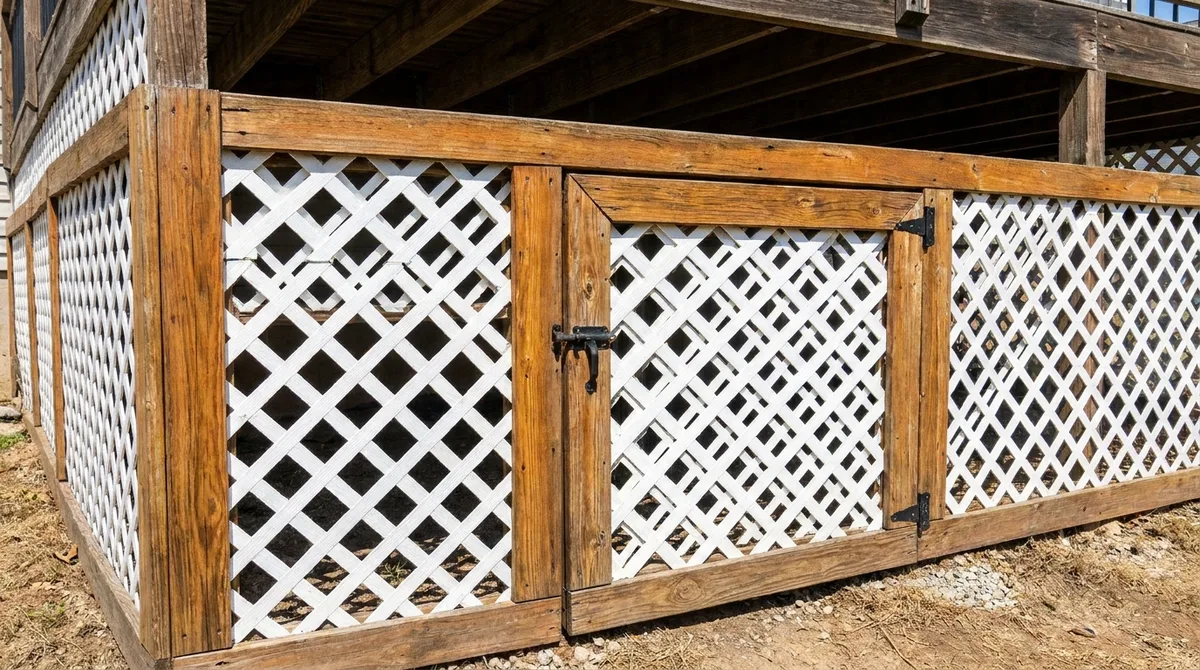
Here is how these deck skirting ideas compare. We judged them on airflow, upkeep and finish.
| Style | Airflow | Upkeep | Look |
|---|---|---|---|
| Wood lattice | Good | High (stain, warping) | Classic, common |
| Vinyl lattice | Good | Low | Clean, can look plain |
| Vertical pickets | Very good | Medium | Traditional |
| Horizontal slats with gaps | Very good | Medium | Sharp, modern |
| Composite skirt boards | Fair to good | Low | Matches composite decks |
| PVC beadboard or panels | Fair | Low | Shiplap look |
| Corrugated metal | Poor unless vented | Low | Industrial |
| Stone veneer or brick | Poor unless vented | Very low | Premium, heavy |
One more opinion: wood lattice is the cheapest to buy and often the most expensive to own. It warps, grays and needs regular sealing. If you have a stained deck, plan for that upkeep on the skirting too.
What are inexpensive deck skirting ideas that still look good?
The cheapest deck skirting is usually pressure-treated wood lattice or plain pickets, followed by vinyl lattice. You can cut cost further by using leftover decking boards, scrap fence pickets or hardware cloth behind a simple frame. Spending a little more on finishing details helps a budget build look far less budget.
Inexpensive does not have to mean flimsy. Say a homeowner has a 12 by 16 deck and about $400 to spend, and wants deck skirting ideas that don’t scream budget. They could frame with pressure-treated 2x4s, then fasten vertical fence pickets with even gaps. That is basically a mini picket fence under the deck, and the gaps keep airflow healthy.
A cheap panel that rots in five years is not cheap, so seal wood ends and keep everything off the dirt.
What are modern deck skirting ideas?
Modern deck skirting favors clean lines: horizontal slats with narrow even gaps, black or charcoal vertical boards, powder-coated aluminum panels or flat composite skirt boards. The look relies on consistent spacing, hidden fasteners and a color that matches your railing or window frames, rather than a lot of decoration.
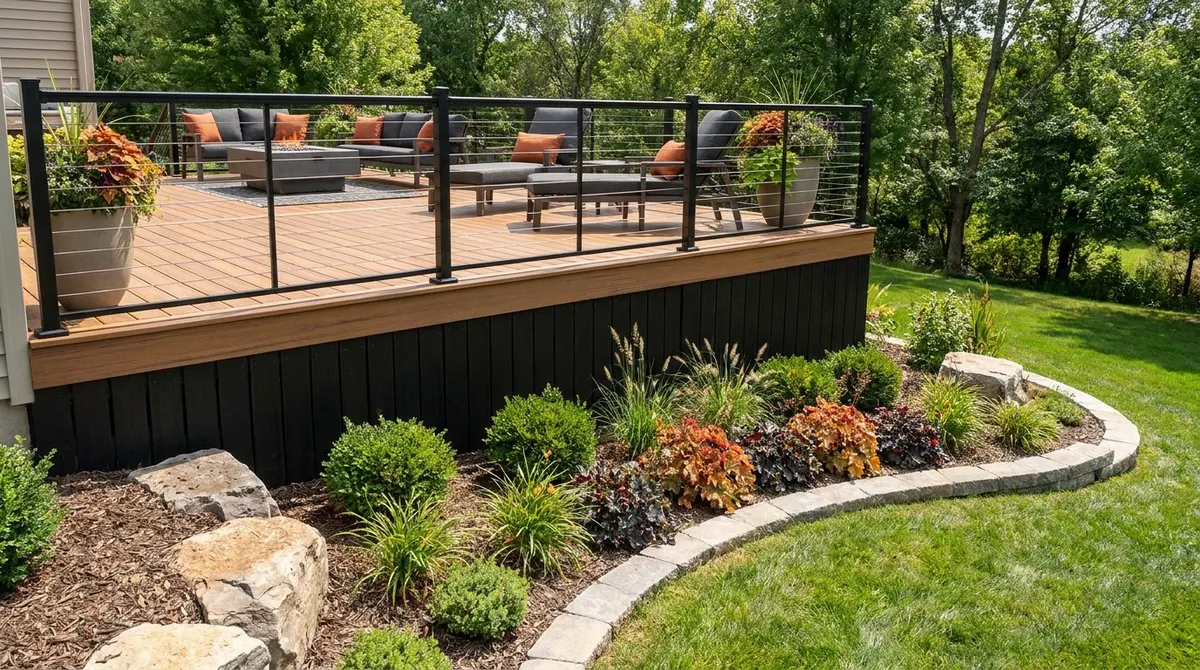
A thread on r/Decks described a neighbor’s horizontal 2×6 skirt with wide gaps and called it "really sharp." It pairs especially well with cable or black aluminum railing, and it can echo the lines of a modern patio design nearby.
Keep gaps uniform, match the finish to your railing, and use coated screws. Wide-gap slats let animals through, so back them with hardware cloth or mesh on the inside. Honest trade-off: slat skirting takes more boards and more cutting than lattice. Expect it to cost more and take a full weekend, but it tends to look like it came with the house.
How much does deck skirting cost?
Deck skirting typically runs from a few hundred dollars for DIY lattice to $2,500 or more for installed horizontal planks. To estimate your own, multiply the deck perimeter by the skirt height to get square feet, then price materials and add labor. Costs vary by region, deck height and material.
One contractor guide, Decks On Point, gives installed ranges of about $500 to $1,500 for wood lattice, $600 to $1,400 for vinyl lattice and $900 to $2,500 for horizontal planks. Treat it as a ballpark. The same source puts wood lattice at roughly $1 to $2 per square foot of material and vinyl at about $1.65 to $1.90. Black vinyl 4×8 sheets were listed at $53 to $60.
Here is the method for pricing deck skirting ideas yourself:
- Measure the sides that need skirting (not the side against the house) and add them up.
- Multiply by the average skirt height to get total square feet.
- Divide by 32 (one 4×8 sheet) to estimate sheets, then add 10 percent for waste.
- Add framing, fasteners, trim, stain or paint, and an access door.
- For hired work, add labor and request a written quote per material.
Take a hypothetical 12 by 16 deck with three open sides: 40 linear feet times 3 feet high is 120 square feet, so about four sheets with waste. Quotes far above your math deserve a question.
How do you add an access panel and keep animals out?
Build a hinged door or removable panel into the skirting before you close up the space, and stop animals with small openings, not solid walls. One contractor guide recommends gaps no larger than about 1/4 inch, plus hardware cloth buried with an L-shaped footer so diggers can’t tunnel in.
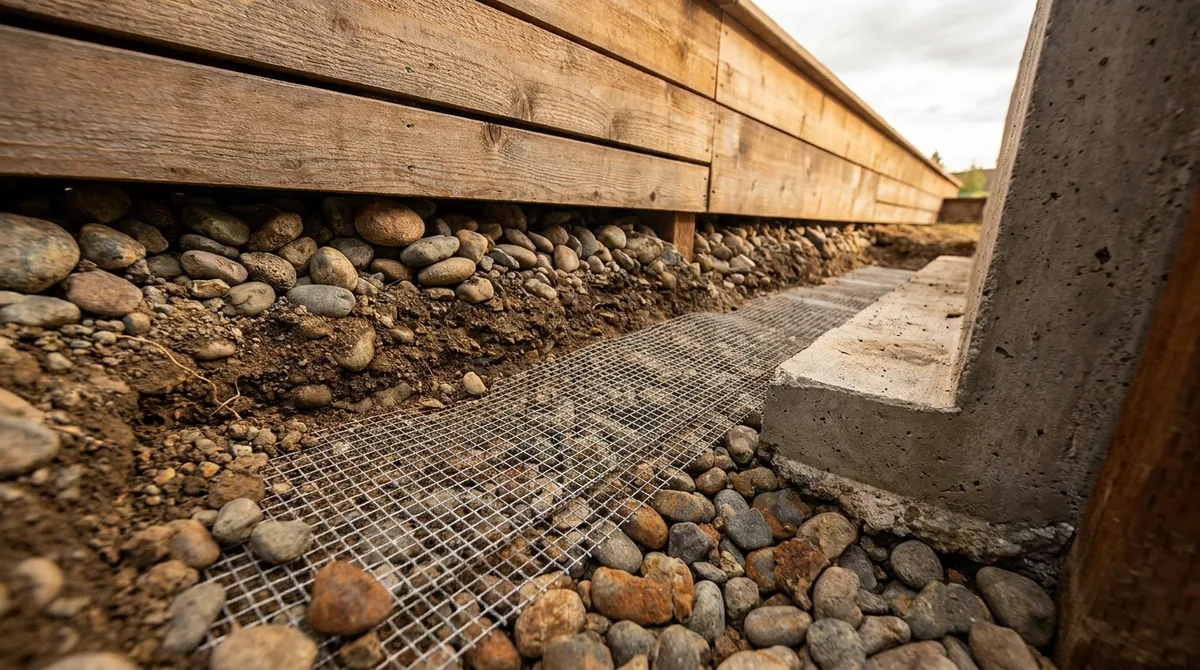
Someone will need to get under there, so frame a door with a latch near utilities. Standard lattice openings are also big enough for small animals, so where pests are a risk, back lattice or wide-gap slats with hardware cloth.
For animals, Decks On Point suggests hardware cloth (a sturdy wire mesh) buried about 12 inches with an L-shaped footer so diggers can’t tunnel in. That advice came from one source, so check what suits your region’s wildlife. Skunks and opossums are the usual culprits, and a determined groundhog will test any weak corner.
Can you skip skirting on a high deck or sloped yard?
You can skip skirting on a high deck by using landscaping, shrubs or open posts instead. On sloped yards, step or rake the skirt so the bottom edge follows the ground, or use a framed panel that stops above the soil. Always keep airflow and drainage the priority.

On a high deck, panels can look like a giant wall. Wrapping the posts in trim and planting shrubs, or using the stairs as a focal point, can feel more natural. A low gravel or stone border can ground the look too.
On a slope, the trick is cutting each section to follow the ground, leaving a consistent gap at the bottom. A common mistake is running a perfectly level skirt on uneven ground, which leaves a big hole at one end for animals. Fix that with hardware cloth or a gravel-filled trench.
Here is a quick decision rule:
- Low deck (under about 2 feet, a rough rule of thumb), flat yard: lattice or slats with a bottom gap.
- Mid-height deck with pests: framed panels plus buried hardware cloth.
- High deck or steep slope: landscaping, wrapped posts, or stepped panels.
How do you install deck skirting and avoid rot?
Frame the skirting with treated lumber, keep it off the soil, and leave bottom and top gaps for airflow. Seal cut ends and fasten with exterior-rated screws. The most common cause of rot is trapped moisture, so never install solid, sealed panels and always slope the ground away.
Composite and PVC skirting resist rot and need little upkeep, but they breathe less, so leave bottom gaps or add vents. Skirting also lets you use the space for storage, as long as you keep the access door and airflow. Maintenance is light: check yearly for loose panels, damp soil and new gaps.
A basic install takes a weekend for most DIYers. Attach a treated frame to the rim joist, then add panels, leaving a gap at the bottom.
Common version of this mistake: a homeowner builds a tight PVC wall to hide a drainage problem. A year later mold lines the inside and the posts feel soft. The fix is to open vents or swap to slats, then regrade the soil so water leaves the area.
Frequently Asked Questions
Do deck skirting ideas need to be vented?
Yes, in almost every case. Trapped moisture rots framing and posts, so skirting should let air move through the space. Lattice, spaced slats and louvered panels all work well, and a solid look needs added vents near the bottom and top. Check local building rules, because ventilation requirements vary and exact requirements depend on your area.
What are the cheapest deck skirting ideas?
Among deck skirting ideas, pressure-treated or vinyl lattice is usually the lowest price to buy, with plain fence pickets close behind. Cheap to buy isn’t always cheap to own, since wood lattice warps and needs sealing. Compare cost over five to ten years before you decide, not only the receipt.
Can I use composite boards as skirting?
Yes. Composite boards, composite trim and PVC trim all work as skirting, and some brands sell matching skirt boards. Keep a gap at the bottom and leave airflow so the frame under the deck can dry. Check the manufacturer’s fastening guidance, because composite expands and contracts more than wood and needs the correct spacing.
Can I skirt a low deck?
You can, but it often isn’t worth the trouble. Very low decks have little space to hide, and tight skirting can trap damp air. Consider a gravel or stone border with a few inches of clearance. If animals are a problem, buried hardware cloth at the edge does the job cheaply.
Is vinyl lattice better than wood lattice?
For upkeep, usually yes. Vinyl doesn’t need staining and won’t rot, though it can look plain, and some vinyl can become brittle in cold weather, so check the maker’s guidance. Wood looks warmer but needs regular sealing. If you want low effort, pick vinyl.
How high off the ground should skirting start?
Leave a small gap of roughly an inch or two between the bottom of the panels and the soil, so wood stays dry and air can move. Contractors vary on exact numbers, so follow your product’s instructions. On uneven ground, add hardware cloth or gravel to close gaps animals could use.
Do I need a permit or HOA approval?
Often not for skirting alone, but it depends. Some HOAs set rules on materials, color and height, and some towns require permits for deck changes. Call your building office and read your HOA documents before you buy anything. Local rules vary, and electrical or gas work nearby should always involve a licensed pro.
Will skirting stop skunks and opossums?
Only if it has no gaps big enough to enter and no easy digging spot. Solid panels alone don’t stop diggers, so bury hardware cloth about a foot down with an L-shaped footer. Stay alert for existing animals before closing the space, since trapping them inside creates a worse problem. Local wildlife rules can apply.
Does sealing under the deck keep it dry?
No, and this myth causes real damage. Sealing the space traps humidity and slows drying, which speeds rot. A dry deck needs air and drainage, not an airtight box. Slope the soil away, keep gutters from dumping underneath, and use ventilated skirting.
How do I match skirting to black railing?
Pick black vinyl lattice, black-painted pickets or dark aluminum panels in a similar sheen. Matching the color ties the whole deck together even when materials differ. Check the finish in daylight too, because black vinyl and black aluminum can read slightly different shades.
Conclusion
The best deck skirting ideas for most homes aren’t about hiding the space. They are about finishing it so it looks intentional, stays dry and keeps critters out. Start with airflow, match your house trim, plan an access door, and run the cost math before you shop. Lattice is fine, slats look sharper, composite suits composite decks, and sometimes the smartest skirt is a row of shrubs.
Remember the illustrative deck owner from the opening, with the sealed panels and the damp posts? A typical fix is cheap: open the bottom, add vents, regrade the soil. The idea they missed was that skirting should be a filter, not a wall. My own bet is that slatted, ventilated looks age better than solid walls.
Your next step is simple. Measure your perimeter this weekend and sketch where the access door goes. Want a deeper look at what sits above the skirt? Read our guides on staining the deck above and building a simple picket look. Which wins at your place: the classic lattice or the sharper horizontal slats?