Indoor Pool Ideas for Your Home: Styles, Costs and Humidity
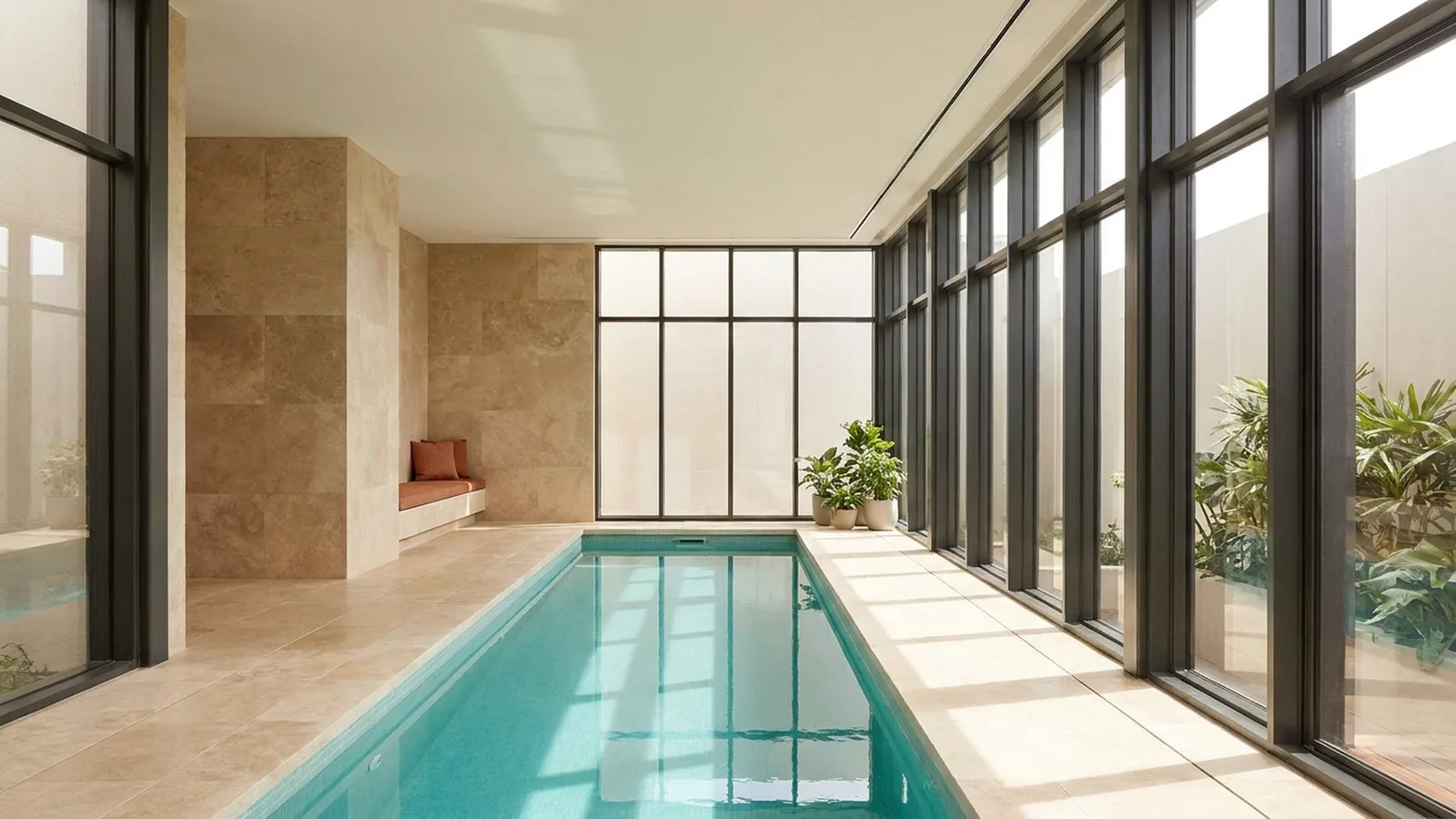
Say you walk through a listing and find a glass-walled room behind the kitchen, with a turquoise rectangle of water in the middle. Swimming laps in January sounds wonderful. Then you notice the dark staining near the ceiling and the faint chlorine smell in the hallway, and the dance stops.
That is the real story of the indoor pool. The water is the easy part. The air, the walls and the energy bill are where homeowners win or lose. Most pages for this keyword are city pool schedules, so the questions you actually have, like "will it grow mold?" and "what will it cost me every month?", rarely get answered.
This guide answers them. It’s one part of planning a backyard and outdoor living space, so we’ll cover styles, real cost ranges, the room around the pool, humidity, running costs and a few cheaper options.
Executive Summary
You can build or buy a home indoor pool and keep it dry, mold-free and affordable, but only if you plan the air before you plan the water. According to Angi’s 2026 cost guide, the national average is about $95,000, with most projects landing between $40,000 and $200,000.
Here is what you’ll get below. First, a style guide covering lap, plunge and endless pools. Second, a cost table with the drivers behind each number. Third, a plain-English look at dehumidification, which is the part sellers skip. Fourth, a checklist for buying a house that already has a pool room.
The biggest objection is usually "isn’t this just a show-off luxury?" Partly, yes, because resale return is low. Running costs can be trimmed with a cover and a heat pump, which the heating section explains. For lap swimmers, rehab routines and cold-climate families, it can be a sane lifestyle purchase when you size it small and treat humidity as job one.
Is an indoor pool worth it, or just a show-off luxury?
An indoor pool is worth it if you will swim at least a few times a week all year, and not worth it if you mainly want a status symbol. The return on resale is modest, so judge it as lifestyle spending. Think of it like a home gym with water: great if you use it, an expensive closet if you don’t.
Angi puts the resale return at roughly 7 percent to 8 percent, and it also notes that a pool can raise insurance and property taxes. That is the honest math. Nobody buys a pool room to make money.
Where it does pay off is use. People on Quora and Reddit mention year-round exercise, low-impact workouts, privacy and no sun, leaves or bugs. One pattern in homeowner threads: owners of outdoor pools often say they swim less than they expected. An indoor room removes the weather excuse, which is the big reason people skip a swim.
Which indoor pool styles work at home?
Most home indoor pools fall into three styles: a lap pool for exercise, a plunge pool for cooling off and relaxing, and an endless or swim-spa pool that lets you swim in place. The right one depends on how you will use it, how much floor space you have and what your budget allows.
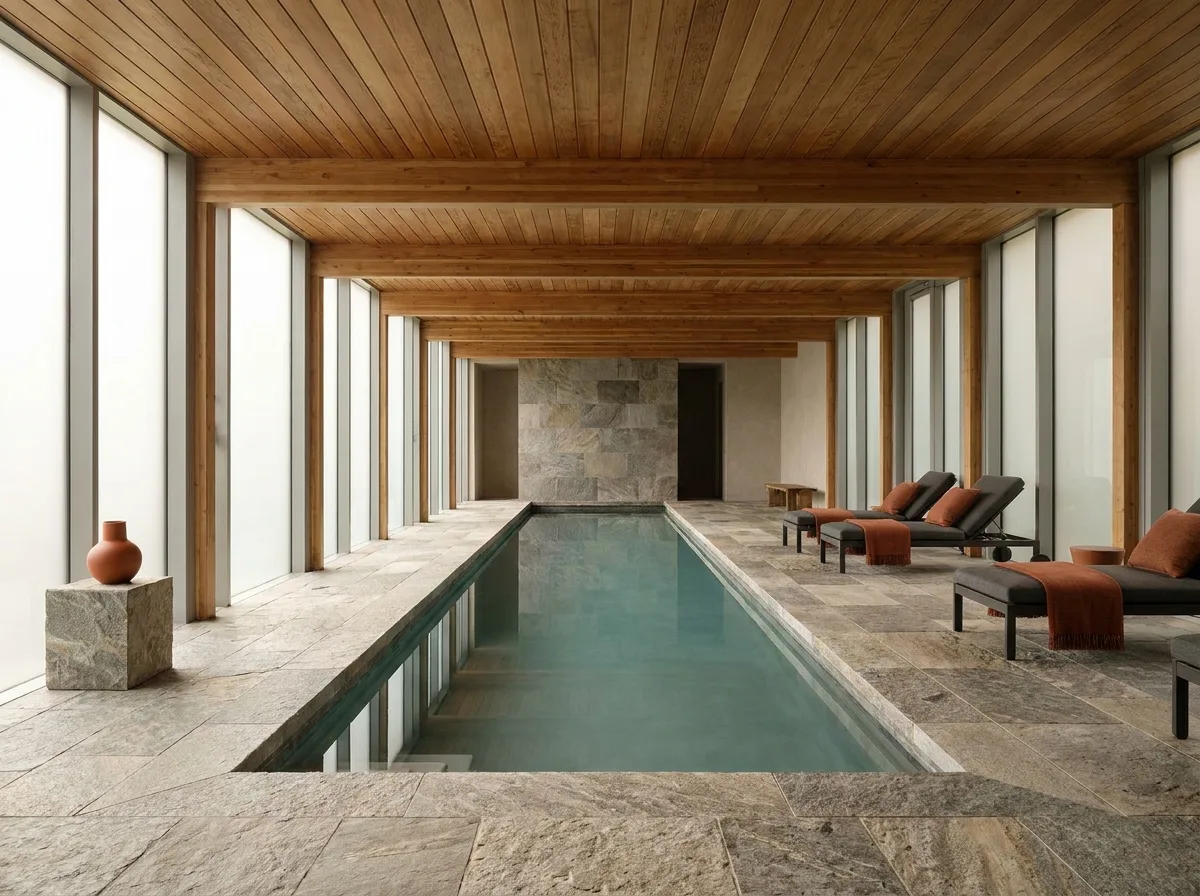
A lap pool is long and narrow, built for straight swimming. A plunge pool is small and deep enough to sit or float in. An endless pool pushes water against you so a short tank works like a long one.
Construction matters too. Pools can be in-ground, semi-inground or aboveground. In a house, in-ground suits a new build or basement dig, while aboveground and semi-inground suit a retrofit where excavation is hard.
Here’s my opinion: if you are not a serious swimmer, choose smaller than your dream. Heat loss follows water surface area, as one Reddit commenter put it, and a smaller surface keeps every future bill smaller too.
How much does an indoor pool cost?
An indoor pool costs about $95,000 on average, with a typical range of $40,000 to $200,000 and extremes from $10,000 to $470,000, according to Angi in 2026. Size, pool type, the building around it and the air system drive the number. Budget for the room and the humidity gear, not only the water.
Angi gives roughly $70 to $315 per square foot. Here is how the main pieces break down, as labelled typical ranges:
| Item | Typical range | What drives it |
|---|---|---|
| Concrete pool | $20,000 to $90,000 | Size, finish, custom shape |
| Vinyl liner pool | $30,000 to $65,000 | Size, liner quality, excavation |
| Fiberglass pool | $40,000 to $85,000 | Shell size, delivery, crane access |
| Plunge pool | $10,000 to $30,000 | Smaller footprint |
| Lap pool | $50,000 to $100,000 | Length and depth |
| Endless pool | $50,000 to $60,000 | Model and installation |
| Enclosure over a pool | $1,000 to $30,000 (avg $13,000) | Glass, framing, roof style |
| Retrofit inside a home | $40,000 to $200,000 | Structure, floors, utilities |
How this was judged: figures come from one national cost guide, so treat them as planning ranges, not quotes. Your region and site conditions can move them a lot.
Enclosure and retrofit costs rival the pool shell.
What does the room around the pool need?
The room needs rot-resistant materials, a vapor barrier, non-slip waterproof floors and a ventilation plan. Everything that can soak up moisture should be avoided or sealed. A pool room is basically a controlled humid climate inside your house, and the building has to be designed for it.
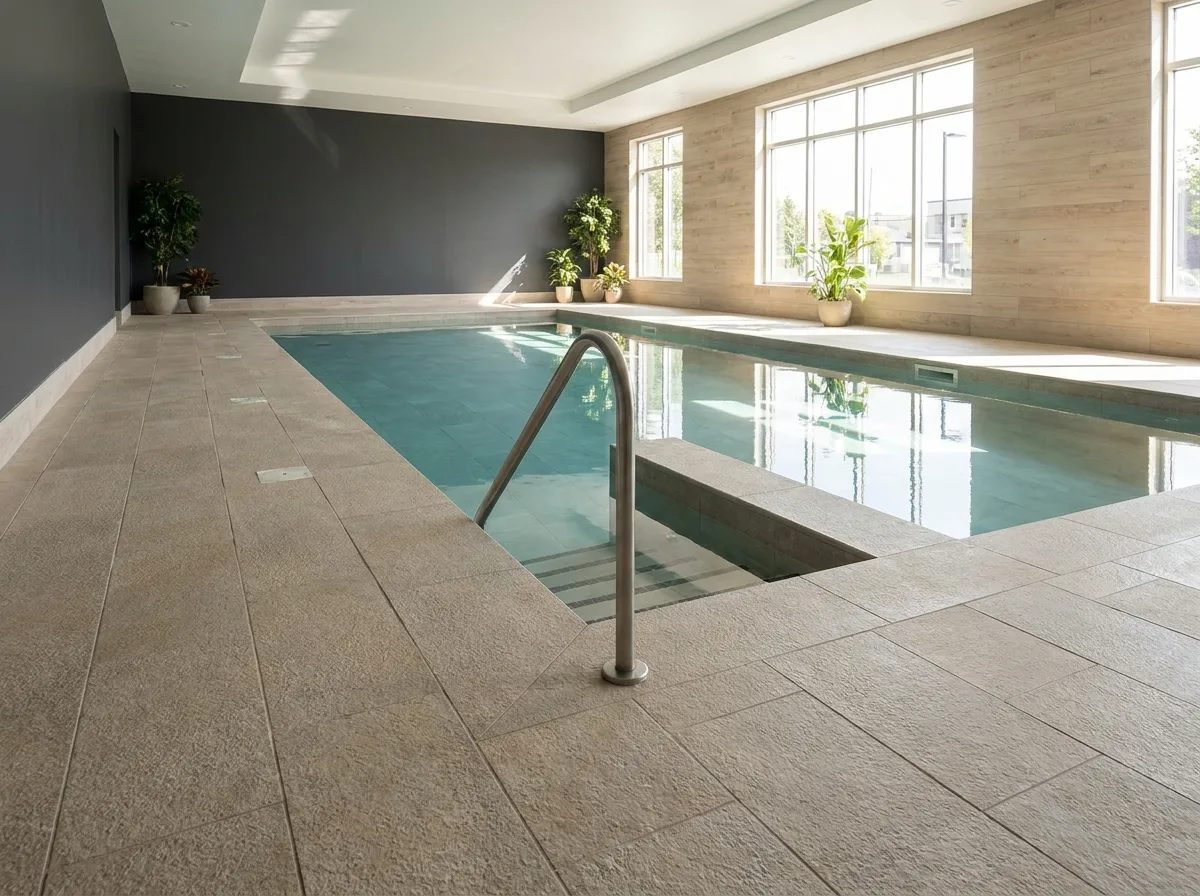
A vapor barrier is a layer that stops moist air from soaking into walls and insulation. Angi lists it at about $0.50 to $0.75 per square foot, which is cheap insurance compared to opening a wall later.
Quora answers keep returning to one point: the construction is the big difference between indoor and outdoor pools. Skip plain drywall and untreated wood in wet zones. Pick moisture-rated boards, treated framing, tile and corrosion-resistant fixtures. Chlorine vapor eats cheap metal, and stainless steel is a common upgrade.
Add windows or skylights carefully. Glass is lovely, but cold glass collects condensation, so ask a pro about double or triple glazing. Any electrical work near water needs a licensed electrician and GFCI protection, and permits and codes vary by city and state.
Why does humidity decide whether your indoor pool works?
Humidity decides everything because a heated pool constantly evaporates water into the room. If a dehumidification system cannot remove that moisture, it lands on walls, windows and framing, and mold and rot follow. A good air system matters more than the pool itself.
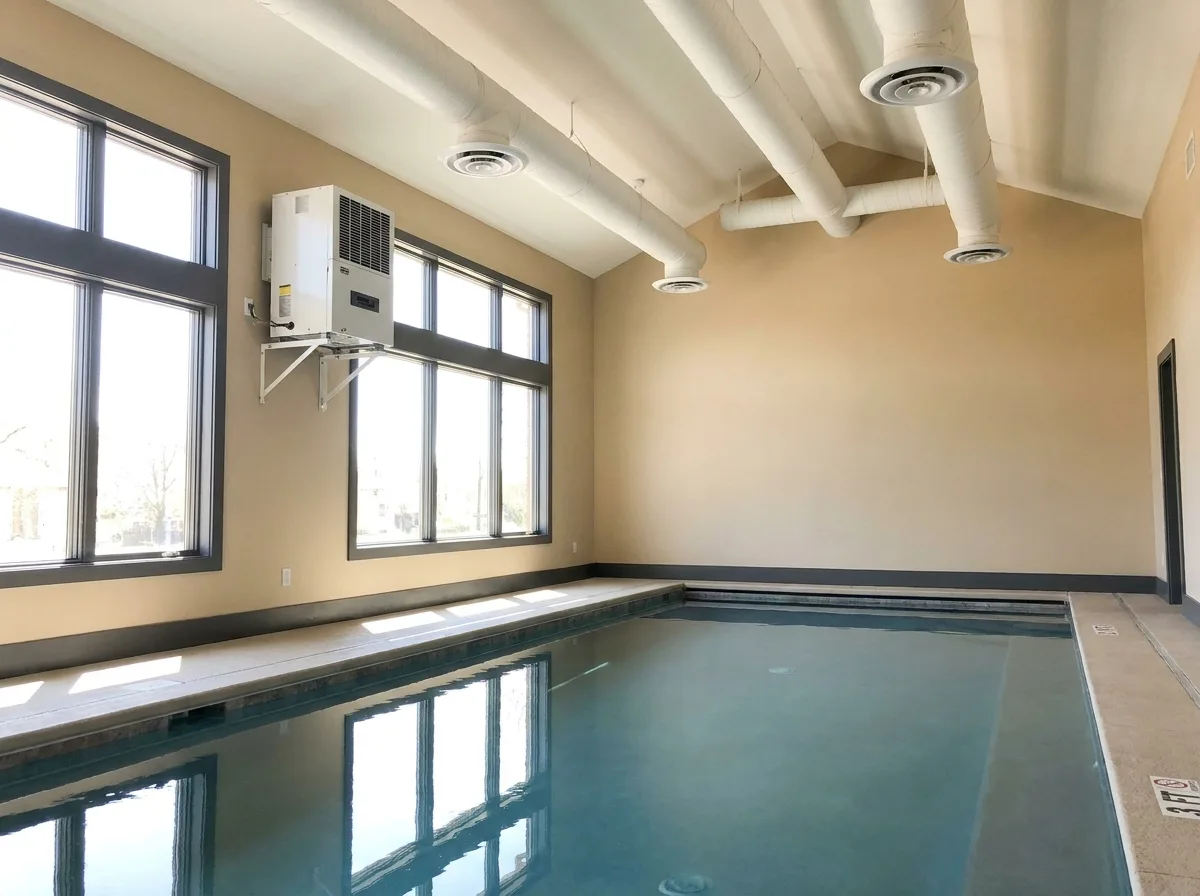
Here is the part most buyers miss. The U.S. Department of Energy’s Better Buildings material notes that evaporation is the largest energy loss from a pool and drives up the dehumidification load. So the water you lose becomes the problem you have to remove.
Angi lists three options. Whole-home dehumidifiers run about $1,300 to $2,800, ventilation-based systems about $4,000 to $10,000, and mechanical refrigeration systems about $4,000 to $20,000. Which one fits depends on pool size and room volume, so a pool-specific HVAC contractor should size it.
Reddit’s advice is consistent: keep the air a few degrees warmer than the water, or you’ll get fog and mold. I’d treat that as a design rule, not a tip.
How do you keep mold and rot away from an indoor pool room?
Keep mold and rot away by removing moisture before it settles: run a properly sized dehumidification system, keep air a few degrees warmer than the water, use a cover when nobody is swimming, and fix leaks fast. A pool-specific HVAC pro should size the equipment for your room.
Walls, ceilings and window frames are the early warning signs, so look for dark staining or a musty smell each month. Glass and metal surfaces that fog up daily are telling you the air system is behind. If you add a sauna, hot tub or glass walls, each one changes the moisture and heat load, so share the plan with the HVAC pro before building. Any electrical work needs a licensed electrician, and codes vary.
How much does it cost to heat and run an indoor pool?
Heating cost depends on water surface area, water temperature, air temperature and whether you use a cover. Indoor does not automatically mean cheap. Covers, heat pumps and a smaller surface are the strongest levers. Monthly bills vary widely by climate, fuel type and pool size.
The DOE fact sheet recommends water around 78 to 82 F and says covers can cut evaporation and save 50 percent to 70 percent of pool heating costs. It also points to heat pumps and solar as efficient heaters.
A Reddit owner in the upper Midwest with a big indoor pool guessed gas bills of $200 to $300 a month. Treat that as one anecdote, not a forecast.
Say a family keeps a small lap pool at 82 F and leaves it uncovered all week. They are paying to heat the water, then paying again to dehumidify the evaporation. A cover turns that into one smaller bill.
The small stuff counts too. Reddit owners of outdoor pools describe filters, pumps and automation parts adding up through small repair bills, and an indoor owner should budget for the same, as an anecdote-level warning rather than a figure.
Indoor pool vs outdoor pool: which should you build?
Build indoors if you want year-round swimming, privacy and a cleaner pool, and you can afford the building and air system. Build outdoors if the budget is tight, you live in a warm climate, or you mostly swim in summer. Neither is maintenance-free.
Quora contributors say maintenance is roughly similar, while heating an outdoor pool in winter costs more. Indoor pools escape sun and leaves, though the water still needs balancing.
| Factor | Indoor | Outdoor |
|---|---|---|
| Season | Year-round | Mostly warm months |
| Upfront cost | Higher (building plus air system) | Lower |
| Main risk | Humidity, mold, rot | Weather, debris |
| Privacy | High | Depends on fencing |
If you’re leaning outdoors, pairing the pool with a stamped or plain concrete patio gives you a clean deck. Barrier rules usually apply, so check your local code first, then browse fence style ideas that fit your yard.
What should you check before buying a house with an indoor pool?
Check the air system, the liner or shell, signs of past water damage and the paperwork. Dark staining, removed drywall and a musty smell can mean old mold. Hire a pool inspector and a home inspector who understands moisture before you make an offer.
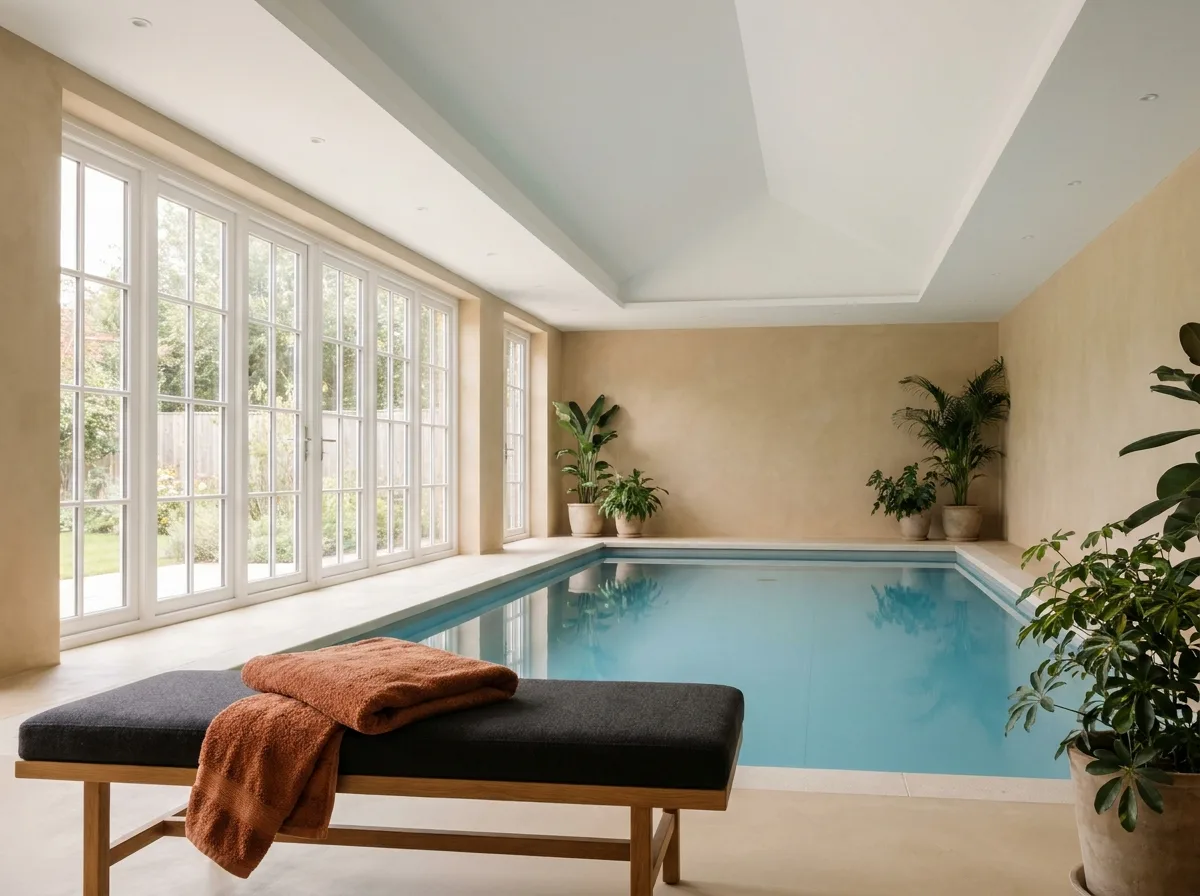
One Reddit buyer worried about "moisture, rot etc" in a house with an attached pool room. Replies pointed out that a shrunken vinyl liner should never be drained, because it may not fit again, and that old staining can hint at past mold.
Use this checklist:
- Is a dehumidifier installed, working and the right size?
- Are there stains on ceilings, walls or window frames?
- What is the liner or shell condition?
- Do records show repairs, permits and winter operating costs?
- Is there a cover, and is the heater a heat pump or gas unit?
- What do insurance quotes look like with the pool?
Ask for a year of utility bills.
Are there cheaper alternatives to a full indoor pool?
Yes. A plunge pool, a swim spa, a hot tub or a public membership can deliver much of the benefit for less money and less humidity risk. For many households, much of the benefit comes from a small, easy-to-control water feature.
A swim spa gives you a place to exercise in a compact footprint. A plunge pool is perfect for cooling off. A gym or YMCA membership under $100 a month came up on Reddit as the "zero maintenance" counter-argument, though that’s one anecdote and prices vary.
If your real goal is summer fun on a small budget, a stock tank pool is the cheapest way to test how much you’d actually swim. And if the dream is more about outdoor living, patio design ideas may give you more daily use for the money.
Frequently Asked Questions
How deep should an indoor pool be?
It depends on how you will use the pool. A lap pool, a plunge pool and a swim spa all call for different depths, so confirm the right figure with your builder and local code. Depth also affects water volume, so a deeper pool costs more to fill, heat and treat.
Do indoor pools need chlorine?
Most indoor pools still need a sanitizer system, and chlorine is the common choice. Saltwater systems make chlorine from salt, so they are not chemical-free. Indoor air quality matters, because strong chlorine odor often points to poor ventilation. The right setup depends on your pool, your room and your comfort.
Can you build an indoor pool in a basement?
Sometimes, yes, though it is one of the harder builds. A basement pool needs excavation, waterproofing, structural review, drainage and serious humidity control. Ceiling height, utilities and access can limit your options. A licensed structural engineer should confirm floor loads, and a pool-specific HVAC pro should confirm the vapor barrier and humidity plan. Local permits are essential, and codes vary. Compare it against a ground-level addition before committing, because digging down often costs more than building out, and humidity control gets harder underground.
Do indoor pools smell?
A well-run indoor pool should not smell strongly. A sharp chlorine odor often points to weak ventilation or unbalanced water. Better air exchange and well-kept water chemistry are worth checking first, and a pool pro can diagnose it. If a house tour smells heavily, treat it as a warning sign.
What temperature should the water be?
The DOE Better Buildings fact sheet recommends about 78 to 82 F for pool water. Keep the room air a few degrees warmer than the water to reduce fog and condensation. Lap swimmers often prefer the cooler end, while kids and relaxed swimmers prefer warmth, so pick a number you will actually enjoy, then hold it steady.
Does homeowners insurance cover an indoor pool?
Usually it needs to be disclosed, and it may raise your premium. Angi notes that a pool can raise insurance and property taxes. Policies differ, and some carriers set safety requirements, so call your agent before you build or buy. Ask for a written quote.
Do you need a permit?
Almost certainly. Pool construction, electrical work, structural changes and barriers often need permits, and the rules differ by city, county and state. A licensed contractor normally pulls them. If a seller or contractor suggests skipping them, walk away, because unpermitted work can cause trouble with insurance and resale.
Is an indoor pool cheaper to heat?
Not automatically. Heat loss follows surface area, and evaporation creates a dehumidification bill on top of the water heating bill. The DOE says covers can save 50 to 70 percent of pool heating costs. Indoor pools win on season length, not on a magically low bill.
Does an indoor pool mean no maintenance?
No, that’s a myth. You still balance water, run pumps and filters, clean surfaces and maintain the dehumidifier. Indoor pools avoid leaves and sun, but they add moisture management. Reddit owners of outdoor pools also describe small repair bills adding up, and indoor owners should expect the same.
How long does an indoor pool take to build?
It depends on the pool type, the building work, permits and the weather during excavation. Prefabricated fiberglass shells install faster than custom concrete, but the room around the pool often sets the schedule. Ask contractors for a written timeline, and expect permits to take a while.
Conclusion
The best indoor pool isn’t the biggest or the fanciest. It’s the one whose air system, room materials and water surface are sized for the way you’ll really swim. That’s the angle this whole guide has leaned on: plan the humidity first, then the water.
Without a working dehumidifier and a vapor barrier, a glass-walled pool room is a mold project with a nice view. With them, it can be a calm place to swim every week of the year.
Your next step is simple. Get a written quote that lists the dehumidification system as its own line, and compare it with a stock tank pool test run if you’re still unsure.
If you could only keep one thing from your dream pool room, would it be the water or the year-round swim?