Luxury Walk in Closet Ideas That Look Costly, Without the Waste
Say a homeowner gets a $16,000 quote for a master closet and feels her stomach drop. Then a friend mentions a neighbor who got a similar layout for about half. Same room, same hangers, wildly different bills.
Here’s the twist. A luxury walk in closet rarely gets its look from the most expensive cabinets. It gets it from light, layout and a few smart finishing details. A closet is a room you walk into to be happy, and happiness is cheaper than the brochures suggest.
This guide is one part of the bigger job of organizing your storage, so if you are still choosing between a reach-in and a walk-in, start with our look at closet doors that fit your space. Below you’ll get sizes, layouts, lighting, honest cost ranges, a budget route and the regrets people report most.
Executive Summary
You can build a luxury walk in closet at three very different price levels and still get the same "boutique" feeling. The secret is spending on what you see and touch daily: warm layered lighting, drawers that glide, a clean layout and a few statement pieces. Cabinet boxes hidden behind doors matter far less than most quotes imply.
Homeowners in online threads describe reported quotes from about $3,100 to $16,000 for similar closets, and one big quote was cut roughly 40 percent after the owner pushed back. You’ll also learn why closets help buyer appeal more than appraisal value, why converting a bedroom can backfire, and which cheap parts wear out first. The biggest objection is "I can’t afford luxury." You probably can afford the part that people notice. We also cover small walk-in sizes, since a tight room can still earn the luxury label, and the quick checks that stop a bad quote before it becomes a bad closet.
What makes a luxury walk in closet feel luxurious?
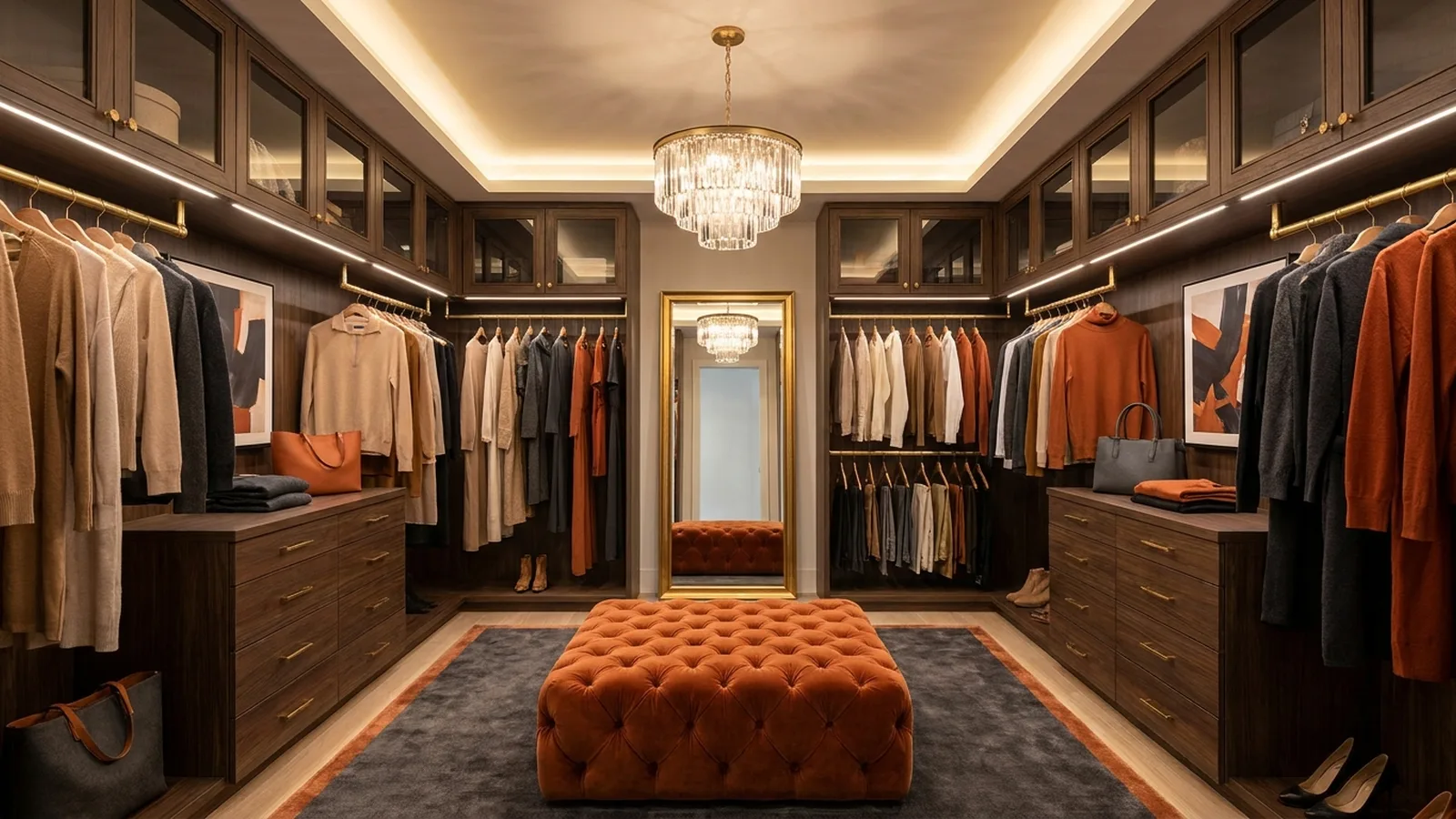
A luxury walk in closet feels that way when you can see everything at a glance, nothing is crammed, and every surface you touch feels solid. Think boutique, not warehouse. Visibility, good lighting, matching hangers, soft-closing drawers and one statement element do more than expensive wood. Luxury is mostly editing and detail, not price.
Quora answers on this topic keep landing on the same point: a boutique feel comes from visibility over density. Uniform hangers, a seat or island, lined drawers and a few concealed shelves behind solid doors do the heavy lifting.
Houzz idea galleries echo it with advice like keeping favorites in sight, color-coding and using wallpaper or fabric panels for contrast. Notice what is missing from that list: a price. Pattern interrupt, I know.
How big should a luxury walk in closet be?
A comfortable luxury walk in closet is at least 5 feet wide, and 6 feet or more lets you hang clothes on two sides. The smallest L-shaped walk-in is around 4 by 4 feet. California Closets describes a double-sided layout at about 7 by 7 feet. Smaller rooms can still feel upscale with smart planning.
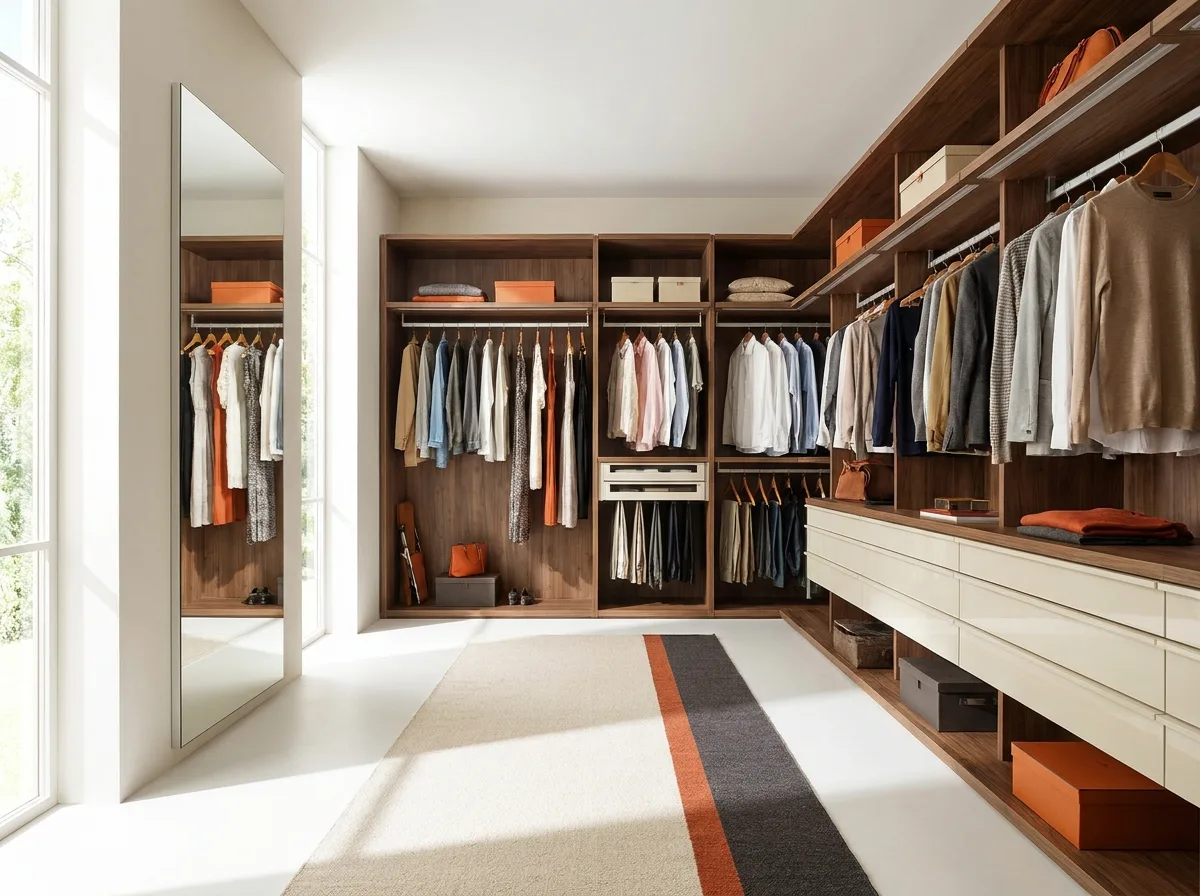
Those numbers come from a Quora answer and a manufacturer, so treat them as starting points and measure your own door swing and walkway. Leave room to pass someone with an armful of clothes.
If your closet is small, a single wall of double-hang rods plus a mirror and good lighting reads richer than a full wall of overstuffed shelves. Our guide to the Ikea Pax closet shows how modular boxes squeeze order out of tight dimensions.
Which layout suits a luxury walk in closet: L, U or double-sided?
An L-shaped layout suits a corner room, a U-shaped layout uses three walls and suits larger spaces, and a double-sided layout works in a long rectangle with a center walkway. California Closets describes all three. Pick the one that keeps the walkway clear and puts daily clothes at eye level.
L-shaped is the most forgiving for small rooms because the corner turns dead space into hanging space. U-shaped gives the most wall, so it is where an island or bench becomes realistic. Double-sided is the simplest to plan: two parallel runs and a walkway down the middle, often described at about 7 by 7 feet.
Sketch the layout on paper before you shop. Tape the walkway on the floor and walk it with an armful of laundry.
How do you light a closet so it feels like a boutique?
Use layered lighting: warm LED strips along shelves and rods, one statement fixture overhead, and a bright mirror zone. Warm tones around 3000K flatter fabric and skin. A single bare ceiling bulb is the most common reason an expensive closet looks cheap. Add motion sensors so lights greet you.
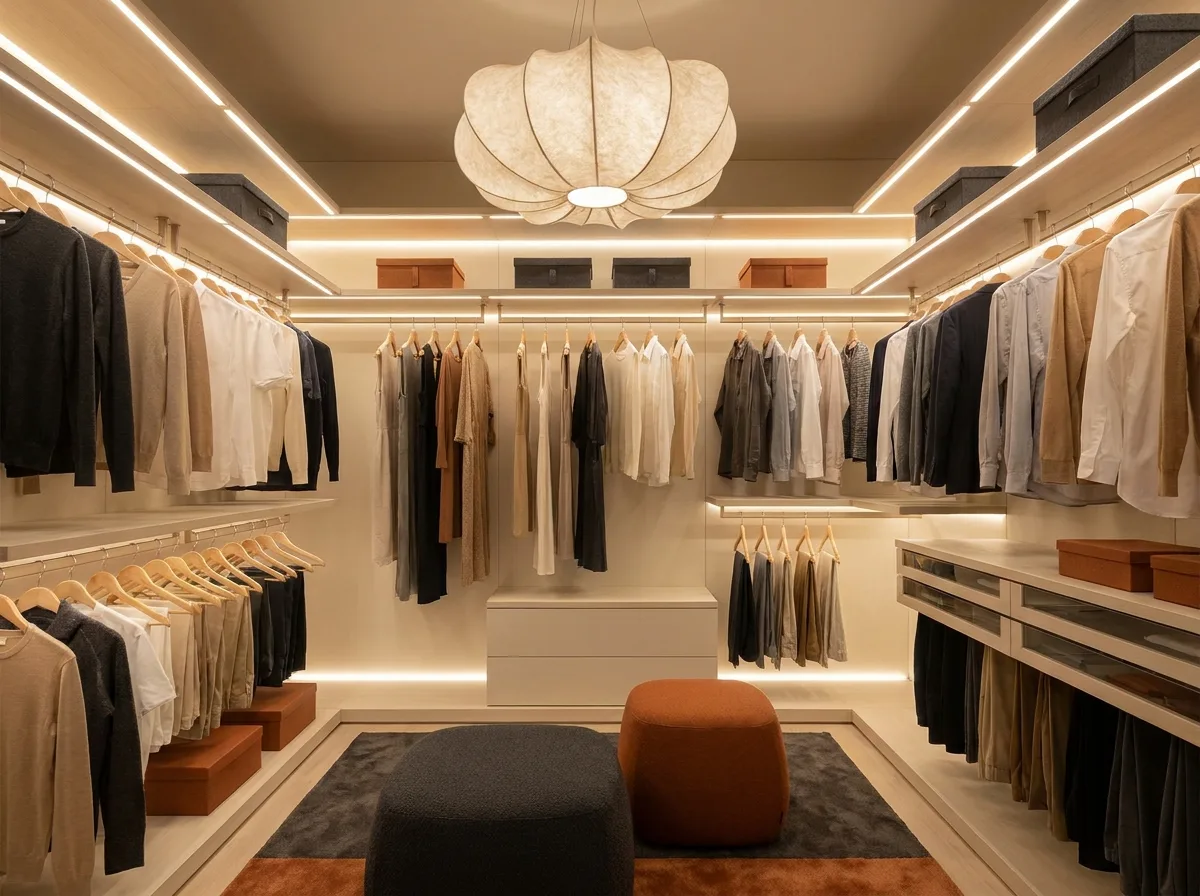
3000K simply describes a warm white, the color of a soft household bulb, and it is a Quora favorite. California Closets also recommends layered light. Keep wiring plans with a licensed electrician where you add outlets or hardwired fixtures, because permits and codes vary by city.
A common version of this mistake goes like this. A couple spends heavily on cabinetry, then leaves one overhead light. Every shadow falls on the shirts. They add LED strips a year later and wish they had done it first.
My opinion: in any luxury walk in closet, light beats cabinetry. If your budget is tight, cut the wood grade before you cut the lighting.
Which features feel high-end: island, glass, velvet?
An island or bench, glass-front display cabinets, velvet-lined jewelry drawers, a shoe wall and handbag shelves all signal luxury. They show off what you own and make getting dressed feel deliberate. Pick two or three that you will use daily, since each one costs space and money.
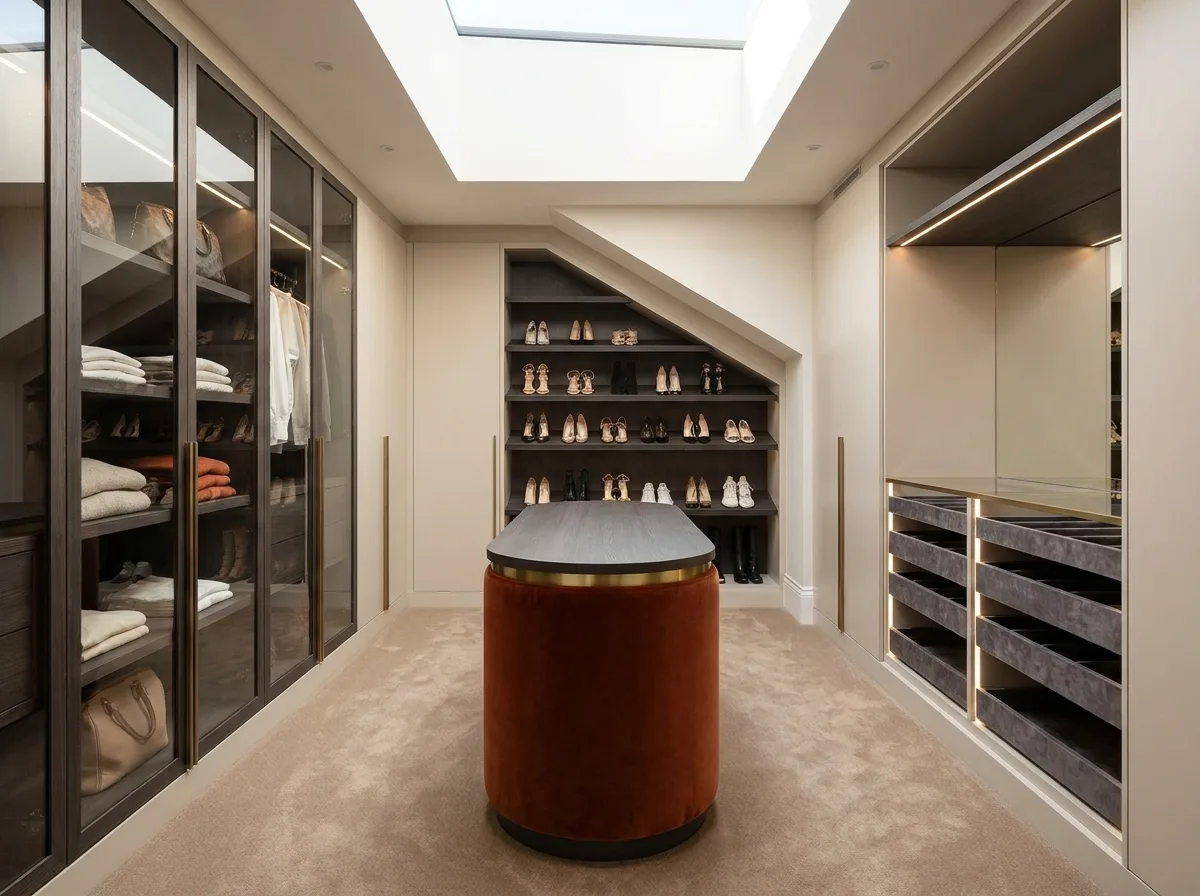
An island needs enough clearance to walk around it with drawers open, so it suits roomy closets. If yours is tight, see whether a closet island is actually realistic before you plan around one. A padded ottoman gives a similar seat without the footprint.
Glass fronts look gorgeous and collect dust, so they suit the pieces you want to display, not everyday socks. A watch winder or locking safe tucks nicely into a drawer. Plan outlets for steaming and charging too.
I could list thirty accessories, but only a handful get used often. Skip the rest.
How much does a luxury walk in closet cost?
The cost of a luxury walk in closet varies hugely. Homeowners report basic builds from about $600 to $8,000, and big luxury closets above $50,000. A rule of thumb from one thread is $200 to $300 per linear foot, plus $200 to $300 per drawer. Size, materials, drawers and labor drive the price. Treat all of it as anecdotal.
No government or industry price source backs these, so here is how to think about it. Three tiers show where money goes.
| Tier | Where the money goes | Reader-reported range | What you give up |
|---|---|---|---|
| Budget | Modular system, DIY assembly | About $300 to $800 for a retail system | Time, some finish quality |
| Mid | Semi-custom or DIY kit with custom details | About $3,000 for a DIY kit | Some exact sizing |
| High | Fully custom cabinetry, lighting, finishes | About $14,000 for a large walk-in, more for the biggest | A lot of cash |
The ranges are anecdotes from reader threads, not price data, so use them to sense scale and nothing more.
One thread described a $16,000 quote cut about 40 percent to roughly $8,500 for 11 units. Another said the big brands consult repeatedly and never give a price. Get three written quotes and ask for itemized line items.
Can you get the look with semi-custom or IKEA?
Yes. A modular system from IKEA, the Container Store (Elfa) or Costco’s Serenity line can look high-end if you add the right details: good lighting, matching hangers, upgraded pulls and a trim package. Assembly takes time, and the budget route trades some durability, but a few upgrades narrow the visual gap quickly.
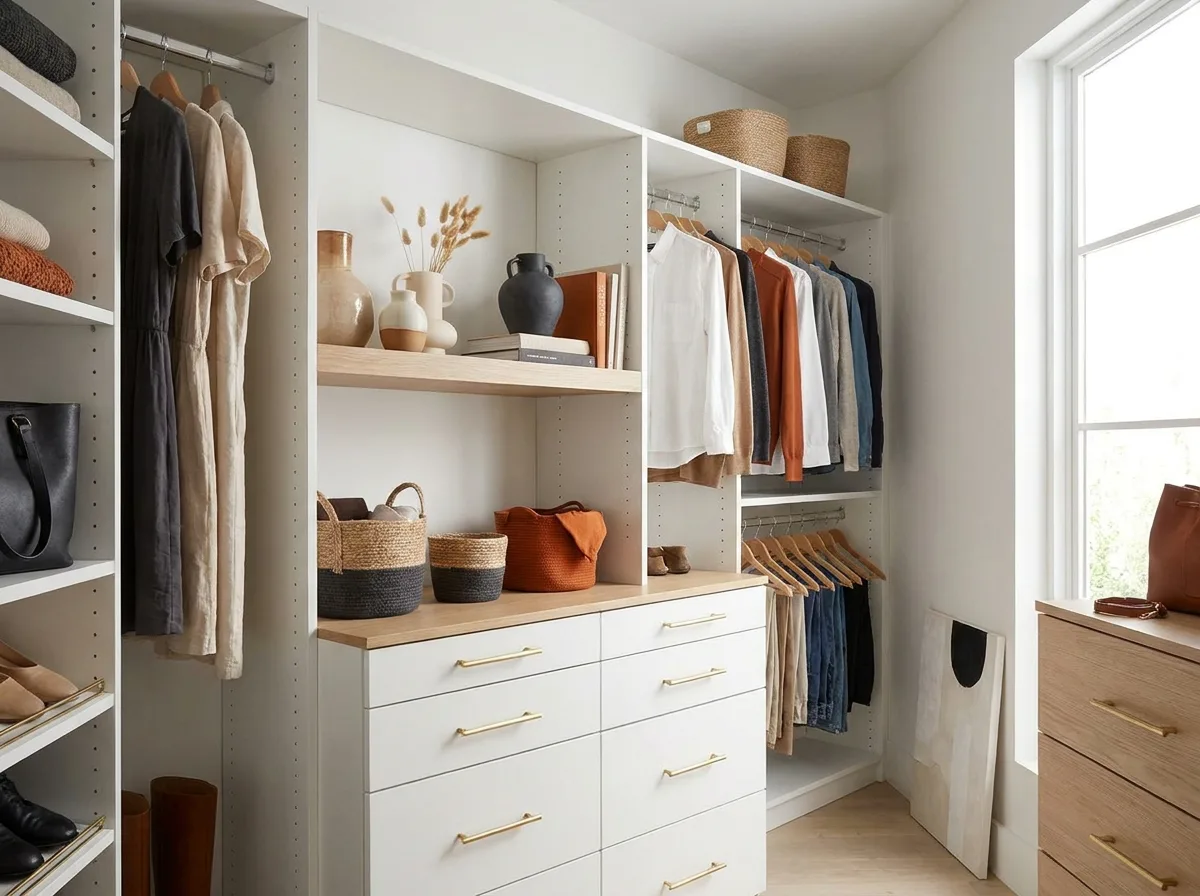
Posters on Reddit say retail systems in the $300 to $800 range can be every bit as good if you assemble them. Others call IKEA a pain to put together. Fair. Both can be true.
Local carpenters can often match quality for less than a national brand, so ask for a quote there too.
Which materials are worth paying for: particle board, MDF or solid wood?
Particle board is the cheapest and common in modular systems, MDF takes paint and finishes more smoothly, and solid wood is the most durable and the most expensive. For most closets, spend on solid drawer fronts and good hardware, and accept particle board for hidden shelving.
Plenty of owners in the threads prefer MDF or solid wood where they can afford it. Honestly, particle board is fine on shelves and in drawers you do not slam. The usual failure points are drawer rails and hinges, so plan to upgrade those first. Moisture is hard on all three, so keep closets away from damp walls.
A useful rule: put the better material where hands and eyes go, and the budget material where nobody looks.
Is a luxury walk in closet worth it, and should you convert a bedroom?
A luxury walk in closet is worth it if you will use it daily, but it rarely adds a guaranteed appraisal bump. Closets help buyer appeal, not necessarily appraised value. Converting a bedroom can lower resale, especially in small homes where going from three bedrooms to two narrows your buyer pool.
Homeowners in threads hold both views. Some say a closet was the best money they spent. Others say it is a closet, you close the door. Both are reasonable.
Say a homeowner in a five-bedroom house turns a guest room into a luxury walk in closet or dressing room. The loss barely changes the buyer pool. Now picture the same move in a three-bedroom starter home, where it could cost real resale. No source quantifies the resale impact, so check local comparable sales with an agent before you demolish a wall.
If you only want more room, a smaller upgrade such as a better door setup is a cheaper test.
What mistakes do people regret in a luxury closet?
The most common regrets are a single overhead light, shoes left on the floor, folded-item shelves set too high, cheap drawer rails and no outlet for a steamer. Plan frequently worn items at eye level and seasonal gear up high. A good plan fixes most of these before you buy a thing.
Here is a quick mistakes list, with fixes.
- One overhead light: add layered LED strips.
- Shoes on the floor: build an angled shoe wall.
- High shelves for daily items: reserve them for seasonal storage.
- No ventilation: add airflow and moth control.
- Mismatched finishes: pick one metal and one wood tone and repeat them.
The sneaky one is wasted space. A luxury walk in closet that is too big and still disorganized is just an expensive pile.
Frequently Asked Questions
How much does a custom walk in closet cost?
It depends on size, materials and labor. Homeowners report $600 to $8,000 for basic builds and well over $50,000 for the most luxurious ones. One thread suggested $200 to $300 per linear foot plus $200 to $300 per drawer. Treat these as anecdotes and get three itemized quotes. A custom luxury walk in closet sits at the top of that range, and our guide to the Ikea Pax closet shows a cheaper starting point.
How big is a good walk in closet?
A good one is at least 5 feet wide, and 6 feet or more lets you hang clothes on both sides. The smallest L-shaped walk-in is around 4 by 4 feet. A double-sided layout is often about 7 by 7 feet. Measure your door swing and walkway before committing to any plan.
Is California Closets worth it?
It can be if you value full-service design, but it is not the only route. Some homeowners say the consultations drag on without a clear price, and local carpenters can match quality for less. Ask for an itemized quote, compare it with a semi-custom system and decide whether the service premium matters to you.
Is IKEA good enough for a walk in closet?
Yes, for many homes. A retail system can give you a luxury walk in closet look with better lighting, pulls and matching hangers. The trade-offs are assembly time and particle board durability. Expect drawer rails and hinges to wear first. A few upgrades get you much closer to a custom look at a far lower price.
What lighting is best for a closet?
Layered, warm lighting is best. Use 3000K LED strips along shelves and rods, a statement fixture overhead and a bright mirror area. Motion sensors are a nice touch because the lights are already on when your hands are full. Have a licensed electrician handle any new wiring, since codes and permit rules vary by location. Avoid a single cold ceiling bulb, which flattens color and casts shadows across every shelf.
Does a walk in closet increase home value?
It improves buyer appeal, but no source here proves it raises appraised value. Myth alert: custom closets do not automatically add dollars at appraisal. Buyers may love one, though. If you plan to sell soon, talk with a local agent before spending heavily on cabinetry.
What is the smallest walk in closet?
Roughly 4 by 4 feet for an L-shaped layout, according to one Quora answer. It works for a single person with a tidy wardrobe. Anything tighter may feel more like a reach-in than a walk-in. Double-hang rods and good lighting help a small walk-in closet feel larger and calmer.
Should a closet have a window or door?
A door helps hide clutter and keeps dust off clothes. A window brings daylight, but as general guidance direct sun can fade fabric and a window can make temperature harder to control. Many luxury designs skip windows and rely on layered electric lighting. If you want a door, see our closet doors guide for styles that fit.
What is the difference between a walk in closet and a dressing room?
A walk in closet mainly stores clothes, while a dressing room adds seating, a vanity, a large mirror and room to get ready. The line blurs in luxury homes. Many people use "dressing room" and "walk-in wardrobe" interchangeably, so check the plan, not the label.
How do you keep a walk in closet dust and moth free?
Keep the space clean, add ventilation and store natural fibers in sealed containers or breathable garment bags. Solid doors on seasonal shelves help, and so does regular vacuuming of corners. Moths love dark, undisturbed wool, so rotate and air out seasonal pieces now and then. Myth alert: cedar blocks alone will not protect clothes that are already dirty, so wash or clean items before storing them for the season.
Conclusion
The hook imagined a $16,000 quote and a neighbor’s much cheaper version of the same layout. Now you know why that kind of gap can happen. A luxury walk in closet is built from light, layout and a few touchable details, not from the priciest cabinet boxes. Spend where your eyes and hands go, and save where nobody looks.
Your next step is simple. Measure the room, sketch a layout, choose lighting first and ask for three itemized quotes.
If you’re still comparing options, read our guide to a closet island for more ideas on finishing the space. So which detail would make your closet feel like a boutique first?