Storage Chest: How to Pick One That Is Safe, Sturdy and Stylish
Say you inherit Grandma’s cedar chest. It smells like a sweater drawer from 1974, the lid has a ring from a long-gone houseplant, and it has a tiny brass lock. You love it. You also have no idea whether it’s worth $40 or $400, or whether that lock is a problem.
Now flip the script. You’re scrolling a page of every storage chest ever made, from flat-pack boxes to solid wood pieces, and they all claim a "330 lb rating." Which one survives a toddler sitting on it?
Here’s the part most shopping pages skip: the look is the easy bit. The lid, the hinge, the lock and the material decide whether a chest is a keeper or a regret. This guide covers size, material, cost, placement, safety and old family pieces in plain talk. It’s one piece of a bigger puzzle, organizing a bedroom around furniture that does double duty, so we’ll keep one eye on the whole room.
Executive Summary
You’ll leave knowing how to choose, place and safely use a chest, whether you buy new, thrift one or inherit one.
A good chest comes down to three decisions: the room it serves, the material it’s made of and how the lid behaves. Measure your spot first. Pick the material based on what you’ll store, because solid wood, particleboard and cedar each protect different things. Skip any storage chest with a heavy lid and no support. You’ll also see rough costs, a quick styling rule and what to do with the lock on an old family piece.
A few surprises are ahead. Cedar is not the moth cure everyone believes. A $95 flat-pack chest is fine for blankets, just not for heirloom duty. And a vintage Lane cedar chest was part of a federal safety warning, so the lock deserves a look before anything else. The biggest hesitation, "will it look cluttered?", gets answered in the styling section.
What is a storage chest, and how is it different from a trunk or blanket chest?
A storage chest is a lidded box, usually wood, built to hold bulky household items like blankets, linens and toys. Trunks, blanket chests, hope chests and toy boxes are all versions of the same idea. The names mostly describe where the piece sits or what it holds, not a strict design difference, so shop by function.
Think of every storage chest as a variation on one idea. A trunk suggests travel style, with corner guards and straps. A blanket chest sits at the foot of a bed. A hope chest is the same piece with a tradition attached: young women once filled one with linens before marriage. A storage bench adds a padded top, and a storage ottoman is the soft-sided cousin. Shop by function and size, not by label.
What size storage chest do you actually need?
Measure the wall or bed width, then pick a chest about two thirds of it. Retail sizing runs from under 12 inches wide to over 45 inches, so start with the spot you want to fill, check the clearance for the lid, and then narrow the list by width and depth.
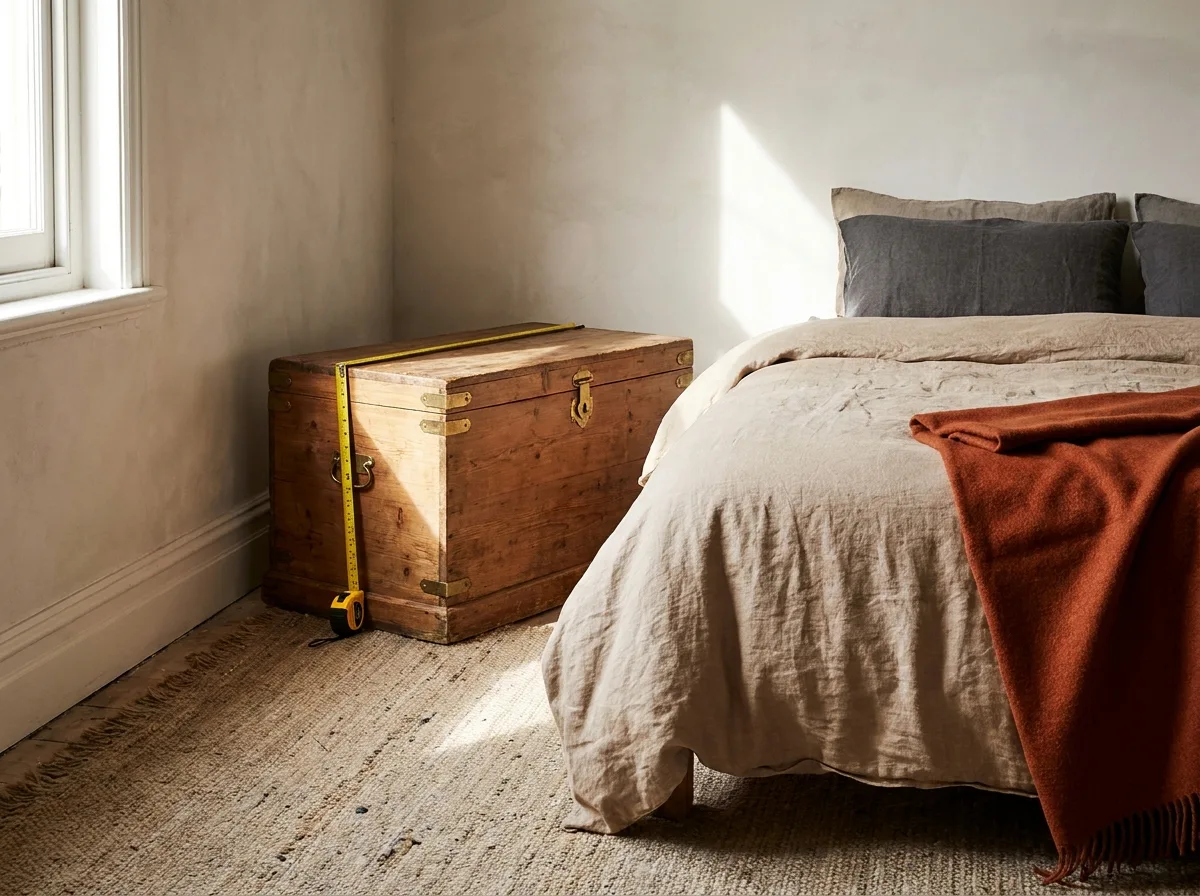
Wayfair’s size bands help: extra small under 12 inches, small 12 to 24, medium 24 to 30, large 31 to 45, extra large over 45. A queen bed is roughly 60 inches wide, so a 40 to 45 inch chest leaves a visible gap on each side.
One flat-pack example on TheStreet measured 47.2 by 15.7 by 19.1 inches, held 64 gallons and carried a 330 lb rating. That 15.7 inch depth is narrow for a storage chest meant to hold quilts. It fits a hallway, but bulky folded quilts may not.
| Spot | Typical width | What to check |
|---|---|---|
| End of a queen bed | 40 to 45 in | Room to walk past |
| Entryway | 30 to 40 in | Depth under 18 in |
| Living room table | 36 to 48 in | Height near sofa seat |
| Nursery | 24 to 36 in | Safe lid, wall anchor |
Which material is best: solid wood, particleboard, cedar or fabric?
It depends on what you’re storing. Solid wood tends to last longest, particleboard is usually the cheapest, cedar suits textiles, and fabric or resin fits light, flexible uses. No single material wins every room, so match the material to the contents before you compare prices or finishes.
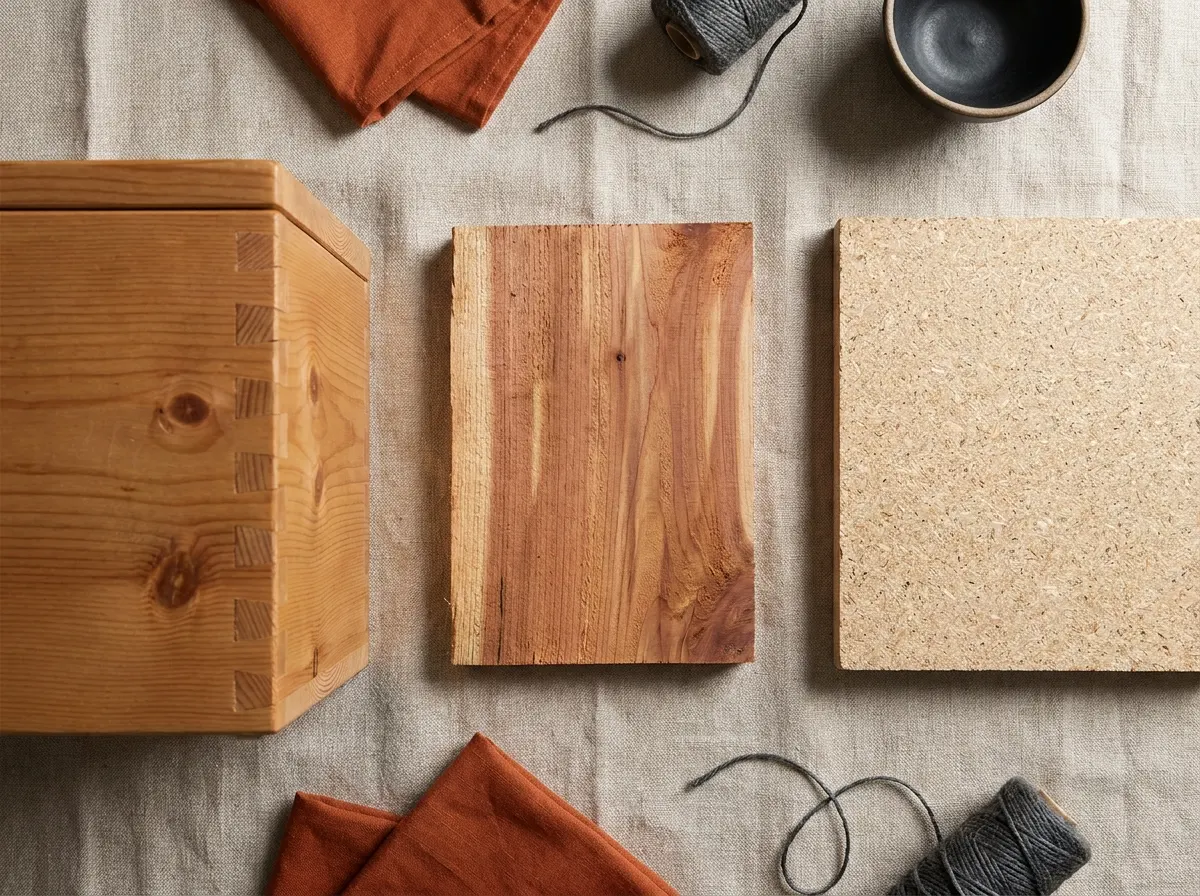
A Quora answer put it well: cedar for textiles, hardwood for tools, plywood for utility.
Solid wood and pine. Pine is soft but affordable and takes paint well. Dovetailed corners signal real craftsmanship, while a stapled box means shortcuts.
Particleboard. Light and cheap. It handles blankets fine, but as a rule of thumb it tolerates moisture and moving day poorly, so a particleboard storage chest often lasts only a few years of hard use.
Cedar. A scented, lined interior is nice for wool. More on its moth reputation shortly.
Faux leather, wicker and resin. Softer looks, and resin suits garages and patios, where it competes with a deck box.
How much does a storage chest cost?
Wayfair’s price filters run from under $150 to over $700, which shows how wide the market is. Flat-pack chests often sit near $70 to $100 on sale, while solid wood and vintage pieces cost more, depending on wood thickness, joinery and hinge quality.
The sale examples I can point to: a particleboard and steel chest at $95, marked down from $167, and a smaller one near $77. Those are deal-page numbers, so they move fast.
Paying $300 for a chest with a cheap hinge is worse than paying $100 for one with a soft-close arm. Honest trade-off: a cheap storage chest is fine for blankets and costume overflow. It isn’t heirloom storage, so don’t expect your grandkids to fight over it.
Where should a chest go in each room?
Put it where its lid has space to work: the foot of the bed, an entry wall, a living room as a coffee table or a nursery corner away from windows. Leave lid clearance above and in front, keep walkways open, and avoid spots where a radiator or sunny window will bake the wood.
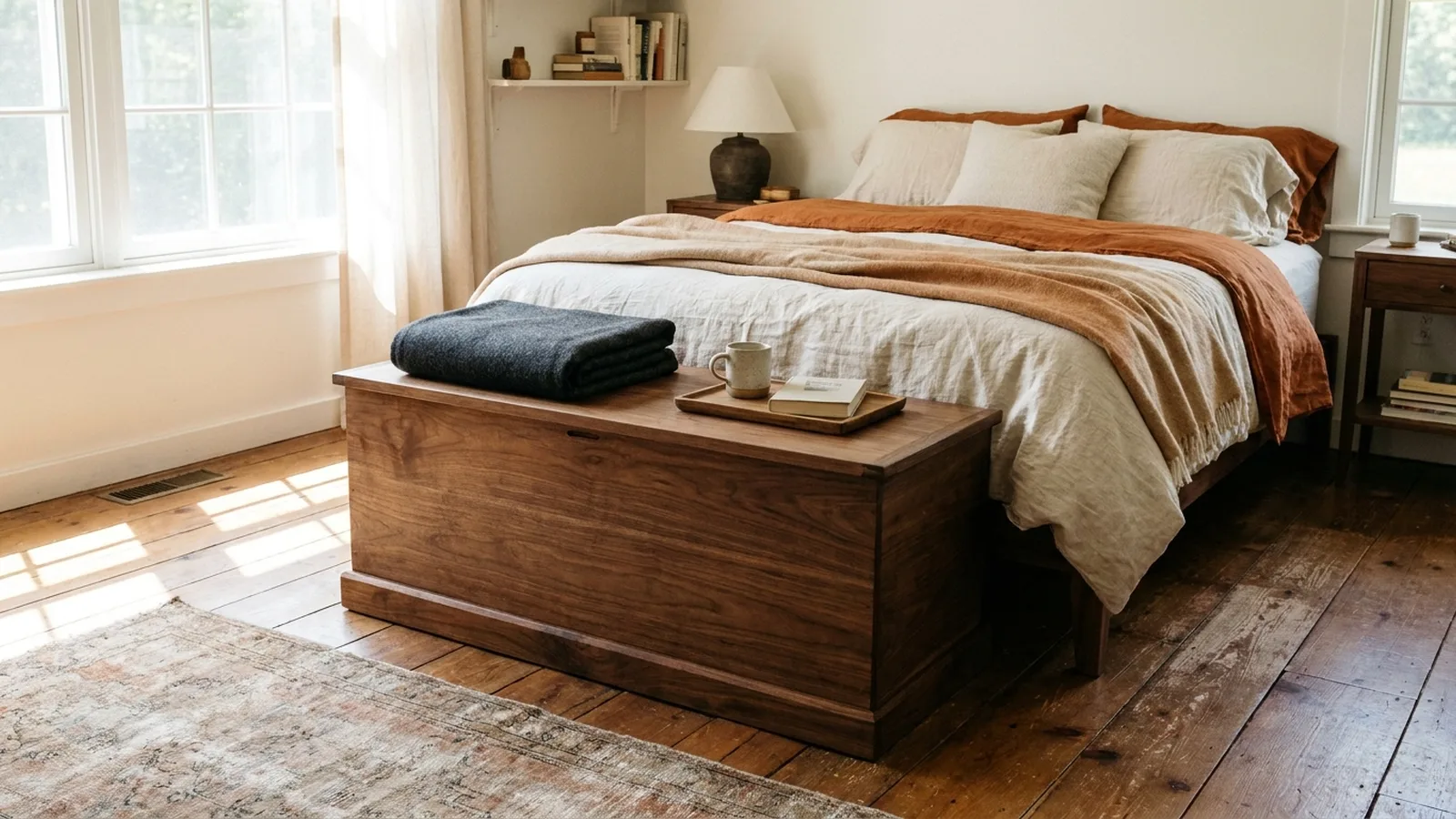
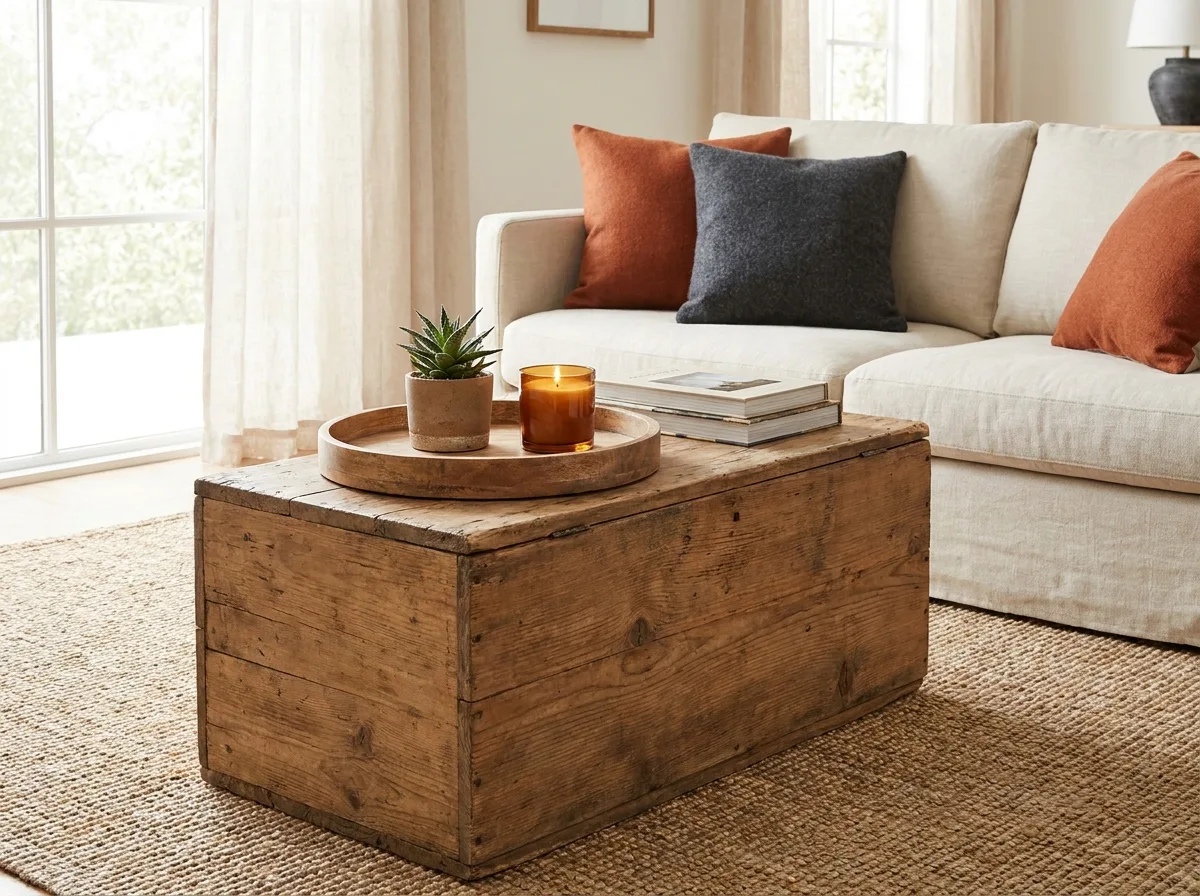
In the bedroom it holds quilts and spare sheets and doubles as a place to put on shoes. If you need more capacity, a storage bed with built-in drawers holds far more. In an entryway keep it shallow and wipeable. In a living room, a flat top works as a rustic coffee table with a tray on it. In a nursery, a storage chest works only with a safe lid and no lock.
How do you style a chest so it looks designed, not dumped?
Treat the top like a shelf with one rule: three items at most, in different heights. Try a tray, a plant or lamp and something personal. Leave some bare wood visible, and make sure one lift clears everything off the lid so the chest stays usable every day.
A common version of this mistake: someone adds a basket, a book stack, three candles and a framed photo, and now the chest can’t open without a cleanup crew. Styling and function fight each other here.
Use a tray so the lid clears in one move. Match the finish to nearby wood, like a nightstand or a sideboard from your dining space, or contrast with paint, but pick one approach. A chest about two thirds the bed width looks planned. A tiny one looks lost.
What makes a storage chest safe for kids and pets?
Look for a safety hinge or lid support that holds the lid open at any angle, no lock, ventilation gaps and rounded edges. A heavy lid dropping shut is the main risk, followed by a child climbing inside and getting trapped, so test the lid before you buy.
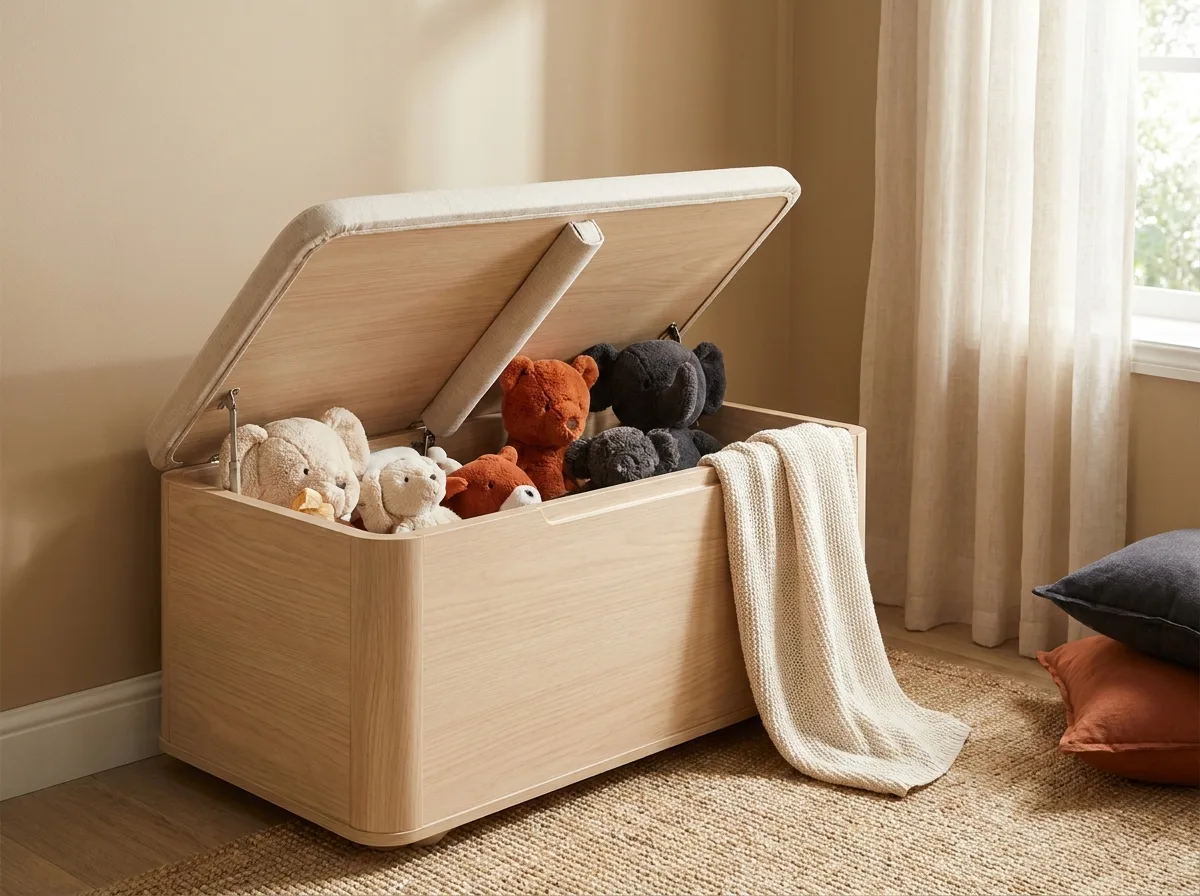
The risk of a storage chest is the lid and the lock, not the look. A free-fall hinge on a storage chest can slam on small fingers, and a latch can trap a child who can’t push a heavy lid up from inside.
Do a quick test: lift the lid halfway and let go. If it falls, skip it. Remove any lock you don’t need, and anchor tall chests to the wall as you would a dresser. A "safety hinge" in a listing isn’t a guarantee, so read reviews that mention the lid.
Is Grandma’s cedar chest dangerous, and what do you do about the lock?
Possibly, if it’s a Lane or Virginia Maid chest with the original latch. The U.S. Consumer Product Safety Commission urges owners to remove or disable the latch and lock because replacement latches are no longer available, so check the maker’s name inside the chest first.
According to the CPSC, about 12 million Lane and Virginia Maid cedar chests made between 1912 and 1987 were recalled in 1996, and 14 child suffocation deaths were reported between 1977 and 2015. The name appears inside the chest. Take off the hardware so the lid can’t lock, whatever storage chest you inherited. One Reddit owner left theirs locked out of fear, which is overcautious but understandable.
Resale rules are unclear, since commenters disagree. Check the CPSC notice before listing one.
Does cedar really keep moths away?
Not reliably. Cedar smells good and may mildly discourage moths, but it doesn’t replace clean storage. Moths tend to go after soiled wool, so wash or dry-clean items first and store them in breathable cotton bags rather than relying on the wood alone.
The research is mixed: one refinisher says only camphor works, while a Quora answer credits cedar. Treat it as contested. My take is that cedar helps at most a little and clean fabric does the real work. If the scent fades, lightly sand the inside and keep oil out of the interior.
Should you buy new, thrift or restore a vintage chest?
Buy new for a predictable look and a modern lid design. Thrift or inherit for character if you’ll test the hinge and remove any lock. Restore only when the structure is sound and the sentimental value beats the cost of a refinish.
Reddit antique threads are anecdotes, not market data, but commenters describe vintage Lane chests changing hands for roughly $10 to $75, sometimes $100 to $200, and "a few hundred" at best. One buyer said they paid $50 on Facebook Marketplace and another said $10.
Say you’re quoted $800 to refinish a chest worth about $400. That math fails unless it’s family. Use the old chest, don’t hoard it. For a cheap refresh, see the next section, and keep any oil off the inside.
How do you refresh an old chest without ruining it?
Start gently: empty it, wipe the outside with a barely damp cloth, air the inside for several days and test any product on a hidden spot. Sand the interior lightly if the scent fades, and avoid putting oil or sealant inside.
Say a family chest has dull wax, a pale ring on the lid and a stale smell. Cleaning and a fresh coat of furniture wax outside may be enough. Some owners reach for products like Restor-A-Finish or orange oil on the exterior, but results vary by finish, so test first. Leave the inside bare so it can breathe, and take the lock off while you’re at it.
What should you never store in a chest?
Skip anything damp, dirty, food-related or fragile. Closed wood traps moisture and odor, so unwashed clothes, wet towels and loose paper can turn musty. Keep valuables out of a chest with no lid support, and never let a child play inside.
Wash wool and cotton before storing, and add a breathable cotton layer between items. Photos and documents do better in archival boxes inside the chest than loose against the wood. A common version of this mistake: someone packs a chest with a damp-from-the-dryer throw in July, and opens a musty box by winter. A chest can also double as a bench or coffee table, but keep heavy loads off weak lids.
Frequently Asked Questions
What is the point of a cedar chest?
A cedar chest protects textiles in a closed, fragrant space. It’s a place for wool blankets, heirloom linens and keepsakes, away from light and dust. The scent is a bonus and the moth-fighting reputation is overstated, so wash everything first. Today it works just as well as a bedroom bench or blanket store.
Are cedar chests still popular?
They’re less common as a bridal tradition but still sell as bedroom storage and vintage finds. Modern versions come painted, in pine or flat-pack, so it is easy to find one that suits a current room. In my opinion, function matters more than ritual now, so choose by lid safety, size and material. If you want more capacity, a drawer-style piece may suit you better.
Why is there a chest at the foot of American beds?
It’s tradition mixed with practicality. Extra bedding needs a home, the foot of the bed has dead floor space, and a chest gives you somewhere to sit and dress. It also visually finishes the bed. It’s habit more than rule, so skip it if your room is tight.
What is a hope chest?
A hope chest is a blanket or cedar chest where a young woman once collected linens, quilts and household goods before marriage. Today the name is mostly sentimental. Any chest can serve as one, and plenty of people now fill theirs with photos, memory boxes or baby keepsakes.
How much is an old Lane cedar chest worth?
Usually less than people hope. Reddit commenters describe $10 to $75 as common, $100 to $200 for nicer examples and "a few hundred" at the top. Condition and a working lid matter most. Refinishing often costs more than the chest is worth, so value it as furniture to use.
How do I decode a Lane serial number?
Lane chests carry a serial number that doubles as a date code, read backwards in one Reddit example. A number like 064101 read in reverse points to October 14, 1960. Treat that as a rough guide and look for maker’s marks inside the chest to confirm the age before you quote it to a buyer.
Can I sell a recalled Lane chest?
Resale rules are unclear, and people online disagree. What is clear is that the CPSC urges removing the lock and latch, and replacements aren’t available. If you sell, state plainly that the hardware is removed and mention the recall. Check the agency’s notice before you list it, and keep the listing honest.
Is a storage chest good for a toy box?
Yes, with the right lid. Pick a chest with a safety hinge that holds at any angle, no lock and ideally ventilation gaps. Keep it low and stable so it can’t tip. A $75 pine blanket chest turned toy box is a common thrift story, but test the lid first. If closet space is the real issue, see how closet doors affect storage.
Can I put a plant or drink on a wooden chest?
Not directly, and this one is a myth-buster: finished wood is not waterproof. Condensation and plant water leave white rings and dark stains, a common complaint on old cedar lids. Use a tray, coaster or felt-backed saucer. If you already have a mark, light sanding sometimes helps, though deep stains may stay.
How do I get the mothball smell out?
Air the chest open in dry shade for several days, wipe the inside with a damp cloth and let it dry fully. Baking soda in an open dish helps absorb leftover odor. Skip heavy perfumes. If the smell persists, lightly sand the interior as you would to refresh cedar scent, and avoid sealing it in.
Conclusion
A storage chest earns its place when the lid is safe, the size fits the wall and the material matches what you’ll store. The real shift is flipping the usual question. Don’t ask which chest looks best first. Ask what it will hold, where it will sit and what happens when someone drops the lid.
That brings us back to Grandma’s chest. Take off the lock, air it out, use it for blankets and stop worrying about the $400 myth. For a new purchase, spend the extra few dollars on a soft-close hinge. Quiet, supported lids are worth paying for.
Your next step is simple: measure the spot and test one lid. Then keep going with organizing a record collection or a smarter spice rack setup.
So what’s sitting in your attic that should be a chest in your living room?