How Many Outlets on a 15 Amp Circuit? The Load Math That Decides

Say you’re finishing a basement and the plan shows one 15 amp breaker for the whole room. Your brother-in-law swears eight outlets is the limit. A forum post says twelve. The electrician you called says "it depends." So how many outlets on a 15 amp circuit is actually safe?
Here’s the part most people miss: the number you’ve heard is a habit, not a US law. What matters is how many watts you pull at once, and the outlet count is only a rough stand-in. This guide gives you the shortcut, the real math and a room-by-room plan. It’s one piece of understanding your home’s electrical system, and that cluster starts with how outlets are wired.
Executive Summary
You’ll leave with a number you can plan around and the reasoning to defend it. For a bedroom or living room, how many outlets on a 15 amp circuit is fine? Usually 8 to 10. For a home office, plan on 4 to 6, and for a basement, garage or heated room, 3 to 8 depending on the tools and heaters.
Three insights do the heavy lifting. First, the US National Electrical Code (NEC) generally sets no hard outlet limit for dwelling circuits, so "12" is reportedly a Canadian rule echoed online. Second, the real ceiling is 1,800 watts, or 1,440 watts for loads that run three hours or more. Third, lights and fans share the same budget as plain outlets.
The biggest objection is "can’t I just add more and see?" No. A breaker protects the wire, not your patience, and a hot wire inside a wall is the worst place to experiment. Wiring changes belong to a licensed electrician, and local code has the final word.
How many outlets on a 15 amp circuit is safe?
For planning, 8 to 10 standard outlets on a 15 amp circuit is the common answer. That number assumes ordinary use, like lamps, chargers and a TV, never several high-draw appliances at once. Your real limit is set by the watts you run, so two space heaters can overload a circuit that has only two outlets.
Think of the breaker as a bucket that holds 15 amps and outlets as faucets. A hundred faucets won’t overflow it unless you open them all at once.
Honest trade-off: easy rules get followed. I’d use 8 to 10 outlets on a 15 amp circuit as a first sketch, then check it against the devices you’ll plug in.
Why do you keep hearing 8, 10 and 12?
Each figure comes from a different rule of thumb or country. Eight is a cautious habit, ten comes from assuming 180 volt-amps per outlet, and twelve is reportedly a limit in Canada’s electrical code, per electricians (check the current text locally). None of them is a measured safe maximum for a specific US room.
The ten figure is simple arithmetic: a 15 amp circuit carries 1,800 volt-amps, and 180 per outlet gives ten. Canadian blogs show up in US searches, which may be one reason their 12 outlet cap crossed the border, and at least one US site wrongly credits 12 to the NEC. Some inspectors, according to homeowner threads, prefer about 6 or 7 in busy rooms. Three real rules got blended into one rumor.
Does the NEC set a limit on how many outlets on a 15 amp circuit?
Generally, no. For dwelling units, the NEC doesn’t cap the number of general-purpose receptacles per circuit. It covers them through a general lighting load of 3 volt-amps per square foot. Commercial buildings use 180 volt-amps per receptacle. Your adopted code year and local amendments can change details, so check with your building department.
That calculation decides how many circuits a house needs overall, not how many outlets each gets. A code-compliant home can have more than 12 outlets on a bedroom circuit. But "legal" and "wise" aren’t twins. Codes set a minimum, and your devices set the real limit. Codes also aren’t retroactive, so an older house may have wiring that wouldn’t pass today.
How do you do the load math for a 15 amp circuit?
Multiply volts by amps. A 15 amp circuit at 120 volts delivers 1,800 watts. For loads that run three hours or more, the working limit is 80 percent of that, or 1,440 watts. Add up the watts of what runs together and keep the total under that line.
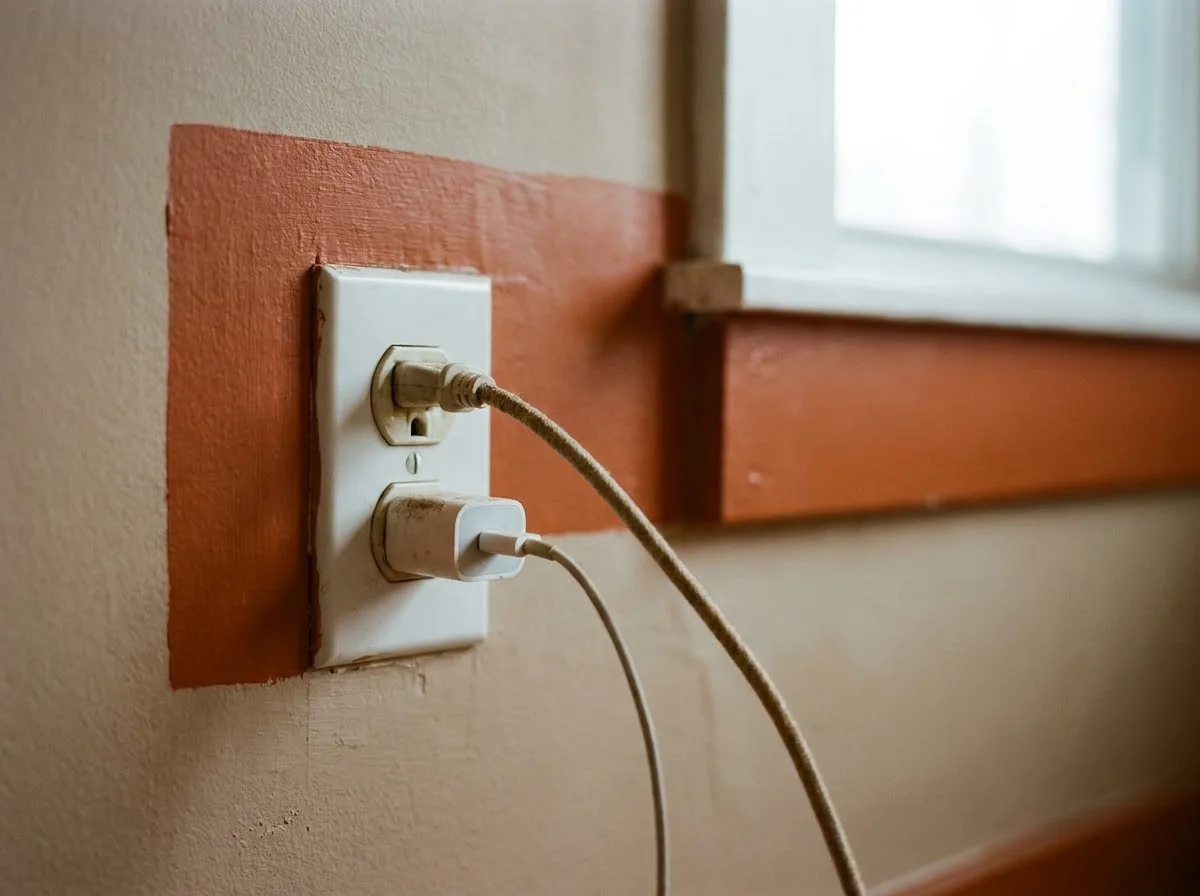
The count of outlets on a 15 amp circuit only matters through these watts. Labels list watts, or amps you multiply by 120. These are rough typical ranges, since models vary widely:
| Device | Typical draw | Note |
|---|---|---|
| LED lamp or charger | A few watts to 15 W | Almost nothing |
| Laptop and monitor | 100 to 250 W | Runs for hours |
| Television | 50 to 200 W | Depends on size |
| Microwave | 1,000 to 1,500 W | About 9 to 12 A |
| Window air conditioner | 500 to 1,500 W | Check the nameplate |
| Space heater | Up to 1,500 W | A circuit hog |
A space heater alone eats nearly all of the 1,440 watt continuous budget. The 80 percent rule applies to long-running loads, not to a vacuum that runs for ten minutes.
How many outlets on a 15 amp circuit in each room?
Plan by the devices in the room. Bedrooms and living rooms usually carry 8 to 10 outlets with light loads. Home offices fit 4 to 6, basements 4 to 8 and garages 3 to 5 if tools or heaters are likely. Kitchens, bathrooms and laundry rooms typically need dedicated 20 amp circuits.

| Room | Planning count | Why |
|---|---|---|
| Bedroom | 8 to 10 | Lamps, chargers, one fan |
| Living room | 8 to 10 | TV gear, lamps, a vacuum |
| Home office | 4 to 6 | Computers run for hours |
| Finished basement | 4 to 8 | Heaters, dehumidifier |
| Garage or workshop | 3 to 5 | Tools draw in bursts |
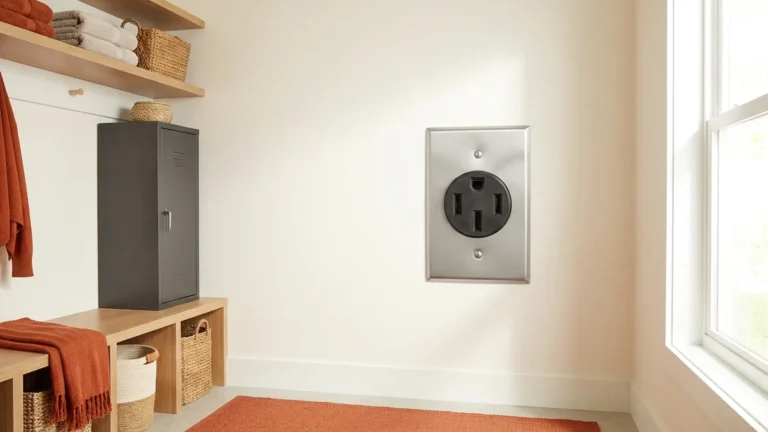
These are my planning suggestions, not code numbers. Local rules govern kitchens and baths. For a big appliance like a dryer, see our guide to 220 outlets.
Do lights and switches count toward the outlet total?
In everyday US talk, lights and switches aren’t counted as outlets, but their wattage still eats the same budget. Fixtures, bulbs and fans share the circuit with your receptacles, so a room’s lighting belongs in the total. Count watts, not objects, and most of the confusion disappears.
The NEC uses "outlet" broadly, meaning any point where power is taken, lights included. Switches draw nothing worth counting. LEDs changed the math, since ten 10 watt bulbs add up to about 100 watts, while the old incandescent days nearly filled a circuit with a few dozen bulbs.
When do 6 outlets fail and 14 work fine?
Load decides everything. Six outlets feeding a heater, a microwave and a vacuum can blow past 1,800 watts. Fourteen outlets feeding lamps, a TV and chargers might draw a few hundred. The count is irrelevant when the wattage tells the real story.
Take a hypothetical sunroom with 6 outlets on a 15 amp circuit. A 1,500 watt heater runs all winter, and a 1,000 watt microwave sits on a cart by the door. Run both and you’ve passed 2,500 watts. The breaker trips, and that’s the system working.
Now take a living room with 14 outlets. A TV, soundbar, three LED lamps, a laptop and two chargers come to roughly 350 watts. The room looks overbuilt and runs cool.
A common mistake: tired of tripping, someone swaps in a 20 amp breaker. Don’t. Thin 14 AWG wire is rated for 15 amps, so a bigger breaker removes the protection and lets the wire overheat. Fix the load first.
Which devices should never share a 15 amp circuit?
Keep high-draw, long-running devices apart from each other and from general lighting. Space heaters, window air conditioners, microwaves, refrigerators, hair dryers and vacuums each deserve their own space. Never run two together, and never plug a heater into an extension cord or power strip.

Heat-producing devices are the culprits, because they run for hours. A refrigerator compressor starting beside a microwave causes surprise trips. If a breaker keeps cutting out, read why a breaker keeps tripping. A window unit is a classic hog, and our window air conditioner guide helps you pick one that fits your power situation.
What are the signs of too many outlets on a 15 amp circuit?
Watch for repeated tripping, lights that dim when an appliance starts, warm faceplates, buzzing, a burning smell or discolored outlets. A slightly warm breaker under heavy use can be normal. A hot one, or any scorched smell, means stop and call a licensed electrician right away.
Tripping is the breaker doing its job, though a loose connection can look like overload. Never remove the panel’s inner cover, since live bus bars can kill you.
Can you add an outlet or a 20 amp receptacle to a 15 amp circuit?
You can often add an outlet if the existing load is light and the box has room, but a licensed electrician should do it and check permit rules. A 20 amp receptacle on a 15 amp circuit is generally not allowed, so use the matching 15 amp device.
Extending a circuit means tapping existing wiring, and that’s where loose pigtails, overstuffed boxes and wrong wire sizes appear. The NEC allows 15 amp receptacles on a 20 amp circuit, but not the reverse. An unpermitted change can also complicate an insurance claim, so check your policy.
When should you upgrade to a 20 amp circuit or add a new one?
Add or upgrade when a space needs more than about 1,440 watts running together, such as a workshop, a home office or a heated room. Going to 20 amps needs 12 AWG wire from the panel to every outlet, so it often means a new circuit.
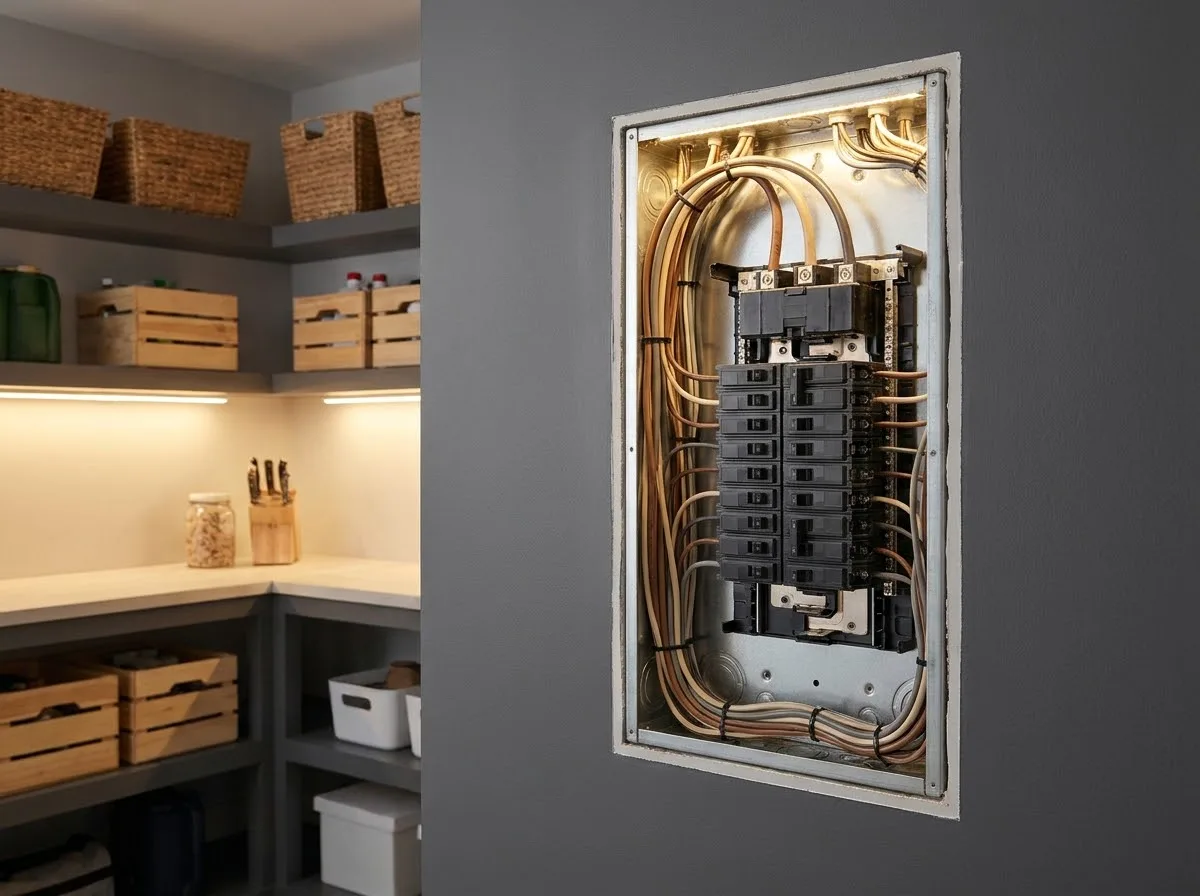
Costs vary widely with panel space, wire length, wall access and local labor, so get two written quotes and ask whether they include the permit and inspection. A standard breaker costs roughly $7, while an arc-fault (AFCI) breaker runs about $80, according to Today’s Homeowner.
Not sure if your circuit is 15 or 20 amp? Check the number on the breaker handle, and where you can see the cable, 14 AWG usually means 15 amps and 12 AWG means 20 amps. If the label is missing or unclear, call a licensed electrician before adding load, and ask which code year your area has adopted.
Decision rule: add a new circuit if heaters, tools or a home office live in the room. Leave things alone if the load is lamps and chargers.
Frequently Asked Questions
How many outlets on a 15 amp circuit by NEC?
For houses, the NEC generally sets no maximum count of general-purpose receptacles per circuit. It requires enough circuits for a calculated load instead. Commercial rules use 180 volt-amps per receptacle, which works out to 10. Local code and the adopted NEC year can differ, so confirm with your building department.
Can a 15 amp breaker run 8 outlets?
Yes, eight outlets on a 15 amp circuit is a common, comfortable setup when the devices are light, like lamps, a TV and chargers. The breaker cares about total watts, not outlet count. If two of those outlets feed heaters or a microwave, the circuit may trip. Add up the real draw first.
What happens if you put more than 8 outlets on a 15 amp circuit?
Usually nothing, as long as the combined load stays under the limit. Outlets don’t draw power, devices do. Trouble starts when plugged-in loads pass 1,800 watts and the breaker trips. A breaker that trips often means you’ve overloaded the circuit, so move devices instead of resetting it repeatedly.
How many lights can you put on a 15 amp circuit?
Dozens of LED fixtures fit comfortably, because each draws only a few watts. Ten 10 watt bulbs add up to about 100 watts, a small slice of the circuit. Older 100 watt incandescent bulbs reach the 1,440 watt line at about fourteen. Add your lights to the outlet load and count total watts, not fixtures.
Is 12 outlets the US limit?
No, that’s a myth. Twelve comes from the Canadian Electrical Code, and some US websites repeat it without saying so. The NEC doesn’t set that limit for dwellings, so how many outlets on a 15 amp circuit a US home may have depends on load and local rules. Check your wattage first.
How many watts can a 15 amp circuit hold?
The circuit tops out at 1,800 watts, from 120 volts times 15 amps. For loads running three hours or more, stay at or below 1,440 watts, which is 80 percent. A breaker may handle short peaks above that, but your wire and receptacles don’t enjoy sustained heat. Check nameplates and add watts before you plug in.
Does a duplex outlet count as one or two outlets?
A duplex receptacle, the standard two-plug outlet, is one device on one yoke, the metal mounting strap. For commercial load calculations the NEC counts each yoke as 180 volt-amps, so a duplex counts once. Some people count each plug, though. Either way, the watts plugged into both halves are what matter.
Can I run a space heater on a bedroom circuit?
Only if the circuit has little else on it. A typical 1,500 watt heater uses nearly the whole 1,440 watt continuous budget, so a TV or vacuum can trip the breaker. Plug the heater straight into the wall, never into an extension cord or power strip. If you use heaters often, ask an electrician about a dedicated circuit.
Is a warm breaker normal?
Slightly warm under heavy load can be normal, but hot to the touch isn’t. A loose connection, an overloaded circuit or a failing breaker can all cause real heat. Don’t wait and watch. Turn off the load, leave the panel cover alone and call a licensed electrician. Never swap in a bigger breaker.
Does adding more outlets give you more power?
No, that’s a common myth. Outlets share one circuit, so new ones divide the same 1,800 watts instead of adding capacity. More power requires a new circuit with its own breaker and wire. For a big appliance, a dedicated 240 volt line may be needed, and our 220 outlet guide explains the options.
Conclusion
The honest answer to how many outlets on a 15 amp circuit is "as many as your watts allow." Eight to ten is a sensible sketch, the NEC generally sets no cap for homes, and twelve is a borrowed Canadian rule. The sunroom that tripped and the living room that didn’t prove the same thing: load beats count.
Your next step takes five minutes. List what you’ll plug in, write each wattage and add them. If long-running devices pass 1,440 watts, plan a second circuit and let a licensed electrician do the work. Local codes vary, and a permit protects you.
For your next read, see how to wire an outlet safely or why a breaker keeps tripping.
So, what’s the heaviest thing you’d plug in at your end of the room?