Vertical Window Air Conditioner: Does Your Window Actually Fit One?

Say it’s 11 p.m. in July and your upstairs bedroom is stuck at 82 degrees. You have a crank-out window, no central air on that floor, and a cart full of units that all say "window AC." Then the question hits. Will a standard box fit? Does a vertical window air conditioner even exist, or is that just a search term? And if it does, why does every listing show something different?
Here’s the part most shoppers miss: the air conditioner is rarely the problem. The window is. Buy by box size and you’ll pay for return shipping. Buy by the clear opening and you’ll cool the room by the weekend.
This guide starts with the window, then walks through sizing, noise, cost, installation and the awkward cases where nothing fits. It’s one piece of keeping a home comfortable, much like knowing when furnace replacement makes sense is for winter.
Executive Summary
You’ll leave knowing which window type you own, how to measure its clear opening, and how many BTUs your room really needs. A BTU is a unit of cooling power, and more isn’t always better. You’ll also see where a slim unit wins, and where a dual-hose portable or a ductless mini split does the job better.
First, "vertical" is a loose label, and most buyers actually need a casement or slider unit. Second, these units top out at a modest capacity, so big open rooms push you toward other options. Third, a narrow or crank-out window can still work with a plywood panel and some patience.
The biggest objection is usually price. Retail listings run from about $160 to $630 for units, and the cheapest route is often a smaller room plus sun control first. Prices shift weekly, so treat them as a snapshot.
What Is a Vertical Window Air Conditioner, and Which Window Do You Have?
A vertical window air conditioner is a tall, narrow unit built for windows that open sideways or crank outward, not up and down. Retailers usually call them slider or casement models. Before shopping, work out whether you have a double-hung (vertical-sliding), side-sliding or casement window, because only the last two suit a tall, slim design.
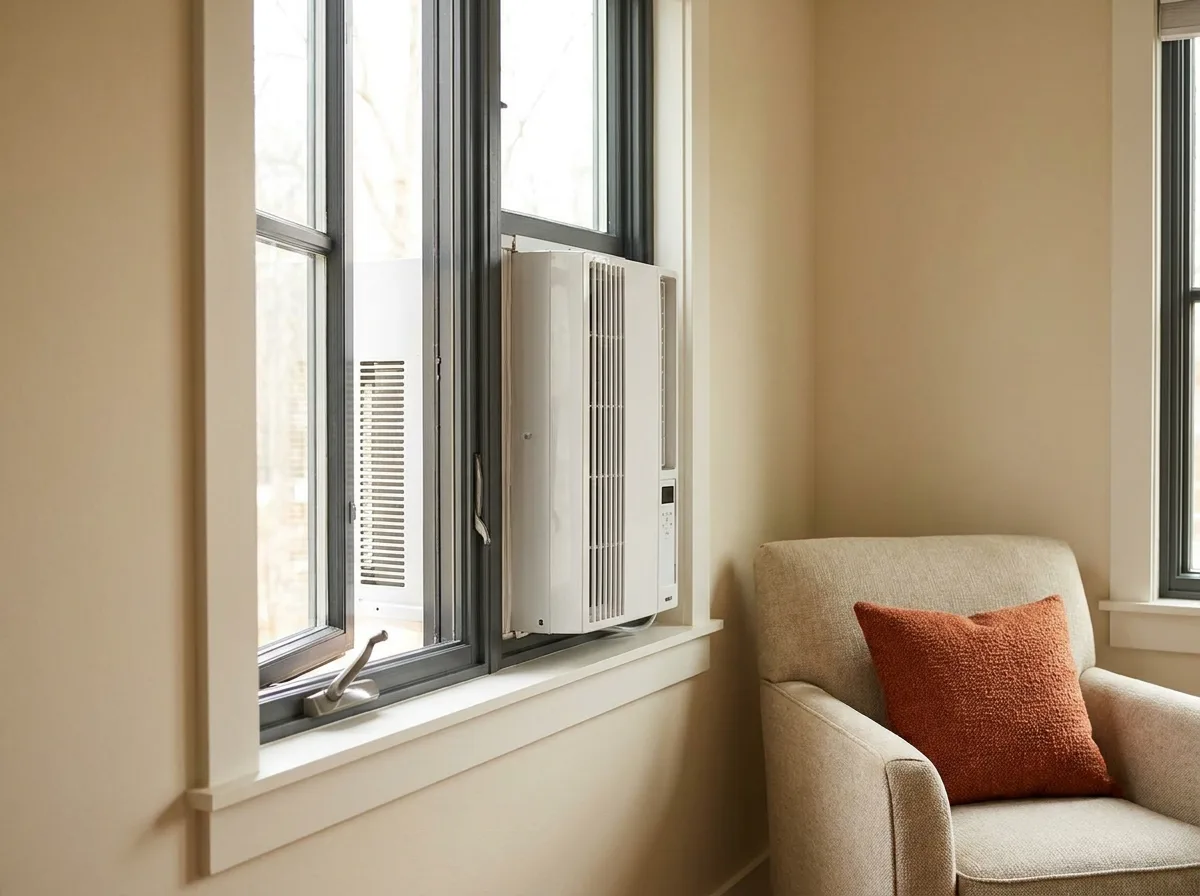
One homeowner thread opens with someone asking for "vertical units," and the top reply points out they mean casement air conditioners.
Here’s a quick way to tell your window apart:
- Double-hung: the sash slides up and down. A standard wide box unit is the usual fit.
- Side-sliding: the sash glides left and right in a track. A slim slider or casement unit fits.
- Casement: a crank swings the sash outward like a door. Slim casement units are made for this.
Some retail pages for the vertical window air conditioner category stuff portable and tower coolers under "vertical" too. Ignore those. They sit on the floor and don’t mount in a window at all.
How Do You Measure Before Buying a Vertical Window Air Conditioner?
Measure the clear opening, the glass-free gap you can actually fill, not the unit’s box. Record width, height and sill depth in inches. Then compare those numbers to the maximum and minimum window sizes printed on the product page, and check that your outlet matches the plug.
A casement unit might top out around 21 inches wide, and plenty of old windows run narrower than that.
A common version of this mistake: someone orders a vertical window air conditioner that "fits a 23 inch window" and never checks the sill depth. The unit rests crooked, the gap leaks, and the bracket can’t grip. Measure three things: width, height and depth.
Then check power. Smaller units use a standard 115 volt outlet. Larger ones can need 208 or 230 volts, according to Home Depot’s buying guide. Skip the extension cord. A cord that runs hot is a fire risk, and an AC that keeps tripping the breaker is telling you the circuit is already loaded. Wiring changes belong with a licensed electrician, and local codes vary.
How Many BTUs Does a Vertical Window Air Conditioner Need?
Match capacity to floor area. Energy Star’s chart starts at 5,000 BTU for 100 to 150 square feet. Home Depot’s guide puts 100 to 350 square feet at 5,000 to 8,000 BTU, and 351 to 550 square feet at 9,000 to 12,000 BTU. Adjust for sun, people and kitchens.

Energy Star suggests trimming capacity by about 10 percent for a heavily shaded room and adding about 10 percent for a very sunny one. A kitchen adds roughly 4,000 BTU. Extra occupants beyond two add more.
| Room situation | Typical starting range | Why it shifts |
|---|---|---|
| Small bedroom, 100 to 150 sq ft | About 5,000 BTU | Shade lowers it |
| Medium room, up to 350 sq ft | 5,000 to 8,000 BTU | Sun raises it |
| Large room, 351 to 550 sq ft | 9,000 to 12,000 BTU | Open plans add more |
Now the catch. A vertical window air conditioner, meaning casement and slider models, are mostly 5,000 to 10,000 BTU, and few go past about 12,000. In an open living room with a kitchen, you may need more than one slim unit can deliver.
Bigger isn’t better. An oversized unit cools quickly, shuts off, and leaves the air clammy. Set the thermostat near 78 degrees, as Energy Star suggests.
How Loud Is It, and What Does It Cost?
A vertical window air conditioner runs louder than people hope and quieter than most portables. Home Depot calls 54 decibels or below quiet. Retail prices for window units in Walmart listings run from about $160 to $630. Budget models sit at the bottom, while inverter and U-shaped designs sit near the top.
Listing prices checked on one day showed a Frigidaire 10,000 BTU unit from $159, an LG 10,000 BTU model from $252 and a Midea 8,000 BTU U-shaped model at $398. Those numbers will move.
Owners on forums report off-brand units failing within a year or two, including a refrigerant leak. Treat that as a pattern, not a rule. Check the warranty and keep the original box, because returns usually need it.
An inverter model, which adjusts its speed instead of switching on and off, tends to hum steadily. Sleep mode helps. If you wake at every click, read the decibel rating before the star rating.
How Do You Install One Without Gaps?
Install it in six steps: confirm fit, assemble the bracket, seat the unit, extend the side panels, seal every gap with foam or weatherstripping, then test. Plan on a rough estimate of an hour or two with a helper. Energy Star notes that a poorly installed unit can leak as much air as a six-square-inch hole.
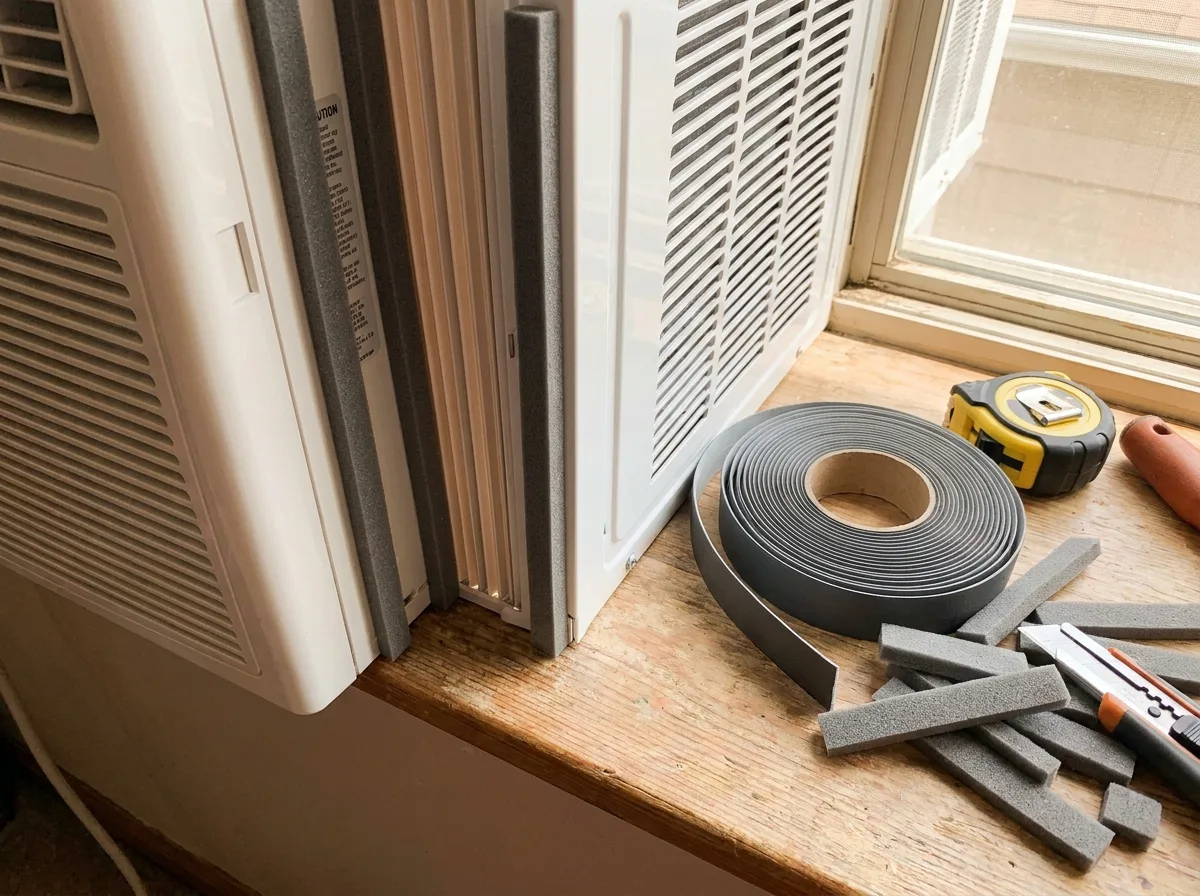
- Check the unit against your measurements one more time.
- Fit the support bracket or sill rail from the kit.
- Lift the unit into place with a second person. These weigh enough to hurt you.
- Pull the side panels out until they touch the frame.
- Seal the edges with foam strips or weatherstripping.
- Plug in, run it for 15 minutes, and feel for leaks.
Most units should lean slightly outward so condensate drains outside. Follow the manual.
Upkeep is short. Rinse the filter every month or so while the unit runs, and keep the drain hole clear so water doesn’t back up. In winter, remove the unit or cover it from outside, and check the lease or HOA rules, since some buildings restrict window units or require them to be removed in the off season.
What If Your Window Is Narrower Than Every Unit?
Rank your options. A slim casement unit around 5,000 BTU fits the narrowest openings. After that, a dual-hose portable, a ductless mini split, or a custom plywood panel around a standard unit can work. Each trades cost, noise and effort differently.
Say a renter has an 18 inch side-sliding window and 150 square feet to cool. Here’s how I’d rank the routes:
- Small casement unit: cheapest, and one reported 5,100 BTU model fits under 18 inches. Capacity is limited.
- Plywood panel with a standard unit: gives you a wider selection. One homeowner reports a plywood and aluminum flat stock fix that held for years. Seal it with silicone, and check your lease first.
- Dual-hose portable: no window fit needed, but you still need a vent kit and floor space.
- Mini split: best performance, with prices from about $400 to $2,000 in forum anecdotes, plus professional installation.
The panel is worth trying first if the lease allows it, before spending big on a vertical window air conditioner. One safety note: don’t block the only escape window in a bedroom. Keep any panel removable, and check local fire code and your lease.
Can You Put a Window Air Conditioner in a Casement Window?
Yes, with a casement-specific unit, or by building a panel in the opened sash. Remove or lock the crank so the sash can’t swing. Fill the gap with plywood cut to size, seal with silicone, and add a security bar. Always check your lease or HOA rules first.
Standard boxes need a flat sill and a sash that closes down on top. A crank-out window offers neither. That’s why casement units exist.
The specifics are the crank and the sash. Casement units usually sit in the opened sash area, so the crank arm must clear the unit and the sash must be secured so it can’t swing in wind. A unit that is loose in the frame is also an easy entry point, so add a bar or pin lock that stops the sash from being pushed in from outside. Panels built for this window should stay removable so the opening can still serve as an emergency exit, and local code and your lease may have rules.
Vertical Window Unit, Portable or Mini Split: Which Wins?
Choose by window and room. A vertical window air conditioner is the cheapest fit for small rooms with slider or casement windows. A dual-hose portable suits windows nothing fits. A mini split suits large or permanent spaces. Judged on cost, capacity, noise and effort.
| Option | Upfront cost | Capacity | Best for |
|---|---|---|---|
| Vertical or casement window unit | Lowest | Up to about 12,000 BTU | Small to medium rooms |
| Dual-hose portable | Low to mid | Mid | Windows that fit nothing |
| Ductless mini split | Highest | High | Big rooms, long-term use |
| Panel and standard unit | Low | Mid to high | Narrow windows, handy owners |
Forum posters argue that portables are about half as efficient as window units. That’s an anecdote, so verify specs before you decide. Single-hose portables also pull warm air back in, which hurts. If you go portable, a dual-hose design is the one most posters praise.
Sun control is the cheapest upgrade in any of these setups. Blackout curtains or reflective window film on the sunny side cut the heat load, which Energy Star’s sun adjustment of about 10 percent reflects.
Is a Ruud or Bryant Air Conditioner a Window Unit?
No. Ruud and Bryant make residential central air conditioners and heat pumps, not window units. If a search led you to those names, you are really looking at a whole-house system that runs through ducts and a thermostat. Window units are different, because they cool one room and plug straight into a wall outlet.
If a whole-house system is on your mind, you’ll want to see how a big HVAC upgrade is planned and priced before you compare central air to a window unit.
Frequently Asked Questions
Is a vertical window air conditioner the same as a casement window air conditioner?
Mostly, yes. Retailers use "slider" and "casement" for the tall, narrow design, while "vertical" is a shopper’s label. Both mount in windows that open sideways or outward. Always read the min and max window size on the product page, since two units with the same name can differ by several inches in width.
Can I use a regular window AC in a sliding window?
Yes, but only with a custom fix. A standard unit needs a flat sill and a sash that closes on top. In a side-sliding window you’d build a panel, usually plywood, and seal the leftover gap. Otherwise buy a slider or casement model and skip the carpentry.
What size AC do I need for a 150 sq ft bedroom or 350 sq ft room?
Roughly 5,000 BTU for 150 square feet, and 5,000 to 8,000 BTU up to 350 square feet. Adjust for conditions. A very sunny room may need a step up, a heavily shaded one can drop a step, and a kitchen in the same space adds about 4,000 BTU. Measure floor area first, then adjust.
Can a window air conditioner heat a room?
Some can. Heat-pump or heater models exist, but most basic units only cool. Check the product listing for a heating mode before buying, because a cooling-only unit can’t run backward. Heater models usually cost more, so decide whether you want one machine for both seasons or a separate space heater.
Do I need professional installation?
Often not. A window unit is commonly a one- to two-hour job with a helper and basic tools, as a rough estimate. Hire help if the unit is heavy, the window is on an upper floor, or you need electrical changes. Wiring and new circuits require a licensed electrician, and local codes vary, so ask before you cut or drill.
Are portable ACs really worse than window ACs?
Often, yes. Portables are generally less efficient, and single-hose designs pull warm air into the room as they exhaust it. A dual-hose portable narrows the gap but still takes floor space. Choose one only when no window unit fits. If your breaker complains, our breaker troubleshooting guide covers causes.
Why isn’t my unit cooling the whole apartment?
It was probably never meant to. One window unit cools one room, and a 5,000 to 12,000 BTU unit can’t beat a big open plan. Close doors, block the sun, and match capacity to the actual room. Add 4,000 BTU if the kitchen sits in the same space.
Can I plug it into an extension cord?
No. Check your manual, since many manufacturers advise plugging directly into a wall outlet. Window units draw a lot of current, and a cord can overheat. This myth survives because cords look harmless. If the plug doesn’t reach, have an electrician add an outlet instead of stretching a cord across the room.
Is it normal to hear water in the unit?
Yes, a gurgle or drip outside is normal. The unit collects condensate and often sprays it onto the coil to help cool it. Constant dripping indoors isn’t normal, though. Check that the unit tilts slightly outward, look at the drain hole for blockage, then clean the filter before calling anyone.
How long does a window AC last?
Lifespan varies widely, and owners report cheap units failing early while better ones last longer, so the warranty matters. Read its terms before buying, and keep the receipt and original box in case a claim or return is needed. Clean the filter monthly during use and store the unit properly in winter to get the most from it.
Conclusion
A vertical window air conditioner is a good answer to a narrow question. Measure the clear opening first, name your window type, match BTUs to the room, and the right option usually shows itself. When nothing fits, a plywood panel, a dual-hose portable or a mini split fills the gap, and sun control makes any of them work better.
The 11 p.m. bedroom from the start doesn’t need the biggest machine. It needs the right fit, a sealed edge and a curtain that stops the afternoon sun. Your next step is simple: grab a tape measure and write down three numbers. Then see the thermostat reset steps if your home’s controls need a refresh before summer.
So what’s your window really measuring: the opening you thought you had, or the one you’ve got?