Breaker Keeps Tripping? Read the Trip Pattern Before You Reset It
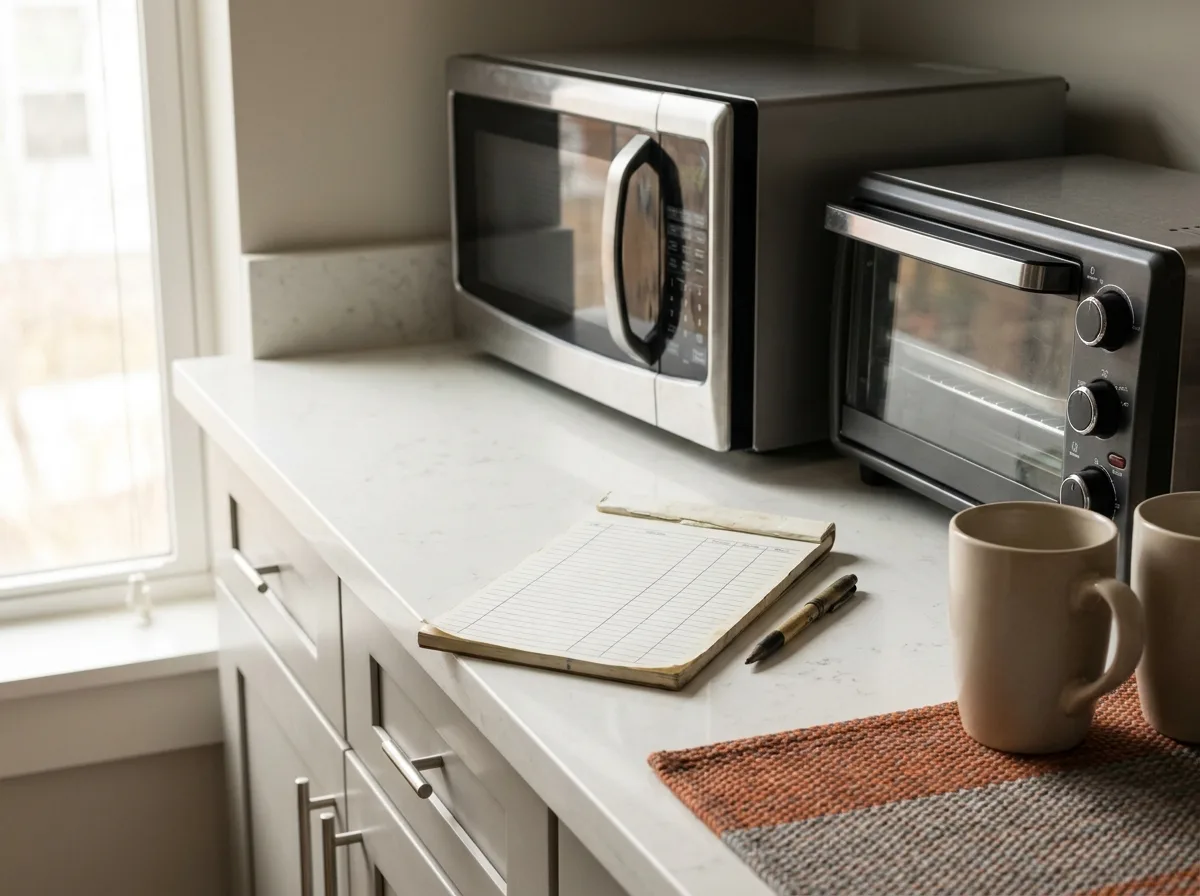
Say it’s 9 pm. The microwave is humming, the toaster oven is warming a snack, and the kitchen goes dark. You walk to the panel, flip the switch back, and the lights return. Ten minutes later it happens again. By the third reset you’re pushing that handle a little harder than necessary.
When a breaker keeps tripping, the instinct is to treat it like a stuck door and push harder. Don’t. In most homes the breaker isn’t broken. It’s reporting something, and how it reports (instantly, after a few minutes, or only when it rains) is the clue that points to the cause.
This guide teaches you to read that clue. You’ll get the usual culprits, a safe reset routine, a method for hunting down the guilty appliance, the wattage math nobody explains, and the line where DIY ends and a licensed electrician begins. Nothing here asks you to open the inner panel cover with the live parts. Ever. At most you’ll open the hinged outer door to read labels or press a test button.
Executive Summary
When a breaker keeps tripping, one clue, the time between the reset and the next trip, shrinks the cause to a short list. A trip within a second or two points to a short circuit or ground fault. A trip after a few minutes points to an overload. A trip that comes and goes over days points to moisture, a loose connection, or a tired breaker.
Along the way you’ll get a safe reset routine, an unplug-and-add-back method, a watts table for 15 and 20 amp circuits, and a plain explanation of why GFCI and AFCI breakers can trip with nothing plugged in. One surprise: swapping in a new breaker rarely fixes the problem, because the breaker is usually the messenger.
The biggest worries are danger and cost. Resetting once is fine. Resetting again and again is not, and a warm breaker, a burning smell, or a main breaker that won’t hold all mean stop and call a licensed electrician. Local codes vary, so treat this as general information, not a replacement for a pro on site.
What Does It Mean When Your Breaker Keeps Tripping?
A breaker trips when a circuit carries more current than its wire can safely handle, or when current takes a path it shouldn’t. Five causes cover nearly every case: an overloaded circuit, a short circuit, a ground fault, a loose or worn connection, and a tired breaker. The trip is the safety device working, not the failure itself.
A standard breaker holds two protections. A heat-sensitive strip bends slowly under a moderate overload and flips the switch. A magnet reacts to a big surge and flips it instantly. That’s why one breaker can trip after ten minutes or in a split second.
Quick glossary. An overload is too many things drawing power at once. A short circuit is a hot wire touching a neutral wire, so current surges. A ground fault is current leaking toward ground, often through water.
Here’s the contrarian bit. The breaker you’re annoyed with is usually the most honest part of the house. The scary case is the breaker that doesn’t trip when it should.
How Fast Does It Trip, and What Does That Tell You?
Time-to-trip is your best free diagnostic. A trip the moment you reset or plug something in usually means a short circuit or ground fault. A trip after seconds or minutes under load usually means an overload. A trip that shows up randomly over days or weeks suggests moisture, a loose connection, or a failing breaker.
Most guides list causes and stop there. If your breaker keeps tripping, grab a pen and note the delay first. It tells you where to look before you touch anything.
| Trip pattern | Most likely cause | First thing to check |
|---|---|---|
| Instantly on reset | Short circuit or ground fault | Unplug everything on that circuit, then reset once only |
| Instantly when one item is plugged in | Faulty appliance, cord or outlet | Try that item on another circuit |
| After 1 to 15 minutes under load | Overload | List what runs together, then split it up |
| Only at certain times (night, rain) | Moisture, a timer-driven load, or a cycling motor | Note the time and what switched on |
| Random, days apart, warm breaker | Loose connection or aging breaker | Stop and call an electrician |
One more wrinkle. Breakers follow a trip curve, so a mild overload can run a surprisingly long time before the strip heats enough to flip. One Reddit poster described two 1,500-watt air fryers on a 20 amp circuit that didn’t trip. Intermittent doesn’t mean innocent.
Is It Dangerous If a Circuit Breaker Keeps Tripping?
A single trip is not dangerous. It is the safety system working. The danger is repeated resetting without finding the cause, because a hidden fault can overheat wiring inside a wall. A breaker that feels warm, buzzes, smells burnt, or won’t stay reset is a stop sign, not a puzzle.
Most people get this backwards: resetting isn’t the sin, ignoring the pattern is. If a circuit breaker keeps tripping and you keep forcing it back on, the same wire carries the same problem again. Heat builds where a connection is loose, and a small fault can grow.
Treat these as "stop and call a licensed electrician" signs:
- A burning or fishy smell near the panel, an outlet or a switch
- Scorch marks, melted plastic, or a warm or hot breaker face
- Crackling, buzzing or sizzling sounds
- A breaker that trips on every reset with everything unplugged
And a hard line for anyone: never tape a breaker handle down, never swap in a bigger breaker, and never remove the panel cover to "have a look." The panel has live parts even with a breaker off. Your phone’s flashlight is not a safety plan.
What Should You Do Right After a Breaker Trips?
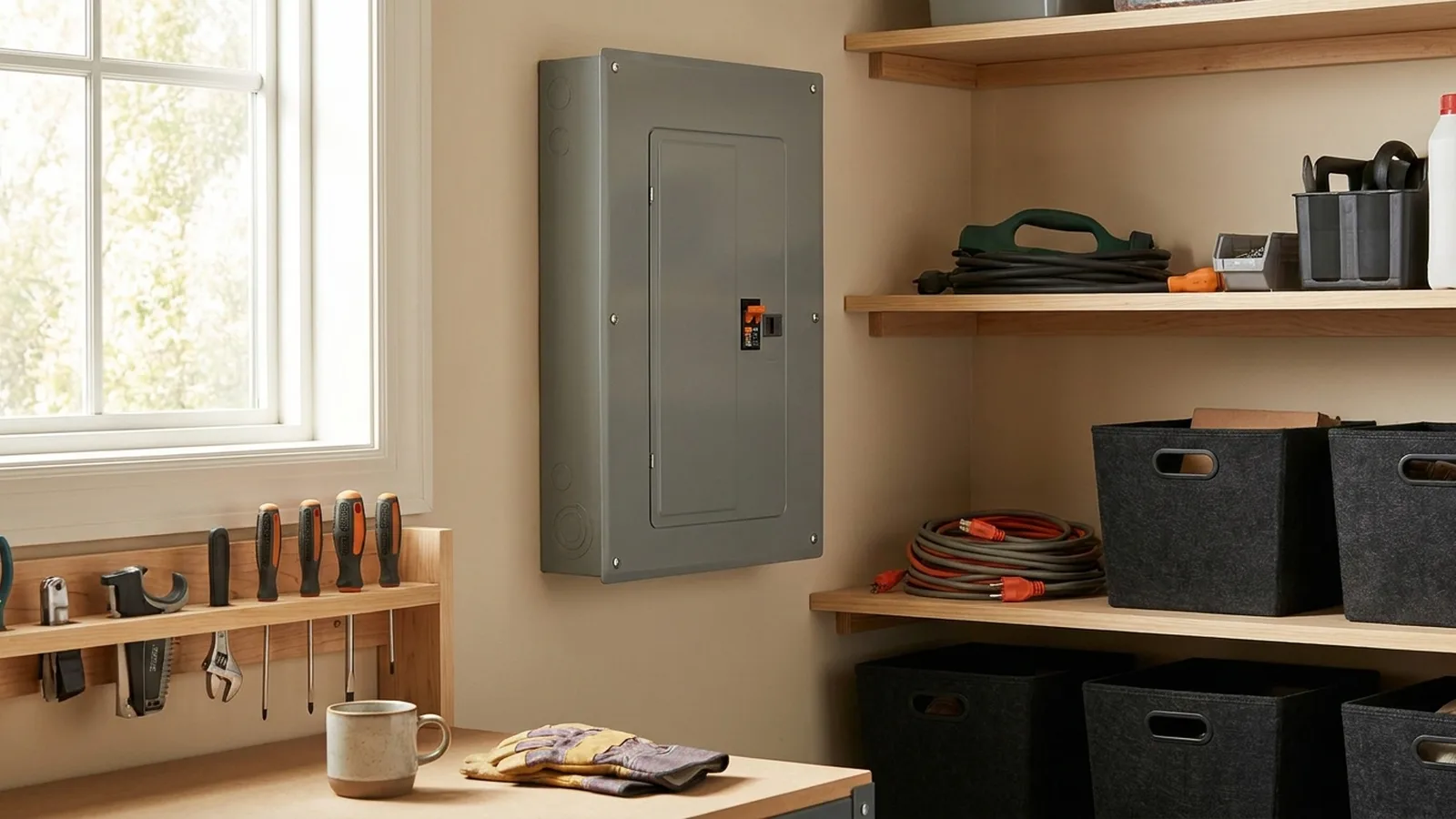
Stay calm, then turn off or unplug whatever was running on that circuit. Push the breaker handle firmly to OFF first, then back to ON, standing to the side of the panel with dry hands. If it holds, you have time to investigate. If it trips again straight away, stop and leave it off.
A tripped breaker usually sits in a middle position, slightly out of line with its neighbors. It won’t latch if you just shove it toward ON, because moving it fully to OFF resets the internal mechanism. The routine takes about two minutes:
- Note what was running and what time it is.
- Unplug everything on that circuit, including lamps and chargers.
- Push the breaker fully to OFF, then to ON.
- If it holds, leave the loads unplugged and move on.
- If it trips with nothing connected, leave it OFF.
One reset is routine. Three, with nothing changed, is a signal.
How Do You Find the Appliance or Outlet Causing It?
Use the add-back method. Unplug everything on the dead circuit, reset the breaker, then plug items in one at a time, waiting two to three minutes between each. The device that trips the breaker, or the item that makes it trip once the load builds up, is your suspect. Count lamps, chargers and power strips too.
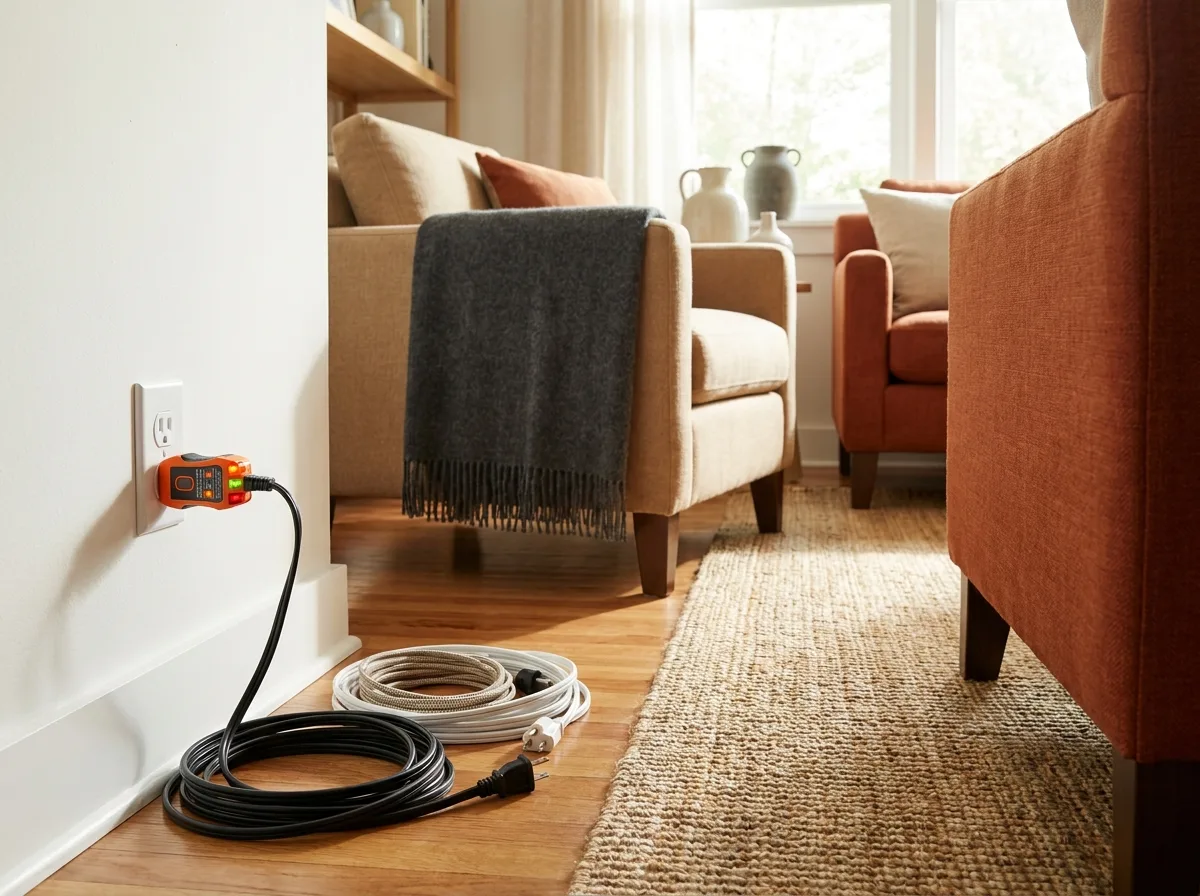
Whenever a breaker keeps tripping, the r/electrical crowd gives this advice in almost the same words every time: unplug everything, reset, and add things back one by one. Even a light bulb counts as a load. The waiting matters because an overload takes minutes to heat the breaker’s strip, so a quick poke-and-plug misses it.
Say a homeowner has a living-room circuit that trips every evening. She adds the TV (fine), the lamp (fine), then a space heater, and two minutes later… pop. The fix isn’t a new breaker. It’s moving the heater to a wall of its own.
Useful gear, none of it expensive: a common plug-in outlet tester to flag wiring errors, and a plug-in watt meter to see what a device really pulls. If the trip follows the appliance to another circuit, the appliance is the problem.
What If the Breaker Keeps Tripping With Nothing Plugged In?
"Nothing plugged in" rarely means nothing is connected. Hardwired lights, switches, smoke detectors, a worn outlet, moisture in a box, or downstream GFCI outlets can all put a load or a fault on the circuit. Newer AFCI and GFCI breakers can also trip on their own sensing faults, with blink codes on the breaker.
A common version of this story goes like this. A bedroom breaker pops the second a vacuum is plugged in, then trips immediately on reset with the vacuum long gone. In one homeowner thread, the cause was a worn outlet whose loose hot lead had shifted. Replacing that receptacle fixed it. Not the breaker. Not the vacuum.
Think through what’s still on a "dead" circuit:
- Worn or backstabbed outlets. Cheap push-in connections loosen over the years, and a loose hot wire can arc or touch a box.
- Hardwired loads. Ceiling fans, bath fans and recessed lights draw power with nothing plugged in.
- Moisture. A damp box or outdoor fixture creates a path to ground.
- AFCI or GFCI breakers. These watch for fault signatures, not just amps. Blink codes on the breaker tell a technician why it tripped.
The Electrical Safety Foundation International recommends testing AFCIs monthly with the TEST button. If it doesn’t trip when pressed, a licensed electrician should replace it.
Why Does Your Breaker Trip in Only One Room?
A breaker trips in one room because that room’s circuit has a heavier load, a fault, or both. Rooms often share circuits with others, so the real map may surprise you. Map your panel, note what each breaker feeds, and log trip times. That record helps you and any electrician find the problem faster.
A small project almost nobody does, and every electrician wishes you had. It pays off most when a breaker keeps tripping in the same room. Spend 20 minutes with a helper and a lamp. Flip each breaker off, one at a time, and write down what loses power, including outlets, ceiling lights and odd corners. Put the results on masking tape next to the panel.
You’ll often find that "the master bedroom" also runs the hallway lights and a garage outlet. The map explains why a trip feels random.
Then start a log in a phone note: date and time, what was running, the weather for outdoor circuits, and how long since the last reset. Handing an electrician that log can shorten a diagnostic visit. It turns "it trips sometimes" into "it trips within five minutes of the space heater kicking on."
How Many Watts Can a 15 or 20 Amp Circuit Really Handle?
A 15 amp circuit at 120 volts can deliver about 1,800 watts at its limit, and a 20 amp circuit about 2,400. For loads that run for hours, the common 80 percent rule limits you to roughly 1,440 and 1,920 watts. Add everything running on the circuit, not just the biggest appliance.
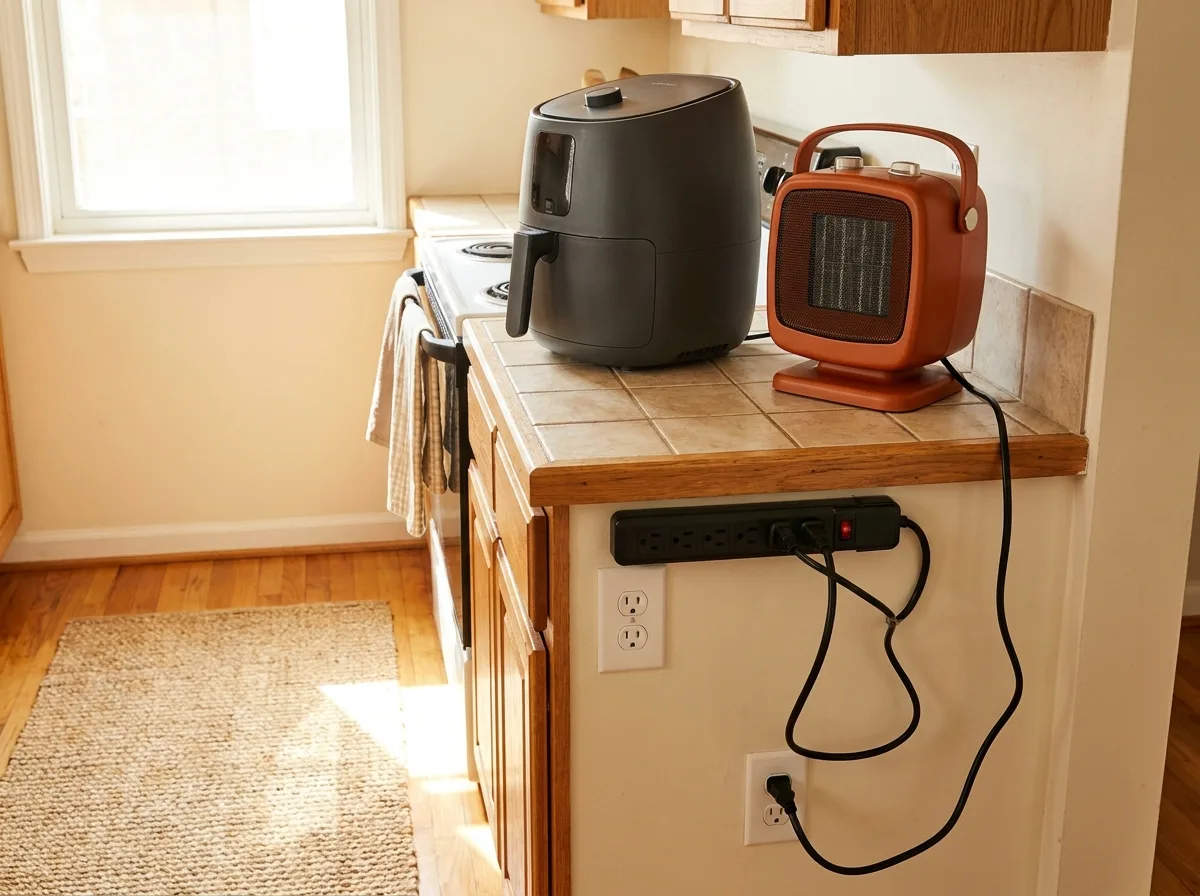
The math is simple: watts equal volts times amps, so 15 amps times 120 volts gives 1,800 watts. The 80 percent guideline for continuous loads comes from National Electrical Code practice, and it exists because a breaker running at its limit for hours gets hot. Treat these as rules of thumb, not guarantees.
| Appliance | Typical draw | Notes |
|---|---|---|
| Space heater | About 1,500 W | Gets its own circuit if you can |
| Hair dryer | Up to 1,800 W | Enough alone to challenge a 15 amp circuit |
| Microwave | Roughly 1,000 to 1,500 W | Check the label on the back |
| Air fryer | Often rated near 1,500 W | Two on one circuit is asking for trouble |
| Refrigerator | Low running draw, but start-up surge about 3 to 4 times running watts | The compressor kick can tip a tight circuit |
"Rated 1,500 W" doesn’t mean a constant 1,500 W, because heating elements cycle. And a fridge’s start-up surge is why a seemingly fine circuit trips only when the compressor kicks in.
Wire size matters too. The standard pairing is 14 AWG wire with a 15 amp breaker and 12 AWG wire with a 20 amp breaker. That’s why you never "upgrade" the breaker to fix a trip. Thin wire can overheat before a bigger breaker ever trips.
Why Does Your GFCI Outlet Keep Tripping?
A GFCI outlet trips when it senses current leaking to ground, even a tiny amount, often through water. The usual culprits are moisture in an outdoor or bathroom outlet, a worn GFCI, or an appliance with damaged insulation. Press TEST and RESET monthly, and replace a unit that won’t hold.
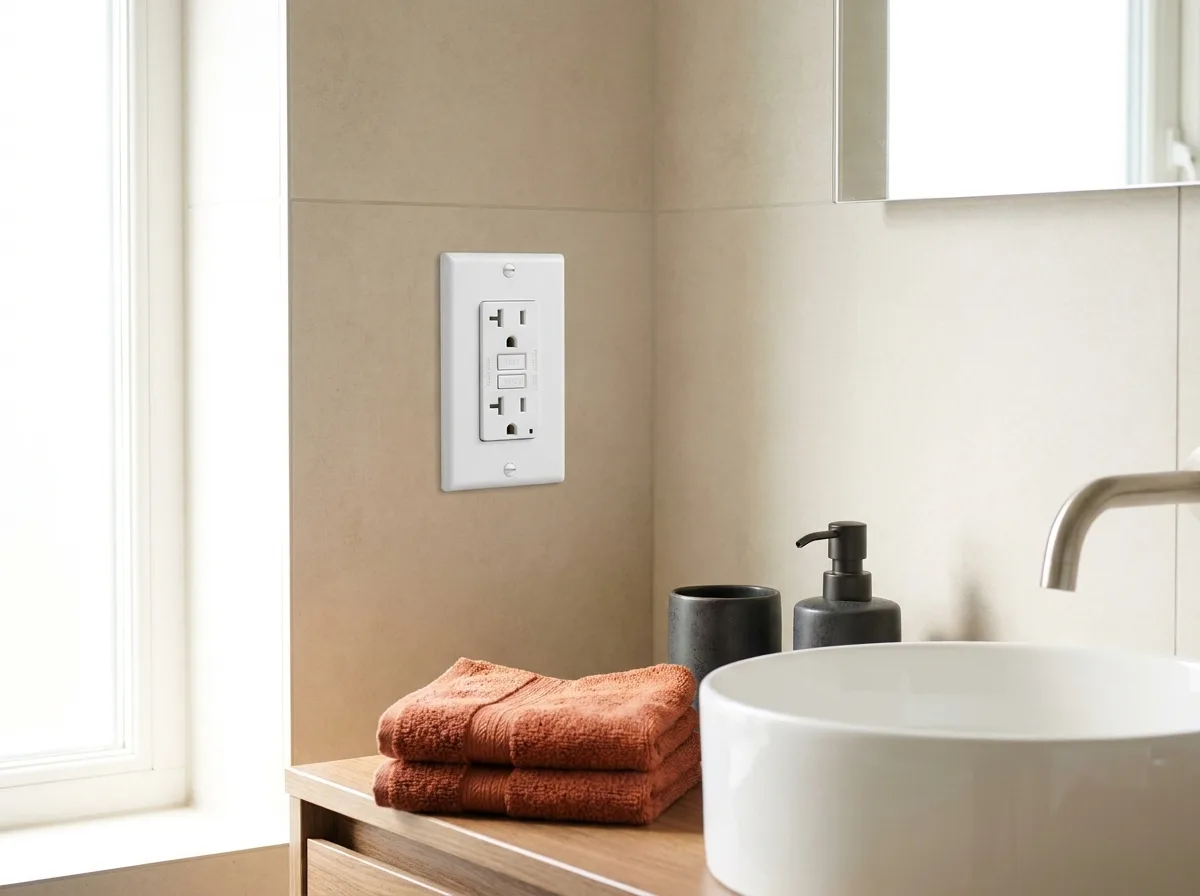
GFCIs (ground fault circuit interrupters) protect you from shock, so they react to tiny leaks. According to the National Electrical Code’s GFCI rules, as summarized by IAEI Magazine for the 2020 edition, protection is required in bathrooms, garages, outdoors, crawl spaces, basements, kitchens, laundry areas and near sinks. Recent editions widened that, so older homes often have fewer.
Why they trip repeatedly:
- Moisture. Outdoor outlets without an in-use cover collect rain. One Reddit thread described a holiday-light GFCI that tripped even with the lights unplugged. Answers pointed at a corroded outdoor outlet, fixed with a weather-resistant receptacle and a proper cover.
- Downstream outlets. One GFCI often protects other outlets on its line, so a fault in another room can trip it.
- Age. If TEST doesn’t trip it, or RESET won’t hold, replace it.
- Appliances. Heaters and pumps with damaged cord insulation can leak.
I’d leave the swap to a pro unless you’re comfortable shutting off the breaker and confirming the power is dead first. GFCI protection matters most in wet rooms, so if you’re planning a bathroom remodel, ask about it before the new fixtures go in.
What If the Breaker Keeps Tripping After a Storm or When It Rains?
Moisture is the usual reason. Water that gets into an outdoor outlet, a fixture, a buried cable or a damp junction box creates a path to ground, and the breaker or GFCI trips when the leak is big enough. It resets fine once things dry out, which makes it feel random.
Take a typical backyard. A patio outlet powers a pump and a string of lights. A storm rolls in, the breaker trips, and it resets cleanly the next sunny morning. A DIY forum thread described the same pattern and pointed at water in cable insulation or string-light sockets. Lights sold for temporary use break down when left up for months. A dry reset is not proof of a fix.
Unplug all outdoor loads, let things dry, then plug in one item at a time over several days. Check for cracked or missing in-use covers and damaged cords. If the trip continues with every outdoor load unplugged, the water is probably in the wiring, and that’s a job for a licensed electrician.
Can a Breaker Go Bad, and Should You Just Replace It?
Yes, breakers wear out, but replacing one rarely cures a trip because the breaker is usually reporting a real problem. Expect a lifespan of decades, with age, heat and brand mattering. Swap one only after the circuit has been checked, and have a licensed electrician do it because the panel’s internals are live.
When a breaker keeps tripping, people blame its age. Online sources disagree on lifespan, 20 years on one page and 30 to 40 on another, so I wouldn’t trust either number. Heat, vibration and loose terminals all age a breaker. One that trips under normal load, feels warm, or won’t stay reset has earned suspicion.
A common mistake, and its fix. A homeowner swaps an outdoor breaker for an identical one, and the same trip returns a week later. The new breaker was fine. Test the circuit first, swap the breaker last.
Panels to know about. Federal Pacific Stab-Lok and Zinsco panels have a known reputation for breakers that can fail to trip when they should. That’s the scary version of this topic, because silence is the danger. If your panel carries one of those names, ask an electrician about replacement. If a breaker is ever replaced, use only one listed for your specific panel make and model.
What Would Cause the Main Breaker to Keep Tripping?
The main breaker protects the whole panel, so it trips on a very large overload, a serious fault on a feeder, a failing main breaker, or a problem on the utility side. Call a licensed electrician or your utility right away. This is not a DIY job, and you should never reset it repeatedly.
A branch breaker handles one circuit. The main handles everything combined, and a healthy one usually holds under normal use. Ask yourself three things. Did the whole house go dark while the main stayed on? That’s often the utility side, so call the power company. Does the main trip again with every branch breaker off? That suggests a fault in the main or the feeders. Is it warm, buzzing or marked with burn spots? Treat that as an emergency. Panel work usually needs a permit and inspection, and codes vary by location, which is one more reason this belongs to a licensed pro.
When Do You Need an Electrician, and What Will It Cost?
Call a licensed electrician if the breaker trips with everything unplugged, feels hot or smells burnt, is part of a Federal Pacific or Zinsco panel, trips after a clean add-back test, or involves the main breaker. Costs vary widely by area, so ask for the service-call minimum before anyone arrives.
I won’t make up a price list. Rates depend on region, time of day and panel type. One Reddit poster was quoted $400 for a 15-minute GFCI swap, and replies called it a minimum service fee. That’s an anecdote, not an average, but it shows the pattern: you pay for the visit, not the minutes.
Decision rule: DIY is reasonable for unplugging devices, add-back testing, panel mapping and pressing a GFCI’s test button. Call a pro for anything inside the panel, a new breaker or circuit, burning smells, aluminum wiring, and repeated unexplained trips.
To avoid overpaying, bring your map and log, ask whether the fee includes diagnosis, and get a written quote before further work. If a company says you need a panel upgrade, ask what test shows it.
A furnace circuit that trips is its own problem. If you’re replacing a furnace, it can be the moment to ask whether it has a dedicated circuit.
How Do You Stop It From Happening Again?
Spread heavy loads across circuits, give big heaters and countertop cookers their own outlets, replace worn receptacles, test GFCI and AFCI devices monthly, and keep a trip log. If your panel is old or labeled Federal Pacific or Zinsco, plan an evaluation. Prevention is mostly about load, moisture and maintenance.
If a breaker keeps tripping, a prevention plan that fits in a weekend looks like this:
- Map the panel and note where heavy gear lives.
- Move the heavy hitters. Put the space heater, air fryer and microwave on different circuits.
- Skip daisy-chained cords. Extension cords and cheap power strips add heat, and a surge protector isn’t a circuit upgrade.
- Replace tired outlets. If plugs fall out or a faceplate feels warm, call an electrician.
- Cover outdoor power with in-use covers and weather-resistant receptacles.
- Test monthly. Press TEST and RESET on every GFCI and AFCI.
- Think dedicated circuits for heaters, window AC units and big kitchen appliances.
Say a family hits a nightly 9 pm trip because the microwave, toaster and coffee maker share one kitchen circuit. Moving the toaster to the other counter circuit costs nothing, and in many homes that’s the whole fix.
One more thing. If a thermostat goes blank after a trip, check the furnace circuit before you try a Honeywell thermostat reset, because a tripped breaker can look like a dead thermostat.
Frequently Asked Questions
How many times can you reset a tripped breaker?
Once is normal. A second reset is acceptable after you’ve unplugged the load and waited a couple of minutes. If it trips again, stop. There’s no safe magic number, because each reset sends current through the same fault. Repeated trips with nothing connected call for a licensed electrician.
Can a breaker trip damage my electronics?
Usually a trip protects them, because power cuts before overheating builds. The real risk comes from voltage spikes during storms, which a breaker doesn’t stop. A quality surge protector adds a layer, but it won’t fix an overloaded circuit. Unplug expensive electronics while you’re chasing repeated trips.
Can a breaker go bad if it keeps tripping?
Yes. Repeated trips, especially near the limit, heat the internal parts and can weaken the mechanism over time. A worn breaker may trip under a normal load or feel warm. Still, test the circuit before blaming it, since the breaker usually reports a real problem. A licensed electrician should do any swap.
Can I put in a bigger breaker to stop the tripping?
No. The breaker is sized to the wire. Generally, 14 AWG wire pairs with 15 amps and 12 AWG with 20 amps. A larger breaker lets the wire carry current it can’t handle, which can overheat it inside the wall before anything trips. If a circuit needs more capacity, an electrician should add a new one.
Why does my breaker trip when it rains?
Water is the likely cause. Rain can reach outdoor outlets, fixtures, buried cable or damaged cord insulation, creating a leak to ground. The breaker or GFCI trips, then resets once things dry. Unplug outdoor loads, check covers and cords, and call a licensed electrician if it persists with everything unplugged.
Why does only the main breaker trip and not the branch breakers?
That points to the main breaker, the feeder wires or a utility-side issue rather than one circuit. A very large combined load can do it, but a healthy main usually holds, and a failing one may trip below its rating. Call an electrician or the utility. Don’t keep resetting it, and never open the panel cover.
How do I know if it’s the breaker or the wiring?
Test by process. Unplug everything, reset, and add devices back one at a time. If it trips with nothing connected, suspect wiring, a worn outlet, moisture or the breaker. A tripping that moves with one appliance points to the appliance. An electrician with a clamp meter and a multimeter can tell the rest quickly.
Is a warm breaker normal?
Slightly warm under heavy load can happen. Hot, buzzing, discolored or smelling of plastic is not normal. Heat usually means a loose connection, an overloaded circuit or a failing breaker. Turn off the loads, leave the panel closed, and call a licensed electrician if the warmth stays or the breaker feels uncomfortable to touch.
Is it true that a 1,500-watt appliance always pulls 1,500 watts?
That’s a myth. Heating elements cycle on and off, so the draw rises and falls, and overloads can appear and vanish. Many appliances also surge above their label when starting. A single 1,500-watt heater can still overload a 15 amp circuit once a lamp, a TV and chargers join it. Add up everything running, and keep the continuous load near the 80 percent guideline.
Can I replace a breaker myself?
Some homeowners do, but I wouldn’t. Parts inside the panel stay live even with the main off, and the wrong breaker type can fail to trip. Many areas require a permit or a licensed electrician. A GFCI outlet swap is simpler but still needs the power off and checked.
Conclusion
When your breaker keeps tripping, it’s sending a message, and the trip pattern is the language. Instant means a short or ground fault. Minutes means overload. Randomly over days points to moisture, a loose connection or a tired breaker. Read that, and you’re no longer guessing at 9 pm in a dark kitchen.
Back to that 9 pm kitchen. The likely fix was never a new breaker. It was a map, a log, and moving the toaster to another counter circuit. If the pattern stays unexplained, or there’s a warm panel, a smell or a stubborn main, bring in a licensed electrician.
Your next step: grab masking tape and a pen, and label every breaker this weekend. Then, the next time the lights blink, will you reset it blindly, or read the clue first?