Chair Rail Ideas and Styles That Still Look Right in 2026
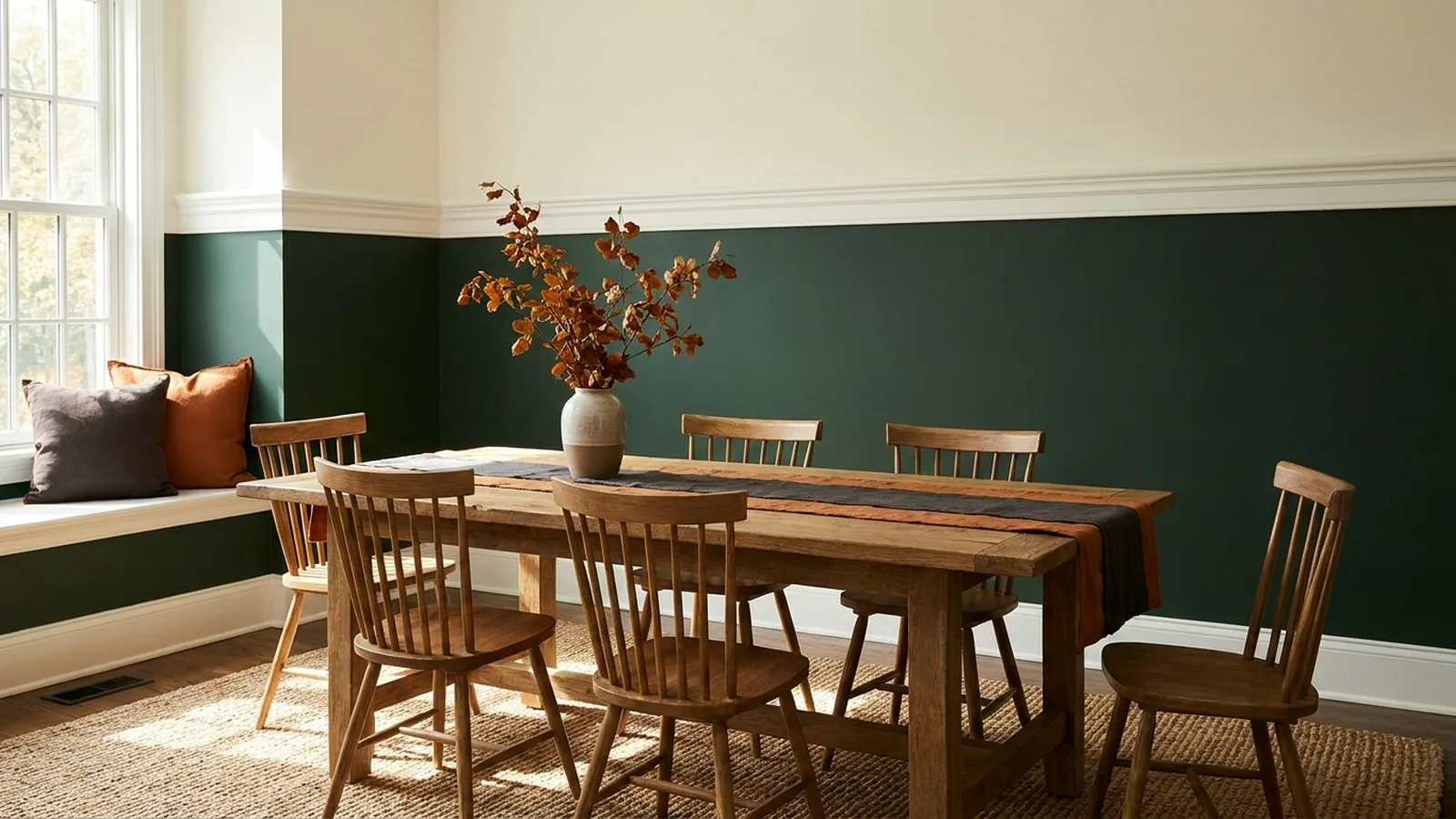
Say you’ve just painted the dining room a deep green, and within a month the wall is scuffed at exactly the height of a chair back. You search for a fix and one phrase keeps surfacing: chair rail. Then a friend tells you it screams 1998. Another says it’s the cheapest way to make a plain box of a room look designed. Who’s right?
Both, sort of. A chair rail, that horizontal band of molding, looks sharp or stale depending on four choices most guides skip: the height against your ceiling, the profile, the paint, and how it meets your doors. Get those right and it earns its place. Get one wrong and guests feel something is off, even if they can’t say what.
This is one part of giving a room character on a budget, alongside ideas like a floating shelf that doubles as wall decor. Below you’ll get the height math, the styles, a verdict on whether it’s dated, cost drivers and fixes for awkward spots.
Executive Summary
A chair rail can still look right in 2026 if you treat it as architecture and not decoration. Pick the height by your ceiling and furniture, not by habit. Choose a simple profile that suits your home. Paint it on purpose. In a standard 8 foot room, stay around 32 to 36 inches, judge taller or shorter rooms by proportion, skip it in a strictly modern space, and check how it meets your door casings before you buy anything.
Three insights run through the guide. First, the 36 inch figure is a habit, not a law, and a rail set slightly low usually beats one set too high. Second, wainscoting wants a cap molding on top, not a rail. Third, jobs rarely fail at the rail itself. They fail at doors, outlets and uneven floors.
The biggest objection is effort and cost. One room is a plausible weekend project for a patient beginner with a miter saw, depending on corners and doors, and prices swing with material and wall length, so you get cost drivers instead of made-up numbers.
What is a chair rail and what is it actually for?
A chair rail is a strip of molding fixed horizontally to a wall, typically 2 to 3 inches tall and placed 32 to 36 inches above the floor, according to Builders FirstSource. Its original job was practical: stop dining chair backs from scraping the plaster. Today it also splits a wall into two zones for different paint or paper.
The chair rail, or chair moulding, was a working part of rooms long before it became a style choice. That explains why old houses often have one in the dining room and nowhere else.
Protection is still a real benefit of a chair rail. If chairs, a vacuum or kids bump the wall daily, the trim takes the hit at the right height. Paint it semi-gloss and it wipes clean.
Dado rail vs wainscoting: what is the difference?
The rail is the single horizontal molding. The dado is the whole lower wall section beneath it, and a dado rail is the British name for the same rail. Wainscoting is paneling that fills that lower section, typically 30 to 54 inches high, and it is finished with a cap molding, not a rail.
People mix these up constantly, even woodworkers.
| Term | What it is | Typical height |
|---|---|---|
| Rail | One horizontal molding | 32 to 36 in |
| Dado | The lower wall zone | Below the rail |
| Wainscoting | Panels filling that zone | 30 to 54 in |
| Picture rail | Molding high on the wall for hanging art | Near the ceiling |
One carpenter opinion worth stealing: finish wainscoting with a cap molding. A rail sitting on top is the classic wrong-trim mistake.
How high should a chair rail be?
For a standard 8 foot ceiling, set it 32 to 36 inches above the floor. In other rooms, judge by proportion, since the right height depends on ceiling and furniture. If the room feels short, go lower. Higher is the riskier error, and slightly low usually looks better than too high.
That last point comes from an old essay on THISisCarpentry, which notes that historic pattern books put rails near 24 inches and that 36 inches became a modern habit. The author’s verdict: too low beats too high.
Say a homeowner has a dining room with an 8 foot ceiling. Painter’s tape goes up at 36 inches, then at 32, and they step back to the doorway. The lower line usually looks calmer and still lands behind the chair backs. Check it in morning and evening light.
Which styles and profiles work best?
The best chair rail style matches your home. Simple flat or gently rounded profiles suit modern farmhouse and transitional rooms. Stepped profiles with beads and coves suit colonial and traditional homes. Keep the width between 2 and 3 inches, and choose a plain profile if you’re unsure.
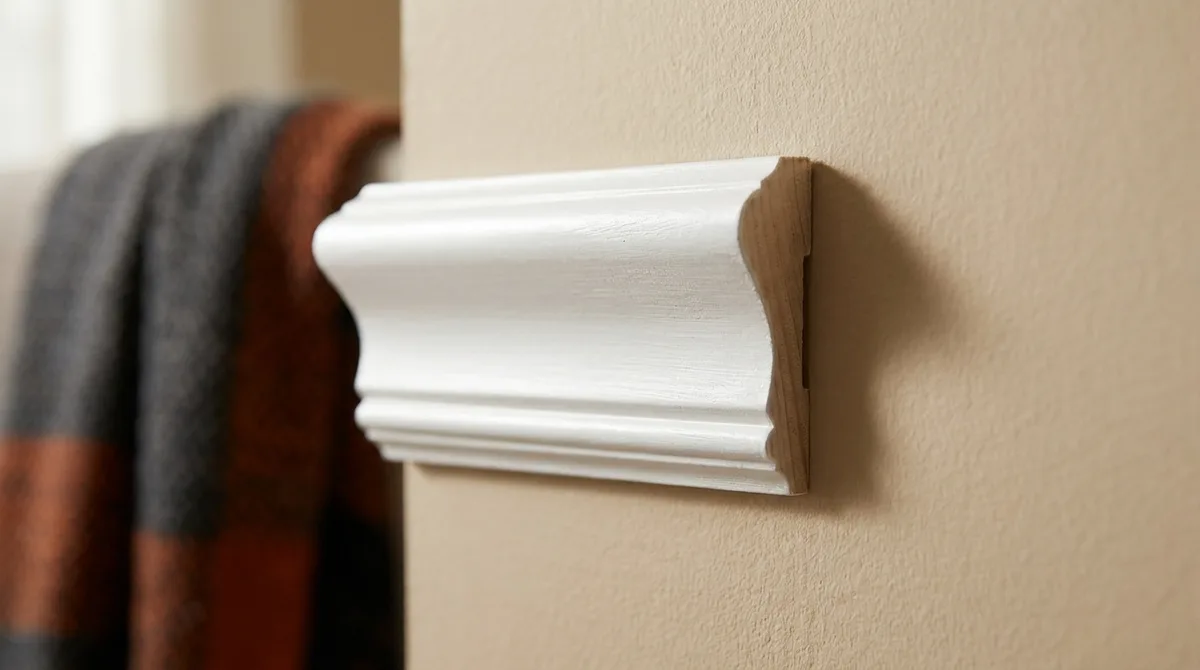
Flat, square-edged profiles read as clean and slightly modern. Rounded ones feel soft in family rooms. Beaded and stepped ones add shadow lines that suit older houses.
Match the baseboard’s family, not necessarily its size. Skinny baseboard under a chunky rail looks top-heavy. My pick for most beginners: a simple cap-style profile around 2.5 inches. It rarely fights anything.
Is a chair rail outdated in 2026?
No, not automatically. It looks dated when it’s too high, too fussy, painted a clashing color, or forced into a contemporary room. In a dining room, hallway or traditional house, with a restrained profile and thoughtful paint, it still reads as classic. In a strictly modern space, skip it.
Builders on Reddit split on this. One owner called a dining room rail "worth every penny." Another skipped it during a new build because it "just isn’t our vibe." Both are valid. Heavy trim can clash with sleek furniture.
Here’s a 2026 move: paint the rail the same color as the wall. It becomes a subtle shadow line, not a loud white stripe. Arched wainscoting is trending, and some owners wonder if it will date fast. A calm rail is the safer bet.
Which rooms look best with one?
Dining rooms, hallways and stairways benefit most, because they take scuffs and have enough wall to divide. Powder rooms and nurseries also work. Skip tiny rooms with many doors and windows, and open-plan spaces where the line would chop a continuous view.
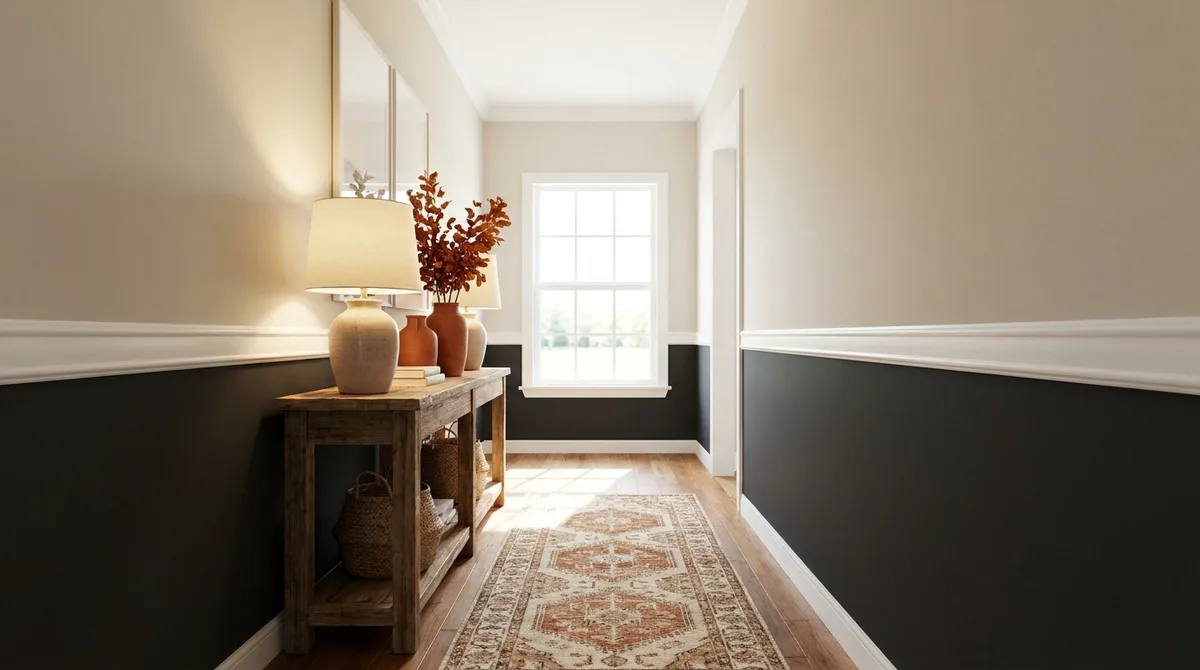
In a dining room with a statement table, a quiet rail keeps the walls from competing with it. In a hallway, the trim doubles as a scuff shield for bags and strollers.
Powder rooms are a fun exception. Paper above, paint below, rail between often finishes a small bath. In a bedroom, check that furniture tops clear the line, for example with a classic dresser pushed against the wall.
What colors and finishes work around it?
Use satin or semi-gloss for easy cleaning. Classic choice: white trim over a deeper wall color below. Modern choice: match the rail to the wall for a soft shadow line. Many designers like darker paint below and lighter above, which feels grounded.

White or off-white trim against a mid-tone wall highlights the molding, which is what you want in a traditional room. To make it whisper, match the wall instead.
Caulk the top and bottom edges before painting. A caulked line looks expensive. A gap looks like a rental.
Wood, MDF or PVC: which material should you buy?
Choose primed MDF or finger-jointed pine for painted rails in dry rooms, since both are cheap and smooth. Pick solid oak or poplar if you want stained wood. Use PVC or polyurethane in bathrooms and humid spaces, where wood and MDF can swell or warp.
Poplar is typically sold as paint grade and tends to take nails well. Oak is usually stain grade and harder to nail. MDF is typically smooth and affordable but can swell when wet. Primed pine is generally light and easy to cut. PVC resists water but can be a bit flexible on long runs.
Honest trade-off for any chair rail: MDF looks great painted but hates moisture. If a leak is possible, spend more on PVC.
How much does a chair rail cost, and can you DIY it?
Cost depends on wall length, material, number of corners and whether you hire out. One room is often a DIY job, while whole-house trim usually means paying a carpenter. Treat any number online as a rough estimate, since local labor and lumber prices vary widely. Ask for itemized bids.
I won’t invent a price per foot, because no reliable figure exists to quote. What moves cost: perimeter in linear feet, number of doors and windows (each adds cuts), material, paint and caulk, and a saw if you don’t own one.
Here’s a hypothetical calculation. A 12 by 14 foot dining room has a perimeter of 52 linear feet (12 + 14 + 12 + 14) before you subtract door gaps. Multiply that by whatever your local supplier charges per foot, add paint and caulk, and you have a budget. DIY means materials, a saw and some patience. Hiring skips the learning curve but pays for the carpenter’s time. I’d DIY a simple chair rail and hire out stairs.
How do you install a rail and fix door, outlet and stair problems?
Mark a level line, find the studs, cut the corners, nail the rail with construction adhesive, then caulk and paint. Trouble appears where doors, outlets, stairs and uneven floors meet the trim. Plan these before cutting, and use a licensed electrician if an outlet must move, since codes vary.
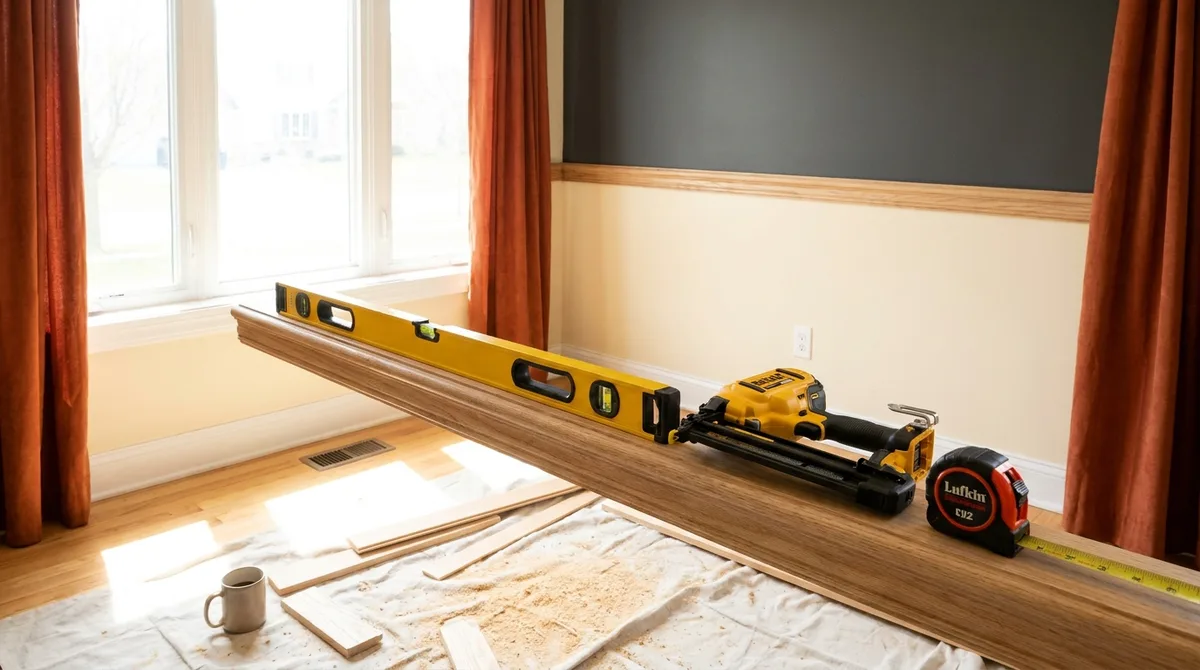
The basic sequence for one room:
- Mark the height with a laser level or long level.
- Locate studs with a stud finder.
- Cope inside corners and miter outside corners.
- Apply construction adhesive and nail with a brad nailer.
- Fill nail holes and caulk every seam.
- Prime and paint.
Now the awkward parts. Where the rail hits door casing, you’ll see a sliver and a thickness mismatch. A Reddit carpenter suggested a backband or jamb extension so the rail butts cleanly. At outlets, pick a height that avoids the plates. On stairs, the rail follows the pitch, so cut the angle carefully. If the floor isn’t level, a level rail looks off at one end, so set it by the room’s visible lines.
What are the alternatives to a chair rail?
If a chair rail feels too heavy, try picture frame molding, board and batten, a picture rail, or a paint-only line. Each divides or dresses a wall without a classic horizontal band. Pick picture frame molding for a traditional look, board and batten for casual rooms, and paint for renters or modern spaces.
Picture frame molding adds boxes of trim and suits formal rooms. Board and batten uses vertical strips and fits entryways and farmhouse styles. A picture rail sits near the ceiling and lets you hang art without nails in the wall. A painted line, with a tape-sharp edge at your chosen height, gives the two-tone effect with no trim at all.
You can also combine a rail with wainscoting-style panels below, but remember the cap molding rule: panels end in a cap, and the rail is for plain walls.
What chair rail mistakes should you avoid?
The most common mistakes are setting the rail too high, picking a fussy profile, ignoring door casings, skipping caulk, and forcing the look into a modern room. Fix them by taping the height first, choosing a plain profile, planning corners, and caulking every seam.
- Too high: a line near the middle of the wall makes a room look chopped. Tape it lower first.
- Wrong trim on paneling: use a cap molding, not a rail.
- Messy door meetings: plan a backband or jamb extension before cutting.
- Raw gaps: caulk the top and bottom edges.
- Wrong material in a bathroom: choose PVC or polyurethane.
A common version of this story is a homeowner who nails up the rail first and discovers the outlet plates collide with it. Check the layout before the first nail.
Frequently Asked Questions
Is chair rail still in style?
Yes, with conditions. It works in traditional, colonial, farmhouse and transitional homes, especially dining rooms and hallways. It looks dated when it’s too high, too ornate or fighting modern furniture. Painting it the wall color keeps the look subtle. Strictly contemporary spaces usually look better without one.
What height is standard for chair rail?
Most sources say 32 to 36 inches above the floor, with a rail about 2 to 3 inches tall. Builders FirstSource gives that range. Standard isn’t mandatory, though. In shorter rooms, lower often looks better, and historic examples sit much lower than modern habit suggests. Tape a line up first and judge it from the doorway.
Chair rail vs wainscoting: which is better?
Neither wins universally. A rail is simpler and cheaper, so it suits a quick upgrade. Wainscoting adds texture and stronger wall protection but takes more time and skill. If you want paneling, finish it with cap molding, not a rail. Pick the rail for light definition, and wainscoting for a real architectural feature.
Should chair rail match the baseboard color?
Often yes, because matching white trim feels cohesive and classic. Painting it the wall color gives a softer shadow line, and a contrasting color can work over deep paint below. Consistency matters most. Choose one trim logic, then repeat it on doors and windows so the rail doesn’t look random.
Can I put a chair rail in a room with 8 foot ceilings?
Absolutely. An 8 foot ceiling is the standard case for the 32 to 36 inch range. If the room feels short, drop a little lower and keep the profile slim. Test with painter’s tape before committing.
Does chair rail go in a bathroom?
It can, particularly in a powder room, where trim and wallpaper make a small space feel finished. Use PVC or polyurethane instead of MDF if the room gets steam, because moisture swells wood-based products. Seal every edge with caulk, and keep trim away from shower splash zones.
Can you add a chair rail over wallpaper?
Yes, and it often looks better than a raw paper edge. Nail or glue the molding over the paper at the marked height, then caulk the edges. If the paper is textured or loose, press it flat first so adhesive grips. Many owners put paper above and paint below, using the trim as the clean break.
What is a dado rail?
It is the British term for a chair rail. The "dado" itself is the lower wall portion beneath it, and the rail marks its top edge. In the US you’ll hear "chair rail" or "chair moulding." The idea that dado only means a woodworking groove is a myth, since that is just a different meaning used in joinery.
Does chair rail add value?
I wouldn’t promise a dollar return. It makes a room look finished and protects the wall. Badly done trim does the opposite, so spend on clean corners, tight caulk and good paint. Whether it pays back depends on your market and your house, so treat it as a comfort and protection upgrade first.
Myth: must it always be at 36 inches?
No, and this is the biggest myth. The 36 inch number is a common habit, not a rule. Historic pattern books show rails around 24 inches, and carpenters argue proportion should win. Your ceiling height and the furniture against the wall are the guide. If the room feels short, go lower. Tape it, look, adjust.
Conclusion
Back in that green dining room, the scuffed wall isn’t really a trim problem. It’s a proportion problem. The best chair rail sits slightly lower than you’d guess, has a profile that suits your house, wears paint chosen on purpose, and is planned around the doors before the first cut. That’s the unique angle here: the molding is easy, and the details around it decide whether the room works.
Looking ahead, I’d bet on calmer trim. Painting the rail the wall color softens the loud white stripe, so a well-chosen chair rail has life left.
Your next step is cheap: tape a line at 32 inches tonight and look at it tomorrow. For more inspiration, see how a statement piece like a live-edge river table anchors a dining room. So which wall in your house is begging for a line?