
Picket Fence Ideas: Pick the Gate and Rules Before the Style
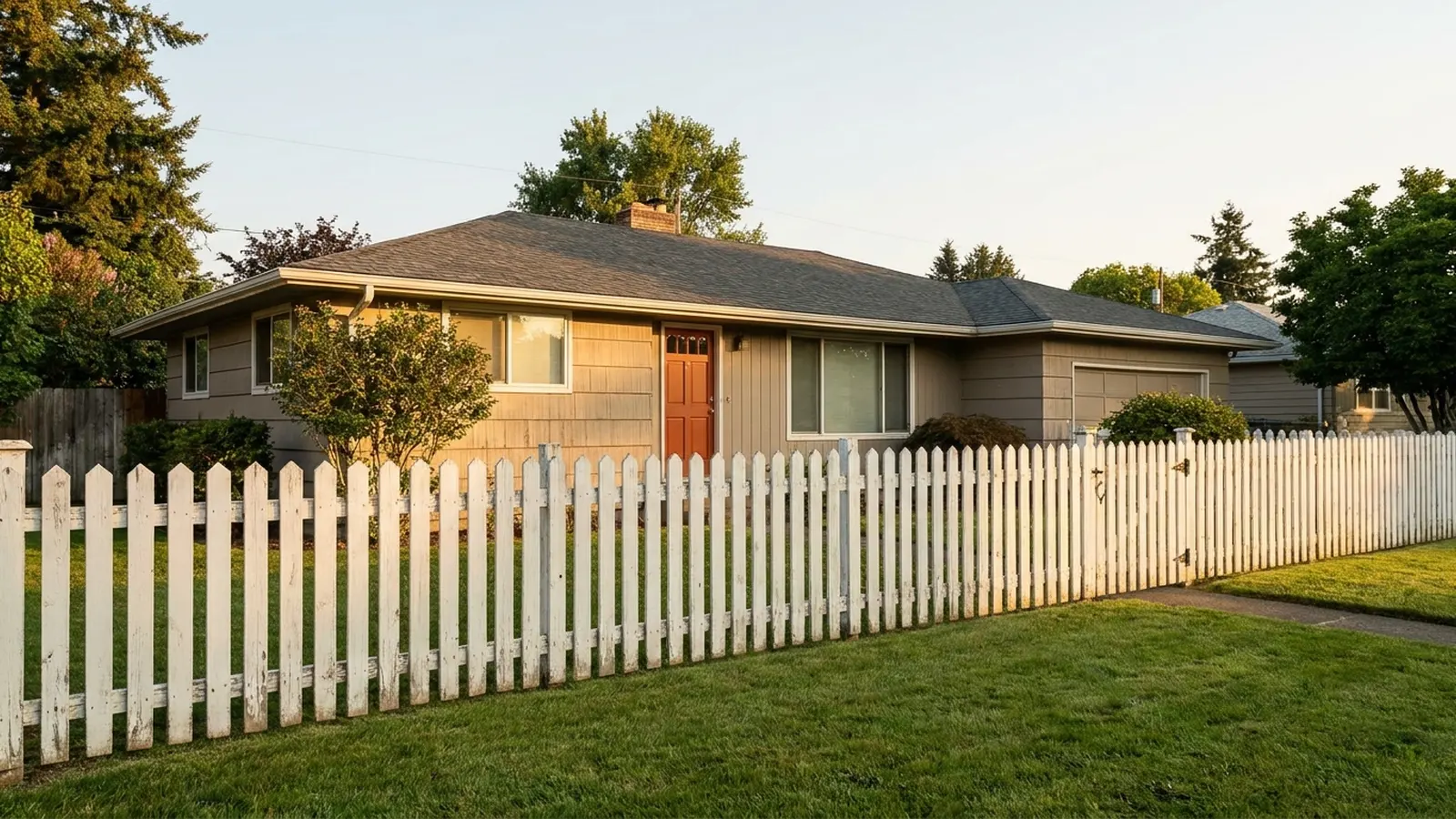
Say a homeowner buys a 1950s ranch with a bare front yard. She pictures a white picket fence by spring. She orders pickets, paints them twice and sets the posts on a free weekend. Six weeks later a neighbor mentions an HOA letter. A month after that the gate drops an inch and drags through the grass. Her paint choice caused neither problem.
A picket fence looks simple, but it carries two risks that have nothing to do with style. One is the rulebook that decides whether you can build in the front yard at all. The other is the gate, which does the most work and gets the least thought. The pickets are the easy bit…
Do you really need another gallery of white fences? Probably not. This guide covers styles, heights, gaps, materials, real costs per foot and the build, but it starts with the rules and the gate, because that’s where fences go wrong.
Executive Summary
You’ll leave with a clear plan for a picket fence that passes the rules, hangs straight and fits your budget. Here is the short version.
- Rules first. Front-yard height limits, HOA covenants and historic district boards can veto a fence after you’ve bought the lumber.
- The gate decides the lifespan. A common sag pattern has three flaws, and each has a cheap fix.
- Cost is a range. Homewyse put a 4 foot wood fence at roughly $24 to $40 per installed foot in May 2026, split about evenly across materials, labor, supplies and equipment.
- Gaps matter. Small dogs and pool codes both care about inches.
The biggest worry is usually upkeep. Painted wood does need repainting, and it never quite matches factory vinyl. You’ll see exactly when each material is worth it, which tops and colors suit which houses, and how to build the whole thing in a weekend or two without redoing it.
Can you put a picket fence in your front yard?
Often yes, but check three things before you buy lumber: your city’s front-yard height limit, your HOA rules, and historic district review if you live in one. Rules differ by town and neighborhood, so no single answer fits the country. A call to the planning office and a read of your covenants takes an hour and can save a teardown.
A common version of the mistake goes like this. A buyer in a historic district finds out the review board denies most front fences unless the block already has them. Homeowners in those threads report two workarounds: a low iron fence (about 3 feet is historically common) or a clipped hedge that does the same job.
Also ask whether a permit is needed. Some towns require one for any fence. Before any digging, call 811 so utility lines get marked.
Why does the gate decide how well the fence ages?
Because the gate is the only moving part on a picket fence. Every opening swings its weight from the hinge side, so any weakness shows up there first. Build the gate frame from 2x4s, use long-arm hinges, and add a diagonal compression brace. Those three choices matter more than the pickets, the paint or the brand.
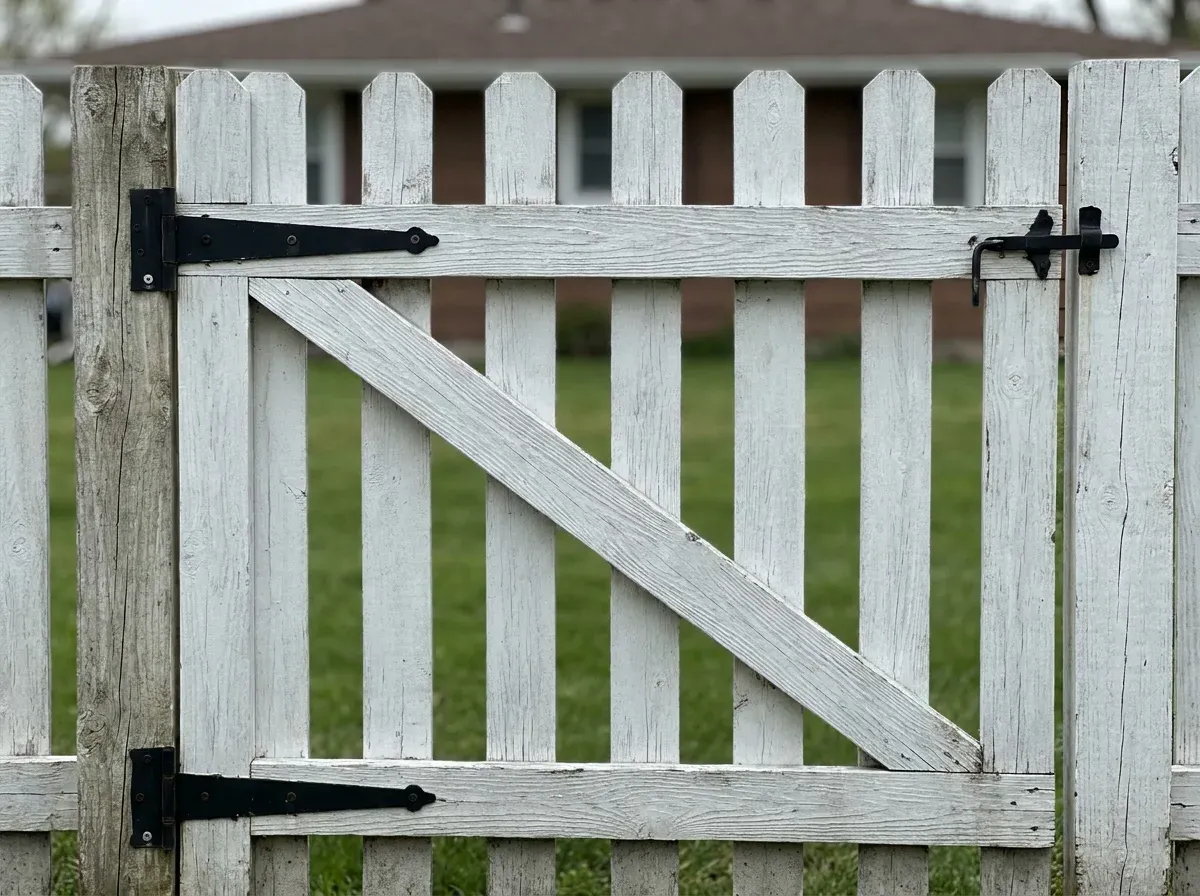
Take an illustrative case. A 42 inch gate is built from lightweight prefab 2×3 rails with no brace and cheap 6 inch hinges. A month later the latch side has dropped about a rail width and scrapes the lawn. One homeowner thread described this exact pattern.
The fix is a diagonal brace that runs from the low hinge corner up to the high latch corner, so it carries the load in compression. Retail listings in October 2026 put a hinge pair and a latch at roughly $20 to $25 each, so sturdier hardware is a cheap upgrade.
I’d spend extra here before spending extra anywhere else. A gate that closes cleanly for years makes a basic fence feel expensive.
Which style and color fits your house?
Match the picket top to the age of the house and the color to your trim. Dog-ear tops suit casual homes, gothic and spade tops feel more formal, and scalloped runs read as cottage style. White is the classic color, but sage, green, black and barn red all work if your neighbors and rules allow.
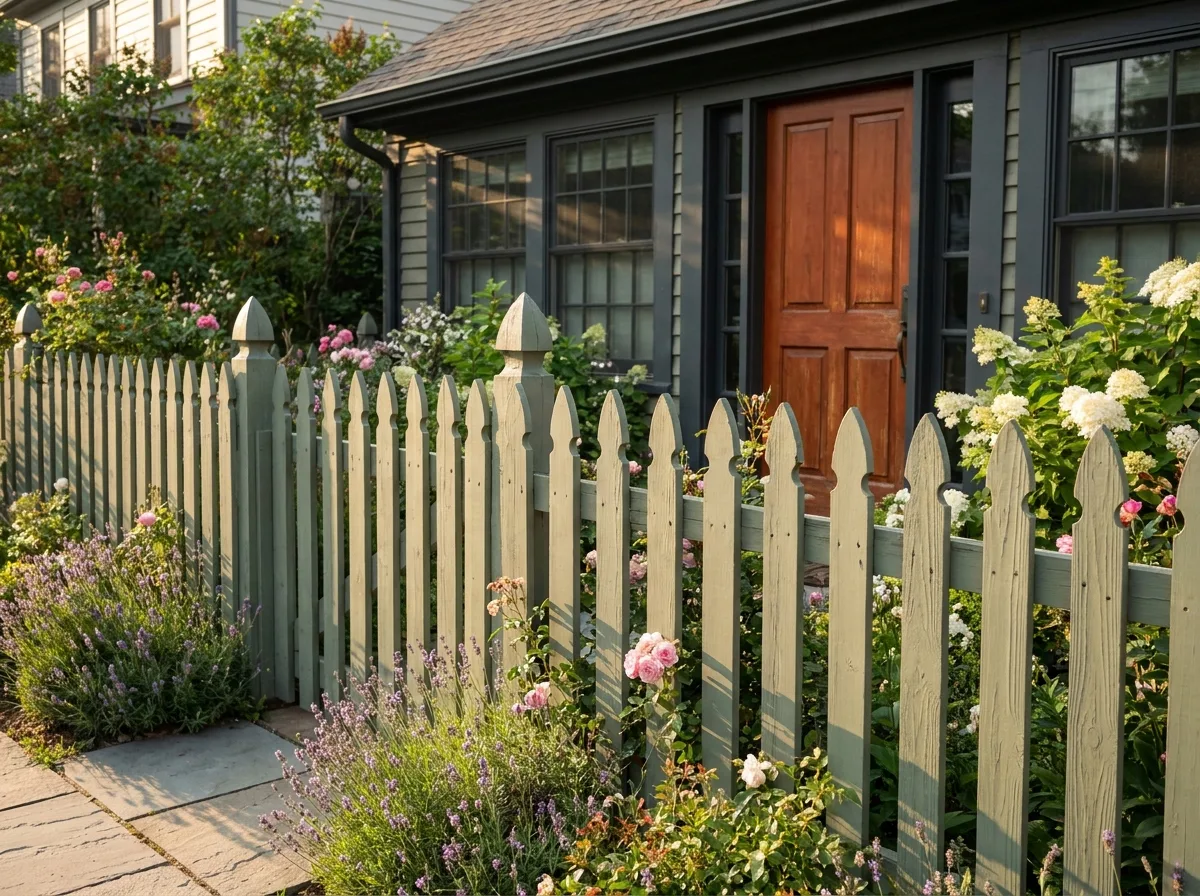
The top shape sets the mood more than anything else:
- Dog-ear: the flat-topped picket with clipped corners, typically the most common and cheapest.
- Gothic (French gothic): a pointed top with shoulders, formal and widely stocked.
- Spade: a sharper point, a bit more dramatic.
- Flat top: clean and modern, easy to cut yourself.
- Scalloped (concave or convex): the tops arc up or down across each section, a cottage look.
Pickets come in 1.5 or 3 inch widths in many vinyl lines, and Weatherables lists 18 styles. Walpole’s cedar gallery is a good place to browse finished looks.
Want a modern take? Try black pickets, or horizontal slats, with plants softening the base. For color, Quora answers suggest asking a neighbor, matching the house and checking the ordinance first. If you prefer a rustic, see-through option, a hog wire fence pairs well with a wood frame.
How tall should a picket fence be, and how wide should the gaps be?
Most picket fences stand 36 to 48 inches tall, with gaps of roughly 1 to 3 inches between pickets. Taller feels more like a barrier and wider gaps feel more open. A pool barrier is stricter, asking for at least 48 inches and vertical gaps of 1.75 inches or less. Small dogs may need narrower gaps than you expect.
Pet owners in one thread wanted 2 to 2.5 inch gaps because a small dog squirmed through 3 inch ones.
For pools, the CPSC safety barrier guidelines call for a barrier at least 48 inches above grade, a 4 inch sphere limit, a 1.75 inch maximum slat gap, and self-closing, self-latching gates that open outward. Local code can differ, so check yours. The same logic applies if you’re fencing a stock tank pool in the backyard.
Is a wood, vinyl or metal picket fence better?
Wood looks richest and is easiest to fix, vinyl needs the least upkeep, and aluminum or ornamental metal suits pools and a thin, formal look. None wins on every count. Choose wood for charm, vinyl for low effort, and metal when sturdiness and sight lines matter most.
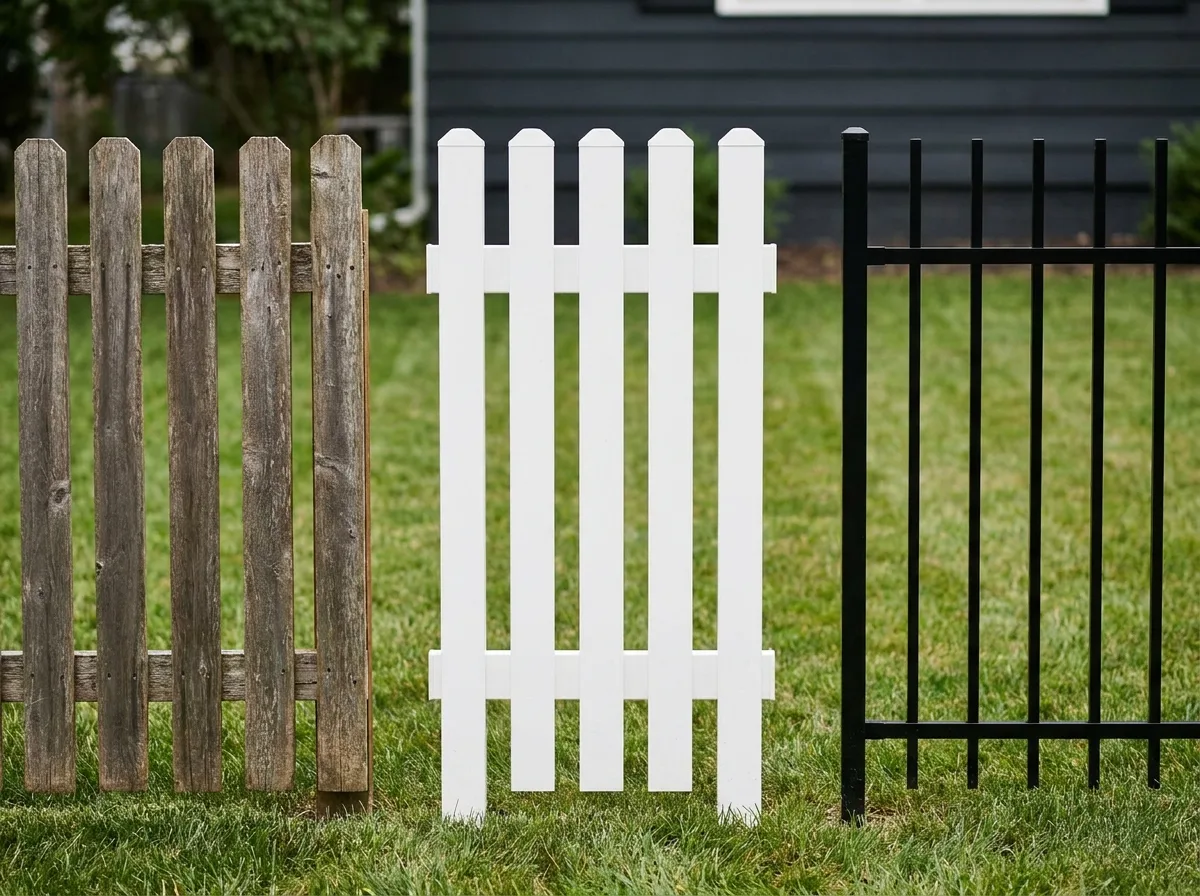
| Material | Look | Upkeep | Watch for |
|---|---|---|---|
| Wood (cedar, pressure-treated pine) | Warm, paintable | Repaint or restain every few years | Posts and cut ends rot |
| Vinyl (PVC) | Bright factory white | Wash occasionally | Thin walls flex, and it can’t be painted |
| Aluminum or ornamental metal | Slim, formal | Low | Typically a higher price, fewer picket shapes |
Judged on effort over time, vinyl usually wins. Judged on looks, painted wood never fully matches factory white, as homeowners in one thread told a poster weighing a $4,000-plus vinyl quote against painting wood. Vinyl thickness matters most, and brands like Catalyst (which bought Bufftech in 2023) and Everguard get compared in installer threads.
How much does a picket fence cost per foot?
Homewyse put a 4 foot wood picket fence at about $24.17 to $39.62 per installed linear foot in May 2026, with posts set in concrete. The cost splits about evenly across materials, labor, supplies and equipment. Permits and tax aren’t included, and your site conditions can push the number either way.
Run the numbers on a hypothetical 100 foot front run. At those rates, you’re looking at roughly $2,400 to $4,000 installed. If you do the labor yourself, roughly a quarter of the cost, the labor share, stays in your pocket. Pricing materials first and then deciding how much labor to buy also works for indoor jobs like a bathroom remodel.
| Item | Retail example (October 2026) |
|---|---|
| Cedar no-dig panel, 2.83 x 3.79 ft | $39.97 at Lowe’s |
| Pressure-treated pine panel, 3.5 x 8 ft | $66.98 at Lowe’s |
| Cedar panel, 4 x 8 ft | $133.12 at Lowe’s |
| Cedar picket | $3.58 to $6.10 at America’s Fence Store |
| 4×4 post | $27.56 at America’s Fence Store |
How do you build one step by step?
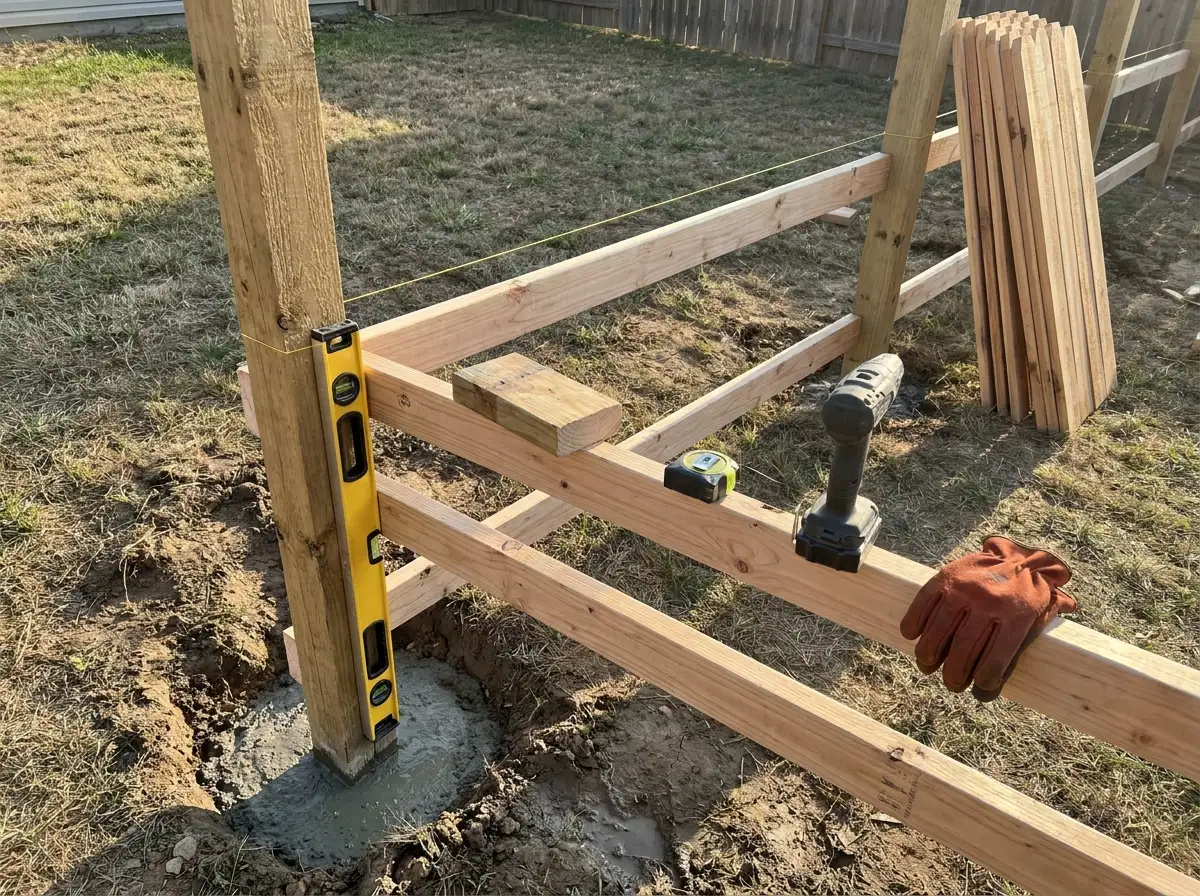
For a picket fence, mark the line, call 811, set posts 30 to 36 inches deep in concrete, attach two rails, then fix the pickets with a spacer block. Posts go about 6 to 8 feet apart. Plan a full weekend for a short run, plus time for the concrete to cure.
- Check rules and mark utilities, then string a straight line.
- Dig post holes about 30 to 36 inches deep, deeper where the ground freezes.
- Set 4×4 posts in concrete, plumb them, and let them cure.
- Fasten 2×4 rails between posts, one near the top and one near the bottom.
- Treat any cut ends, and paint or seal all sides of each picket before hanging.
- Space the pickets with a scrap block so every gap matches.
- Hang the gate last, using the brace and hinges from earlier.
Buying sections? You need one more post than the number of sections. On a slope, a stepped layout drops each panel like a stair and keeps tops level, while racked panels tilt to follow the grade. One DIY thread suggests leaving a couple of inches of clearance above the soil so wood stays dry.
How do you keep it looking good?
A picket fence needs little, but not nothing. Wash vinyl a couple of times a year and never paint it. Repaint or restain wood every few years, keep soil and mulch off the bottom edge, and check the gate hinges each spring. Small habits catch rot early, when a single picket swap fixes it.
Quora answers mention repainting about every 3 to 5 years, which is an anecdote, not a rule. Wood that sits wet or stays shaded mildews first, so trim plants back and angle sprinklers away.
Frequently Asked Questions
What does picket fence mean?
A picket fence is a low fence of evenly spaced vertical boards fixed to horizontal rails between posts. It usually stands 36 to 48 inches tall. The gaps keep the view open, so it marks a boundary politely without hiding the yard. In everyday speech the phrase also points to a settled, suburban idea of home.
What is the picket fence dream?
It’s shorthand for the American Dream of a house, a yard and a stable family life. Quora answers describe it as a mid-century ideal that now feels a bit cliche. Some people use it half-seriously, others bitterly, usually while talking about housing costs. Real picket fences rarely match the daydream, since they need paint, repairs and a gate that closes properly.
What does white picket fence slang mean?
As slang it means a conventional, comfortable life, usually with marriage, kids, a dog and a house. People also use "white picket fence syndrome" for chasing that picture even when it doesn’t fit them. It isn’t a type of fence at all, and nobody needs real pickets to use it. When someone says it about their plans, they’re describing a goal, not a shopping list.
How far apart should pickets be?
Most builders leave gaps of about 1 to 3 inches. Weatherables lists vinyl gaps from 1.7 to 3.7 inches, and Quora answers suggest 1 to 3 inches for wood. Narrower gaps look more solid and hold small dogs in. For a pool barrier, the CPSC maximum is 1.75 inches.
Can you paint a vinyl picket fence?
No, and this is the biggest myth about vinyl. Weatherables advises against painting vinyl, and paint can peel because the surface is slick and flexes in the heat. It may also affect a warranty, so read yours first. If vinyl gets stained, wash it. If you want a color other than white, buy that color.
Is vinyl or painted wood cheaper over time?
Vinyl usually costs more up front and less in upkeep, while wood costs less at the start and more in repainting and repairs. Which one wins depends on labor prices, how much you DIY, and your climate. I’d lean vinyl if you hate maintenance and wood if you enjoy the project.
How deep should picket fence posts be?
Plan on 30 to 36 inches, with holes roughly 12 inches wide. Wikipedia describes 36 inch holes, and Weatherables recommends 30 to 36. In cold regions, go below the local frost line so frost heave doesn’t push posts up. Set them in concrete, plumb them, and let them cure before loading rails or a gate.
Do you need a permit for a picket fence?
Sometimes. Many cities require one, especially for front yards or corner lots, and some limit height. An HOA or historic board can add its own approval. Rules vary by town, so check the planning office before buying anything. Call 811 before you dig, too. Ask the planning office about setbacks from the property line, and keep any approval in writing.
How many posts do you need?
Count the sections and add one. A 40 foot run in 8 foot sections takes five sections and six posts. Corners and gate posts count too, so sketch the layout and count each post once before ordering. Retailers like Lowe’s suggest posts every 6 to 8 feet.
Can a picket fence work as a pool barrier?
It can, but only if it meets the numbers. The CPSC guideline asks for at least 48 inches above grade, vertical gaps under 1.75 inches, limited space under the bottom edge, and a self-closing, self-latching gate that opens outward. Many standard picket fences fall short, so confirm your local code first.
Conclusion
The best picket fence isn’t the prettiest one on a mood board. It’s the one that clears your local rules, hangs a sturdy gate and uses a material you can live with. Return to the homeowner from the start. Had she read the covenants first and braced her gate, her spring would have gone differently, with the same pickets and the same paint.
If the rules say no, a clipped hedge or a low iron rail may be the fallback. Your next step is simple. Call your city and read your covenants this week, then price one section of your favorite style at two stores.
If a picket fence is really about marking the line between your private life and the street, how much of that line do you want to be wood, and how much do you want to be green?



One Comment