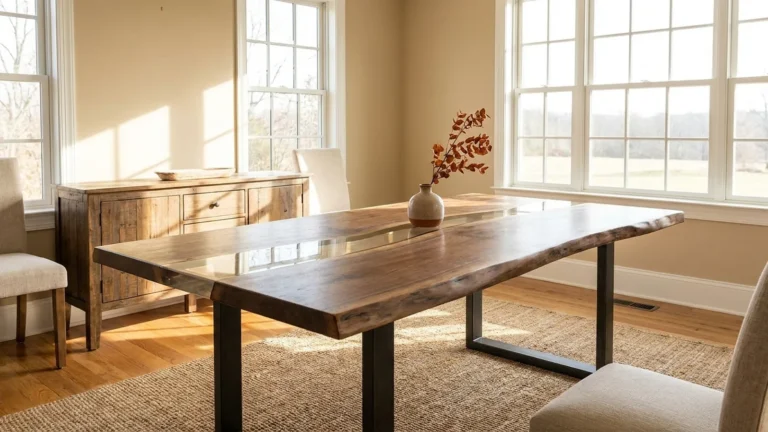
Outdoor Chair Buying Guide: Pick One That Survives Your Climate
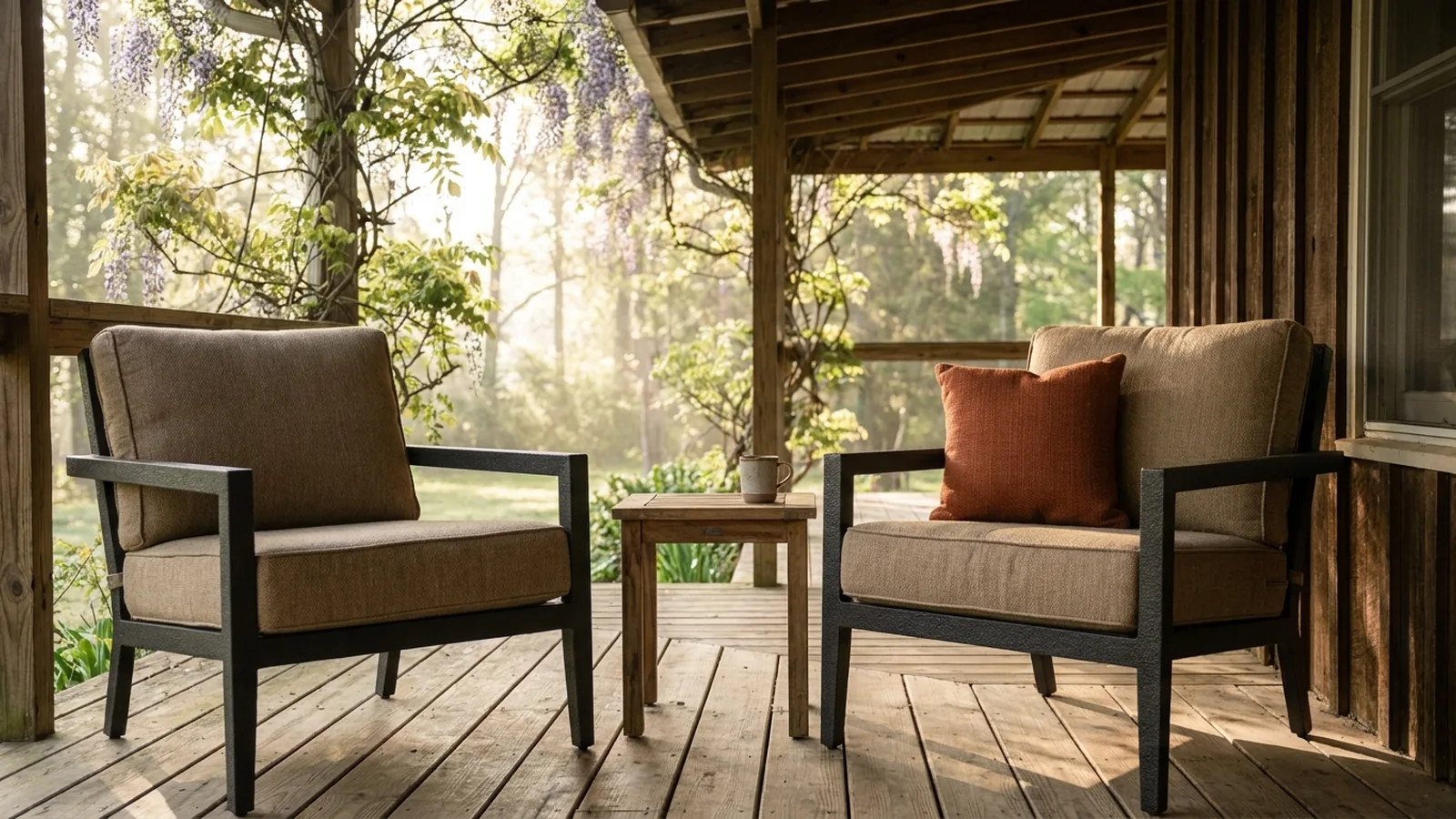
Say it’s late April and you’re holding a $25 chair that looks perfectly fine. It folds, it’s cheerful, and it weighs almost nothing. Two summers later it’s chalky, one leg wobbles, and you’re back in the same aisle, quietly buying the same chair again. Sound familiar?
Here’s the awkward part. The opposite mistake exists too. A few owners report spending $300 a seat and still watching the sun chew through it in three years.
So what makes an outdoor chair worth its price? Not the tag. It’s the match between the chair, your weather and the way you really use your patio. A chair that thrives on a covered porch in the damp Northwest can fall apart on a Colorado deck at 7,000 feet.
This guide skips the fluff. You’ll learn which type fits your habits, which material survives where you live, what warranties quietly leave out, and why cushions are the real budget trap.
Executive Summary
The short version: buy for your climate first and your style second. The best chair is the one that fits your sun, moisture and storage situation, not the one with the prettiest photo.
Here’s what you’ll get below. Material beats looks, because aluminum, teak and poly lumber each win in different places and each has a weak spot. Warranties are narrower than they sound, so the headline number rarely tells the whole story. A cheap chair isn’t always a regret, but one replaced every few summers can cost as much as a good one. Cushions can cost more than anyone budgets for, so pick a frame that takes standard sizes.
"I just want somewhere to sit, why is this complicated?" It isn’t, once you answer three questions. Where will it live, who will sit in it, and will you actually put it away in October? Retail pages checked in October 2026 showed prices from about $15 to well over $1,000 a chair.
Which Type of Outdoor Chair Do You Actually Need?
Pick the type of outdoor chair by what you do in it. Lounge and chaise styles suit long sunny afternoons, dining chairs suit table time, Adirondack and rocking chairs suit slow porch evenings, and zero gravity chairs suit naps. Lowe’s buying guide sorts patio seating into six types: cushioned, Adirondack, rocking, chaise, zero gravity and dining.
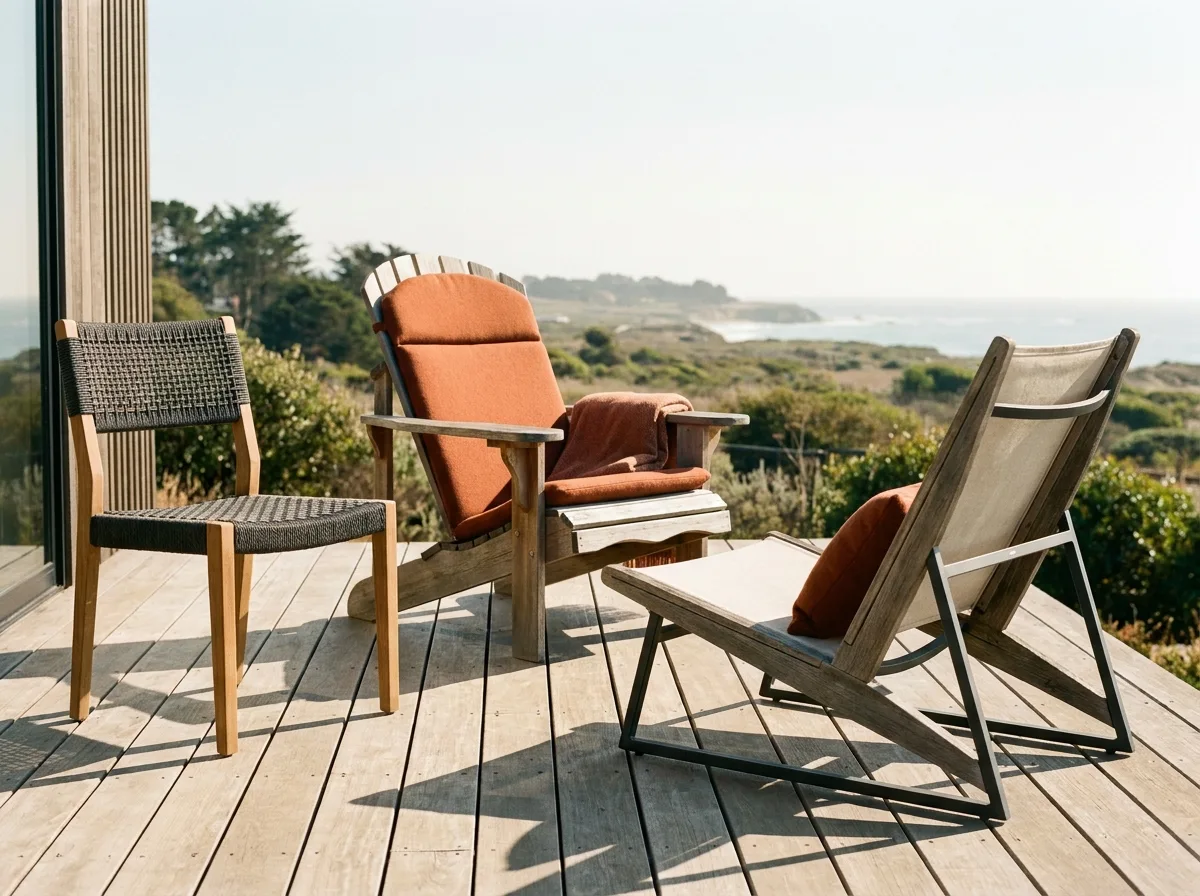
Each type trades something away. Dining chairs tuck under a table, but a two-hour dinner on a flat seat gets old. Adirondack chairs are deep and low, which feels wonderful until a bad knee has to climb out of one. Zero gravity chairs recline and fold flat, though many have thin frames.
Swivels, gliders and egg chairs are fun extras, not a first buy. Buy for the 80 percent use, not the daydream one.
Do the chairs have to match the table? No. Pick one shared element, such as the color family or the material, and let the shapes differ. If you mix styles, keep cushion colors in one palette and seat heights close.
Which Material Is Best for an Outdoor Chair Where You Live?
Match the material to your worst weather. Strong sun and heat favor solution-dyed fabric and powder-coated aluminum or poly lumber. Damp, humid regions favor teak and aluminum, which shrug off soaking. Salt air demands rinsing whatever you buy. Steel is cheapest, but it rusts and can leave orange stains on a pool deck.
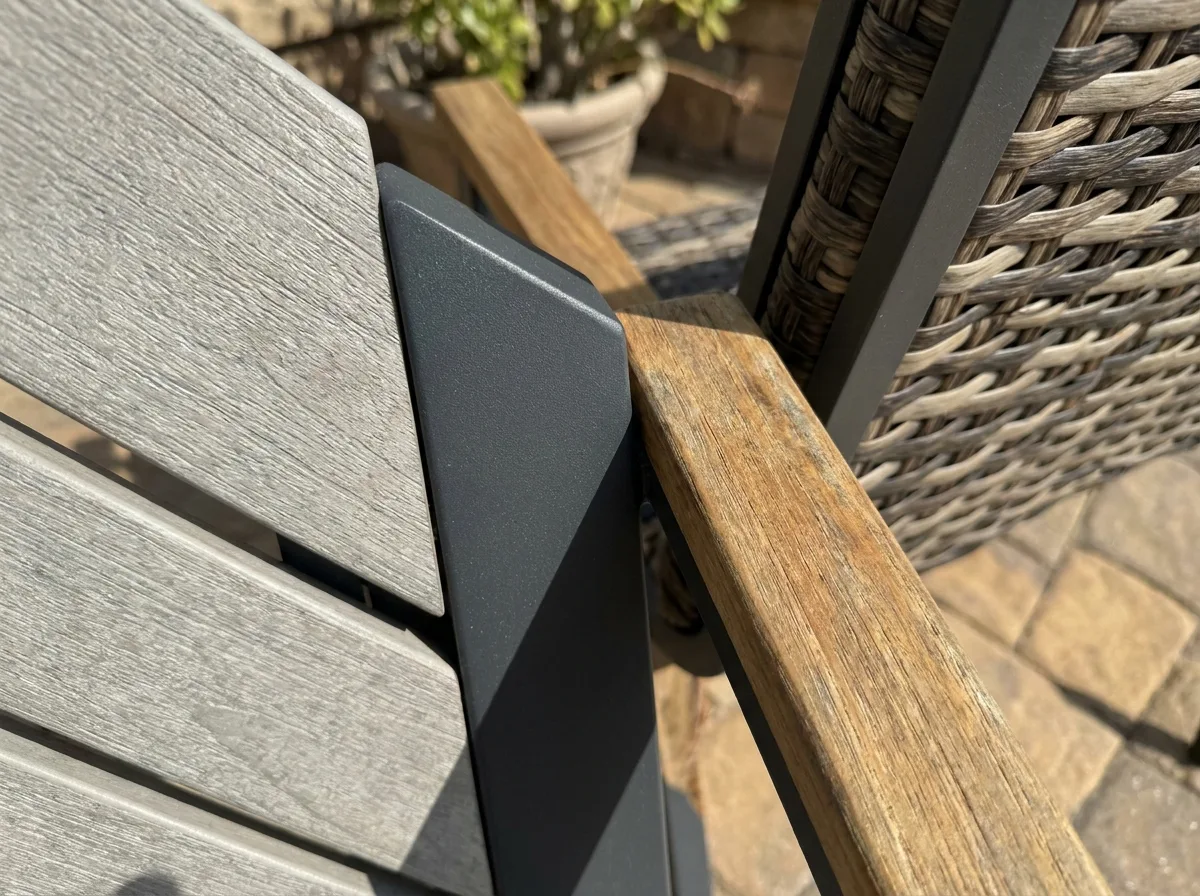
Owner reports make this concrete. One Colorado owner said woven chairs and cushions bleached and cracked in 18 months. A Texas owner regretted cheap and pricey sets alike after sun chewed through $300 chairs in three years. Those are anecdotes, not lab tests, but the pattern is hard to miss. Sun ruins an outdoor chair faster than rain does.
Poly lumber gets mixed owner reports. Some say it feels static in dry air and runs hot in full sun, while others report soft spots in heat and swelling in damp weather.
Here are rough if/then rules, drawn from owner patterns rather than tests:
- Coast: favor aluminum or poly lumber and rinse with fresh water.
- Desert or high altitude: spend on solution-dyed fabric and shade, and skip woven pieces.
- Humid and rainy: favor poly lumber or teak, and keep cushions indoors.
| Material | Strength | Weak spot | Suits |
|---|---|---|---|
| Powder-coated aluminum | Light, won’t rust like steel | Owners report pitting near salt air, coating can chip | Most climates, coasts with rinsing |
| Teak | Rot-resistant wood, a tip Lowe’s gives | Price, and owners disagree on upkeep | Humid, mild regions |
| Poly lumber (HDPE) | No painting, sturdy | Owners report heat, static, softness in hot sun | Rainy and coastal homes |
| Resin wicker | Traditional look | Owners report cracking in harsh sun | Covered porches |
| Steel | Cheapest | Rusts, stains decks | Dry, covered spots |
Judged from owner reports and retailer guides, since no lab data turned up.
How Long Should an Outdoor Chair Last, and What Do Warranties Skip?
Plan on a few summers from budget chairs and longer from well-built ones, but treat any lifespan number as a rough guess, because no independent test backs the figures floating around forums. Read the warranty instead. The Polywood residential warranty covers defects and structural failure for 20 years, yet normal fading, weathering and rust are excluded.
Notice the gap. The headline says 20 years, but color is what you’d notice first, and only abnormal or excessive fading is covered, and only on fabric. Sling fabric gets 3 years and cushion fabric gets 1. Terms change, so read the current one.
A common version of this mistake: someone buys an outdoor chair set because a review says "no fade," then finds that normal fading on the lumber isn’t covered. Before you pay, check three lines: what counts as a defect, what’s excluded, and how long the fabric is covered.
Is Cheap Patio Furniture Always a Regret?
Not always, but cheap chairs left outside often cost more than they seem. Over 12 years, a $30 chair replaced every three summers lands in the same range as one $150 chair. The exception is a chair you store indoors or rarely use. Price alone tells you little. Climate, storage and habits decide whether cheap or expensive wins.
Retail pages checked in October 2026 showed IKEA chairs from $15 to just under $400, West Elm lounge chairs from $399 to $1,798, and Amazon’s best-selling zero gravity pairs from about $45 to $100.
Now the hypothetical math. A $30 outdoor chair replaced every 3 years costs $120 over 12 years. A $150 chair that lasts all 12 years costs $150. Close, but it means four purchases instead of one.
One owner reported spending $12,000 on Polywood and not regretting it. Another said a $2,000 Costco set looked new after 5 years. Regret comes from mismatch, not price.
Why Are Outdoor Cushions So Expensive, and How Do You Cut the Bill?
Outdoor cushions cost more because they need quick-drying foam and fade-resistant fabric, such as Sunbrella’s solution-dyed acrylic. One homeowner thread described roughly $50 per cushion for a set needing six. Cut the bill by buying standard sizes, storing cushions indoors and replacing covers instead of whole cushions.
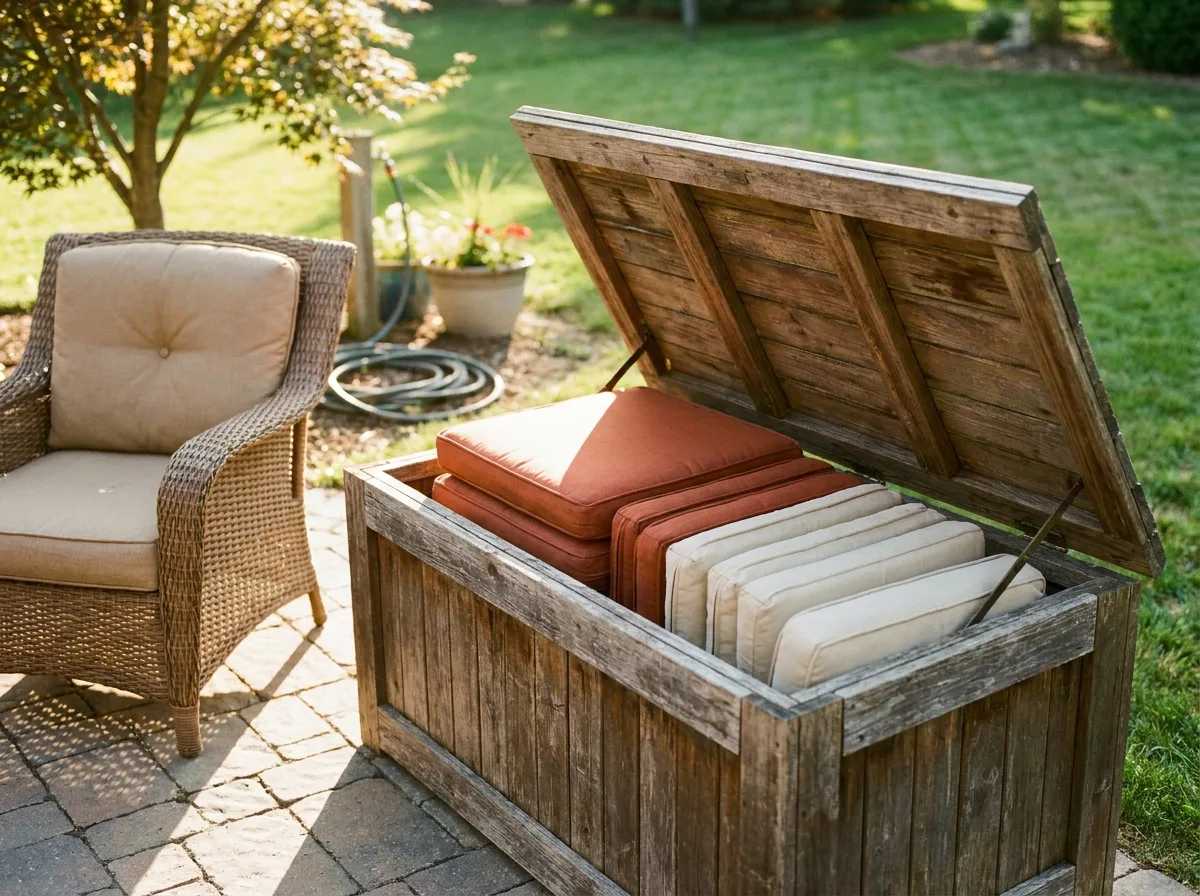
A full set of cushions can eat a surprising share of the budget. Stay ahead of it:
- Choose a frame that takes standard cushion sizes, so replacements stay easy to find.
- Buy cushions with removable covers. West Elm’s page notes that replaceable cushions extend a chair’s life.
- Bring them inside before rain and all winter. Lowe’s guide gives the same tip.
- Consider a sling chair with textilene fabric, which dries fast and needs no cushion.
How Do You Pick a Comfortable Outdoor Chair for a Small Patio?
Sit in it first. Comfort is personal, and no review can tell you how a seat feels on your back and knees. Check seat height, depth and arm placement, then measure your space. For small patios or balconies, choose stackable, slim-armed chairs and a bistro-size table so people can still walk past.
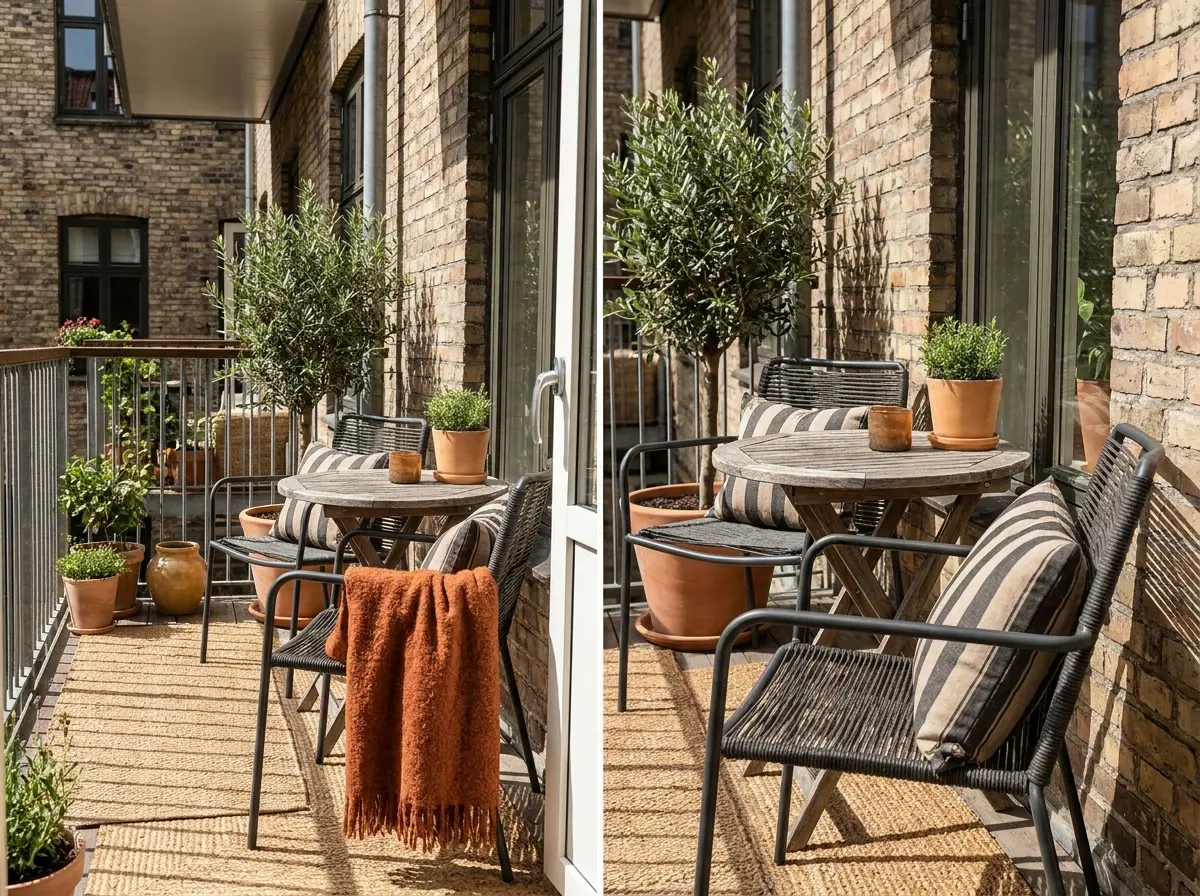
Sit in any outdoor chair for ten minutes, not ten seconds. A slightly higher seat with sturdy arms is far easier to stand up from than a low, deep lounger. With a bad hip, skip the Adirondack no matter how good it looks.
Tight on floor space? Skip the side table and mount a floating shelf on a sheltered wall for drinks.
Sitting out in the rain? The roof matters more than the chair. A covered porch or canopy does the real work.
Should You Choose Folding or Permanent Seating?
Choose folding only if you will really put them away. A folding outdoor chair is cheap, light and fine for occasional use, but left out all year it wears faster at the hinges and fabric. Permanent chairs cost more yet suit people who want to walk outside and simply sit down.
Owners split on this. One person reported stashing theirs in ten minutes. Another admitted they never do. You know which person you are.
The rule: pick folding if there’s a closet near the door and you’d actually use it. Pick permanent if hauling chairs sounds like a chore.
How Do You Care for Patio Chairs and Buy Them for Less?
Rinse chairs with mild soap and water a few times a season, dry the cushions, cover or store chairs in winter, and buy secondhand when you can. Covered storage matters more than the material. A well-kept chair from Facebook Marketplace or a Habitat for Humanity ReStore often beats a new budget one.
Teak splits owners. One Colorado owner called the oiling obsessive, while others rinse it and oil once a year or not at all.
For savings, one Marketplace buyer reported paying about $500 for a three-seat couch, three rockers and a fire pit table, and was still using them 5 years later. Check used chairs for wobble, rust and cracks. Buying new? Retailers tend to clear stock late in the season. If a bathroom remodel or a furnace replacement is already eating this year’s budget, wait for that clearance and let the bigger project go first.
Frequently Asked Questions
Do outdoor chairs need covers?
Covers help, but only if the chair is dry when you put them on. A cover over a wet chair traps moisture. Covers pay off most for wood, wicker and cushions in rainy or snowy regions, and matter less for aluminum or poly lumber. A vented cover beats a cheap tarp.
Can wicker chairs get wet in the rain?
Yes, if it’s all-weather resin wicker, which is built for rain. Natural rattan is different and warps or rots when it stays wet. Check the label before you buy. Its cushions still soak up water, so bring them in, and strong sun usually cracks resin sooner than rain does.
Is Polywood worth it?
It depends on your priorities. Owners in rainy or coastal areas often praise poly lumber, while a few in hot, dry regions report static and heat. One owner reported spending $12,000 on it and not regretting the purchase. Read the warranty exclusions before you buy, because color and cushions are covered far less than the frame. If you want low upkeep and accept the price, it can be worth it. Sit in one first.
Does aluminum rust?
Aluminum doesn’t rust the way steel does, because rust is iron oxide. It can still corrode, though. One commenter described pitting, and salt air speeds that up. Powder coating helps, and a regular fresh water rinse helps more. Chairs labeled simply "metal" are the ones that rust and stain decks.
Are plastic chairs bad outside?
Not bad, just limited. Basic resin chairs are cheap, light and fine for occasional use, but sun can make them chalky and brittle, and they sometimes fail suddenly instead of slowly. Thick, UV-treated or HDPE chairs last longer. Keep cheap ones in shade and retire any with cracks.
Are folding chairs OK outside all year?
Not really. Folding chairs handle summer evenings well, but hinges, rivets and fabric suffer when left through rain, sun and freezing nights. Store them in a garage, shed or closet in the off-season. If leaving chairs out is your plan, buy fixed frames in aluminum, teak or poly lumber instead.
Can I leave outdoor cushions out all the time?
You can leave them out during dry weather, but not through rain, dewy nights or winter. Even quick-dry foam holds moisture, and mildew follows. Fabric also fades faster in constant sun. Lowe’s guide suggests removing cushions in bad weather, and a deck box near the seating makes that a two-minute habit.
What is a zero gravity chair?
A zero gravity chair is a reclining lounger, usually foldable, that tilts your legs up above your hips so your weight spreads across the whole seat. It’s built for naps and reading. Amazon’s best-selling pairs ran from about $45 to $100 in October 2026. Check the weight capacity.
What color hides dirt best?
Mid-tone and darker neutrals like gray, brown and charcoal hide dirt better than white or cream, a tip Lowe’s guide also gives. Patterned fabric also tends to hide stains better than solid. Dark colors do get hotter in direct sun and may show fading more clearly. With kids or pets, medium taupe or gray is safest.
Does a higher price always mean a longer-lasting outdoor chair?
No. Price often pays for design, brand and cushions rather than durability. One owner reported $300 chairs looking chewed by sun after three years, while a cheaper secondhand set kept going for five. Check the material, the warranty exclusions and the construction, then ask whether you’ll store the chair.
Conclusion
Back to that $25 chair. It wasn’t the villain. The mismatch was: wrong material for the sun, no storage plan, and cushions nobody budgeted for. Once you buy for your climate, check what the warranty skips and sit in the seat first, the right outdoor chair gets surprisingly easy to spot.
The angle worth remembering is that covered storage and honest habits beat fancy materials. A modest chair you bring inside will outlast a pricey one left to bake. When you shop, favor frames that take standard cushion sizes and covers you can replace, so a repair never means a whole new set.
Your next step takes ten minutes. Measure the space, decide folding or fixed, and read one warranty line by line. Then sit in your top two outdoor chair picks for a full ten minutes.
So when the sun, the rain and your own laziness all get a vote, which one of them is really choosing what you buy next?