Table Behind Couch: Size It Right, Style It, Skip the Mistakes
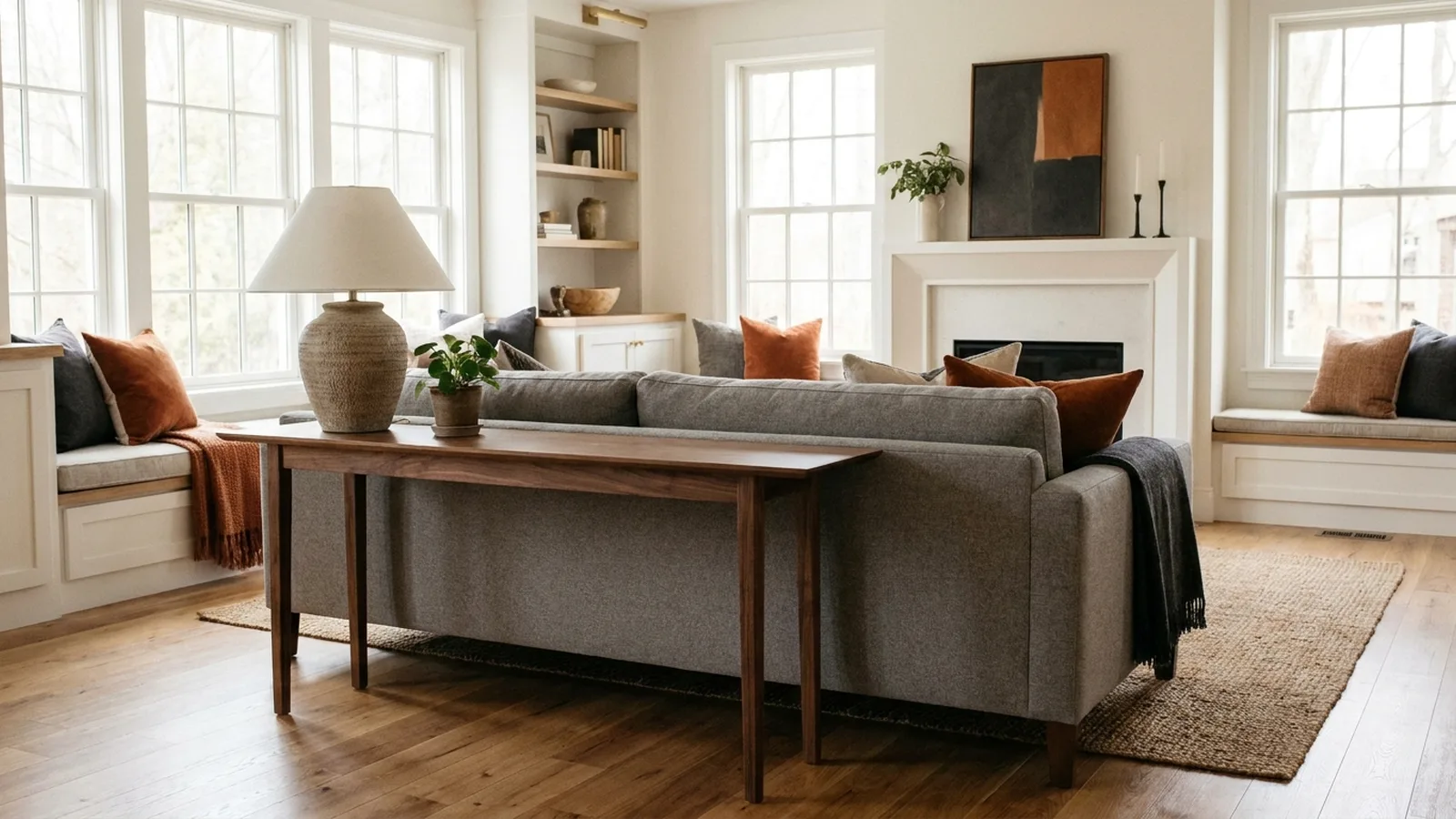
Say you just pulled your sofa off the wall to split a big living room in two. Its back now faces the dining area like a bare cardboard box. So you order a pretty console. It arrives, you slide it into the gap, you lean back on the sofa, and the edge of the tabletop pokes your head.
A table behind couch looks like a styling choice, but it is mostly a measuring job. Height, depth, length and the gap to the sofa decide whether it looks built-in or like a mistake. Style comes second.
This guide gives you the numbers people actually use, the styles that work, what to put on top, and what to do when no table fits. It is one piece of arranging a living room, and a floating shelf is a lighter option for the wall behind the sofa.
Executive Summary
You can pick the right table behind couch seating in one measuring session with a tape and a pencil. Start with the sofa back, not the shop listing. A common view is that the top should sit near the height of the sofa frame, not the cushions. One rule of thumb says the table should run about 70 to 90 percent of the sofa length. Keep it slim for tight rooms, since one popular roundup suggests under 12 inches deep, and leave room to walk.
You will also learn the real difference between a sofa table and a console table (smaller than the internet claims), how to handle sectionals and floating sofas, what to check around outlets and vents, and cheap ways to fix a table that is too tall. The biggest objection is "will it crowd my room?" Often it will not, if you keep it narrow. Many of these numbers are rules of thumb, not codes, so treat them as a starting point and adjust to your room.
What is a table behind a couch called?
A table behind a couch is most often called a sofa table. You will also see console table, entry table or hall table. In practice, shops use the names loosely. What matters is the shape: long, narrow and fairly shallow, so it fits the tight strip between the sofa back and a wall or open floor.
Some purists say a console must be fixed to a wall and a sofa table must stand free. Most store pages ignore that split, so search both names. The real difference is depth, so filter by depth before you fall for a finish.
Do you need a table behind your couch?
No, you do not need one, but it helps in three cases: a floating sofa with an exposed back, a sofa against a wall with a dead gap, or a room that needs a spot for a lamp and a drink. If none of those apply, skip it, keep the floor space and enjoy the open room.
Here is the contrarian part: not every floating sofa needs one. If a rug and a good lamp already define the zone, a table behind couch seating can crowd it.
Table behind couch height: how tall should it be?
Match the table to the sofa frame, or slightly below the top of the back cushions. Measure your own sofa first, because cushions can add several inches that the frame does not have. Tables sold at about 30 inches are common, so compare that number with your own sofa before you buy.
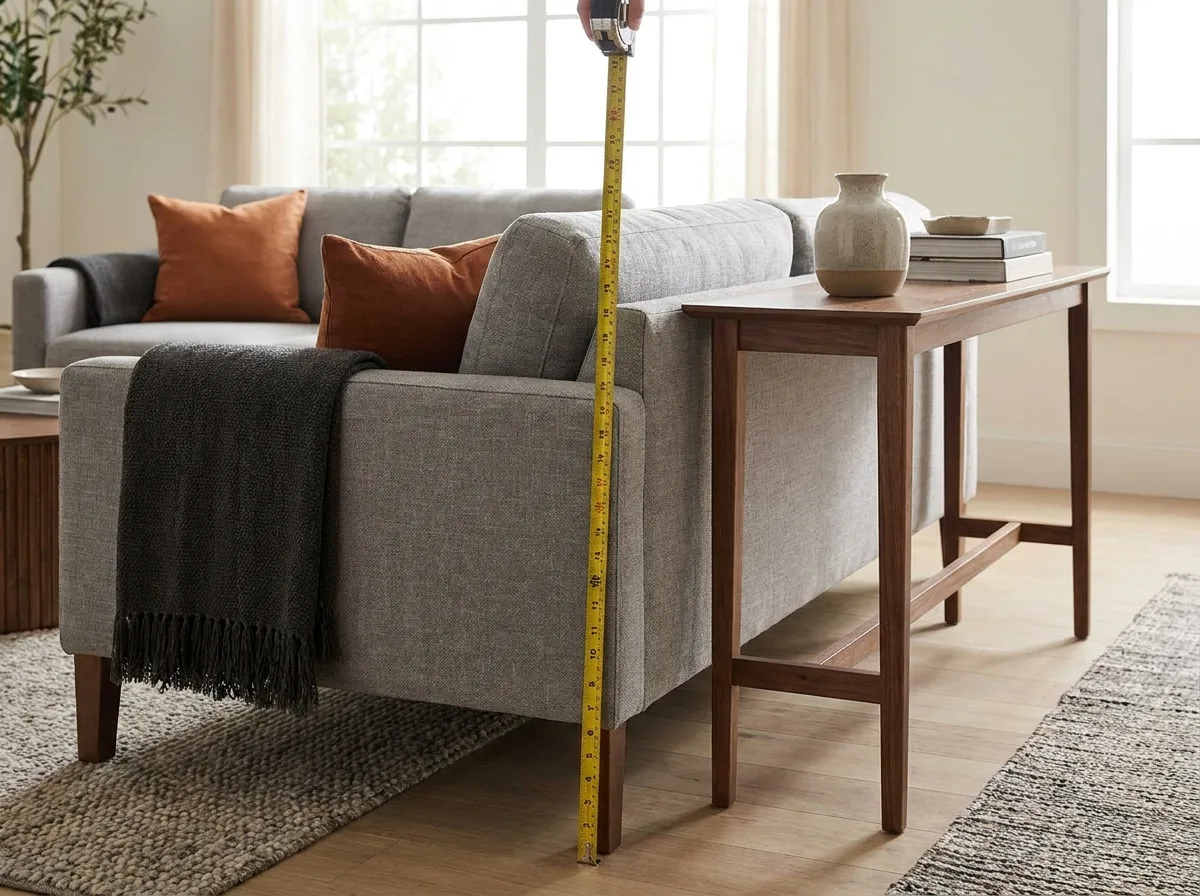
One homeowner thread has a poster with a 28 inch frame, 34 inch cushions and 30 inch tables, worried about heads hitting the edge. The common reply: match the back height without the cushions, or trim about 2 inches off the legs.
"Flush with the frame" is a guide, not a law. A table a little above the frame often looks fine, as long as nobody leans on it. Use your own sofa, not the average one.
Table behind couch size: how deep, long and far from the sofa?
Aim for a slim depth, often about 10 to 14 inches, and a length of roughly 70 to 90 percent of the sofa, which is one common rule of thumb. Leave a small gap of a few inches from the sofa back, and keep about 3 feet of walkway on the other side if people pass through.
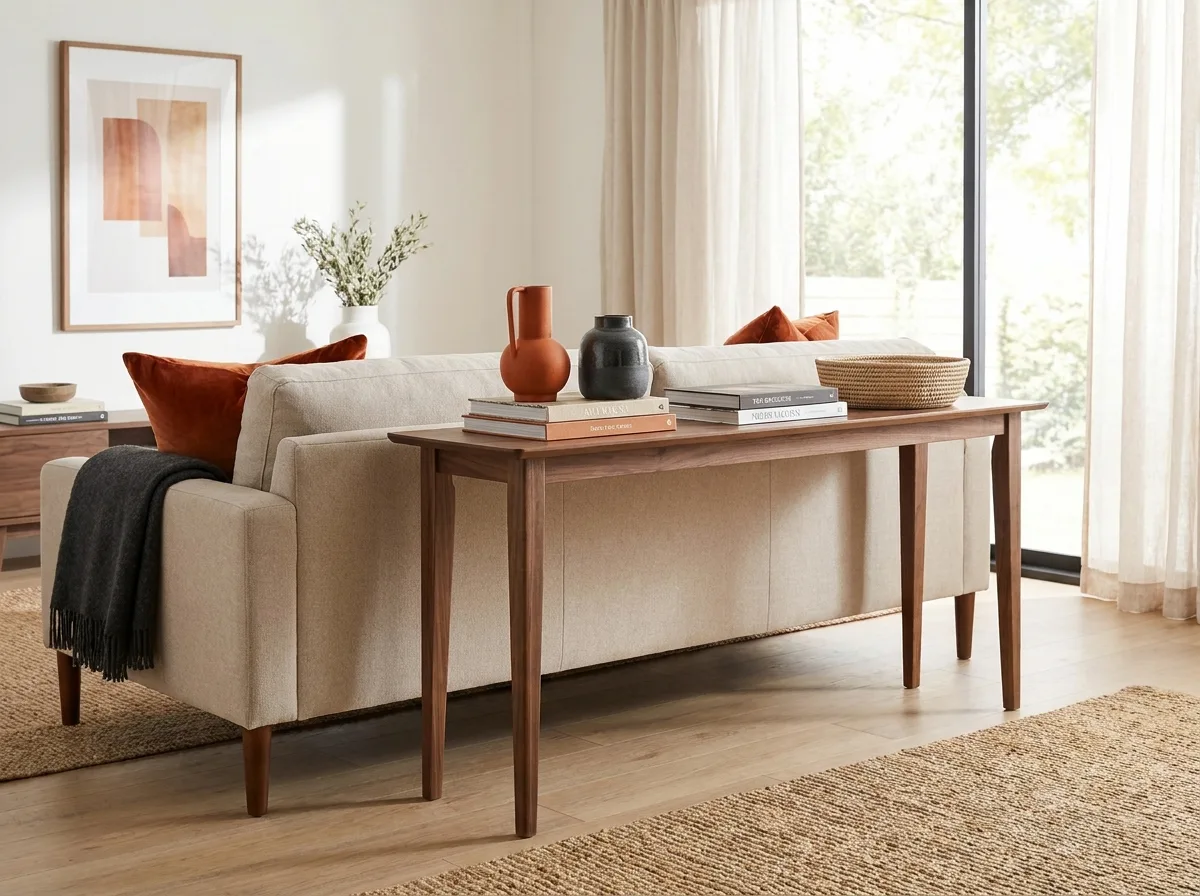
IKEA lists its LACK sofa table at about 55 inches long and 15 inches deep, and its HAVSTA console at about 39 by 14 inches. Those are manufacturer figures, so check the product page.
| Sofa (illustrative) | Table length at 70 to 90 percent | Why it works |
|---|---|---|
| Small loveseat, about 60 inches | About 42 to 54 inches | Sofa shows at both ends |
| Standard sofa, about 84 inches | About 59 to 76 inches | Balanced, not wall to wall |
| Long sofa or sectional | Two tables or a longer piece | One short table looks lost |
These figures are illustrative, worked out from the 70 to 90 percent rule, and are not standards. The small gap lets you vacuum without moving anything, and if a door swing eats into the path, shrink the table.
What styles of table behind a couch work best?
Slim wood suits most rooms, metal and glass keep small rooms light, and drawers suit anyone who needs storage. Pick the style that solves your problem rather than the one in the prettiest photo, and always check the depth and height against your sofa before you think about the finish.
Slim wood and warm finishes
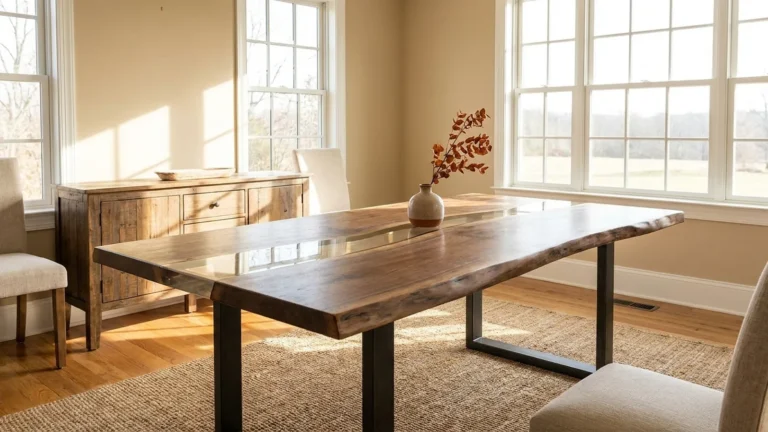
A plain wood table with tapered legs blends into almost any living room. For a bolder look, a live-edge or river table style top makes a statement, though it costs more and weighs more than a plain slab.
Metal, glass and open frames
Thin metal frames and glass tops let the eye pass through, which helps in a small room. They show fingerprints, though.
Storage and drawers
Drawers or a lower shelf hide remotes, chargers and throws. The trade-off is depth, since storage tables run deeper.
Budget is flexible. Roundups such as Driven by Decor use $400 as a common cap, and West Elm lists consoles from about $95 into the thousands, so price tells you little about fit.
Must it match the sofa? No. Contrast usually reads as more intentional than a perfect match.
What can you put on a table behind a couch?
Use it for a lamp, a tray, a plant and one or two personal items, and keep the center fairly clear. A pair of matching lamps frames a long sofa well, while one lamp and a stack of books suit a short table. Skip clutter, since the top is seen from both sides.
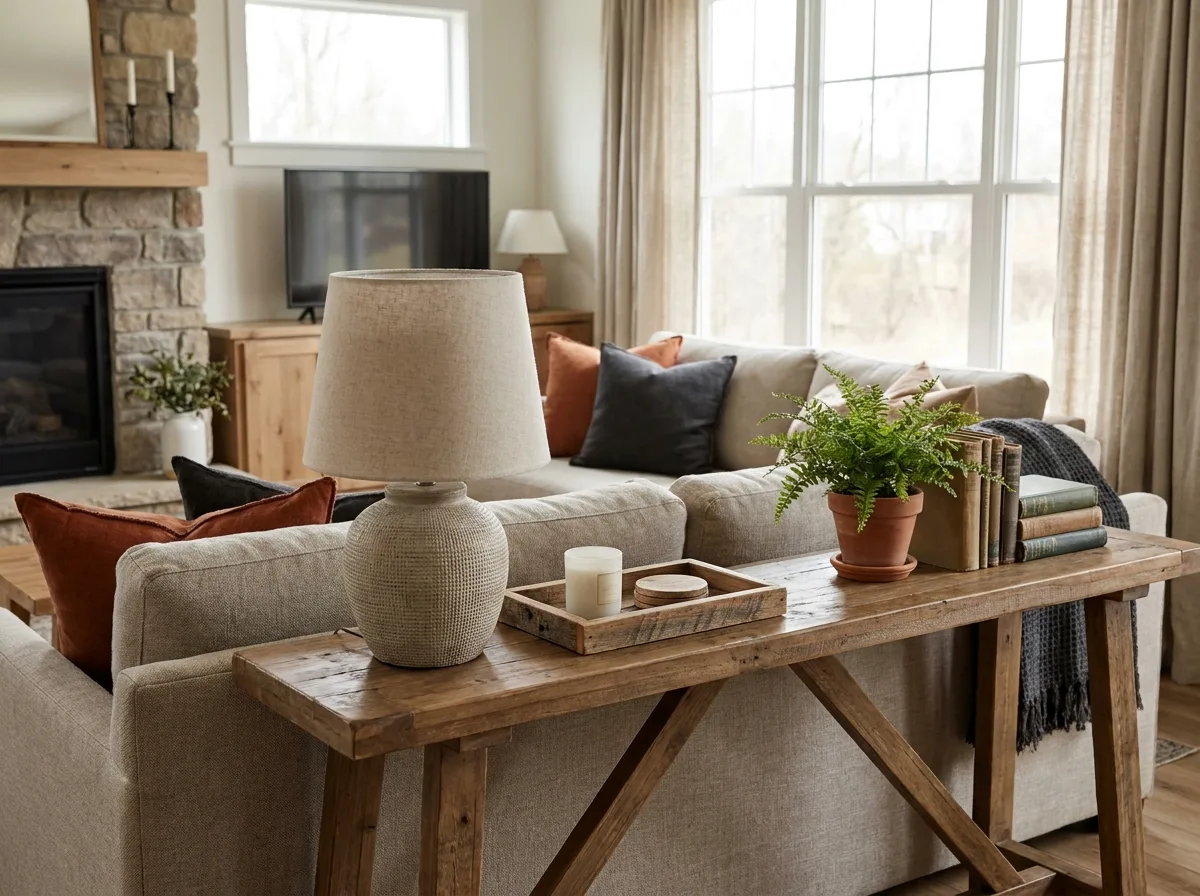
Think by function for any table behind couch style. A drop zone needs a bowl for keys. A snack buffet needs a clear top and a tray. A heavy planter on a narrow table is a tip-over risk around kids and pets. Building a plank on two sturdy legs wins on size. Buying wins when you want drawers.
What if the table is too tall for the couch?
Trim the legs by an inch or two, draw the eye away with a lamp or plant, or choose a lower table. Cutting is the cheapest fix but cannot be undone, so measure twice and cut a little at a time. Renters should skip cutting and use glides or a runner instead.
Say a homeowner buys a 33 inch table behind couch for a sofa frame at 29 inches. The table looks like a fence. A common version of the fix: remove an inch and a half from each leg, even them with sandpaper, and add felt pads. The top now sits close to the cushion line and the problem is mostly gone.
How do you handle a sectional or a floating sofa?
Place the table behind couch seating along the straight back of the sofa and stop short of the corner. For a sectional, use the longest straight run or two matching tables side by side. Do not try to wrap an L-shape unless you can find or build a custom piece, because standard tables are straight.
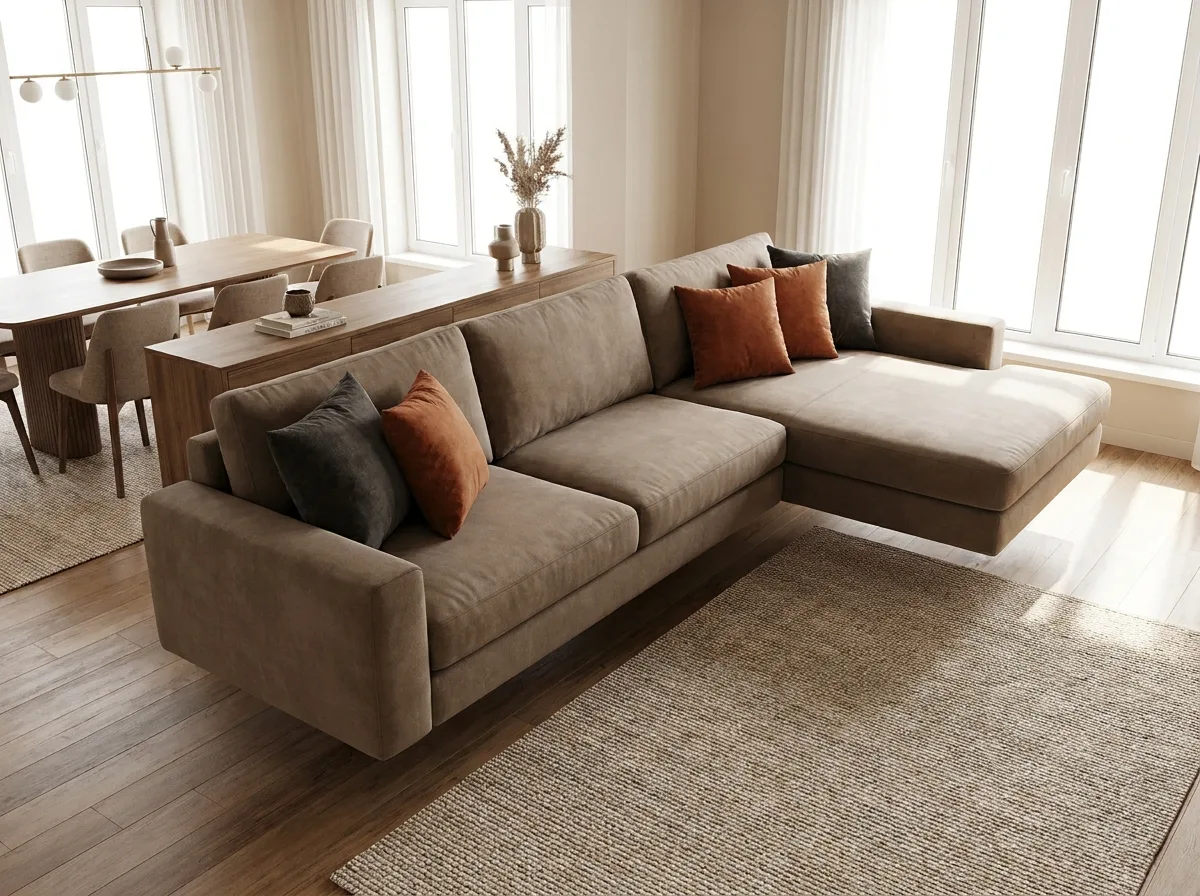
With a floating sofa, a table behind couch also acts as an edge between two zones, such as a living area and a dining area. A desk with a few plants can do the same job, and some people use a 30 inch desk this way. For a curved sofa, a low cabinet follows the curve better than a straight board.
Table behind couch near outlets, vents and walkways: what to check
Before placing a table behind couch seating, check outlets, heating vents and doors. Do not block a vent, keep plugs reachable, and never run cords across a walkway where someone can trip. New outlets need a licensed electrician, and local codes vary by city and state.
A table over a floor vent can starve the room of airflow. Leave it clear or pick a table with a high open base. If the only outlet sits behind the sofa, a table with a built-in charging strip may help. Check the cord length and the rating, and clip cords against a back leg so nobody catches a foot.
What can go behind a couch instead of a table?
A narrow shelf, a bench, a tall plant, a bookshelf or a rug with art on the wall can all do the job. Choose one of these when the gap is under about 10 inches or when you want a softer look than a full table.
A wall-mounted floating shelf behind a wall-hugging sofa holds a lamp and costs no floor space. A low bookshelf works as a divider but can block light. A low chest of drawers, like the one in this malm dresser guide, works if you need drawers and have more depth. A tall slim planter hides a sofa back with almost no footprint.
Common mistakes with a table behind couch
The biggest mistakes are a table that is too tall, too deep, too long, or in the way of vents, outlets and walkways. Most are avoided by measuring before you buy. Tape the outline on the floor and live with it for two days before ordering, so you feel the space.
The usual list: buying by photo, choosing a table as long as the sofa, putting heavy items on a narrow top, blocking an outlet or vent, and forgetting a gap for cleaning.
Frequently Asked Questions
What is the difference between a sofa table and a console table?
Mostly the name. A sofa table is meant to sit behind a sofa, so some sellers make it a little lower and narrower, while a console is made for an entry or wall. Shops use both terms for the same piece. Ignore the label and check height and depth against your own sofa.
Can a table behind a couch be taller than the couch?
Yes, but it can feel awkward. A table that rises above the sofa back can poke heads and block the view from the seats. Many people aim for roughly the frame height or just below the cushions. Measure first, then decide how bold to go.
Should the table match the sofa?
No, and matching is a myth that makes rooms look flat. Pick a finish that echoes something else in the room, such as the floor, a coffee table or the window frames. A little contrast usually looks better than an exact match. What does need to match is scale, meaning the height and length should suit the sofa.
What should I put on a table behind a couch?
Keep it simple. A lamp, a tray, a small plant and a bowl for keys cover most needs. Leave the middle open so the table does not look crowded from the other side, since people see the back of the arrangement too. Mix item heights so the top has a gentle rhythm instead of a flat row.
How wide should the table be in a small room?
Choose a depth of about 10 to 12 inches, which keeps the walkway open and still holds a lamp and a few items. If the room is truly tight, use a narrow shelf instead. Small rooms suffer most from deep tables, so depth matters more than length.
Can a table behind a couch be used as a desk?
Yes, with limits. A table about 30 inches high can work as a short laptop spot, especially with a lamp and a stool that tucks underneath. It is not great for long hours, because there is little legroom and no back support. Use a proper desk for full-time work.
Will a table behind my couch block outlets?
It might. Check the wall before you place it. If an outlet is hidden, pick a table with a lower open base or pull it forward enough to reach the plug. Never use an extension cord as permanent wiring. If you need more outlets, hire a licensed electrician, and remember that local code rules vary by city and state.
Do I need a table in an open floor plan?
Not always. A table is a helpful divider, but a rug, a lamp and a bench can do the same job. If the sofa back faces a dining area and looks bare, a table gives it a finished edge. If the space feels busy, try a tall narrow plant first.
What can I use instead of a table behind a couch?
A shelf, bench, bookshelf, tall plant or large art on the wall can all work. Pick the item that fits the gap. A shelf suits very narrow spots, a bench suits wider ones, and a plant suits almost anything. Measure the gap and the sofa back first, then choose the lightest option.
Is it okay to cut the legs of a table?
Yes, if you own it and it is solid wood, but it is permanent. Mark the cut, remove a small amount, and test the height. Metal legs and veneered tables are harder to cut cleanly. Renters should avoid cutting and use a lower table instead. Never cut more than you need, because you cannot add the length back.
Conclusion
The best table behind couch seating is not the prettiest one in a photo. It is the one that fits your sofa back, leaves a clear path and holds what you need within reach. Height follows the frame, length stays under the sofa, depth stays slim, and a small gap keeps the room easy to live with.
Do that and the head bump from the opening becomes far less likely, because you tested the spot with tape first.
Your next step is simple. Measure the frame, the cushions and the gap, then tape the outline on the floor. If you are planning the wall behind the sofa, the river table guide shows how a statement top can anchor a room. Which gap in your room will you measure first?