
Floating Shelf Guide: Styles, Sizes, Weight Limits and Ideas
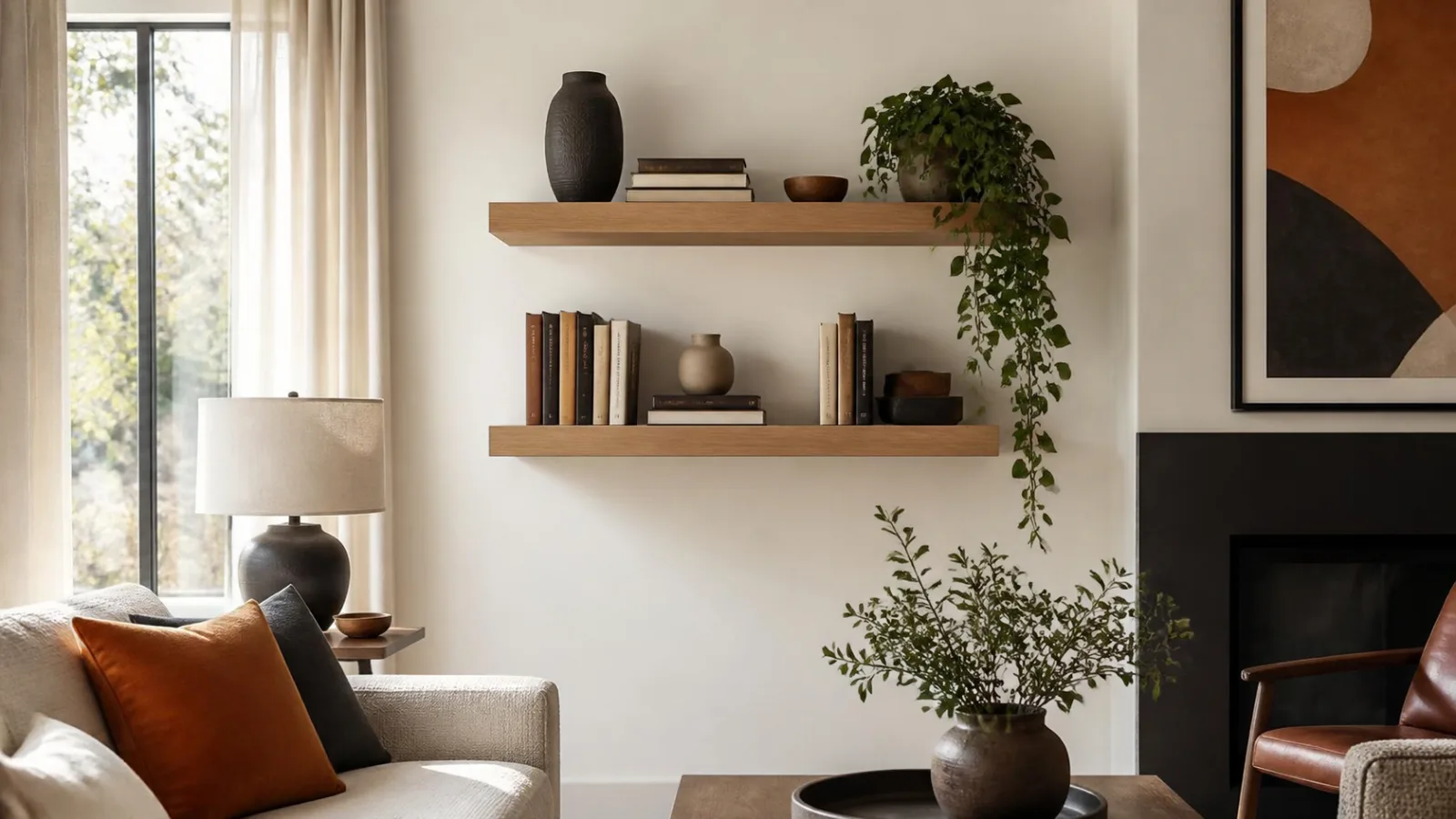
You found the perfect wall, pictured a clean row of books and plants, and then wondered whether a shelf with no visible bracket will hold anything at all. That doubt is fair. A floating shelf looks effortless, but the quality of the hidden support and the wall behind it decide whether it stays flat or slowly tilts.
I’ll also tell you plainly when a floating shelf is the wrong call.
Quick summary
- A floating shelf hides its bracket inside or behind the board, so the wall connection does all the work.
- Screwing into a wall stud is the safest mount. Drywall anchors alone suit light decor only.
- Match depth to what you store: shallow for decor, deeper for books and dishware (see the table below).
- Check the rated load on the package, because it varies a lot between products.
Here is a rough starting point by what you plan to store. Treat it as general guidance, not a rating.
| What you store | Typical depth | Best mount | Rated load to look for |
|---|---|---|---|
| Decor and frames | 4 to 6 inches | Studs preferred, toggles for light items | Well above the decor’s weight |
| Books | 10 to 12 inches | Studs, at least two on long runs | Weigh a stack first, then add margin |
| Dishes and mugs | 10 to 12 inches | Studs | High, with a safety margin |
| Office gear | Deeper, or a desk-rated kit | Studs, heavy-duty hardware | Often heavier than it looks, so weigh it |
What is a floating shelf and how does it actually stay on the wall?
It is a shelf with no visible brackets. A hidden metal mount, usually a plate with steel rods, is fastened to the wall, and the shelf slides over it. The shelf is typically hollow or drilled to receive the rods, so the support disappears.
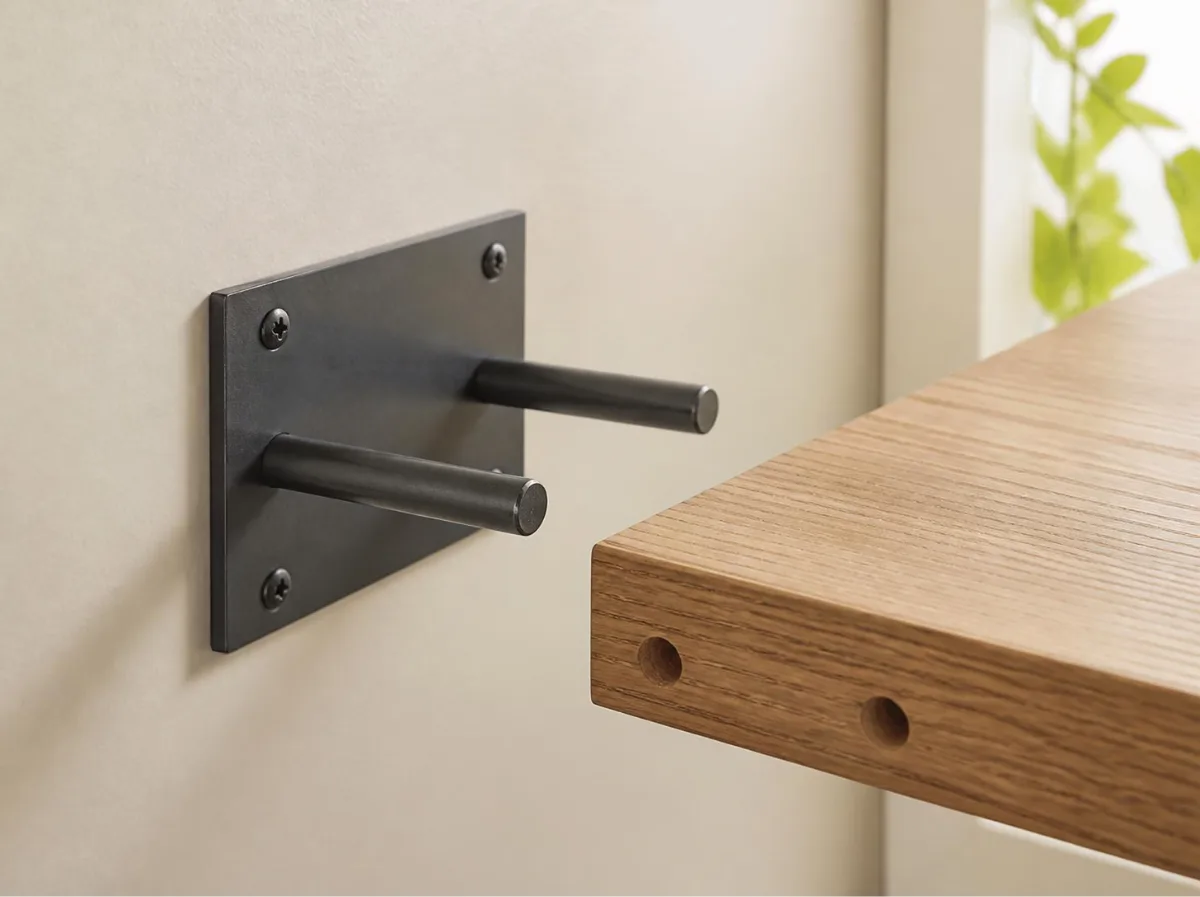
The trick is leverage. Everything you place on the shelf pulls forward and down, and the hidden rods push back against the wall. That is why the wall connection matters more than the board. A thick, handsome shelf on weak anchors will fail, while a plain one screwed into studs will carry far more. A commenter in a DIY forum thread made the same point, noting that a true floating shelf has no visible support bracket, so the hidden hardware has to be strong.
If you want a visible bracket instead, that is simply a bracket shelf. It is often stronger and cheaper, and there is no shame in choosing one.
What are the main floating shelf styles?
Most floating shelves fall into six styles: straight rectangular, corner, staggered groupings, live edge, picture ledge and floating desk. Each solves a different problem, so pick by purpose first and looks second.
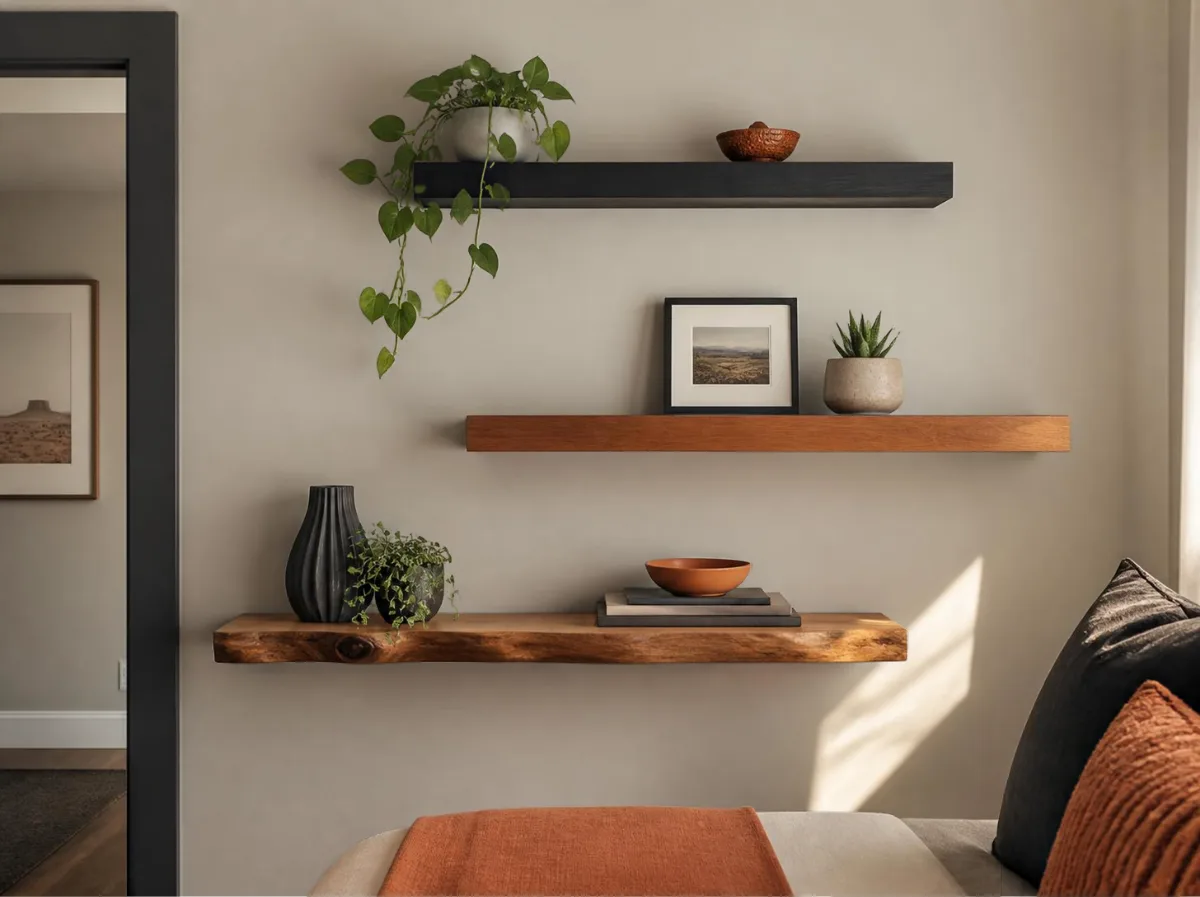
- Rectangular: the default. Works in a single run or a stacked set, and suits almost any room.
- Corner: wraps an inside corner and uses space that normally goes to waste. Good in bathrooms and small rooms.
- Staggered: shelves hung at different heights and lengths. It is common in retail listings and adds rhythm to a plain wall.
- Live edge: keeps the natural curve of the tree on the front edge. It gives a rustic or organic look, but each piece is unique, so matching a pair is hard.
- Picture ledge: a narrow lip for leaning frames and art. It is not meant for heavy objects.
- Floating desk: a deep, thick surface for a laptop. This needs serious mounting into studs, and many people use a desk-rated kit.
A quick rule: choose rectangular if you are unsure. You can always add variety with what you place on it.
What are the best floating shelves ideas for each room?
The best floating shelves ideas follow the room’s job. Living rooms want display and books, kitchens want durable and wipeable surfaces, bathrooms want shallow and moisture-safe, and entries want a landing spot for keys. Here is how that plays out. Shelves also work as a display spot for serveware when you host, like the ideas in our charcuterie cups guide.

- Living room: a pair of long shelves above a sofa or flanking a TV, holding books, a plant and a few objects. Pick a depth that suits what you display.
- Kitchen: short shelves for everyday plates and mugs, or a single shelf for oils and jars. Choose a sealed finish and expect to wipe it often. I would keep kitchen runs modest, since open shelves collect grease and dust.
- Bathroom: narrow shelves above the toilet or sink for towels and toiletries. Use a finish that tolerates humidity.
- Bedroom: narrow shelves in place of nightstands, or a short run over the headboard for a lamp and a book. Keep them narrow.
- Entryway: one narrow shelf with hooks beneath for keys, mail and a small bowl.
- Office: a deeper shelf for a printer or files, or a floating desk. Plan the load first, because office gear is heavier than it looks.
Which material is best: solid wood, MDF, metal or glass?
Solid wood is the best all-round material for strength and longevity, MDF is the budget option with a smooth painted finish, metal is thin and strong, and glass suits light display. The right pick depends on weight, moisture and budget.
| Material | Strengths | Watch out for | Best for |
|---|---|---|---|
| Solid wood | Strong, repairable, real grain | Can warp, especially soft pine | Books, living rooms |
| MDF or veneered board | Smooth paint finish, affordable | Swells if water gets in | Dry rooms, decor |
| Hollow-core | Light, hides the mount well | Lower capacity | Decor, frames |
| Metal | Slim profile, very rigid | Industrial look, cold feel | Offices, garages |
| Glass | Bright, airy | Fragile, shows fingerprints | Bathrooms, small objects |
Warping is a real complaint. One woodworking thread titled "Floating Shelves are Overrated" came from someone whose pine shelf warped, and they asked for a better wood. As general guidance, denser hardwoods tend to hold flat better than soft pine, and a sealed finish helps in kitchens and baths. Manufacturers such as Shelfology suggest solid wood be at least about 1.25 inches thick, and thinner sizes belong to hollow-core designs.
What size floating shelf should you choose?
Choose the length from your wall and your layout, the depth from what you will store, and the thickness from how much strain the shelf will take. As a starting point, decor shelves can be 4 to 6 inches deep, and books or dishware need about 10 to 12 inches.
Room-based depth guidance from Ashdeco puts bathrooms above a sink at 4 to 6 inches, kitchens and living rooms at 8 to 10, and entry and bedroom shelves at 6 to 8. Shelfology lists about 10 inches as a general depth and 10 to 12 for kitchens. If you are updating the whole room, our bathroom remodel guide covers costs and timeline.
Longer shelves need more support points. A long run should hit at least two studs, which are typically 16 inches apart in many homes and sometimes 24. Deeper shelves also multiply the leverage on the wall, so a 12-inch shelf is much harder on the mount than a 6-inch one holding the same weight.
Mock it up before you drill. Cut cardboard to the exact length and depth and tape it to the wall.
How far apart should floating shelves be spaced?
A standard gap between stacked shelves is 12 to 16 inches, measured from the top of one shelf to the underside of the next. Taller objects need more room, and tight spacing looks busy.
Think about the tallest thing on each shelf. Paperback books clear 12 inches easily, while a large cookbook or a tall vase may need 14 to 16. A common approach is to leave the biggest gap at the bottom, where the heaviest and tallest items usually sit, and let the gaps narrow toward the top.
How much weight can floating shelves hold?
Floating shelves hold anywhere from a few pounds to well over 100, depending almost entirely on how the mount is attached to the wall. Drywall anchors alone are the weak link. Studs or wood blocking behind the wall are what unlock real capacity.
Retail ratings show the spread. The Architectural Digest roundup lists shelves rated from 24 to 60 pounds depending on size, and a long shelf from another maker rated at 150 pounds. The Shelfology guide claims big-box shelves often carry about 20 pounds, and that anchors alone are good for roughly 5 to 10 pounds. Those are manufacturer claims, so treat them as ballparks and read the rating on your own product.
How much weight can a floating shelf hold in practice?
The honest answer is to count what you plan to put on it. A row of paperbacks adds up fast, and a full shelf of hardcovers or dishes can pass what a drywall-only mount can take. A Carpentry forum thread about storing around 1,000 pounds of records drew the plain reply that a standard wall-hung shelf cannot do that.
Here is a simple way to plan:
- List what will sit on the shelf and estimate the weight with a kitchen or bathroom scale.
- Add a safety margin, since loads are not always evenly spread.
- Compare the total with the product’s rated capacity and with the wall method you will use.
- If the total is close to the limit, upgrade the mount or choose a bracket shelf.
Do you need a stud, and what anchors work in drywall or plaster?
Yes, a stud is the best option whenever you can reach one. The Lowe’s drywall anchor guide says securing to a wall stud is the best option, and anchors are the fallback when no stud lines up. Choose the anchor by the weight and by the wall.
Lowe’s lists estimated ranges for anchors in drywall: plastic expansion anchors at about 5 to 25 pounds, pop toggles at about 40 to 155, wing toggles at about 140 to 150, and channel toggles at about 160 to 265. Those are ultimate-strength estimates, and other guides quote lower working loads per anchor, so stay well under the number on the package.
| Wall type | What to do |
|---|---|
| Drywall over studs | Screw into studs, using a stud finder to locate them |
| Drywall, no stud where you need it | Use toggle-style anchors rated well above your load |
| Plaster and lath | Hire a handyman if unsure, since anchors can crumble. If you go ahead, aim for studs, and screw length depends on the wall |
| Tile or concrete | Needs the right masonry bit and anchors. Stop if unsure |
| Unknown wiring or pipes | Stop and have a pro check |
A common problem from forum threads is a stud in the wrong place, or only one stud under a long shelf. Some kits ship with their own anchors that are not great. A reply to a sagging-shelf thread said the fix was swapping the included hardware for drywall toggles.
Safety note: drilling into walls can hit electrical wires or plumbing. If you are unsure what is behind the wall, or your wall is plaster or tile, call a licensed handyman or electrician. Building codes and wall construction vary by location and age of the home.
How do you install a floating shelf step by step?
Plan an afternoon the first time: mark and level the position, find the studs, drill pilot holes, fasten the mounting plate, then slide the shelf onto the rods. Follow the maker’s instructions for your hardware.
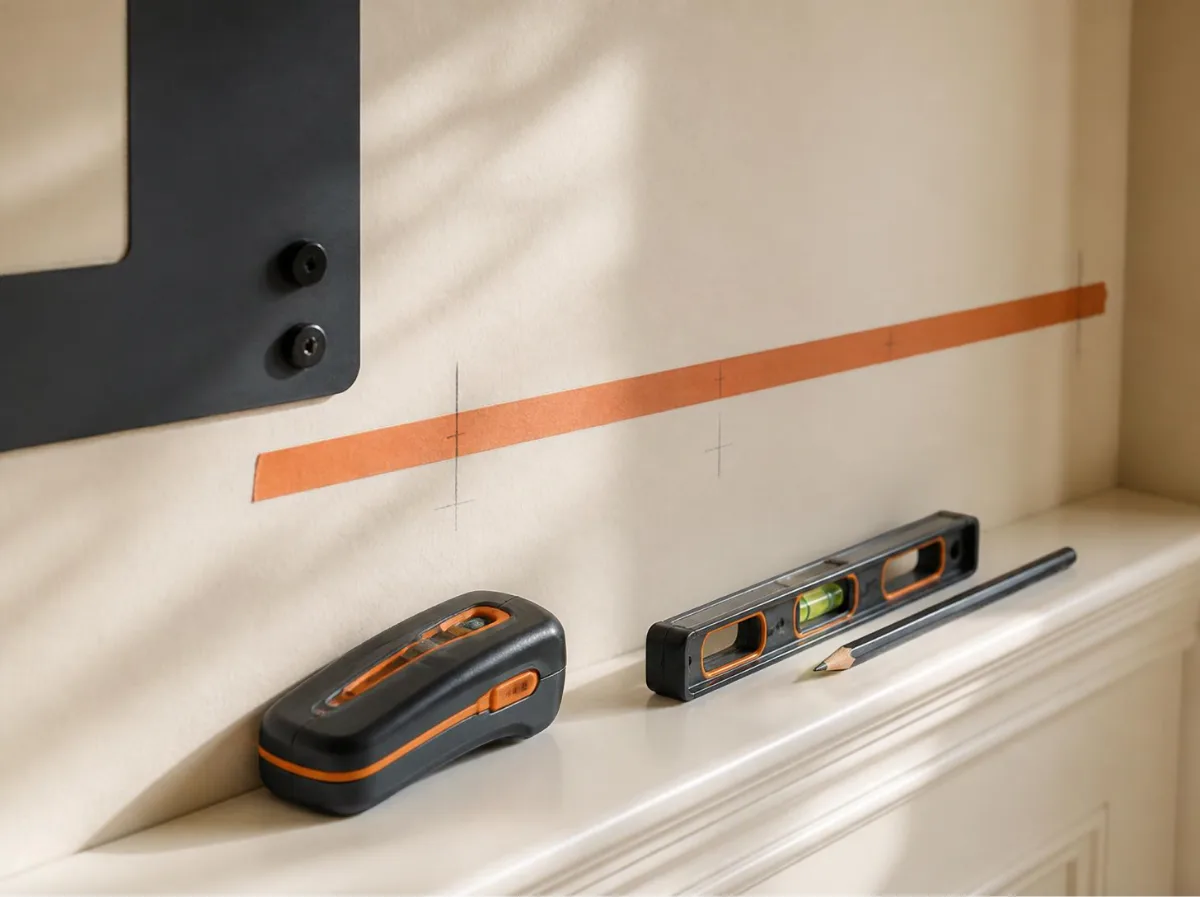
- Plan the height and layout. Mark the spot with painter’s tape and step back to check it.
- Find the studs. Use a stud finder and mark the edges. Mark each stud edge with tape.
- Level the plate. Hold the mounting bracket against the wall and mark the screw holes with a level on top.
- Drill pilot holes. Use a bit sized for your screws, or anchors if you are not hitting a stud.
- Fasten the bracket. Drive screws until the plate sits tight and flat against the wall.
- Slide the shelf on. Push it fully home. Some models have a set screw underneath to lock it.
- Test with light weight first. Add items gradually and watch for sag at the front edge.
Uneven walls leave a small gap behind the shelf. A thin bead of paintable caulk usually hides it. If drills, studs and anchors make you nervous, a handyman can do this quickly, and it is cheaper than patching a wall.
How much does a floating shelf cost?
Costs vary widely. Basic big-box shelves are about $20 each by Shelfology’s account, while solid wood, live edge and made-to-order shelves cost much more. The price drivers are material, length, hardware quality and finish.
Typical ranges only, since prices change by retailer and size. Shelfology also notes that stores often sell basic shelves at about $20 each, and one marketplace listing showed a four-pack of 15.75 inch shelves at about $30. Solid wood and custom pieces generally cost more, and the tiers below show what the extra money buys:
| Tier | What you get | Where to spend |
|---|---|---|
| Budget | Hollow-core or MDF, light capacity | Fine for decor, frames, plants |
| Mid-range | Veneered or solid wood, better mount | Books, everyday display |
| Premium or custom | Solid hardwood, thick, heavy-duty mount, custom length | Heavy loads, long runs, visible showpieces |
Spend money on the mount and the wall connection first, and the board second. A cheap board with a strong mount can be refinished. A pretty board with a weak mount ends up on the floor. Add the cost of anchors, a stud finder and a level if you do not own them, and a handyman’s time if you hire one.
Can renters use floating shelves without drilling?
Not really. Adhesive and no-drill options exist, but they carry very little, and no reliable adhesive method supports a true floating design with real weight. Ashdeco says command-type strips top out around 16 pounds and are not meant for floating shelves.
If you rent, check your lease first. Small screw holes are often acceptable and are easy to patch with spackle, but some landlords want to approve them. If you cannot drill at all, consider these alternatives:
- A freestanding bookcase or ladder shelf that leans without screws.
- A picture ledge held with a few small, patchable holes.
- A framed art grouping, which spreads load across several small hooks.
One thread described a renter inheriting a sagging shelf. If you find one, empty it and have the landlord or a handyman check the wall before reloading it.
How do you style a floating shelf so it does not look cluttered?
A common approach is to leave a good share of the surface empty, group items in odd numbers, and vary height. Restraint is what makes floating shelves look expensive, not the number of things on them.
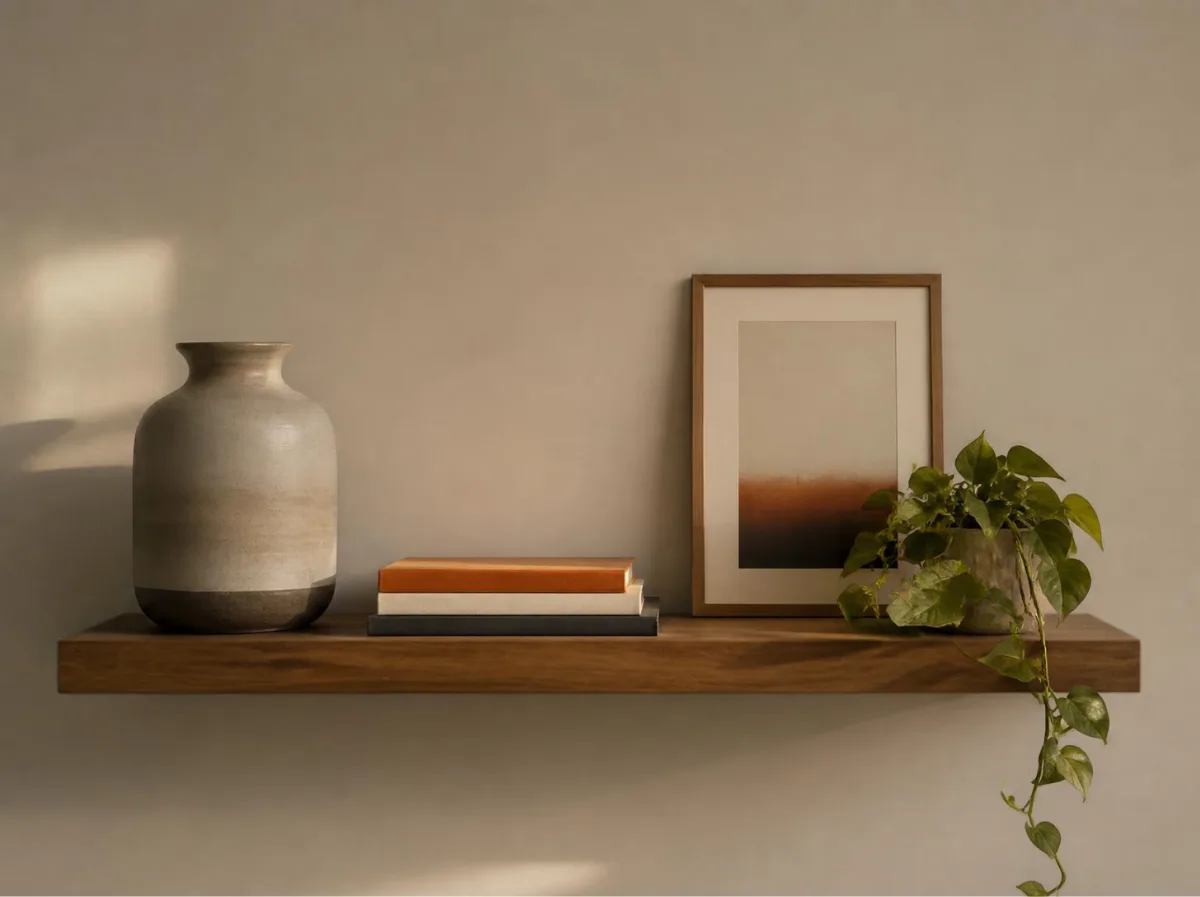
A simple formula works well. Start with one anchor object, such as a larger vase or a stack of books lying flat. Add a medium piece and one small accent. Repeat that rhythm on the next shelf, but change it so the shelves don’t mirror each other. Mix textures, such as ceramic, wood and a trailing plant, and keep to two or three colors.
Heavy things go low and toward the back. Lean a frame against the wall to add height without weight. On a long shelf, cluster items in groups with breathing room between them rather than spacing everything evenly.
Are floating shelves worth it or do they sag, collect dust and warp?
Floating shelves are worth it for light to medium loads in the right spots, but they are not magic. The honest downsides are sagging if the mount is weak, warping in soft wood, dust on open surfaces and a limit on what they can carry.
A kitchen thread weighed floating shelves against more cabinets, and another said open shelves mean more dust and cleaning. That is true. If you dislike dusting, closed storage may suit you better. Shelves also sag when the screws loosen over time or when too much weight hangs on the front edge. If you need to hide clutter, closed storage behind closet doors is another route.
Pick floating shelves if you want a clean look, you have studs to hit and you will store decor or a moderate number of books. Skip them for heavy storage, for walls you cannot verify, or if you want zero maintenance. A bracket shelf or a bookcase is the better answer in those cases.
What mistakes should you avoid?
The most common mistakes are skipping the stud, overloading the shelf, choosing too deep a board, trusting the hardware in the box and not leveling before drilling. Each is easy to avoid with a little planning.
- Mounting into drywall alone for books. Find a stud, or use toggle anchors rated well above the load.
- Guessing the weight. Weigh the items and compare them with the rating.
- Going too deep. A deep shelf has more leverage on the wall and may bump into heads or doors.
- Trusting included anchors. Some are basic. Check the rating and upgrade if needed.
- Ignoring wall type. Plaster and tile need different methods.
- Using soft wood in humid rooms. Pine can warp, so use hardwood or a sealed finish.
- Not leveling. A tilted plate makes a tilted shelf, and it is hard to fix once the screws are in.
Frequently Asked Questions (FAQ)
Are floating shelves strong enough for books?
They can be, if the mount goes into studs and the shelf is rated for the load. Books are heavier than most people expect, so weigh a typical stack and compare it with the rating. For a large library, a bracket shelf or bookcase is a safer choice.
Can floating shelves go on drywall without a stud?
Yes, for light decor, using the right anchors. Toggle-style anchors hold far more than plastic expansion anchors, but ratings differ by brand. Stay well below the package rating, and avoid heavy items such as dishes or books when you have no stud behind the shelf.
How deep should a floating shelf be?
Choose depth by use. Roughly 4 to 6 inches suits decor, and 10 to 12 inches suits books and dishes. See the size section for room by room depths. Deeper shelves put more strain on the wall, so match the mount to the depth.
How high should I hang a floating shelf?
It depends on the room. Above a sofa or desk, leave enough clearance to sit comfortably and avoid bumping your head. Eye level suits display shelves, while shelves for daily items should be within easy reach. Tape a paper template to the wall first and check it from where you normally stand.
Do adhesive or no-drill floating shelves work?
Only for very light items. Adhesive strips top out around 16 pounds according to Ashdeco, and that is for hanging things, not for a shelf with leverage. Use screws into a stud for a real one, or choose a freestanding unit if you cannot drill.
What is the best wood for a floating shelf?
Solid hardwood is a common choice and is generally less prone to warping than soft pine. For kitchens and baths, add a sealed finish. Veneered board is a lower-cost option, though it should stay dry.
How do I fix a sagging floating shelf?
Remove the items, then check the mount. If the screws only bite into drywall, move them into studs or replace the anchors with heavier toggles. Tighten any set screws on the shelf. If the board itself has bowed, you may need a new one or a thicker replacement.
Can I put a floating shelf over a plaster or tile wall?
Sometimes, but it is trickier. Plaster and lath can crumble around anchors, and tile needs a masonry bit and the right anchors to avoid cracking. Hire a handyman if you are unsure, and check what is behind the surface before drilling.
Are floating shelves safe with kids and pets?
They can be, if you mount them well and place them sensibly. Secure the shelf into studs, keep heavy or breakable items low and to the back, and avoid placing fragile things where a bump or a jump could knock them off. A shelf is not a climbing aid, so do not let children climb or hang on it.
How do I clean and care for floating shelves?
Dust regularly with a dry or slightly damp microfiber cloth. Wipe kitchen shelves with a mild cleaner to remove grease, and dry them well. Avoid soaking MDF or unsealed wood. Every so often, check that the shelf is still tight and level, and re-tighten any set screws.
The Bottom Line
Floating shelves are a great fit when you want a clean wall and you plan for the load. Start with what you will store, choose a depth to match, find the studs and buy hardware rated well above your weight. Spend on the mount before the board, and skip the shelf entirely if the wall or the load is a poor match.
For your first one, hang a single shelf in a low-stakes spot and watch how it behaves for a few weeks before building a whole wall.
So which wall in your home is begging for a shelf, and what would you put on it?


3 Comments