220 Outlet Guide: Find Your Type and What It Can Safely Run
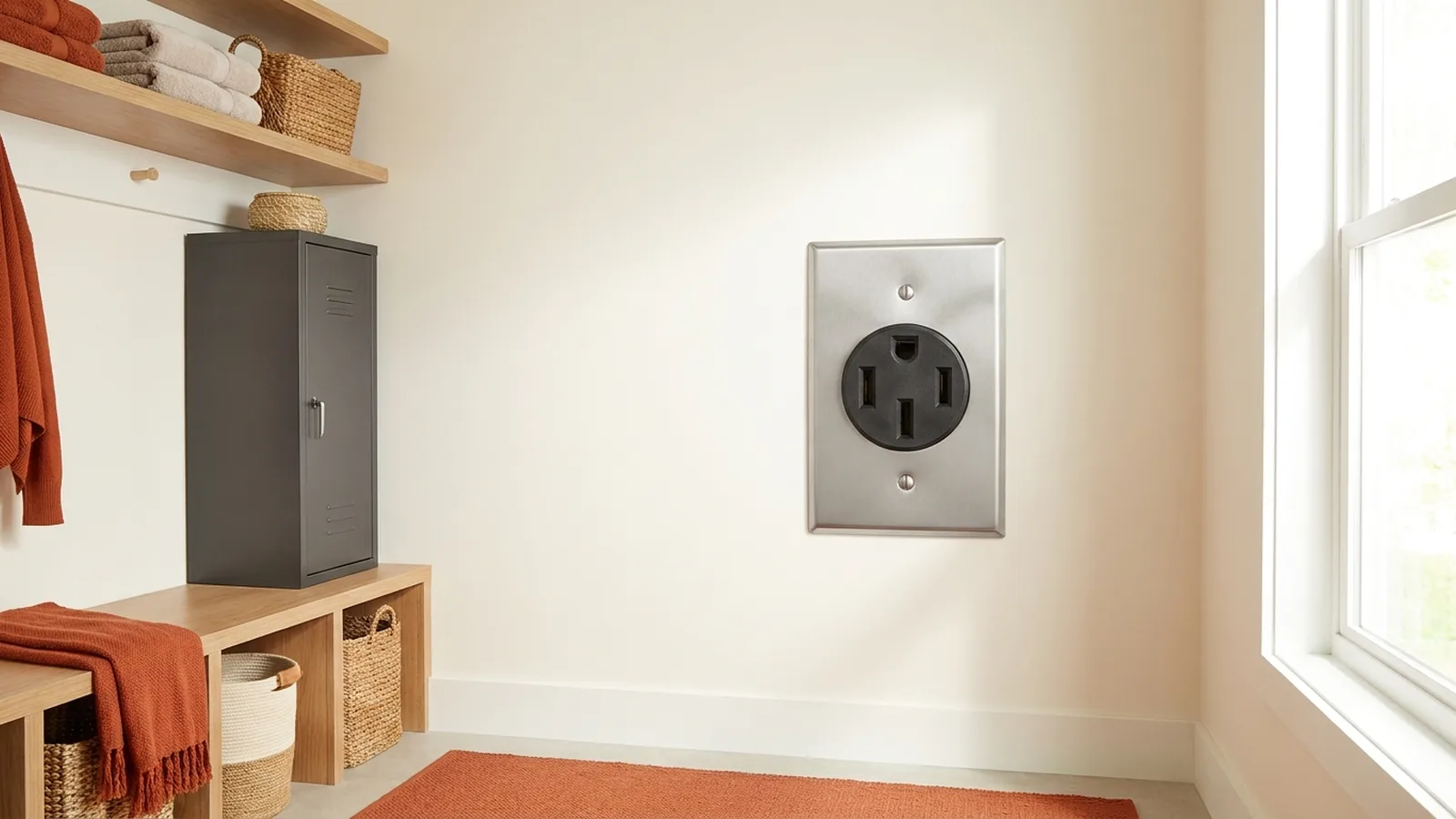
Say you just bought a used electric dryer at a great price. You wheel it into the laundry room, and the cord ends in a plug that fits nothing on the wall. The wall has a fat, odd-looking receptacle with three or four slots. Or nothing at all. Now you’re staring at a heavy appliance, a plug that won’t fit, and a choice between a licensed electrician and a very bad shortcut.
That choice starts with knowing what a 220 outlet really is. It isn’t one thing. It’s a family of receptacles that look alike across the room and behave very differently up close. Plug the wrong thing into the wrong one, or "adapt" your way around it, and you risk melted cords and tripped panels.
This guide is one part of understanding your home’s electrical system, and it pairs well with a walkthrough of wiring a standard outlet. By the end you’ll know how to identify your receptacle, match it to an appliance, and judge what an install should cost.
Executive Summary
Here is the short version. A 220 outlet is what most people call a 240-volt receptacle. In a US home it sits on a double-pole breaker, the wide breaker that takes two slots in your panel. Dryers, ranges, EV chargers, welders and some shop tools use it because they draw a lot of power.
Three insights save the most grief. First, the slot shape tells you the amperage and whether a neutral wire is present, so the shape matters more than the voltage name. Second, you cannot safely turn this kind of outlet into a 110 outlet by swapping a face plate or a plug. Third, the 2020 National Electrical Code extended GFCI protection to receptacles rated 125 to 250 volts in listed dwelling locations, so new work may need it. Ask your electrician what your area requires.
The biggest objection is cost and fear of DIY. A basic install averages about $220 according to Angi, though panel work pushes it higher. A new circuit is a job for a licensed electrician in most places, and your local code has the last word.
What is a 220 outlet, and is it really 240?
A 220 outlet is a receptacle that delivers two hot legs, giving about 240 volts between them. "220," "230" and "240" all describe the same US service. The older number stuck around in conversation, but appliance labels in American homes usually say 240V. Your house gets 120/240 split-phase power, so both voltages exist inside the panel.
The older number comes from earlier nominal voltage standards, and the public kept the name. On Home Improvement Stack Exchange, a popular answer explains that equipment is rated with a tolerance, commonly plus or minus 5 or 10 percent, so a 230V nameplate works fine on a 240V circuit.
So whether you typed 220v outlet or 220 volt outlet, you’re asking about the same wall receptacle. What changes is the plug configuration, and that’s where it gets interesting.
How can you tell a 220 outlet from a regular 110 outlet?
Look at the breaker first. A 240-volt circuit sits on a double-pole breaker, two switches joined together and taking two panel slots. The receptacle is usually larger, with slots in odd shapes. A standard 110 outlet has two vertical slots and a round ground hole, and sits on a single-pole breaker.
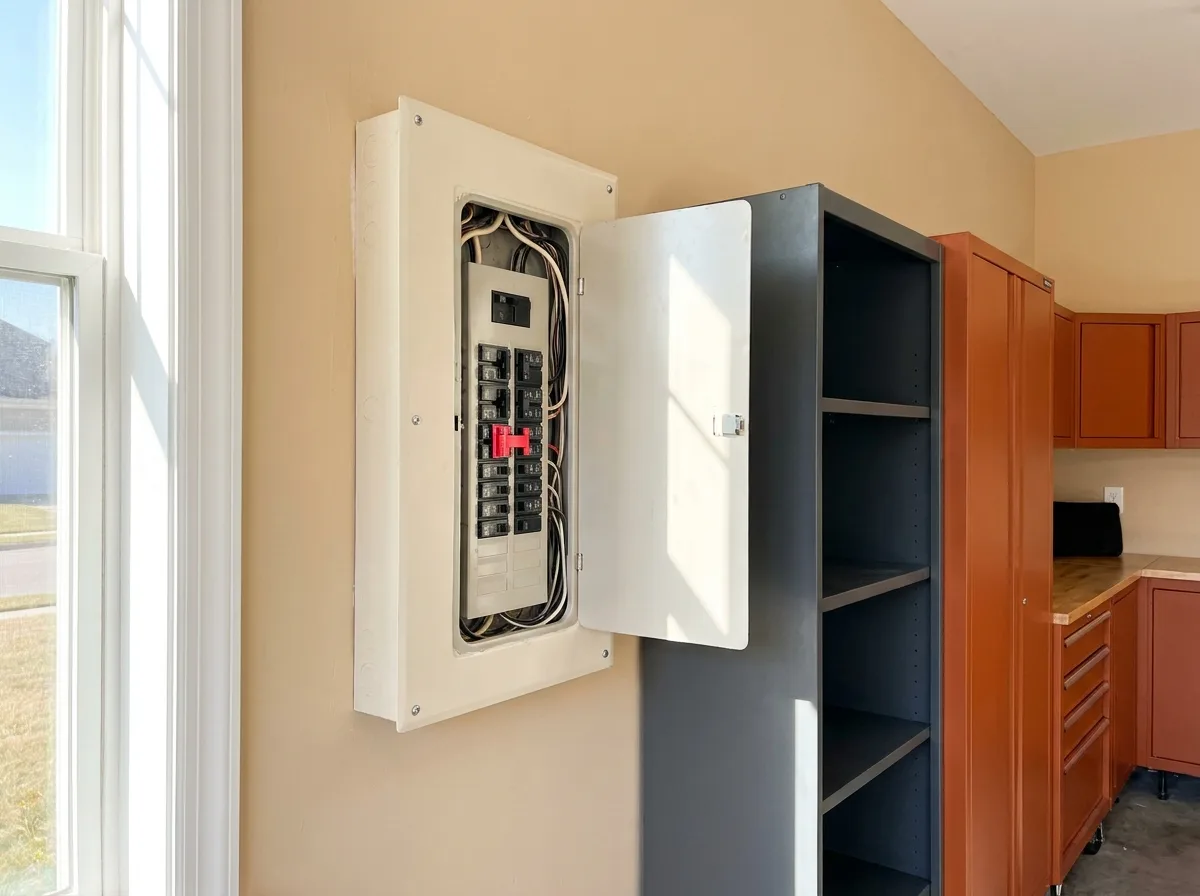
The breaker test beats the face plate, because covers can lie. A woodworking forum answer for a dust collector said the same: find the breaker that takes two slots. Panel labels are often wrong, so treat them as a hint.
A multimeter gives a definite answer. On a working circuit, the reading between the two hot slots is around 240 volts, and each hot slot to ground reads around 120. If you’ve never used a meter, skip this and call an electrician. Probing live receptacles is how people get hurt.
Your kitchen outlet is the 110 type, also called 115 or 120. A 220 outlet is simply the bigger cousin with a second hot leg.
Why are there so many outlet types?
Each 240-volt receptacle is shaped for a specific amperage and wiring layout, so a small circuit can’t be fed by a heavy appliance cord. The National Electrical Manufacturers Association, or NEMA, gives each shape a code like 6-20 or 14-50, where the number after the dash is the amp rating.
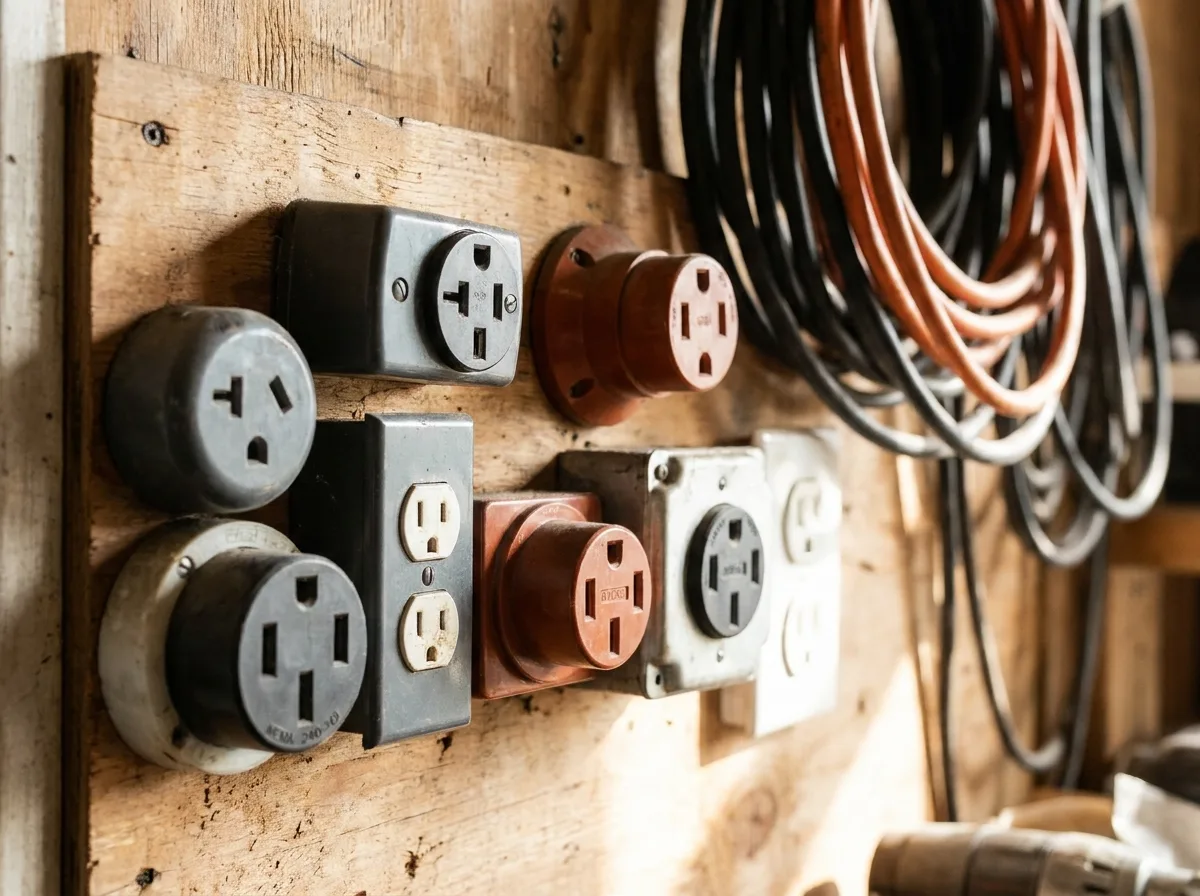
Think of it as a lock-and-key system. This 220 outlet table covers the types you’ll meet in US homes, judged on what they power, whether they carry a neutral, and how common they are.
| NEMA type | Amps | Neutral | Typical use | Notes |
|---|---|---|---|---|
| 6-15 | 15 | No | Small window AC, shop tool | Looks like a 120V plug turned sideways |
| 6-20 | 20 | No | Larger window AC, tools | T-shaped slot on the 20A side |
| 6-30 | 30 | No | Heavy shop equipment | Common in workshops |
| 6-50 | 50 | No | Welders, plasma cutters | Three-prong |
| 10-30 | 30 | Yes, no ground | Older dryers | Legacy in new work |
| 10-50 | 50 | Yes, no ground | Older ranges | Legacy in new work |
| 14-30 | 30 | Yes | Modern dryers | Four-prong |
| 14-50 | 50 | Yes | Ranges, RVs, EV chargers | Four-prong, most versatile |
| L6-30 | 30 | No | Generators, shop gear | Locking, twist to secure |
A neutral wire lets an appliance run 240-volt heating and 120-volt controls such as a dryer timer. A twist-lock plug resists vibration, which suits generators.
What can you plug into a 240-volt receptacle?
Only what the receptacle was built and wired for. Typical loads are electric dryers, ranges, EV chargers, welders, kilns, dust collectors, well pumps and big window air conditioners. Plug shape, amp rating and breaker size decide compatibility, so voltage alone never tells you whether a device is safe to plug in.
Match three things. The plug shape must fit the receptacle. The appliance’s amp rating must sit at or below what the circuit supplies. And a qualified person must have sized the wiring for that amperage.
Common loads include electric dryers and ranges, Level 2 EV charging, welders on 6-50, ceramic kilns, woodworking dust collectors, well pumps and RV or generator hookups. Big window units are another, and a vertical window air conditioner is a good example where the label tells you whether you need 240V.
The label on the appliance’s back panel is your best friend. If it says 240V or 208-240V, you have a candidate. If it says nothing, read the manual before buying a plug.
Which receptacle does a dryer, range, EV charger or welder need?
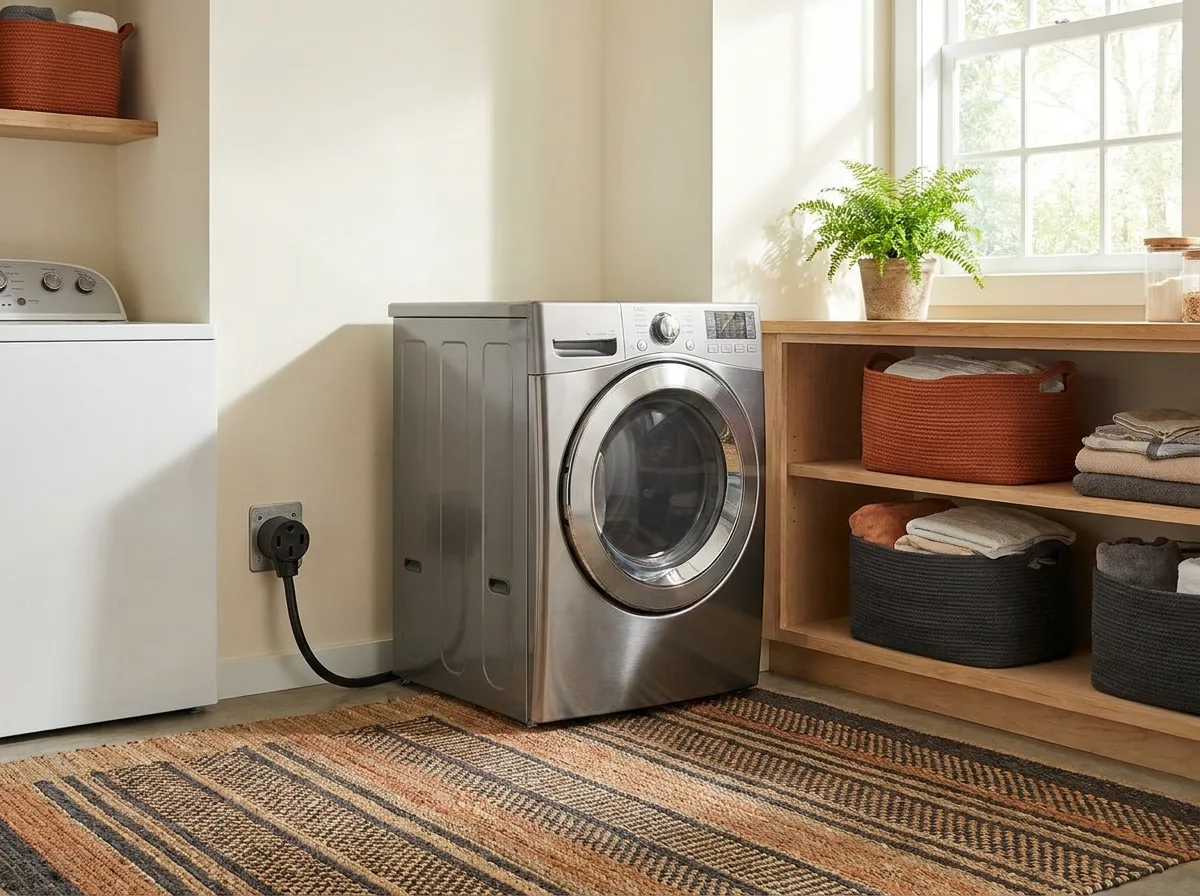
Dryers usually need a 14-30 (or an older 10-30). Ranges usually need a 14-50 (or an older 10-50). EV chargers commonly plug into a 14-50, and welders often use a 6-50. These are common matches, but the appliance manual and your local code have the final say.
Take a composite case. A homeowner buys a new induction range and finds a three-prong 10-50 left in the wall from decades ago. The range ships with a four-prong cord. One path is a three-prong cord kit, if the manufacturer allows it. The other is updating the receptacle and wiring to four-prong. Which is right depends on the manual and on what the local inspector accepts.
I’d lean toward the update, since a dedicated ground is worth it. Ask for both options in writing.
A quick decision rule. Pick 14-50 if you want one receptacle for a range, RV or EV charger. Pick 14-30 for a dryer-only spot. Pick 6-50 if a welder is your only heavy load.
What does a 4-prong versus 3-prong plug mean?
A 3-prong 240-volt outlet has two hots plus either a neutral or a ground, not both. A 4-prong has two hots, a neutral and a separate ground. Four-wire is the current standard for new dryer and range circuits because the ground gives fault current a dedicated path back to the panel.
Older homes often have the three-wire version, where the neutral also served as the ground. It isn’t an emergency, but it’s a reason to ask about upgrading when you replace an appliance.
People sometimes try to turn a dryer receptacle into a regular one. Stack Exchange threads mostly end with the same advice: if it is three-prong, hand it to a pro. A shared-neutral setup, called a multi-wire branch circuit, can overload in surprising ways.
Can you use a 240-volt receptacle for 110 devices?
Not safely by swapping parts. The circuit is built for a different voltage, breaker size and wiring, so a cheap adapter only hides the mismatch. The safe options are a step-down transformer rated for your load, or a new 120-volt circuit installed by a licensed electrician.
Search results are full of "220 to 110 converter" listings, and some are legitimate transformers. But a transformer must be rated for the watts you run, and heating appliances can demand more than you’d think. A mismatch overheats the transformer.
Here’s what not to do: wire a 120-volt receptacle onto a dryer circuit, or use an adapter so a standard plug "fits." The breaker on that line is sized for the big appliance, so a short in a small device might never trip it.
Your safe routes, in my order of preference: add a proper 120-volt circuit, use a correctly rated transformer for one device, or buy the 120-volt version of the appliance. Overseas gear is a classic trap too. Europe runs 230 volts at 50 hertz with different plugs, so check the label.
Does higher voltage save energy?
No. Electricity is billed by kilowatt-hours, and a kilowatt-hour costs the same at 120 or 240 volts. The real advantage is lower current for the same power, which allows thinner wire, less heat in the cable, and faster charging or heating for demanding loads like cars and dryers.
A Quora poster asking about a Chevy Volt got the right answer: a kWh costs the same at 110 or 220, and the gain is charging speed and convenience. If your dryer uses 5 kilowatts for an hour, you pay for 5 kWh either way.
Power equals volts times amps, so doubling the voltage halves the amps for the same watts. Pay for the circuit when the appliance needs it, not to trim your bill.
How much does it cost to install a 220 outlet?
Angi reports an average of about $220 for a 240-volt outlet, with a typical range of $175 to $300, a low near $130 and a high near $400. Electricians commonly charge $50 to $150 per hour. Costs climb with a long run, a full panel, or a required permit and GFCI breaker.
Those numbers describe a basic outlet, so treat them as the floor. The table shows what moves the price.
| Cost driver | Why it matters | Effect on price |
|---|---|---|
| Run length from the panel | More cable and labor | Rises with distance |
| Panel capacity | A full panel may need an upgrade | Can be the biggest add-on |
| Permit and inspection | Required in many places | Adds a fee and a visit |
| GFCI breaker | Required in some locations | Costs more than a plain breaker |
| Wall access | Finished walls mean patching | Adds labor |
On Reddit, one homeowner mentioned about $1,000 extra to run a line to the garage during a renovation. That’s one anecdote, not a benchmark. Get two or three written quotes.
Can you install a 240-volt circuit yourself?
In many places a homeowner can legally do some electrical work, but a new 240-volt circuit usually needs a permit and inspection, and working in the panel is dangerous. Most people are better off hiring a licensed electrician. Local rules vary widely.
Running cable yourself can save labor, but electricians on forums dislike half-DIY jobs. If you run the wire and a pro only connects the breaker, the pro still answers for work they didn’t see. Many refuse. Ask what they’ll accept before you touch anything.
Never work inside a live panel, bypass a breaker, use a breaker that doesn’t match the panel brand, or skip the permit to save a few hundred dollars. An unpermitted circuit can complicate an insurance claim after a fire. Your local authority having jurisdiction, the AHJ, makes the final call.
Does a 220 outlet need GFCI protection?
Often, yes in newer work. The 2020 National Electrical Code expanded GFCI protection to receptacles rated up to 250 volts in dwelling locations such as garages, basements, laundry areas, kitchens and outdoors. Your area may follow an older or newer code edition, so ask your electrician.
A GFCI, or ground-fault circuit interrupter, cuts power when current leaks to ground. For years it was common on 120-volt outlets and rare on 240-volt ones. The 2020 change in NEC 210.8(A) extended the rule to receptacles rated 125 to 250 volts in listed dwelling locations. Ask your electrician which of your outlets are covered.
The twist is local adoption. Some states adopt the latest code quickly, and others lag by cycles. A 240-volt GFCI breaker costs more than a standard one, and some appliances can nuisance-trip on it. If that happens, ask the electrician about the cause. Never ask about removing the protection.
Is a plug-in receptacle or a hardwired EV charger better?
A plug-in 14-50 is flexible and cheaper, while a hardwired charger avoids the plug connection and is often preferred for higher continuous loads. Loose connections at high-amp outlets are a known heat risk, so electricians on forums often say they prefer hardwiring at higher amperage.
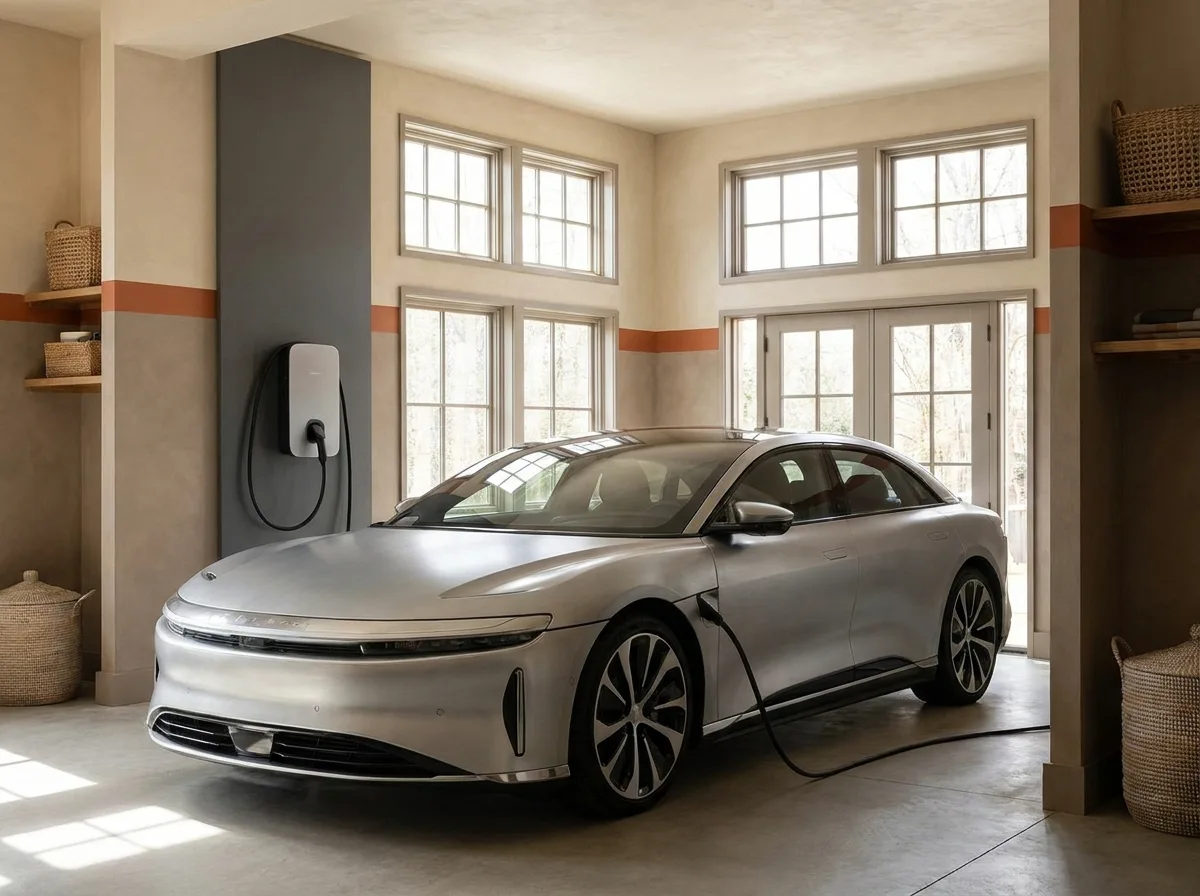
Say a homeowner buys an EV. The 220 outlet route costs less upfront and lets the owner unplug the charger and take it along when moving. The hardwired route removes a connection that can loosen with repeated plugging. Reddit electricians point out that plugs wear, and a heavily used 50-amp receptacle can heat at the contacts if it isn’t snug.
My pick: if the charger will live on the wall permanently, hardwire it. If you rent, travel with an RV, or want flexibility, a quality 14-50 works, and you should check it for warmth now and then. Verify charger specs with the manufacturer, and leave the continuous-load sizing of the circuit to your electrician.
Should you run a 240-volt line to the garage now?
Sometimes, if you’re already opening walls or upgrading a panel. Adding a line during a renovation costs less than doing it later, but it’s a bet on a future EV, welder or shop tool. If you have no plausible need in a few years, skip it.
A Reddit poster asked whether the extra money is worth it for a future EV. The honest answer is "it depends whether a future car is realistic." A Quora reply said to install 240-volt outlets only for specific loads.
My test: do it now if the walls are open, the panel has room, and you may buy an EV, do metalwork, or want a heavy shop tool. Skip it if the panel is near capacity, because the real bill may be a service upgrade. A new house does not need one in every room.
What mistakes should you avoid?
The costliest mistakes are adapting a plug instead of fixing the circuit, ignoring amp ratings, skipping the permit, and assuming all 240-volt receptacles are alike. Each is cheap to avoid and expensive to repair later, so slow down before you buy a cord or cut a wire.
A common version of the first mistake: a homeowner cuts the plug off a new appliance and wires on whatever fits the old outlet. The appliance runs. Months later the cord is warm because the circuit was never sized for the load. The fix is matching the plug to the circuit and having a pro check it.
- Guessing amperage. The breaker, wire and receptacle must all match the load.
- Ignoring 3-prong versus 4-prong. Know what your wall has before buying a cord.
- Buying "220" gear abroad. Check plug, voltage and frequency.
- Forgetting total load. A new 240-volt circuit adds to what the panel must carry, so have the electrician check panel capacity first. The furnace replacement guide shows how other heavy loads change panel needs.
Wire gauge and breaker pairing belong to a licensed professional. I’m deliberately not printing a chart, because the right size depends on amperage, run length, cable type and local code.
Frequently Asked Questions
What does a 220 outlet look like?
It’s larger than a standard outlet and has three or four slots in a distinctive pattern, often angled or round. Some are surface-mounted boxes, others sit flush in the wall. The pattern tells you the amp rating. If you’re unsure, find the NEMA code on the face or matching plug, then compare it with the chart above.
Is 220 the same as 240?
In US homes, yes for practical purposes. Utilities supply 120/240 volts, and labels read 220, 230 or 240 because of tolerance and old naming habits. A 230V appliance works on a 240-volt circuit, as a Home Improvement Stack Exchange answer explains. Check the amp rating and plug shape instead of arguing about the name.
Can I put one anywhere?
Not anywhere you like. It needs a dedicated circuit from the panel, a breaker sized to the load, and space for the receptacle and cable path. Garages, laundry rooms and kitchens are the usual spots. Distance from the panel and wall access drive cost, and the electrician confirms the panel can carry one more heavy load.
Do I need a special plug?
Yes. Each 240-volt receptacle pairs with one matching plug shape, and the shapes are deliberately incompatible. A dryer cord with a 14-30 plug won’t fit a 14-50 receptacle. Never cut or modify a plug to force a fit. Buy the matching cord, or have an electrician change the receptacle to suit the appliance.
Can it run a 110 appliance?
Not by itself. A 110 device on a 240-volt circuit can be damaged or become a fire hazard. If you need 120 volts in that spot, have an electrician add a proper 120-volt circuit. A rated step-down transformer is a limited option for one device, but it must match the appliance’s wattage, so check the label first.
Is a 240-volt outlet more dangerous than a 110 outlet?
Both can kill, but 240 volts delivers more energy, and these circuits often carry high amps. The risk is manageable when the circuit is installed to code, protected correctly, and used with the right plug. Danger rises with loose connections, wrong adapters and DIY panel work. Treat every receptacle as live until a meter says otherwise.
Do I need a permit?
Usually yes. Many jurisdictions require a permit and inspection for a new circuit, and some places want one for more than new circuits. Rules vary by city and state. Your electrician can pull the permit and schedule the inspection. Skipping it can cause trouble at resale or with insurance. If breakers misbehave later, this guide to tripping breakers helps.
How do I test whether an outlet is 220 or 110?
Check the breaker first. A double-pole breaker usually means 240 volts. A multimeter on the AC setting reads about 240 between the two hot slots and about 120 from each hot slot to ground. If you’ve never used a meter on a live outlet, call an electrician instead. A bad probe can cause a shock or a short.
Will a 230V appliance work on my 240V outlet?
Yes in most cases. Appliances are designed for a tolerance around the nominal voltage, commonly cited as plus or minus 5 to 10 percent, so 230V gear works on a US 240-volt circuit. Plug shape and amp rating must still match. European 230V appliances often have different plugs and 50-hertz motors, so read the label before connecting.
Is it true that 220V is cheaper to run?
No, that’s a myth. Your utility bills kilowatt-hours, and a kilowatt-hour costs the same at 120 or 240 volts. What 240 volts gives you is lower current for the same power, which means thinner wiring and faster charging. For a dryer or range, the voltage is about appliance design, not your bill.
Conclusion
Back to that used dryer and the plug that fit nothing. The answer wasn’t an adapter or a hacksaw. It was reading the label, identifying the NEMA type on the wall, and checking that the circuit, the cord and the permit all matched. That’s the real lesson of any 220 outlet: the name is loose, but the details are strict.
One trend looks likely to continue. Electric cars, heat pumps and induction ranges keep pushing homeowners toward panels that carry more, so planning one dedicated, GFCI-protected line while walls are open is a smart habit, as long as your panel can handle it.
Your next step: photograph your receptacle and appliance label, count the prongs, and ask a licensed electrician for a written quote. For the bigger picture, start with how to wire a standard outlet, then read about why a breaker keeps tripping.
So what’s behind your walls that you haven’t looked at yet?