
Furnace Replacement: What It Really Costs, When You Actually Need One, and How to Vet the Quote
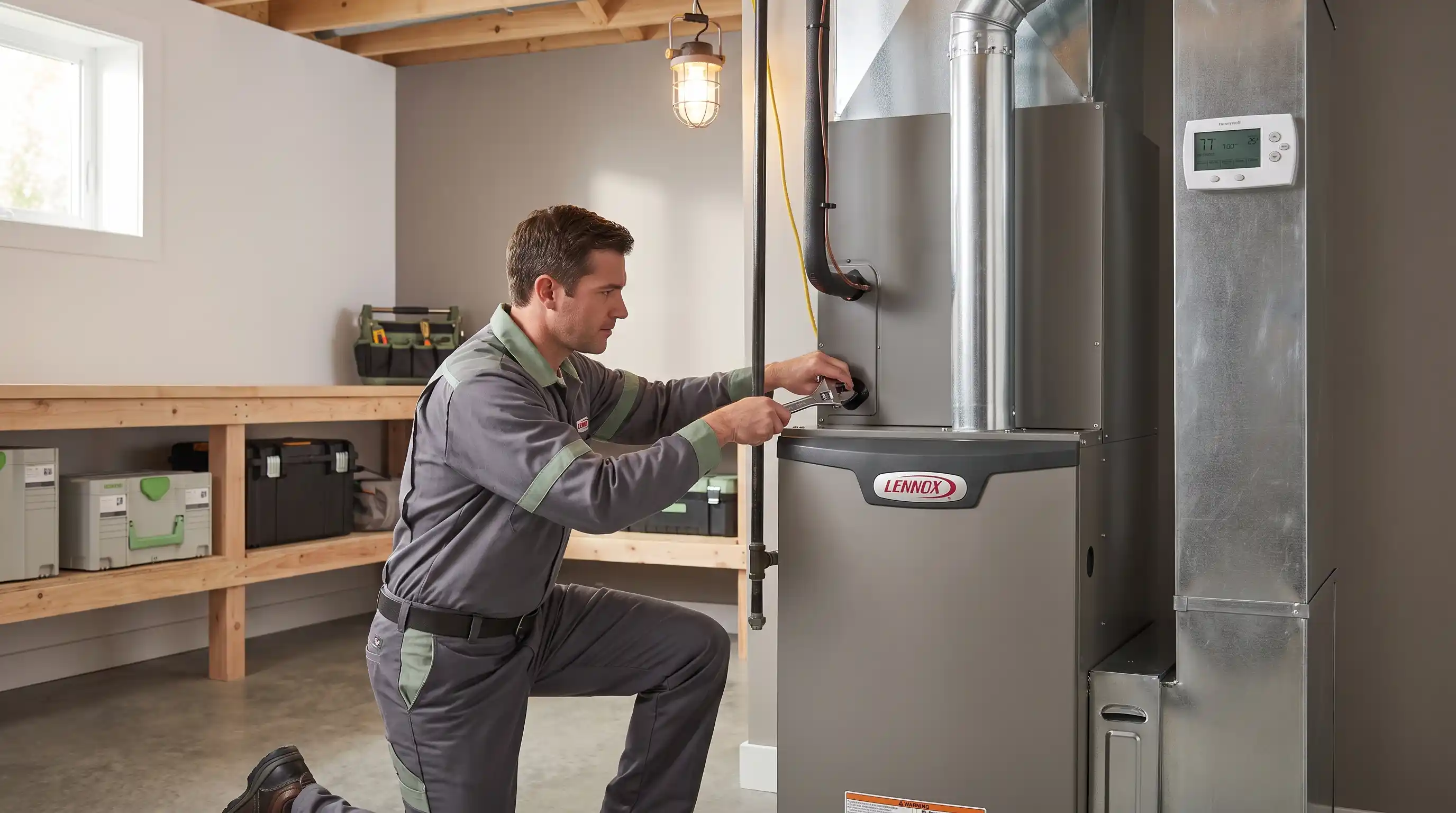
If your furnace just quit in the middle of a cold snap, you’re probably staring at three contractor quotes that don’t agree on anything. Not the price, not the timeline, not even what’s actually wrong with the old unit. That’s the normal experience of furnace replacement, and it’s exactly why so many homeowners feel like they’re flying blind on one of the most expensive systems in their house.
This guide covers what furnace replacement actually costs in 2026, how to tell a furnace that needs replacing from one that just needs a repair, and how to read a quote so you don’t end up as the next person posting a “was I overcharged” story to Reddit. Claire here at Deco Furnish built this the same way we build every Systems guide: plainspoken, numbers included, and willing to say when a “deal” is actually a warning sign.
Furnace Replacement, the Short Version
Most homeowners pay somewhere between $2,800 and $7,500 for furnace replacement in 2026, with national averages clustering around $4,800 to $6,000 for a standard gas furnace installed in a typical home. High-efficiency or premium systems, oversized homes, and ductwork problems can push that well past $10,000. Replacement generally makes more sense than repair once a furnace passes 15 years old or a single repair bill crosses roughly half the cost of a new unit. Planning other updates this year? Our barn door guide covers a smaller upgrade.
One thing worth knowing before you call anyone: the federal tax credit that used to knock money off a new furnace expired at the end of 2025. If a salesperson tells you a 2026 install still qualifies for it, that’s your first red flag, not your last.
Here’s the full breakdown, including the parts most cost guides skip.
How Do You Know It’s Time? Signs Your Furnace Needs Replacing, Not Repairing
A furnace rarely dies without warning. It usually sends a few signals first: rooms heating unevenly, a yellow or flickering pilot flame instead of blue, a spike in your gas or electric bill with no other explanation, strange banging or screeching noises on startup, or a repair technician who’s shown up twice this winter already. Age matters too. A well-maintained gas furnace typically lasts 15 to 20 years, with some pushing past 25, but efficiency drops steadily after year 10 even if nothing has technically broken yet.
The harder question is what to do when the furnace still runs, just not well. That’s where a clear decision rule helps more than a gut feeling.
When to Replace a Furnace vs. When to Repair It
The rule most HVAC technicians actually use is some version of the “50 percent rule”: multiply the furnace’s age by the estimated repair cost, and if that number is more than half the price of a new furnace, replacement is the better financial move. In practice, that usually breaks down like this: under 10 years old with a repair under $500, fix it. Over 15 years old with a repair quote north of $1,000, especially for a major part like the heat exchanger, replacing is almost always the smarter long-term spend. Anywhere in between is a genuine judgment call, and it’s worth getting a second opinion before committing either way.
What Furnace Replacement Actually Costs in 2026

Furnace replacement cost depends heavily on fuel type, efficiency rating, and how much of your existing setup, ductwork, venting, electrical, can be reused versus rebuilt. Equipment usually makes up about 60 percent of the total bill, with labor, permits, disposal of the old unit, and materials covering the rest.
| Furnace Type | Typical Installed Cost Range |
|---|---|
| Electric furnace | $1,800 – $7,300 |
| Standard gas furnace (80% AFUE) | $2,800 – $5,500 |
| High-efficiency gas furnace (95%+ AFUE) | $5,500 – $10,000+ |
| Propane furnace | $3,000 – $7,500 |
| Furnace + AC replaced together | $5,000 – $15,000 |
These ranges reflect national data from cost-tracking sites and contractor pricing surveys rather than any single company’s rate card, so treat them as a planning tool, not a quote. Your actual number moves based on a few real factors.
What Drives the Price Up (or Down)
A Manual J load calculation (the formal sizing math a contractor should run before quoting anything) determines what size furnace your home actually needs, measured in BTUs. Skipping this step is a common mistake, and an oversized furnace doesn’t just cost more upfront, it short-cycles, wears out faster, and heats unevenly. Old or leaky ductwork can tack on another $1,000 to $3,000 if it needs replacing rather than reusing. Difficult access, like an attic or tight crawlspace install, adds labor time. And local permitting requirements, which vary a lot by city, can add fees plus a few days to the timeline. None of this means every contractor quoting on the higher end is padding the bill. It means you’re entitled to ask what’s driving the number, and a contractor who can’t answer clearly is worth a second look.
Why the Lowest Furnace Replacement Quote Isn’t Automatically the Safest One
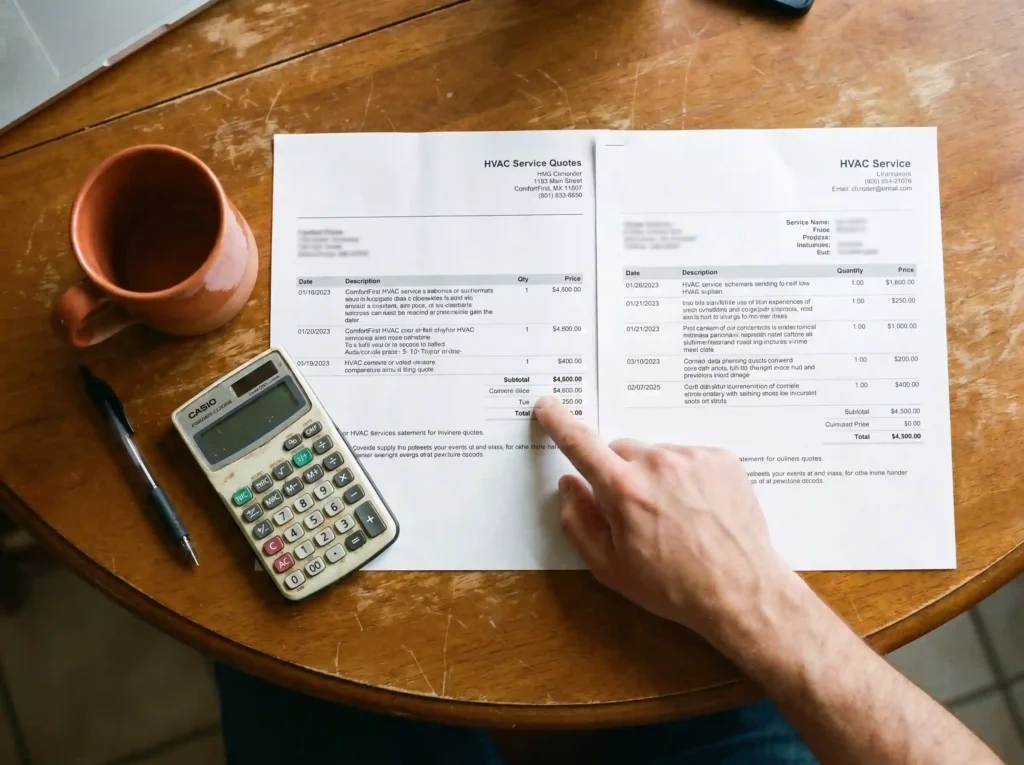
Real quotes for identical remodeling jobs have been documented ranging tens of thousands of dollars apart for the exact same scope of work, and furnace replacement isn’t immune to that same spread. A bid that comes in 15 to 25 percent below every other quote you’ve collected deserves a closer look, not automatic relief. It can mean a contractor is hungry for work and genuinely competitive. It can also mean a lowball number designed to get a signature, followed by “surprise” add-ons once the old unit is already sitting on your lawn. The same advice about comparing quotes applies to a bathroom remodel, where bids vary widely too.
A few patterns worth treating as actual warning signs: a contractor who wants full payment upfront before any work starts, one who can’t produce a license or insurance certificate without hesitation, or one whose only “office” is a truck. On the other end, a quote that’s dramatically higher than the rest without a clear explanation, missing ductwork, a hard-to-access unit, premium equipment, deserves the same scrutiny. The goal isn’t to chase the middle number. It’s to understand what each quote actually includes before you compare them at all.
Repair or Replace? Running the Real Math
The temptation to handle a furnace problem yourself is understandable, especially with quotes stacking up. The gap between DIY and professional costs on home projects generally runs in the range of $2,500 versus $6,000+ for comparable scope, and furnace work sits at the riskier end of that gap because it involves gas lines, combustion, and carbon monoxide risk if something’s connected wrong. A cautionary story that comes up constantly in home improvement communities involves a homeowner spending tens of thousands of dollars fixing damage caused by an unlicensed installer trying to save a few hundred. That’s not a reason to avoid every cost-saving option. It’s a reason to be selective about which parts of the job are genuinely safe to DIY (thermostat swaps, filter changes, basic maintenance) and which parts are not (gas line work, venting, electrical connections, anything touching the heat exchanger). If you want a lower-risk home project to try yourself, our guide to closet doors is a good place to start.
Gas, Electric, Propane, or Heat Pump: Choosing What Replaces Your Furnace
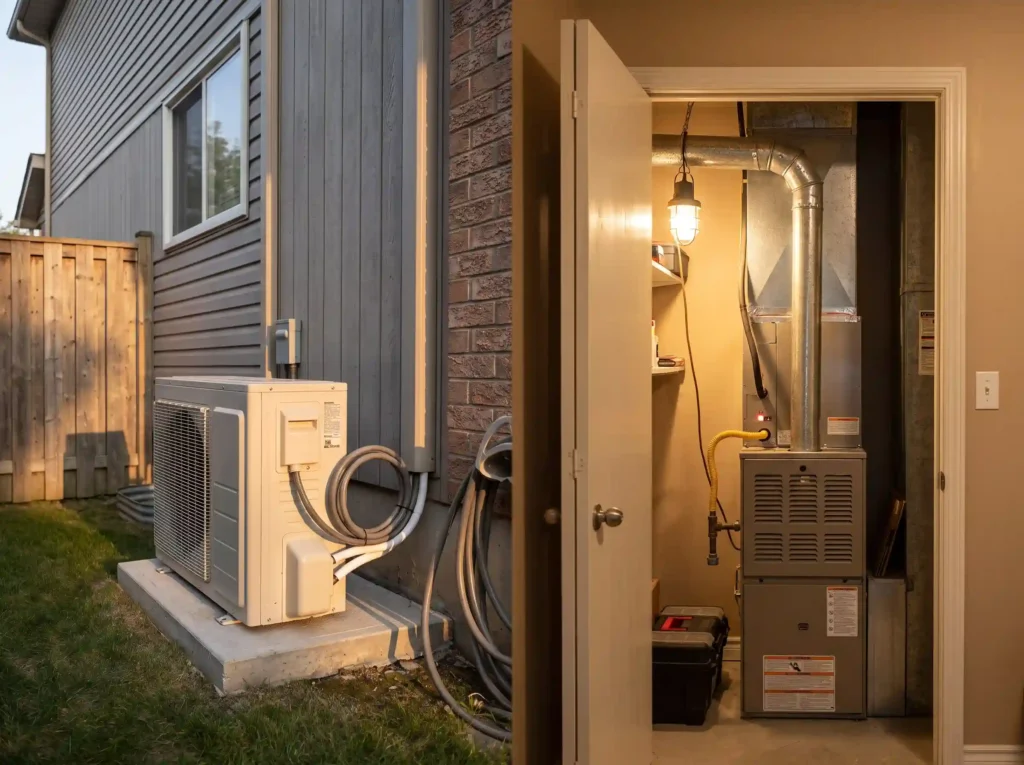
Most homes replace like with like, a gas furnace for a gas furnace, but 2026 is a reasonable year to at least consider alternatives. Gas furnaces remain the most common choice in cold climates because they heat fast and handle extreme cold reliably. Electric furnaces cost less upfront but more to run in most regions. Propane works well off the gas grid but tracks fuel prices that swing more than natural gas. Heat pumps have gained ground fast, now representing a genuinely mainstream option rather than a niche one, and a dual-fuel setup (a heat pump paired with a gas furnace as backup for the coldest days) is worth asking a contractor about if you’re in a moderate climate and want lower year-round operating costs without giving up cold-snap reliability.
None of these is universally “better.” The right call depends on your climate, your current ductwork, local utility rates, and how long you plan to stay in the house.
Furnace Sizing and Efficiency Ratings, Explained Simply
Two numbers matter more than any brand name on the unit: AFUE (Annual Fuel Utilization Efficiency) and BTU output. AFUE tells you what percentage of fuel actually becomes heat rather than escaping up the flue. A standard furnace runs around 80 percent AFUE. A high-efficiency condensing furnace runs 95 percent or higher, meaning it wastes almost nothing, though it costs more upfront and requires different venting. BTU output determines whether the furnace can actually keep your home warm, and bigger isn’t better here. An oversized furnace cycles on and off constantly instead of running a longer, steadier cycle, which wastes energy and shortens the equipment’s life. This is exactly why that Manual J calculation from earlier matters more than picking a number off a size chart.
Brands like Carrier, Trane, Lennox, Rheem, Goodman, American Standard, Bryant, and Amana all make furnaces across a range of efficiency tiers and price points. None of them is a wrong answer on its own. What matters more is the installer’s track record and the warranty terms, since a premium furnace installed poorly performs worse than a mid-range one installed correctly.
Rebates and Tax Credits for a New Furnace in 2026
Here’s where a lot of furnace replacement content floating around is out of date. The federal Energy Efficient Home Improvement Credit, known as Section 25C, expired for equipment placed in service after December 31, 2025. A furnace installed anywhere in 2026 does not qualify for that federal credit, no matter what a sales rep tells you. If your installation happened before the end of 2025, you may still be able to claim it on that year’s return, but that window has closed for new 2026 projects.
That doesn’t mean there’s no money on the table. State energy offices and local utility companies still run their own rebate programs for high-efficiency equipment, and these vary significantly by state and even by utility provider. It’s worth checking your state’s listing through the DSIRE database (the standard clearinghouse for state and utility incentive programs) before assuming a “high-efficiency” furnace pencils out the same way it did a year or two ago.
What the Actual Replacement Process Looks Like
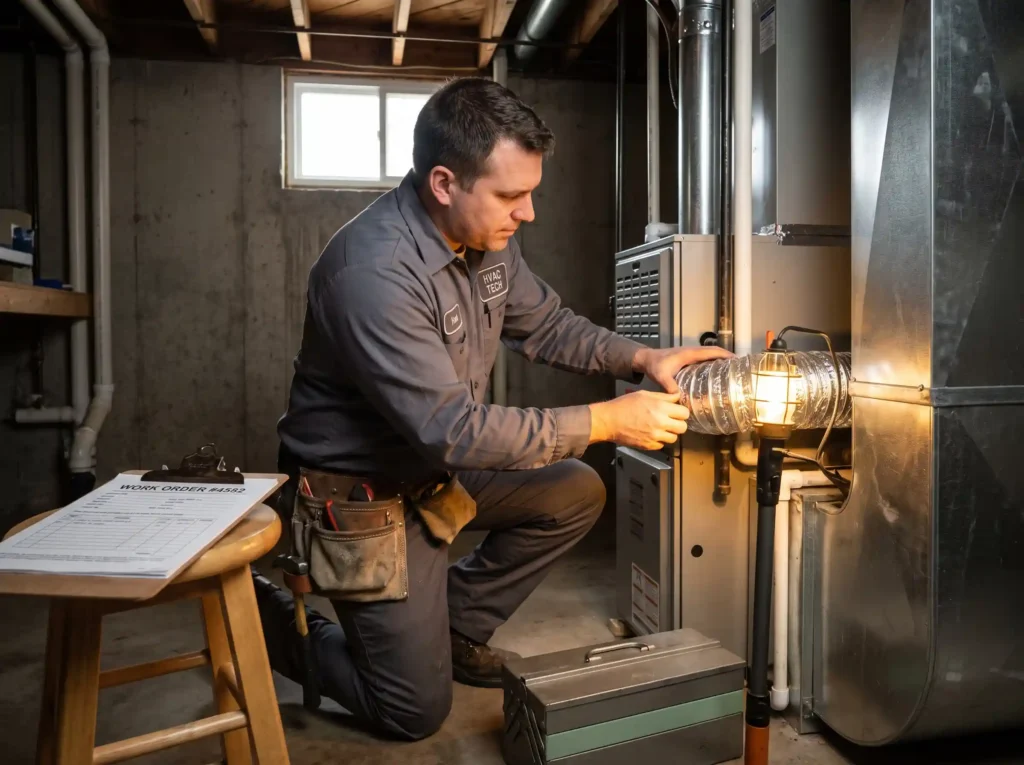
A typical furnace replacement runs one to two days for a straightforward swap, longer if ductwork, electrical work, or a permit inspection is involved. The general sequence looks like this:
- Assessment and sizing: a proper Manual J calculation, not a guess based on square footage alone
- Quote and contract: itemized pricing, not a single lump number, with anchor text and expected timeline in writing
- Permit pulled: required in most jurisdictions for gas and electrical work, and skipping it can cause problems at resale
- Old unit removed and disposed of: properly, including any refrigerant or gas line disconnection
- New unit installed: including venting changes if you’re moving to a higher-efficiency condensing furnace
- Testing and inspection: combustion testing, carbon monoxide checks, and a local inspector sign-off where required
- Warranty registration: often time-sensitive, register the equipment promptly so the manufacturer warranty is actually valid
Skipping the permit step is one of the more common shortcuts homeowners agree to in order to save time or money, and it’s one that tends to surface later, either during a home sale or an insurance claim, at the worst possible moment.
Questions to Ask Before You Sign a Furnace Replacement Contract
A few direct questions separate a contractor who’s confident in their work from one hoping you don’t ask too much:
- What size furnace are you quoting, and can I see the load calculation behind it?
- Is this quote itemized by equipment, labor, permits, and any ductwork or electrical work?
- What’s included if something unexpected turns up once the old unit is out?
- What’s the manufacturer’s warranty, and what’s your own labor warranty separately?
- Are you licensed and insured in this state, and can I see documentation?
- What’s the realistic timeline, and what happens if it runs long?
A contractor who answers all six without hedging is worth trusting more than one who has the lowest number on paper.
Furnace Replacement FAQs
How much does furnace replacement cost in 2026?
Most homeowners pay $2,800 to $7,500, averaging around $4,800 to $6,000 for a standard gas furnace. High-efficiency models, larger homes, and ductwork repairs can push costs toward $10,000 or more.
How long does furnace replacement take?
A standard swap typically takes one to two days. Add time if ductwork needs work, if your home requires new venting for a high-efficiency unit, or if permit inspections are required in your area.
Can I replace a furnace myself?
Basic maintenance like filter changes and thermostat swaps is fine for most homeowners. Full furnace replacement involves gas lines, combustion, and carbon monoxide risk, and most local codes require a licensed installer for the gas and electrical connections regardless of your comfort level with tools.
Do I need a permit to replace a furnace?
In most jurisdictions, yes, especially for gas furnace work. Skipping the permit can cause problems later, particularly during a home sale or an insurance claim after an incident.
Is there a federal tax credit for a new furnace in 2026?
No. The Section 25C federal tax credit expired for equipment installed after December 31, 2025. Check your state energy office or utility provider for any remaining local rebate programs.
How long does a furnace actually last?
Most gas furnaces last 15 to 20 years with regular maintenance, and some reach 25 years. Efficiency typically declines noticeably after year 10 even before a breakdown happens.
Should I repair or replace an aging furnace?
A common rule of thumb: if the furnace’s age multiplied by the repair cost exceeds half the price of a new unit, replacement usually makes more financial sense, especially past the 15-year mark.
Is a heat pump cheaper than a gas furnace to run?
It depends on your climate and local utility rates. Heat pumps often cost less to operate in moderate climates, while gas furnaces tend to win in very cold regions unless paired with a heat pump in a dual-fuel setup.
What size furnace do I need for my home?
The right size comes from a Manual J load calculation, not square footage alone. Oversizing is a common and costly mistake that leads to short-cycling, uneven heat, and a shorter equipment lifespan.
When should I be suspicious of a furnace replacement quote?
Treat a bid 15 to 25 percent below every other quote as worth a closer look, not automatic relief, and watch for cash-only demands, no license or insurance on hand, or full payment requested upfront.
The Bottom Line on Furnace Replacement
The honest version of furnace replacement isn’t complicated, it’s just rarely explained plainly. Most homes land in the $2,800 to $7,500 range, replacement beats repair somewhere around the 15-year mark or when a single repair crosses half the cost of a new unit, and the federal tax credit that used to sweeten the deal is gone for 2026 installs. The part that actually protects your wallet isn’t finding the cheapest number. It’s understanding what’s behind each quote well enough to know whether it’s a fair price or a story you’ll be telling on Reddit next winter.
If your furnace is on its way out, start by getting two or three itemized quotes, run the 50 percent rule on any repair estimate first, and don’t sign anything until you’ve asked the six questions above out loud. What’s the strangest furnace quote you’ve ever gotten, and did it turn out to be a red flag or just an honest reflection of a harder job?


One Comment