Cable Deck Railing: Real Costs, Sag Fixes and Code Rules
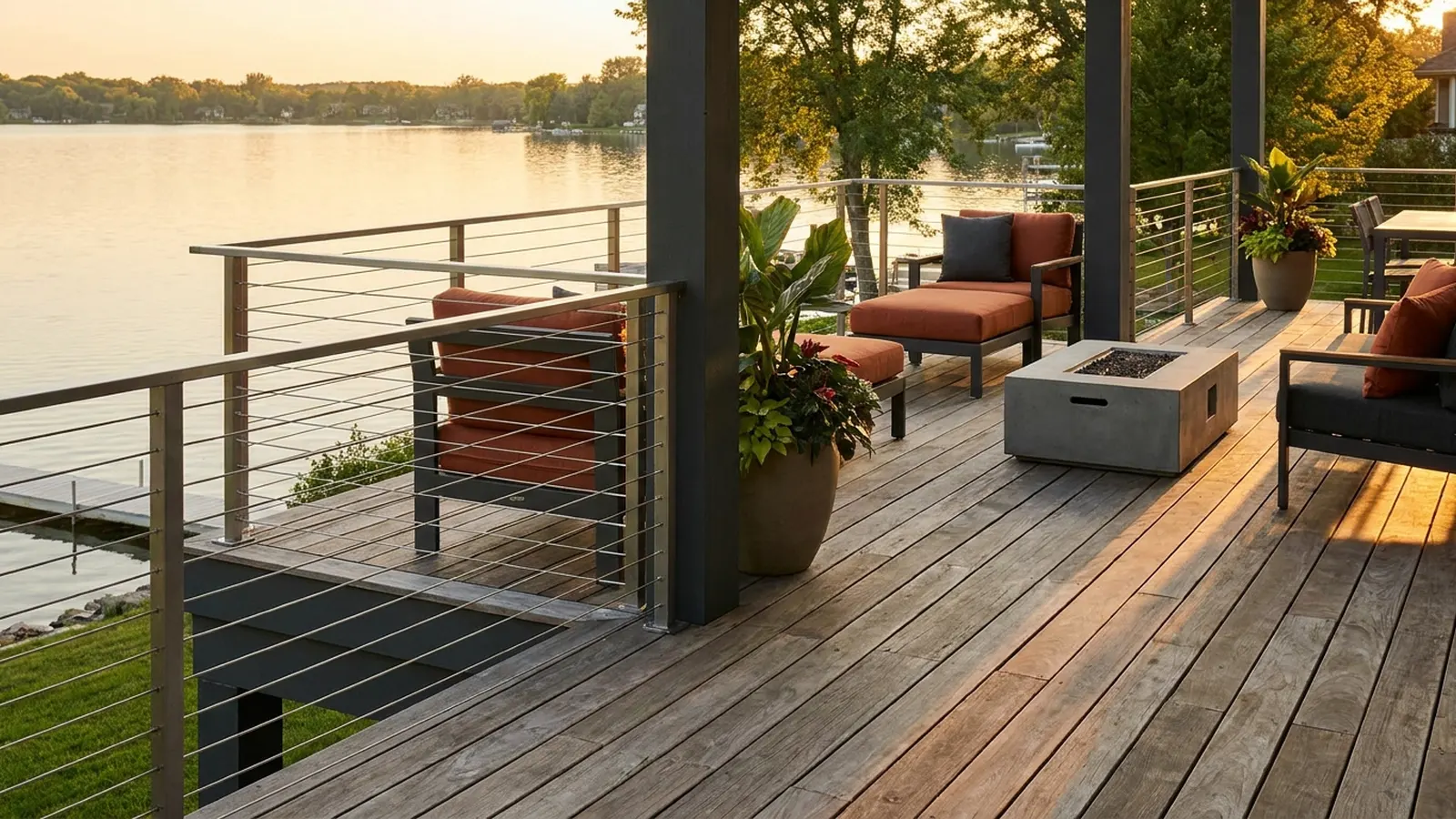
Say a homeowner builds a new deck facing a lake and picks cable deck railing because it nearly disappears. The brochure photos show a clean horizontal grid and a view with nothing in the way. Two summers later a few lines droop like laundry, the top rail wobbles when someone leans on it, and a contractor is quoting a fix that costs almost as much as the original job.
What went wrong? Usually not the cable. It’s the posts, the tension, and a handful of rules nobody mentioned at the showroom.
This is one part of planning a safe, good-looking deck, and the railing is the piece people regret most often. Below you’ll get a realistic cost picture, the real causes of sag, what inspectors tend to check, and a blunt list of decks where cable is the wrong call. If you’re still comparing styles, railing styles that also pass inspection is a good companion read.
Executive Summary
Cable deck railing (also called wire deck railing) is a guard made of stainless steel wire strung tightly between sturdy posts. It keeps sightlines open, but it is a view-and-cost trade, not a bargain upgrade. Retailers such as Lowe’s put an installed system at roughly $150 to $285 per linear foot, and where you land depends on posts, labor and kit quality.
Three insights matter most. Posts decide whether cable sags, far more than the wire does. Code is more than the 4-inch sphere rule, because deflection and guard height count too. And upkeep is real: cable loosens with temperature swings and needs a yearly check.
The biggest objection is child safety. Horizontal lines can act like a ladder, so households with toddlers should read the safety section before ordering anything. Cable can last decades with care, according to Trex, but only on a deck built to carry it.
How much does cable deck railing cost per foot?
Expect roughly $150 to $285 per linear foot installed for a stainless cable system, according to a Lowe’s buying guide. That’s a retailer range, not a quote. Posts, cable size, finish, stair angles and labor swing the number, and the tensioning labor is the part people forget to budget.
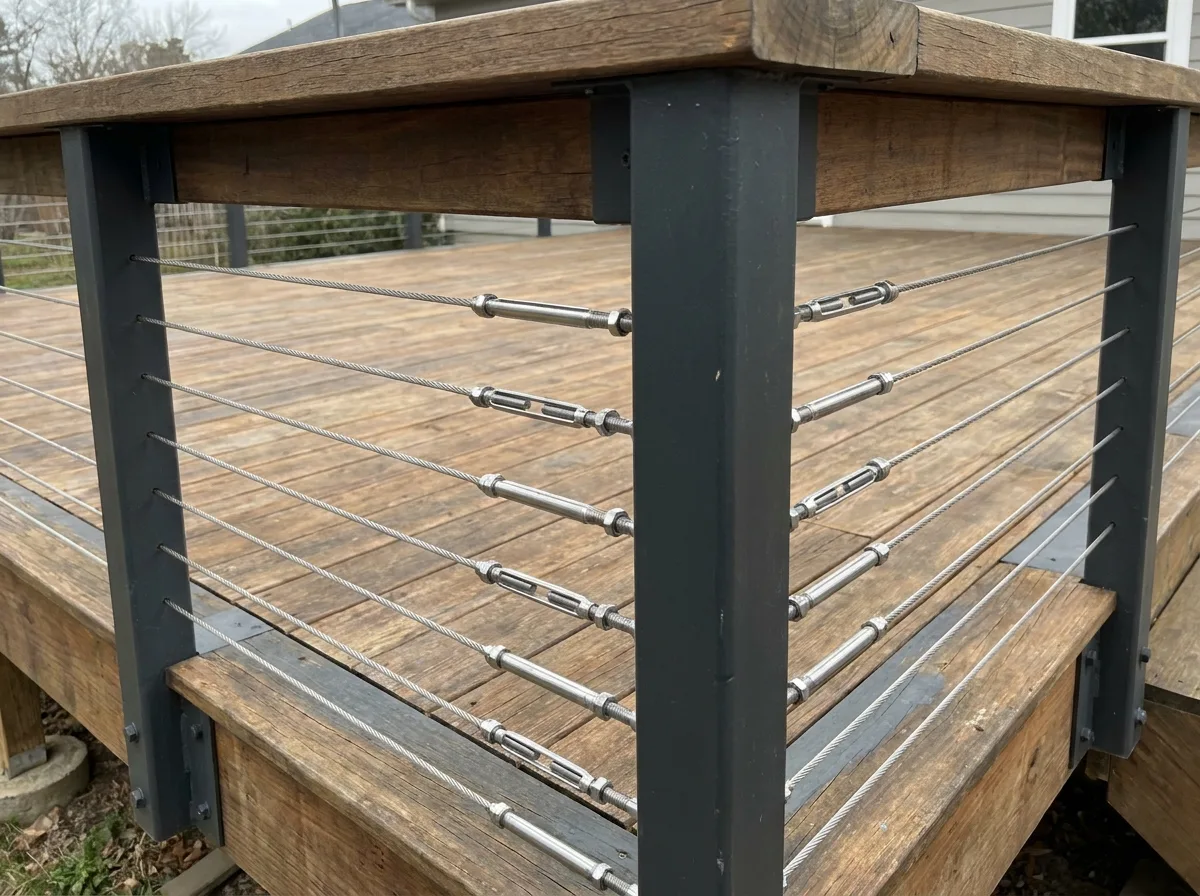
Think of the bill in three buckets. Posts and framing reinforcement come first, because cable needs rigid, closely spaced posts. Then the cable and fittings, including tensioners, which are the hardware that pulls each line tight. Then labor, and cable is slower than balusters because every line must be cut, fed and tightened evenly.
Here’s where DIY actually saves money on cable deck railing:
| Cost bucket | Where DIY helps | Where it backfires |
|---|---|---|
| Posts and blocking | Little, structure matters | Weak posts cause sag later |
| Cable and fittings | Kits cut waste | Cheap tensioners can gall |
| Labor | Usually the largest share of cost, so the largest saving | Slow, tedious tensioning |
My honest take: if your budget is tight, put money into posts first and cable second. A cheaper infill on solid posts beats fancy cable on flexy ones. Compare it with a cheaper way to dress up a deck’s lower edge if the budget has to stretch across several upgrades.
Why does cable railing sag, and which posts prevent it?
On a cable deck railing, sag comes mostly from post flex, lost tension and temperature swings, not from bad cable. Posts that bend under pull let every line go slack. Lowe’s notes that temperature changes loosen cable, and Trex says thin 1/8 inch cable needs more tensioning. Stiff steel or well-braced posts fix most problems.
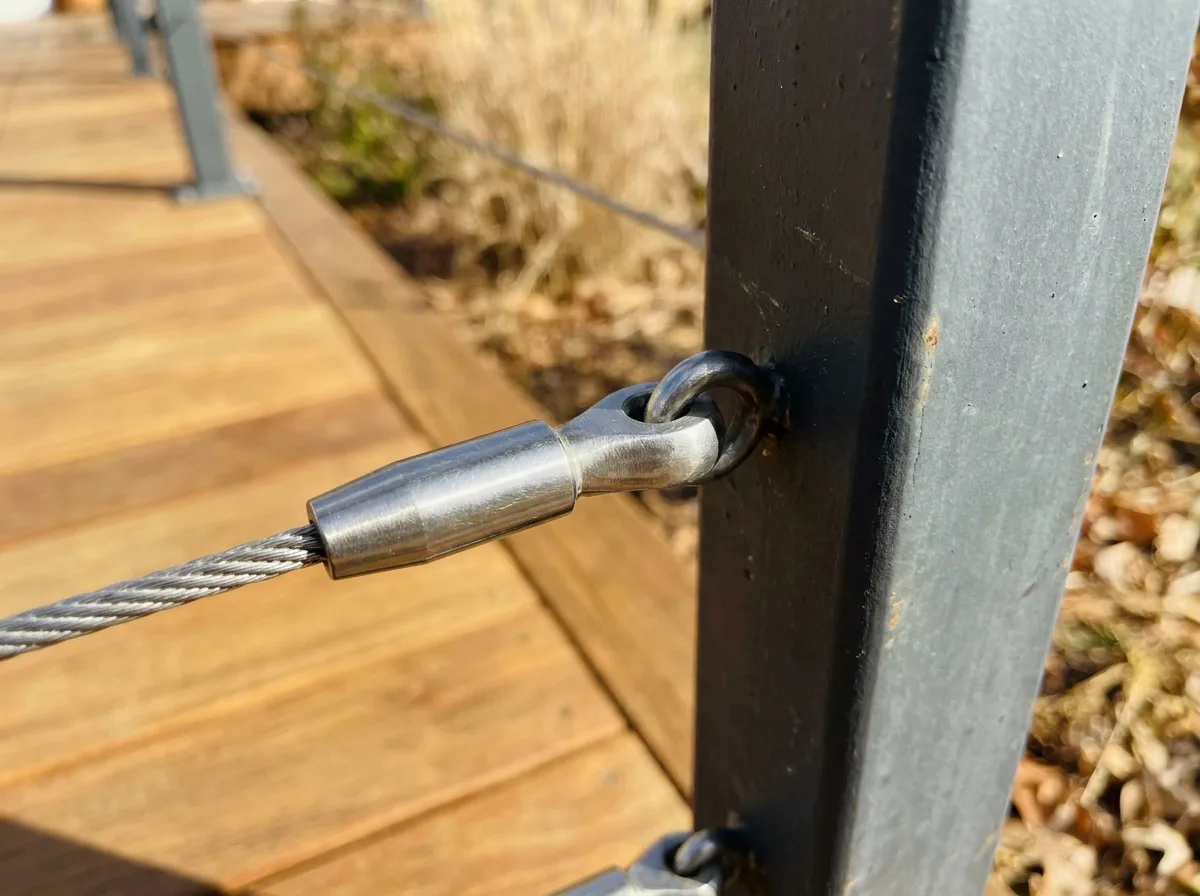
First, how it works: posts anchor the run, stainless cable threads through them, and a tensioner at one end pulls each line tight. Horizontal runs sag more than vertical ones, per Lowe’s.
Here’s the pattern that keeps showing up in homeowner threads. Someone installs a system on aluminum posts, tightens everything, and it feels perfect. Weeks later the end posts have leaned a hair toward each other and every line has lost its snap. The cable did nothing wrong. Dozens of lines pulling at once bent the posts.
A common version of this mistake goes like this: a contractor promises metal posts mean no sag, the cable gets replaced after two seasons, and the real problem was anchors that were never reset after the first settling. "Metal posts equal no sag" is a myth. Metal helps, but only if it’s stiff enough and the line posts are properly anchored.
Practical rules:
- Keep posts no more than about 4 feet apart, a spacing Lowe’s cites.
- Use stiff steel or reinforced posts at corners and ends, where pull is greatest.
- Check wood posts for blocking and bolt-through anchoring, and keep them sealed with a good deck stain so they stay put instead of shrinking and twisting.
- Re-tension after the first few weeks, then yearly.
Tighten each line in stages, rotating across the rows, so the posts don’t take one big tug.
Does cable deck railing pass code?
It can, if the guard meets your local adopted code. The model IRC calls for a guard where a drop exceeds 30 inches, a height of at least 36 inches, and openings that block a 4 inch sphere. Stairs use 4-3/8 inches. Local rules vary, so confirm with your building department before ordering.
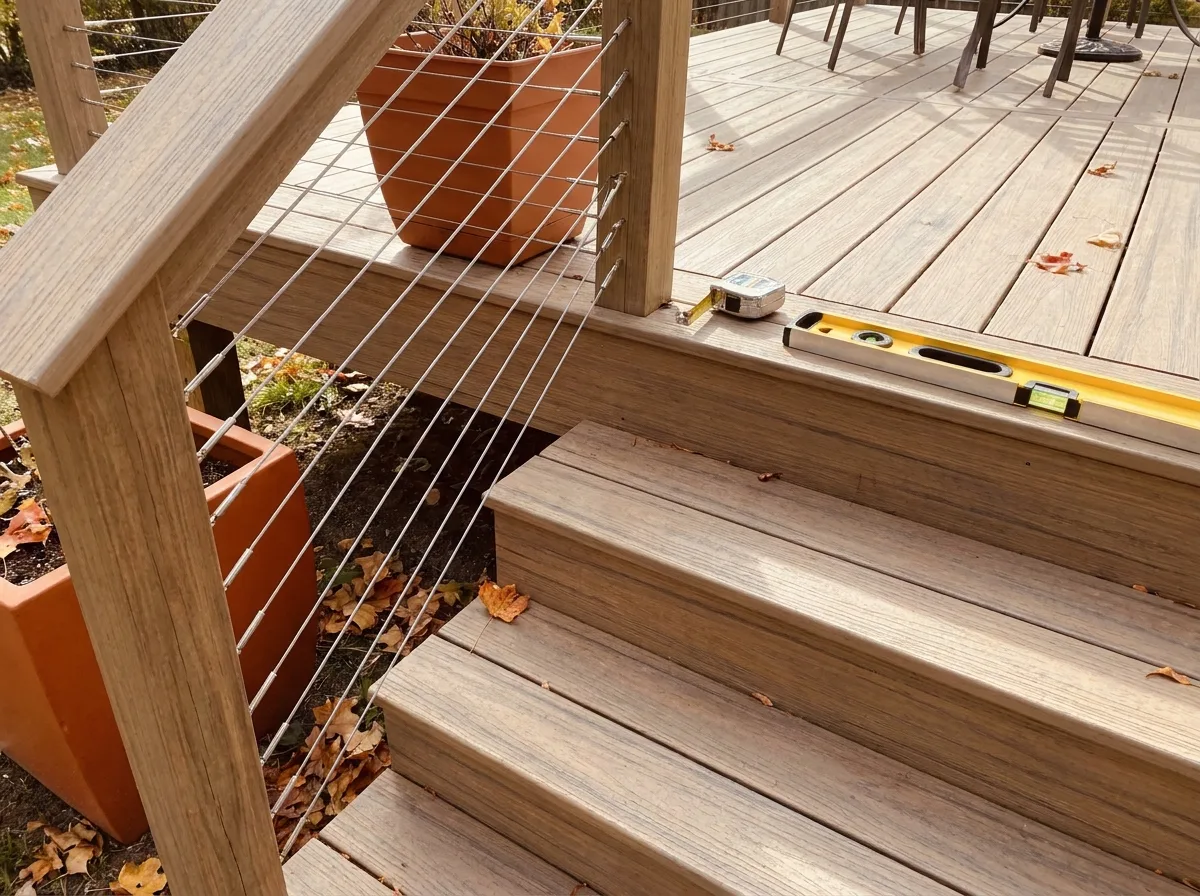
The sphere rule is the headline, but it’s only the minimum. The model IRC also expects guard infill to resist a 50 pound load on one square foot, though adoption and inspector practice vary by place. Inspectors can lean on a rail, and a cable system on flexible posts may let the cable bow wide enough that the sphere passes through. That is the failure people don’t expect: the gaps were fine when you measured them, and wrong under load.
Cable spacing in kits is typically around 3 inches or less, though sources differ between 3 and 3-1/8 inches, so treat 3 inches as the safe working number and check local code. Heights matter too. Many areas require 42 inches on raised decks, and a tall top rail can block the very view cable is meant to protect. If you sit a lot, bar-height chairs help.
A permit is usually needed for new decks or structural railing changes, and inspectors differ by town. Ask before you buy.
Is cable railing safe for kids and pets?
A wire deck railing meets the 4 inch sphere rule when spaced correctly, but horizontal runs can be climbed like a ladder, so small children need extra thought. Many owners feel vertical cable or a different infill lowers the risk. Retailers argue the danger is small, though the claim is contested, so judge it by your own household.
The ladder effect is real in theory. Horizontal lines offer steps, and a determined toddler may use them. Lowe’s reports that industry studies see minimal risk, but I’d treat that carefully since the studies weren’t opened for this guide.
Pick vertical cable or solid balusters if you have kids under five and a raised deck. Pick horizontal if the kids are older and the view matters more. Vertical also sags less than horizontal, per Lowe’s, which is the short version of the horizontal versus vertical choice.
Which cable, tensioner and kit should you choose?
For cable deck railing, choose Type 316 stainless 1×19 cable in 1/8 or 3/16 inch. The 3/16 inch size is most popular and holds tension better, while 1/8 inch looks lighter but needs more tensioning. Kits from Feeney, RDI, Deckorators, Trex or CityPost differ mostly in posts, fittings and warranty, so compare those.
Grade matters. Type 316 resists salt air better than Type 304, and galvanized cable corrodes. A black oxide finish looks sharp but should be checked near coasts. Tensioners come visible or hidden, and hidden ones look cleaner but can be tedious to tighten. Owners also warn about galling, where threads seize, so a dab of anti-seize on male threads is common owner advice, not a rule from any manufacturer.
Honestly, the brand name matters less than three questions: are the posts stiff, are the fittings Type 316, and can you get replacement parts in five years?
Can you DIY a wire deck railing?
Yes, if you’re patient. A wire deck railing kit trades money for time, and tensioning every line evenly is the slow part. You’ll need a cable cutter, gripper pliers, a drill, a level and, for some systems, a lacing needle. Structural post work is where many people hire a pro.
Budget a full weekend for a modest run, and a calm head. Say you’re installing 20 feet of railing: it’s several hours just to cut and thread lines, then more to snug them in rounds. Common mistakes are cutting cable to the wrong length, skipping the post reinforcement, and tightening one line fully before the others.
Read the kit’s instructions, and keep your inspector in the loop. Electrical lighting, if you add it, may need a licensed electrician and local permits.
How do you maintain cable deck railing?
For cable deck railing, check tension and fittings once a year, wipe the cable with a soft cloth and mild soap, and rinse off salt or grit. Re-tension after temperature swings. Trex says cable can last over 25 years with care, but only if loosened lines get fixed promptly.
Near the coast, wash it more often. Owners often report that even stainless can show tea staining in salt air, and grade matters. A twice-yearly rinse and a spring tension check are common owner advice, not a rule, and cover most homes. For design context around the rest of the outdoor space, see patio design ideas that match your deck.
When should you skip cable deck railing?
Skip it if you have small children, a tight budget, very long spans, a high-wind lot with flexy posts, or a deck you can’t reinforce. In those cases solid balusters, metal pickets or glass panels are the better alternatives, and they can be simpler to build and easier to keep looking good.

A common regret is buying it for a deck with 8-foot post gaps and aluminum posts. The better answer there was simple metal balusters. Glass gives a fuller view with no tension to maintain, but it costs more and shows smudges. Wire mesh can work for rural looks, and the same logic shows up in a wire fence that blends wood and metal.
Frequently Asked Questions
How long does cable railing last?
Quality stainless cable railing can last over 25 years with care, according to Trex. The cable itself is rarely the weak point. Posts, fittings and tension checks decide the real lifespan. In coastal areas, Type 316 and regular rinsing extend it. Plan on yearly inspections, and replace any fitting that shows corrosion early before it affects the whole run.
Does cable deck railing sag?
It can, mostly from post flex, temperature swings and thin 1/8 inch cable. Lowe’s notes that temperature changes loosen lines, and vertical systems sag less than horizontal. Fix it with stiffer posts, proper anchors and a yearly retension. If lines go slack within weeks, suspect the posts before blaming the cable. Our guide to deck railing styles that hold up covers other options.
Is stainless steel cable rust-proof?
No. Stainless resists rust, but grade matters. Type 316 handles salt air far better than Type 304, and galvanized cable corrodes sooner. Even good cable can show light surface staining near the coast. Rinsing it regularly and wiping it down keeps it looking clean. If you live within a few miles of salt water, pay for Type 316 and skip the cheaper grades.
Is cable railing legal for stairs?
Usually yes, but stairs are stricter. The model IRC uses a 4-3/8 inch sphere limit on open stair sides, and cable on angled runs needs angled fittings. Heights are measured differently along the slope too. Because local adopted codes vary, bring your plans to the building department first. Stair cable is also the hardest spot for DIY tensioning, so many owners hire it out.
How far apart should posts be?
Lowe’s guidance says posts should be no more than 4 feet apart, and tighter is better for cable. Wider spans let posts and lines flex under load, which makes sag and deflection worse. Corners and ends need the stiffest posts because they carry the most pull. Check the kit’s rated post spacing, since some brands specify less than the general rule.
Is a 36 or 42 inch guard better?
The model IRC sets 36 inches as the minimum, but many places require 42 inches on raised decks, so local code decides. Trex suggests about 9 to 11 cable rows at 36 inches and 11 to 13 at 42. A taller rail adds safety but can block a seated view, so test it with your own chairs first.
Can I use wood posts with cable railing?
Yes, with blocking and sturdy anchoring. Wood posts can work well when they’re thick, braced and sealed, but they can shrink or twist and loosen the lines. Metal or composite-sleeved posts hold tension better. If you stay with wood, plan on re-tensioning more often. Protect the wood with a quality finish such as the one in our deck stain guide.
Is cable railing harder to install than balusters?
Generally yes. Balusters are fixed and forgiving, while cable needs precise cutting, threading and even tensioning. Kits make it manageable, but the tedious part is tightening every line without bending posts. Expect more time than a baluster rail, and more patience. If you want a quicker weekend job, a baluster or picket system is the easier pick for most DIYers.
Can cable railing be retrofitted to an existing deck?
Often yes, but the old posts may not be stiff enough. Existing wood posts typically need reinforcement or replacement to hold tension, and the guard must still meet local code and height rules. Check for rot first. A retrofit that skips post work is the most common way to end up with sagging lines and a failed inspection.
Do metal posts mean cable never sags?
No, that’s a myth. Metal posts help, but aluminum can still flex under the pull of dozens of lines, and weak anchors let even steel posts move. Stiff steel posts with solid bolting hold tension best. Always check the post spec and have the structure reviewed before you commit. Skipping that step is how a perfect-looking rail ends up slack.
Conclusion
The honest summary is that a good cable deck railing is about posts, tension and code, with the cable almost an afterthought. Pay for stiff posts, pick Type 316 in 3/16 inch if you can, budget for tensioning labor, and check your local code before you order. If kids are small or spans are long, a different infill may serve you better and cost less.
Your next step is simple: measure your post spacing today, then call your building department about guard height. If the deck needs more than a railing, a cheaper way to dress up a deck’s lower edge is the next upgrade to price. Which will you check first, your post spacing or your local guard height?