Glass Front Door Ideas That Keep the Light and Your Privacy
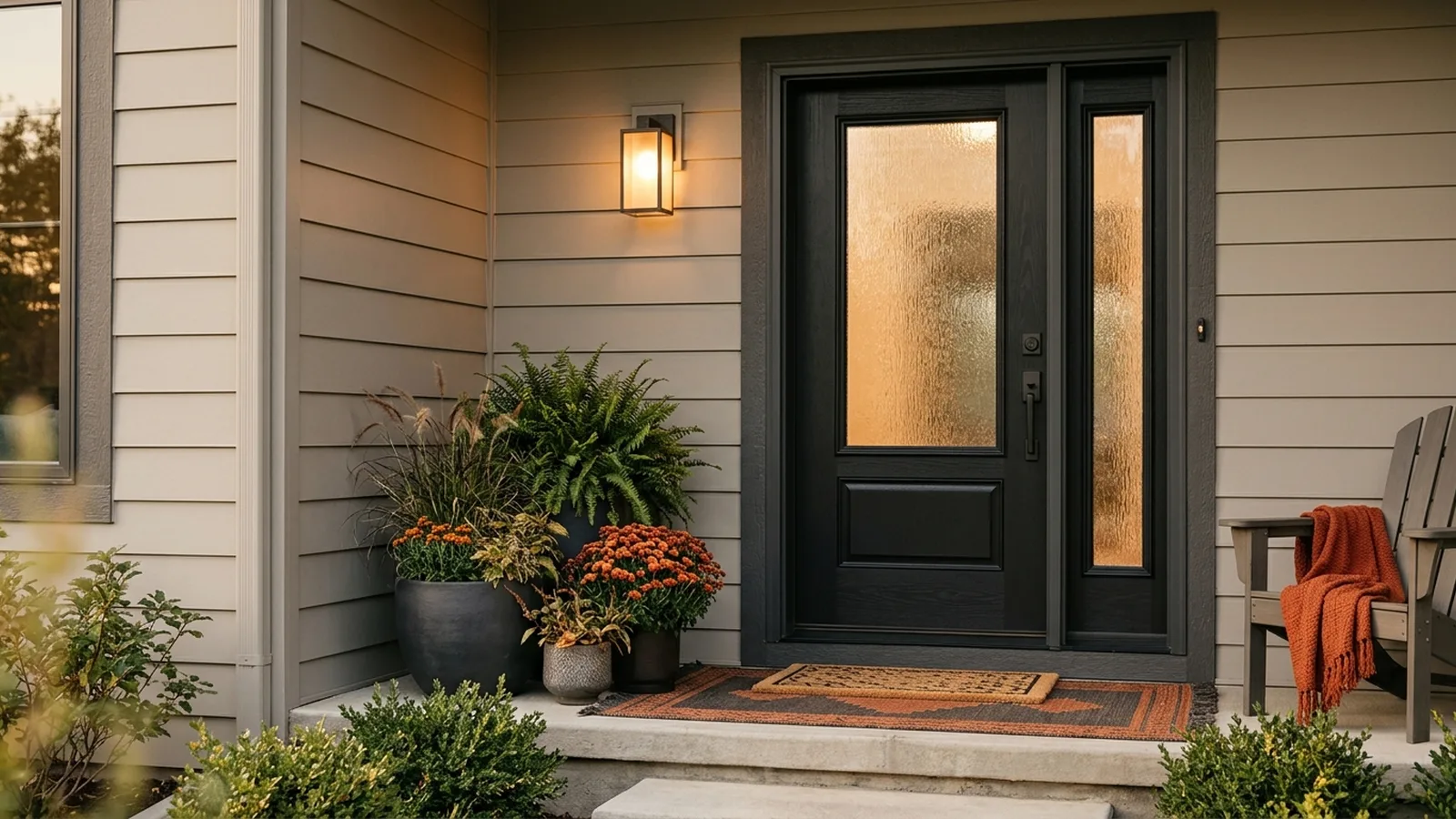
Say you’re standing in the hallway at 6:45 on a dark January evening. The porch light hits your new door, and the glass turns into a mirror from outside and a stage from inside. A neighbor walks a dog past and you freeze. Was that a good call?
That’s the real tension behind every glass front door. You want daylight, curb appeal and a hallway that doesn’t feel like a cave. You also want to change in peace and sleep without picturing a rock through the pane. Those goals don’t fight as much as you’d think.
You’ll learn which styles fit your house, which glass does what, how to fix privacy cheaply, and what the door really costs.
Executive Summary
You can get a bright entry that still feels private and safe. The trick is treating glass as a dial, not an on/off switch. A half lite door with textured glass keeps most of the light and blocks the view. A solid door with a narrow sidelight does it with even less exposure.
Here are the insights worth remembering. First, break-ins usually beat the lock, not the glass, so the frame, strike plate and deadbolt matter more than the pane. Second, laminated glass is the security upgrade, while tempered glass is the safety upgrade. Third, you can fix a privacy mistake after install with film or a blind for very little money.
Expect a wide price spread. Anecdotal homeowner ranges run from about $900 for a basic steel prehung door to $4,000 and up for wood with sidelights. The biggest objection, "won’t it be unsafe?", gets a full answer below, including a fire-safety warning about one lock type you should avoid.
What counts as a glass front door?
A glass front door is any entry door with a glass panel built in, from a small window to nearly the whole slab. The panel is called a lite. Full lite doors are mostly glass, half lite doors have glass in the upper half, and sidelights or a transom add glass around a solid door instead.
A full lite door is the airiest and the most exposed. A half lite is the crowd favorite because it lights the hall while keeping the lower half solid.
Then there’s the "glass beside the door" option. Sidelights are tall panes on either side, and a transom sits above. Here’s the part most people miss: a solid door with two sidelights can feel brighter than a glass door, yet you can lock the center slab with no visible pane at hand height.
Should a front door have glass at all?
Yes for most homes, if you choose the glass type and placement with care. A glass front door brings daylight, makes a small entry feel larger and lifts curb appeal. It costs you some privacy and, depending on the glass, some security. Both problems have inexpensive fixes, so skipping glass entirely is rarely necessary.
The answer depends on your lot. A house set far back can run clear glass happily. One ten feet from the sidewalk should lean on frosted or textured glass. A dark hallway with no other window? Glass pays for itself in daylight alone.
Regret usually comes from visibility, not break-ins, and that’s solvable.
Which glass front door styles suit your house?
Match the glass to the architecture. Modern homes suit tall, narrow or full lite panes with slim frames. Farmhouse styles lean on half lite doors with grid bars and painted fiberglass or wood. Craftsman homes favor a short row of panes at the top. Traditional houses pair arched or oval glass with sidelights.

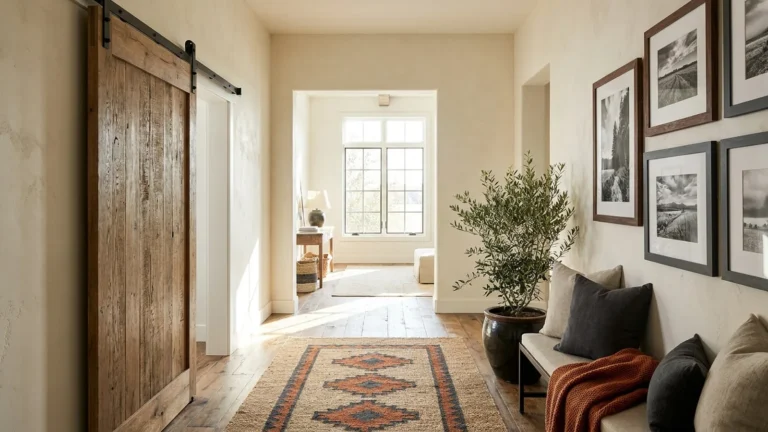
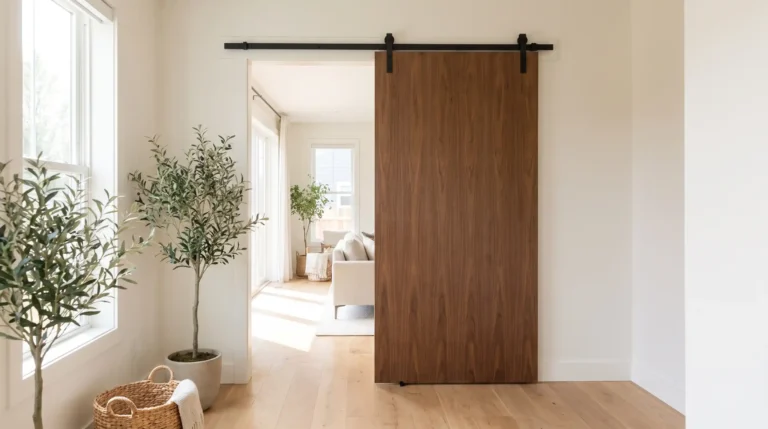
A farmhouse front door usually means a painted slab with a three-quarter lite and simple grid lines. It looks right in white, black, deep green or a muted blue. If you like that rural feel and want sliding hardware inside, a barn door styles guide shows what pairs well.
Is a stained glass front door still a good idea?
Stained glass works when the house suits it, such as an older Tudor, a Victorian or a craftsman bungalow. The leaded caming (the metal strips between colored pieces) adds privacy and character. On a new minimalist build it can look pasted on. Say a 1920s bungalow keeps its original leaded panel: restoring it beats a catalog look-alike.
Modern decorative inserts are sealed units, so you get the look without the drafts of old single-pane leaded glass.
What glass types work, and how do you get privacy?
Clear glass gives full view and maximum light. Frosted or obscure glass blurs shapes. Textured types such as rain, reed, seedy or hammered keep most light while hiding detail. Beveled and leaded designs add decoration. Pick by how close your door sits to the street and by how much you care about people seeing in.
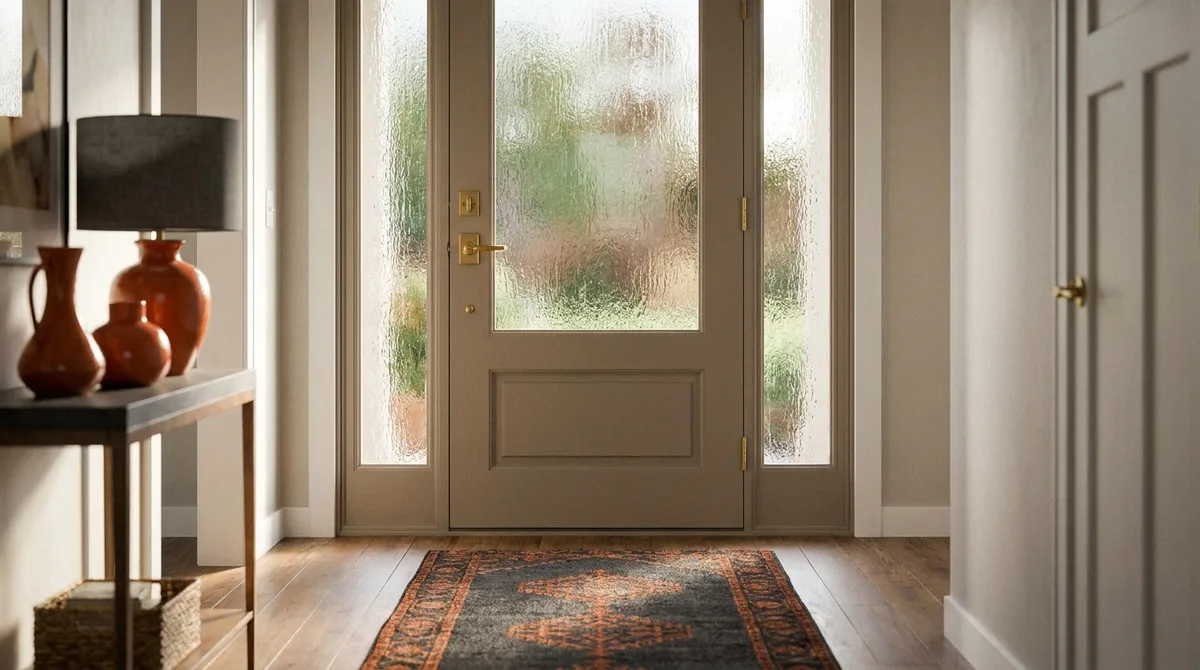
Privacy is a dial. Textured glass is the underrated middle setting because it lets daylight flow while turning a neighbor into a vague shape.
| Glass type | Light | Privacy | Best for |
|---|---|---|---|
| Clear | Highest | Lowest | Long, private drives |
| Textured (rain, reed) | High | Good | Most suburban homes |
| Frosted | Medium to high | High | Doors near the sidewalk |
| Leaded or stained | Medium | High | Period homes |
These ratings are general guidance, not lab-tested, so always view a sample from outside.
Privacy fixes after you buy
You already own a clear door? Don’t panic. Frosted window film is cheap and removable. Some doors come with blinds sealed between the glass panes, which you adjust and never clean. A roller blind inside, pulled down at night, also works, and it’s the fix many homeowner threads recommend. Spending thousands to dodge a problem that costs a few dollars is a common story.
Is a glass front door safe and secure?
It can be, if the glass is rated and the door is set up well. Entry-door glass is usually tempered or laminated safety glazing. Tempered generally breaks into small pieces, which prevents deep cuts. Laminated glass generally holds together when hit, which slows entry. The lock, frame and strike plate matter just as much.

Look for the etched safety-glazing mark in the corner of the pane, and ask the maker for the glass specs in writing.
The U.S. Consumer Product Safety Commission’s glazing rule, 16 CFR 1201, covers glass in doors, storm doors and sliding glass doors. Rules for glass beside a door vary, so check your local building code before ordering sidelights.
Here’s the contrarian view, and it’s a common one on homeowner and security forums. Many people say a burglar rarely wants to cut through the pane of a glass front door, and that kicking the door beside the lock is the faster, quieter route. Treat that as a common view, not a proven fact. Either way, reinforce the jamb, use long screws in the strike plate and fit a solid deadbolt. A doorbell camera and a glass-break sensor help too. For hardware, see how to replace a door handle step by step.
The lock you should avoid
A double-cylinder deadbolt needs a key on both sides. It sounds clever near glass, since a thief can’t reach in and turn a thumb latch. But in a fire you may not find the key fast. Some local codes restrict these on homes, and rules vary. Ask your local building department before installing one.
Do glass front doors lose heat, and what material is best?
Glass insulates worse than a solid door, so a large pane can raise heating and cooling costs. Look for double glazing, a Low-E coating and a rated U-factor on the label. Fiberglass is the most common material for glass doors because it resists dents and warping, steel is cheapest, and wood looks richest but needs upkeep.
Check the NFRC label for U-factor (lower means better insulation) and SHGC (how much solar heat gets through). The Department of Energy publishes guidance on both.
Quick material guide:
- Fiberglass: stable, paintable, holds up in sun and rain. My pick for most buyers.
- Steel: strong and affordable, but dents and can rust at scratches.
- Wood: beautiful, and the most upkeep in harsh weather.
- Aluminum: slim modern frames, often for pivot designs.
Prehung means the door arrives in its frame, while a slab is just the door. Prehung costs more upfront and saves a headache.
How much does a glass front door cost?
Costs swing widely with material, glass and installation. Homeowners often report about $900 to $1,500 for a basic steel prehung door, $2,500 to $4,500 for quality fiberglass, and $4,000 or more for wood with glass, sidelights or a transom. Treat these as anecdotal ranges, then get local quotes.
Those numbers came from homeowner discussions, not a price survey, so they’re a starting point only. What drives the total: door material, glass type (decorative and impact-rated cost more), sidelights, transom, hardware and labor. Replacing the frame costs more than swapping a slab.
Say you pick a fiberglass half lite with textured glass. Add a sidelight and the price jumps. Dropping the sidelight and adding window film can save real money, and you keep most of the light.
Compare the same specs on every quote, since one bid may include Low-E and another may not.
What color and decor work on your entry?
Choose a color that complements your siding and let the glass do the lighting. Black, deep green and navy look polished, while a yellow front door adds warmth against gray or white siding. Hang a wreath high on the solid rail, or use a hook that keeps the center of the glass clear.
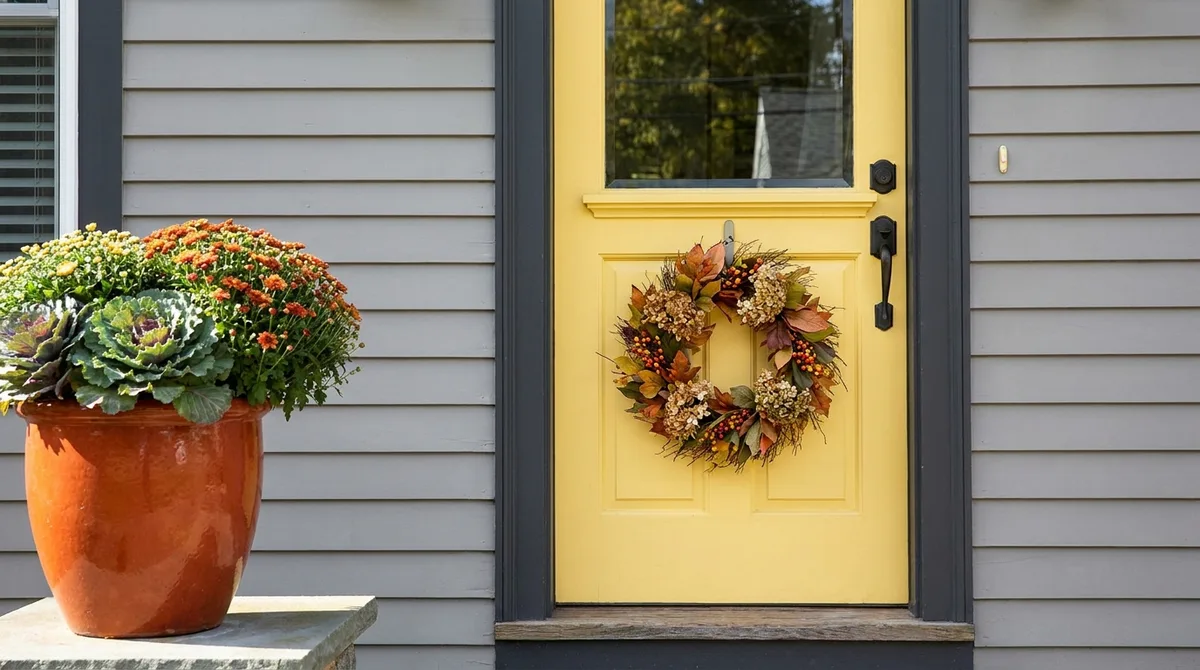
A yellow front door is a bold move that works best when the trim stays neutral. Test a sample first, since colors shift in sunlight.
Wreaths are easy dressing, and fall, spring, summer, winter and Christmas versions all work. The catch is blocking light and scratching glass. Use a removable over-door hanger with a soft pad. A wreath also doubles as free privacy for the middle of the pane.
Mistakes and regrets to skip
Common regrets are clear glass on a close-to-sidewalk entry, a dark color on a south-facing door that bakes in summer, and forgetting how fingerprints show. Wipe with mild glass cleaner and a microfiber cloth, and never scrape film with a razor. Every season or so, check the weatherstripping and the seal where the glass meets the frame, since a cracked seal lets in water and drafts. Clean the glass edges gently so you don’t wear the sealant away.
Frequently Asked Questions
Is a glass front door tempered?
Usually yes. Glass in a glass front door is normally tempered or laminated safety glazing, and federal rules under 16 CFR 1201 cover glass in doors. Tempered glass breaks into small pieces rather than sharp shards. Look for the etched mark in the pane corner. Sidelights follow separate local code rules, so confirm before you order.
Can you break in through a glass front door?
Any door can be forced, and glass is not the only weak point. Most attempts target the lock side by kicking the frame. Laminated glass slows a smash attempt because it stays in one piece. Reinforce the strike plate with long screws, use a good deadbolt and add a camera.
How do I get privacy with a glass front door?
For a glass front door, add frosted film, textured glass, or a blind inside. Film is cheapest and usually a short DIY job. Internal blinds between the panes need no cleaning. A roller blind lowered at night works for many households. Pick the lightest option that solves your problem.
Are glass front doors energy efficient?
They can be, if you choose well. Look for double glazing, a Low-E coating and a good NFRC U-factor. A small lite loses far less than a full lite, and a solid door with narrow sidelights usually beats a mostly glass slab for insulation. Check the label, not the brochure, and ask for the NFRC numbers in writing before you pay a deposit. ENERGY STAR labeling helps you compare for your climate zone.
Do I need a double-cylinder deadbolt on a glass door?
Usually not, and it can be a fire hazard. A key-both-sides lock slows your exit in an emergency. Some local codes restrict them for homes, so ask your building department. A better route is a single-cylinder deadbolt with reinforced framing, or a door with glass away from the lock. Ask your local building department before choosing, since codes vary.
What is a lite in a door?
A lite is one pane of glass set into a door or window. A half lite door has glass in the upper half, and a full lite door is mostly glass. It’s trade shorthand, and you’ll see it on spec sheets and quotes, so learn it before you compare doors.
Can I hang a wreath on a glass door?
Yes, with the right hanger. Use an over-the-door hook with a soft pad, or a removable adhesive hook rated for the weight. Avoid nails and suction cups that can leave marks. Hang the wreath on the solid rail if you want light inside, and check that the hanger pad sits flat so it doesn’t scratch the glass or rattle when the door closes.
Is frosted glass see-through?
Frosted glass blocks detail, but shapes and light can still show. At night with lights on inside, a person’s outline may be visible. Textured glass like rain or reed can be clearer or blurrier depending on the pattern. Ask for a sample and look at it from outside after dark.
How much does it cost to replace a glass front door?
It depends on material, glass and installation. Homeowners often cite about $900 to $1,500 for steel and $2,500 to $4,500 for fiberglass, with wood and sidelights higher. These are anecdotal, so get local quotes. Ask each installer to list the glass type, Low-E coating, frame work and hardware separately, which makes bids easy to compare and shows where the money goes.
Are glass doors always less secure than solid doors?
No, that’s a myth. A solid door with a weak frame fails easily, and a glass door with laminated glass and a reinforced jamb can hold well. Security depends on the whole setup: lock, frame, strike plate, glass type and lighting. Glass does add one more thing to plan around, so plan for it.
Conclusion
Back in that dark hallway, the answer wasn’t to give up on light. It was textured glass, a roller blind and a stronger jamb. That’s the heart of any good glass front door: treat glass as a dial, protect the weak points that thieves actually target, and keep the budget honest.
Your next step is simple. Stand outside at night, look at your current door, and decide how much exposure you can live with.
If you’re still planning the entry, read the walkthrough on replacing a door handle step by step. Which would you notice first on your own door: the light coming in, or the people looking in?